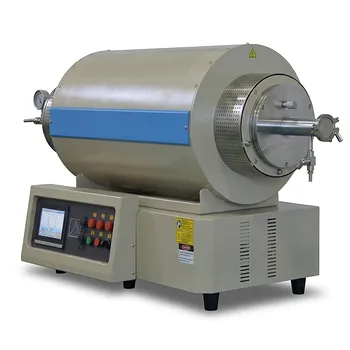
Why is high-purity nitrogen (N2) required during the carbonization process in a tube atmosphere furnace? Prevent Oxidation
Updated 3 months ago
High-purity nitrogen serves as the essential barrier between your carbon source and total oxidative destruction. During carbonization, temperatures typically reach between 400°C and 800°C, a range where carbon and organic precursors naturally ignite in the presence of oxygen. By displacing air with an inert nitrogen atmosphere, the furnace ensures the material undergoes pyrolysis—thermal decomposition into carbon—rather than simple combustion.
The core function of high-purity nitrogen is to create a strictly oxygen-free environment that prevents material loss through burning, protects delicate microscopic structures, and facilitates the removal of chemical byproducts that could otherwise stall the carbonization process.
Preventing Oxidative Combustion and Yield Loss
The Role of Oxygen Displacement
The introduction of nitrogen effectively flushes oxygen out of the tube furnace chamber. This creates an inert working environment where the carbon source cannot react with atmospheric oxygen, which is the primary requirement for carbonization.
Pyrolysis vs. Burning
Without nitrogen, organic precursors would undergo oxidative combustion, resulting in ash and gas. High-purity nitrogen forces the material into pyrolysis, ensuring the organic matter converts into a stable, carbon-rich biochar or skeleton.
Maximizing Material Yield
By eliminating the "burn-off" caused by oxygen, researchers can achieve a much higher yield of carbon material. This is critical when working with expensive precursors or small-scale laboratory samples where every milligram counts.
Preserving Delicate Structural Integrity
Protection of 1D and 2D Nanostructures
At high temperatures, even minor oxidation can lead to thermal erosion, which eats away at the surface of the material. Nitrogen prevents this erosion, preserving the integrity of sensitive one-dimensional hollow tubes and two-dimensional nanosheets.
Maintaining Lattice Defects and Functional Groups
For materials used in electromagnetic wave absorption or catalysis, specific lattice defects and oxygen-containing functional groups are vital. An inert atmosphere ensures these features are retained rather than destroyed by aggressive oxidation.
Orderly Dehydration of Precursors
Nitrogen allows for the orderly dehydration of biomass molecular structures. This controlled process is necessary to transform complex biological molecules into a preliminary carbon skeleton without losing structural detail.
Chemical Potential and Byproduct Management
Removal of Volatile Impurities
As materials carbonize, they release byproduct gases such as CO, CO2, H2O, and CH4. A continuous flow of nitrogen (e.g., 200 mL/min) carries these volatiles away from the sample, preventing them from interfering with the reaction.
Stabilizing the Chemical Potential
By sweeping away byproducts, the nitrogen flow maintains a stable chemical potential within the furnace. This environment is necessary for complex processes like gas-phase exfoliation or the efficient reaction between activators and carbon substrates.
Enabling Heteroatom Doping
When creating doped porous carbon, nitrogen ensures that heteroatoms like nitrogen and phosphorus remain within the carbon matrix. This prevents these atoms from reacting with oxygen and escaping the material as gaseous oxides.
Understanding the Trade-offs
Purity Levels vs. Material Sensitivity
While 99.9% nitrogen is sufficient for some applications, high-performance carbon materials often require 99.99% purity. Even trace amounts of oxygen can cause "pitting" on the surface of activated carbon, reducing the quality of the pore structure.
Flow Rate Balancing
A high flow rate ensures rapid removal of impurities but can lead to thermal gradients or the physical displacement of lightweight powders. Conversely, a flow rate that is too low may fail to fully exclude oxygen or allow byproducts to accumulate near the sample.
Cost and Logistics
Maintaining a continuous flow of high-purity gas adds to the operational cost of the laboratory. However, the risk of losing an entire batch of synthesized material to oxidative burnout usually outweighs the cost of the nitrogen supply.
How to Apply This to Your Project
To achieve the best results in your tube furnace carbonization, tailor your nitrogen usage to your specific material goals:
- If your primary focus is high-yield biochar: Maintain a steady, moderate flow of nitrogen to ensure complete oxygen displacement throughout the heating and cooling cycles.
- If your primary focus is delicate nanostructures: Use the highest purity nitrogen (99.99%+) and a carefully calibrated flow rate to prevent any localized thermal erosion or "pitting" of the surface.
- If your primary focus is porous activated carbon: Ensure the nitrogen flow is sufficient to rapidly carry away volatile byproducts, which promotes the development of clean microporous and mesoporous structures.
- If your primary focus is heteroatom doping: Use an inert atmosphere to maximize the retention of nitrogen or phosphorus atoms within the carbon lattice during the high-temperature phase.
Providing a controlled nitrogen atmosphere is the most fundamental step in transforming organic precursors into high-value carbon materials.
Summary Table:
| Function of Nitrogen | Key Benefit | Impact on Material Quality |
|---|---|---|
| Oxygen Displacement | Prevents combustion/burning | Ensures pyrolysis & maximizes carbon yield |
| Structural Protection | Prevents thermal erosion | Preserves delicate 1D/2D nanostructures |
| Byproduct Removal | Sweeps away CO, CO2, H2O | Maintains chemical potential & pore integrity |
| Atmosphere Stability | Prevents heteroatom loss | Facilitates effective Nitrogen/Phosphorus doping |
Elevate Your Research with THERMUNITS
Precision in atmosphere control is the difference between successful carbonization and material loss. THERMUNITS is a leading manufacturer of high-temperature laboratory equipment specifically designed for material science and industrial R&D.
Our comprehensive range of thermal processing solutions includes:
- Advanced Tube & Atmosphere Furnaces (Optimized for nitrogen-rich pyrolysis)
- CVD/PECVD Systems for thin-film and nanostructure synthesis
- Vacuum & Hot Press Furnaces
- Vacuum Induction Melting (VIM) and Electric Rotary Kilns
Whether you are developing porous carbon for energy storage or advanced catalysts, our equipment provides the uniform heating and precise gas management your project demands.
Ready to optimize your heat treatment process?
Contact our technical experts today to find the perfect furnace solution for your laboratory.
References
- Fangfang Liu, Xiuyun Chuan. 1D hollow tubular/2D nanosheet hybrid dimensional porous carbon prepared by one-step carbonization using natural minerals as templates for supercapacitors. DOI: 10.1039/d4ra01873g
Mentioned Products
- Vertical 1700C Vacuum and Atmosphere Tube Furnace with 80mm Alumina Tube
- 1200C Hybrid Muffle and Tube Furnace for Material Research with Dual Atmosphere Control Quartz Tubes
- Compact Vertical Split Quartz Tube Furnace with Stainless Steel Vacuum Flanges for Rapid Thermal Quenching and Controlled Atmosphere Material Processing
- Compact Hybrid Muffle and Tube Furnace for 1000C Controlled Atmosphere Laboratory Material Sintering
- 1200°C Atmosphere Controlled Automatic Bottom Loading Furnace with 6 Inch Quartz Tube
People Also Ask
- How is an industrial-grade vertical tube furnace utilized in smelting leaching residues? Enhance Metal Recovery Efficiency
- What is the function of a laboratory-grade vertical tube furnace in fast pyrolysis? Optimize Composite Research.
- How does a vertical tube furnace facilitate thermoelectric alloy melting? Precision synthesis for material homogeneity.
- Why is a thermocouple sensor indispensable for monitoring the vertical tube furnace during gallium oxide nanowire production? Optimize VLS Growth
- What are the advantages of using a vertical tube furnace for crucible experiments simulating steel-slag interactions?

Tech Team · ThermUnits
Last updated on Jun 02, 2026
Related Products

Vertical 1700C Vacuum and Atmosphere Tube Furnace with 80mm Alumina Tube
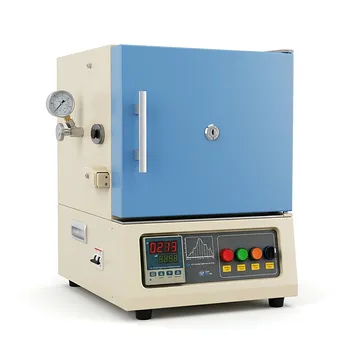
1200C Hybrid Muffle and Tube Furnace for Material Research with Dual Atmosphere Control Quartz Tubes

Compact Vertical Split Quartz Tube Furnace with Stainless Steel Vacuum Flanges for Rapid Thermal Quenching and Controlled Atmosphere Material Processing
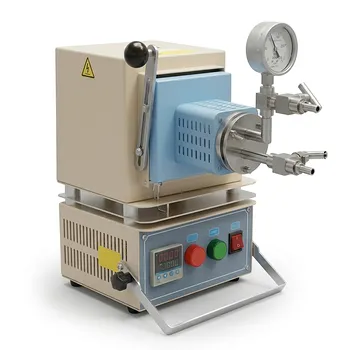
Compact Hybrid Muffle and Tube Furnace for 1000C Controlled Atmosphere Laboratory Material Sintering
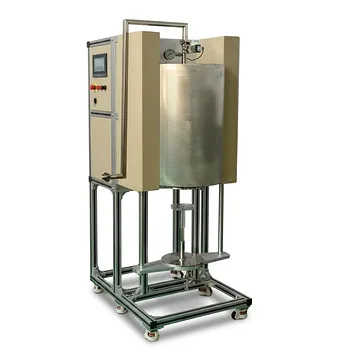
1200°C Atmosphere Controlled Automatic Bottom Loading Furnace with 6 Inch Quartz Tube

Three Zone Tube Furnace with 11 Inch or 15 Inch Quartz Tube and Hinged Flanges for Vacuum Atmosphere Heat Treatment

1200°C 5 Inch Vertical Quartz Tube Furnace with Stainless Steel Vacuum Flanges
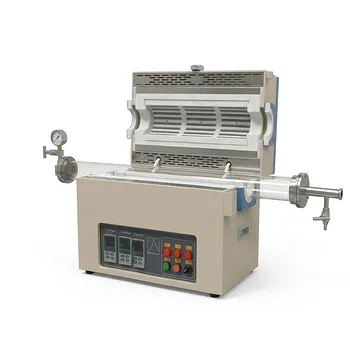
1200°C Three Zone Split Tube Furnace with 18 Inch Heating Length and Vacuum Flanges
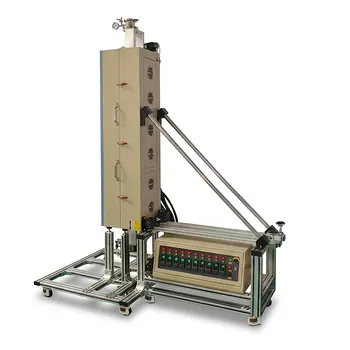
1200°C 10-Zone Split Tube Furnace with Horizontal and Vertical Mounting for Multi-Zone Thermal Gradients and Large Diameter Material Processing
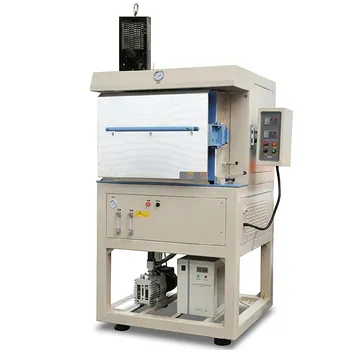
1200C Hydrogen Atmosphere Box Furnace with 5 Heated Sides and 64L Chamber

High Temperature 1700C Tube Furnace with High Vacuum Turbomolecular Pump System and Multi Channel Mass Flow Controller Gas Mixer
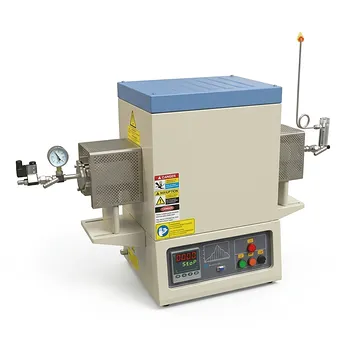
1700C Hydrogen Gas Tube Furnace with 60mm Alumina Process Tube and Integrated Hydrogen Safety Detector

High Temperature 1700C Vertical Tube Furnace for Powder Spherification and Material Sintering

High Temperature 1700C Six Zone Split Tube Furnace with Alumina Tube and Water Cooled Flanges
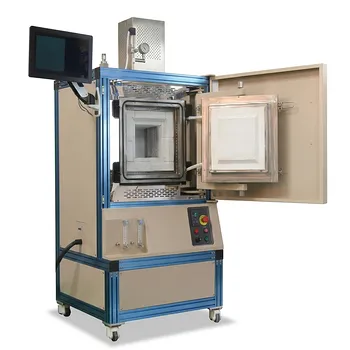
High Temperature Hydrogen Atmosphere Box Furnace 1650C Max Reducing Environment Material Synthesis System 8x8x8 Chamber
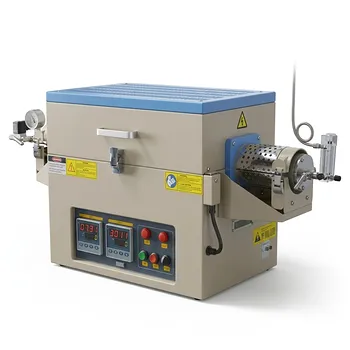
1100C Dual Zone Hydrogen Gas Tube Furnace with Quartz Tube and Integrated H2 Leak Detection System

1800C High Temperature Compact Vacuum Tube Furnace with 60mm OD Alumina Tube and Kanthal MoSi2 Heating Elements

High Temperature 1700C Benchtop Tube Furnace with 5 Inch Heating Zone High Purity Alumina Tube and Vacuum Sealing Flanges

High Temperature Automated 5 Inch Tube Furnace for Autonomous Material Research and Advanced Laboratory R&D