Why perform nickelate reduction in vacuum-sealed tubes? Ensuring High Phase Purity & Stoichiometric Control
Updated 3 months ago
To achieve a successful nickelate reduction, sealing the reaction within vacuumed quartz or glass tubes is a non-negotiable requirement for environmental isolation and kinetic control. This process excludes atmospheric oxygen and moisture that would otherwise cause unintended oxidation, effectively ruining the thin film. Furthermore, the sealed environment captures the gas partial pressure generated by decomposing reducing agents, which is the driving force behind the necessary topotactic transformation.
Vacuum-sealed tubes provide a strictly controlled closed-system environment that prevents material degradation and ensures the precise chemical stoichiometry required for advanced nickelate synthesis.
Preventing Material Degradation and Impurities
Eliminating Atmospheric Contaminants
Nickelates are exceptionally sensitive to oxygen and moisture, especially at the high temperatures required for the reduction phase. If exposed to even trace amounts of air, the thin films will undergo unintended oxidation, reverting the material to an unwanted phase or introducing structural defects.
Protecting the Metal Lattice
A vacuum environment ensures that metal atoms can rearrange into an ordered structure without the interference of oxygen atoms. This isolation prevents the formation of oxide impurities, allowing the nickelate to maintain the specific lattice integrity required for its electronic or superconducting properties.
Maintaining Thermodynamic and Kinetic Stability
Capturing Gas Partial Pressure
During the reduction process, reducing agents decompose to generate specific gases that facilitate the chemical change. In a sealed tube, these gases are trapped, maintaining a constant partial pressure that ensures the topotactic reduction reaction proceeds efficiently under stable, predictable conditions.
Preserving Stoichiometric Precision
The closed system prevents the loss of volatile elements that might otherwise escape at high temperatures. By keeping all components within the tube, researchers can guarantee that the final sample maintains an accurate stoichiometric ratio, which is critical for the material’s performance.
Understanding the Trade-offs and Risks
Pressure and Temperature Limits
While sealing is necessary, it introduces the risk of the tube rupturing due to internal gas expansion at high temperatures. Quartz is often preferred over glass because it can withstand higher temperatures and greater thermal shock, though it is more expensive and harder to work with.
Process Complexity and Access
The use of vacuum-sealed tubes significantly increases the complexity of the experimental setup compared to open-flow systems. It also limits the ability to monitor the reaction in real-time or make adjustments to the gas flow once the heating cycle has begun.
Implementing These Controls for Your Research
To ensure the highest quality results during the nickelate reduction process, consider the following strategic priorities:
- If your primary focus is Phase Purity: Use high-grade quartz tubes and achieve a deep vacuum (at least $10^{-3}$ Torr or better) to ensure the complete removal of oxygen and moisture.
- If your primary focus is Stoichiometric Accuracy: Carefully calculate the volume of the tube relative to the amount of reducing agent to precisely control the resulting gas partial pressure.
- If your primary focus is Safety and Scalability: Ensure the wall thickness of your glass or quartz is sufficient to handle the calculated internal pressure at your peak operating temperature.
By mastering the sealed-tube environment, you ensure that the chemical potential of your reduction reaction remains perfectly balanced for successful synthesis.
Summary Table:
| Aspect | Requirement | Primary Benefit |
|---|---|---|
| Environment | High Vacuum Seal | Prevents unintended oxidation and defects |
| Atmosphere | Gas Partial Pressure | Drives the necessary topotactic transformation |
| Integrity | Closed-System | Preserves precise chemical stoichiometry |
| Hardware | Quartz/Glass Tubes | Provides isolation and thermal shock resistance |
Elevate Your Material Research with THERMUNITS
Precision is critical in advanced nickelate synthesis. THERMUNITS is a leading manufacturer of high-temperature laboratory equipment for material science and industrial R&D. Whether you require standard Muffle furnaces, specialized Vacuum and Atmosphere systems, or advanced CVD/PECVD setups, our thermal processing solutions are engineered for stability and stoichiometric accuracy.
Ready to optimize your heat treatment process? Contact our technical experts today to find the ideal furnace for your specific research needs!
References
- Araceli Gutiérrez‐Llorente, Lucía Iglesias. Toward Reliable Synthesis of Superconducting Infinite Layer Nickelate Thin Films by Topochemical Reduction. DOI: 10.1002/advs.202309092
Mentioned Products
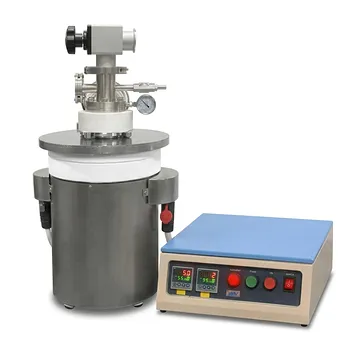
- Compact Vertical Split Quartz Tube Furnace with Stainless Steel Vacuum Flanges for Rapid Thermal Quenching and Controlled Atmosphere Material Processing
- High Temperature Rocking Tube Furnace with Quartz Tube and Vacuum Flange for Materials Synthesis
- High Temperature 1200C Split Tube Furnace with Hinged Vacuum Flanges and 4 Inch Quartz Tube for Laboratory Research
- Three Zone Tube Furnace with 11 Inch or 15 Inch Quartz Tube and Hinged Flanges for Vacuum Atmosphere Heat Treatment
- 1100°C High Temperature Quartz Chamber Furnace 8 Inch OD with 7.6 Liter Capacity and Vacuum Atmosphere Capability
People Also Ask
- Why integrate a vertical split tube furnace with hydraulic loading for HSECC? Essential for In-Situ Fire Simulation.
- What is the role of a split vertical tube furnace during flash sintering of 8YSZ and 20SDC? Master Ultra-Fast R&D
- What is the primary engineering purpose for using a customized ventilation hood when operating a split tube furnace? RCF Safety
- Why is a quartz tube furnace necessary for phosphorus-doped MoS2/GO preparation? Ensure Purity & Precise Synthesis
- What is the primary function of a Quartz Tube Furnace in ZnO VLS growth? Master High-Precision Nanowire Synthesis

Tech Team · ThermUnits
Last updated on Jun 03, 2026
Related Products

Compact Vertical Split Quartz Tube Furnace with Stainless Steel Vacuum Flanges for Rapid Thermal Quenching and Controlled Atmosphere Material Processing
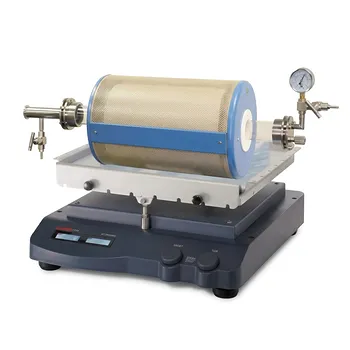
High Temperature Rocking Tube Furnace with Quartz Tube and Vacuum Flange for Materials Synthesis
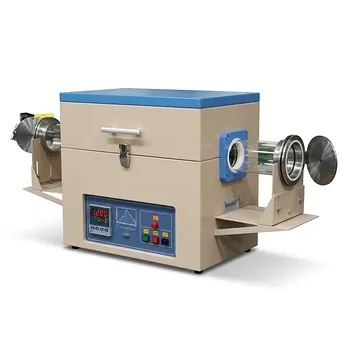
High Temperature 1200C Split Tube Furnace with Hinged Vacuum Flanges and 4 Inch Quartz Tube for Laboratory Research

Three Zone Tube Furnace with 11 Inch or 15 Inch Quartz Tube and Hinged Flanges for Vacuum Atmosphere Heat Treatment
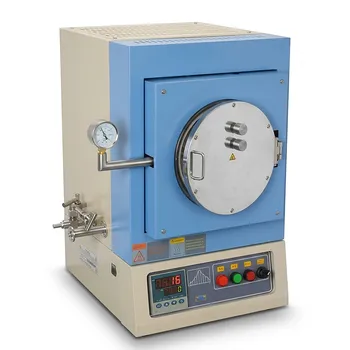
1100°C High Temperature Quartz Chamber Furnace 8 Inch OD with 7.6 Liter Capacity and Vacuum Atmosphere Capability

1200°C 5 Inch Vertical Quartz Tube Furnace with Stainless Steel Vacuum Flanges
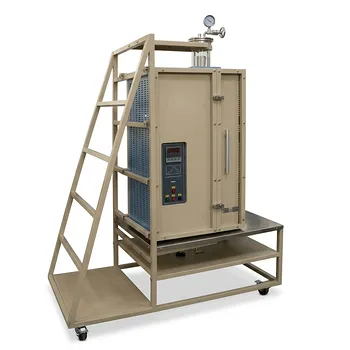
Split Vertical Tube Furnace with 1200C Quartz Tube and Stainless Steel Vacuum Flanges for Rapid Thermal Processing
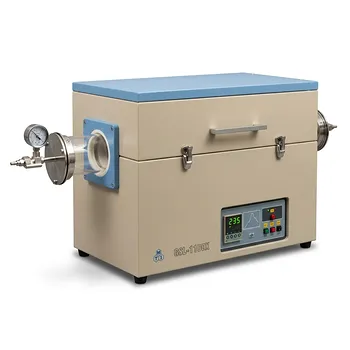
Single Zone Tube Furnace 5 Inch Quartz Tube 36 Inch Heating Zone Vacuum Flanges
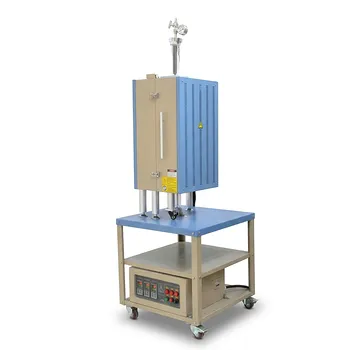
1200C Three Zone Vertical Tube Furnace with 2 Inch Quartz Tube and Vacuum Flanges
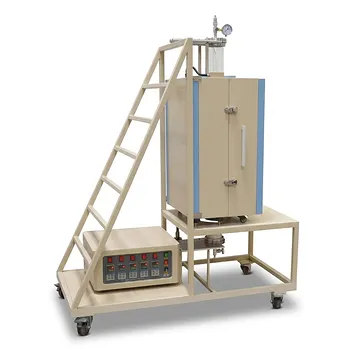
Five Zone Split Vertical Tube Furnace 1200C Max with 4 Inch Quartz Tube and Stainless Steel Vacuum Flanges
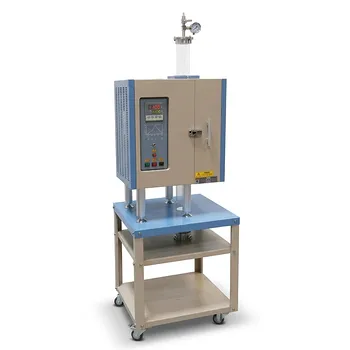
1100°C Split Vertical Tube Furnace with 80mm Quartz Tube and Stainless Steel Vacuum Flanges

High Temperature Automated 5 Inch Tube Furnace for Autonomous Material Research and Advanced Laboratory R&D
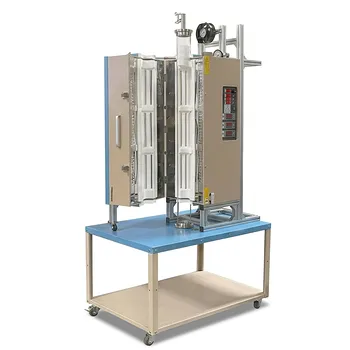
1200C Three Zone Split Vertical Tube Furnace 4 Inch Quartz Tube Stainless Steel Vacuum Flanges

High Temperature 1700C Benchtop Tube Furnace with 5 Inch Heating Zone High Purity Alumina Tube and Vacuum Sealing Flanges
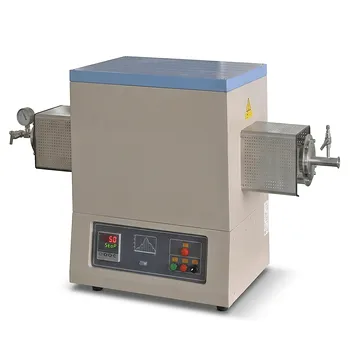
High Temperature 1700C Tube Furnace with 4 Inch OD Alumina Tube and Vacuum Sealing Flanges
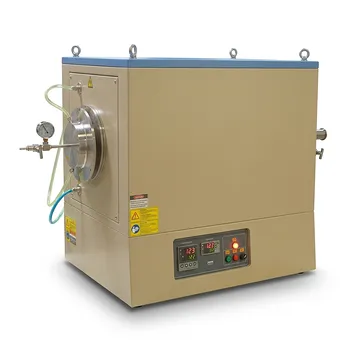
1100°C Large Diameter Quartz Tube Furnace with 24 Inch Heating Zone and Water Cooled Flanges
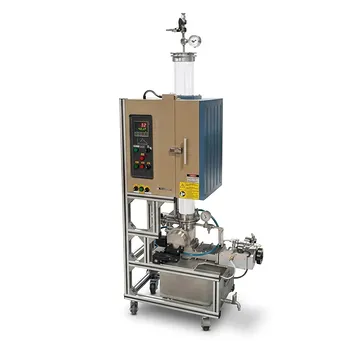
1200C High Temperature Atmosphere Controlled Vertical Quenching Tube Furnace with 4 Inch Quartz Tube
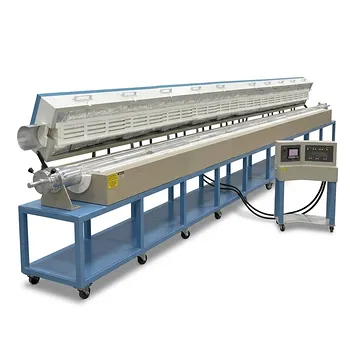
12 Zone Ultra Long Split Tube Furnace with 20 Foot Quartz Tube and 1100C Max Temperature
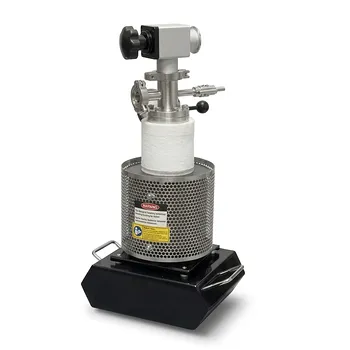
High Temperature 1100C Compact Top Loading Vertical Vacuum Tube Furnace for High Vacuum Noble Metal Melting and Material Research