Why is precise atmosphere control necessary in a tube furnace for CoFe2O4? Optimize Your Nanomaterial Performance
Updated 5 months ago
Precise atmosphere control in a tube furnace is essential for CoFe2O4 synthesis because it prevents uncontrolled oxidation and allows for the intentional engineering of oxygen vacancies. By utilizing high-purity inert gases like argon, researchers can maintain specific Co2+/Co3+ and Fe2+/Fe3+ ratios that are critical to the material's magnetic and electrochemical properties.
Precise atmosphere control shifts the furnace's role from a simple heat source to a controlled chemical reactor. It ensures phase purity and creates the specific surface defects required for high-performance applications like heavy metal adsorption.
Preserving Chemical Stoichiometry and Phase Purity
Managing Metal Oxidation States
The introduction of high-purity argon gas effectively prevents the uncontrolled oxidation of cobalt and iron ions during high-temperature treatment. This stability allows the material to maintain the precise balance of Co2+/Co3+ and Fe2+/Fe3+ required for its specific spinel structure.
Isolating Ambient Contaminants
A sealed tube furnace environment isolates the precursors from oxygen and moisture found in ambient air. This isolation ensures that the chemical stoichiometry remains unchanged, preventing the formation of unwanted secondary oxide phases that would degrade the material's performance.
Ensuring Phase Stability
Maintaining an inert environment during the heating and cooling phases ensures the phase purity of the CoFe2O4 nanomaterials. Without this control, the material might undergo unintended phase transitions, resulting in a hybrid oxide that lacks the targeted magnetic or catalytic properties.
Engineering Active Sites through Oxygen Vacancies
Generating High-Concentration Vacancies
A stable, oxygen-free atmosphere promotes the generation of high concentrations of oxygen vacancies on the oxide surface. These vacancies are not defects in the negative sense; rather, they are engineered "holes" in the crystal lattice that act as vital functional sites.
Enhancing Adsorption Capacity
These oxygen vacancies serve as active sites during electrochemical detection and environmental remediation. They significantly increase the material’s chemical adsorption capacity for dangerous heavy metals, including lead, copper, mercury, and cadmium.
Improving Electrical and Magnetic Properties
The presence of vacancies and the control of valence states directly influence the electrical conductivity and magnetic stability of the nanomaterials. Precise gas flow ensures these properties are uniform across the entire batch of synthesized material.
Understanding the Trade-offs and Limitations
Gas Purity and Flow Dynamics
The effectiveness of atmosphere control is limited by the purity of the gas used; even trace amounts of oxygen in an argon cylinder can cause surface oxidation at high temperatures. Furthermore, high flow rates can create thermal gradients inside the tube, potentially leading to non-uniform material properties across the sample boat.
System Hermeticity
Maintaining a vacuum-tight seal is a constant challenge, as gaskets and O-rings can degrade over repeated high-temperature cycles. Leaking seals introduce atmospheric oxygen, which can neutralize the benefits of the inert gas and result in "over-oxidized" materials with fewer active surface sites.
Cost and Complexity
Implementing precise control requires expensive mass flow controllers and high-purity gas supplies. For researchers, the trade-off involves balancing the increased operational cost against the need for the high sensitivity provided by vacancy-rich CoFe2O4.
How to Apply This to Your Project
When configuring your tube furnace for CoFe2O4 nanomaterial preparation, your strategy should align with your specific research or production goals:
- If your primary focus is heavy metal adsorption: Prioritize a high-purity argon atmosphere to maximize the density of oxygen vacancies on the material surface.
- If your primary focus is magnetic phase purity: Ensure the furnace is evacuated to a vacuum before introducing gas to remove all traces of residual oxygen that could alter the Co/Fe ratios.
- If your primary focus is structural uniformity: Use a low, steady flow rate of inert gas to maintain a stable thermal environment while preventing the infiltration of ambient air.
Mastering the furnace atmosphere is the most decisive factor in transforming standard cobalt ferrite into a high-performance nanomaterial capable of advanced electrochemical sensing.
Summary Table:
| Key Control Factor | Impact on CoFe2O4 Nanomaterials | Research & Industrial Benefit |
|---|---|---|
| Inert Gas (Argon) | Prevents uncontrolled metal oxidation | Maintains precise Co2+/Co3+ and Fe2+/Fe3+ ratios |
| Sealed Environment | Isolates ambient oxygen and moisture | Ensures phase purity and chemical stoichiometry |
| Vacancy Engineering | Generates controlled oxygen vacancies | Enhances adsorption capacity for heavy metals |
| Flow Dynamics | Minimizes thermal gradients | Guarantees uniform electrical and magnetic properties |
| Hermeticity | Prevents atmospheric leakage | Avoids unwanted secondary oxide phase formation |
Elevate Your Material Research with THERMUNITS
Precision is the difference between a standard oxide and a high-performance nanomaterial. THERMUNITS is a leading manufacturer of high-temperature laboratory equipment, providing the advanced thermal processing solutions required for cutting-edge material science and industrial R&D.
Whether you are synthesizing CoFe2O4 or developing next-generation catalysts, our comprehensive range of equipment ensures perfect atmosphere control and thermal uniformity:
- Advanced Furnaces: Tube, Atmosphere, Vacuum, Muffle, Rotary, and Hot Press Furnaces.
- Specialized Systems: CVD/PECVD systems, Vacuum Induction Melting (VIM), and Dental Furnaces.
- Components: High-quality Thermal Elements and electric rotary kilns.
Ready to achieve superior phase purity and engineer precise active sites in your materials? Contact our technical experts today to find the ideal furnace configuration for your laboratory.
References
- Jieli Guo, Hao Li. MOF Derived Cobalt Ferrite Cubic Rod‐Like Materials for Highly Efficient Electrochemical Simultaneous Detection of Multiple Heavy Metal Ions. DOI: 10.1002/chem.202404298
Mentioned Products
- High Temperature Tube Furnace 1500C with Sliding Flanges and 50mm OD for Rapid Thermal Processing Fast Heating and Cooling
- Vertical 1700C Vacuum and Atmosphere Tube Furnace with 80mm Alumina Tube
- 1100C Tube Furnace with Vacuum Flange and Programmable Temperature Controller for Material Science and Industrial Heat Treatment
- Compact High Temperature 1600C Tube Furnace with 50mm Alumina Tube and Vacuum Flanges for Material Sintering
- 900°C Max Rotary Tube Furnace with 8 Inch 310S Alloy Tube and Optional Multi Zone Heating for Industrial Material Calcination
People Also Ask
- How are high-temperature tube furnaces utilized to repair etching damage? Precision Lattice Restoration Solutions
- What role does a high-temperature tube furnace play in CVD synthesis of silicon nanowires? Master VLS Growth Precision.
- What core conditions does a high-temperature tube furnace provide for rGO aerogels? Mastering Precision Synthesis.
- What role does a high-temperature tube furnace play in the sulfidation heat treatment of CoS@C/MXene nanocomposites? Guide
- How does precision tube furnace control influence CoFe nanoparticle formation? Master Your Bimetallic Synthesis.

Tech Team · ThermUnits
Last updated on Apr 14, 2026
Related Products

High Temperature Tube Furnace 1500C with Sliding Flanges and 50mm OD for Rapid Thermal Processing Fast Heating and Cooling

Vertical 1700C Vacuum and Atmosphere Tube Furnace with 80mm Alumina Tube

1100C Tube Furnace with Vacuum Flange and Programmable Temperature Controller for Material Science and Industrial Heat Treatment

Compact High Temperature 1600C Tube Furnace with 50mm Alumina Tube and Vacuum Flanges for Material Sintering
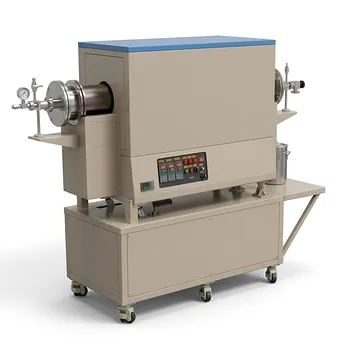
900°C Max Rotary Tube Furnace with 8 Inch 310S Alloy Tube and Optional Multi Zone Heating for Industrial Material Calcination

1700C Hydrogen Gas Tube Furnace with 60mm Alumina Process Tube and Integrated Hydrogen Safety Detector

High Temperature 1700C Tube Furnace with High Vacuum Turbomolecular Pump System and Multi Channel Mass Flow Controller Gas Mixer

5 Inch Three Zone Rotary Tube Furnace with Integrated Gas Delivery System and 1200C Capability for Advanced Material CVD Processing

Three Zone Tube Furnace with 11 Inch or 15 Inch Quartz Tube and Hinged Flanges for Vacuum Atmosphere Heat Treatment

1200C High Throughput Multi Channel Tube Furnace with 50mm Quartz Tubes for Annealing and Material Phase Diagram Research

1200°C 5 Inch Vertical Quartz Tube Furnace with Stainless Steel Vacuum Flanges

High Temperature 1700C Benchtop Tube Furnace with 5 Inch Heating Zone High Purity Alumina Tube and Vacuum Sealing Flanges
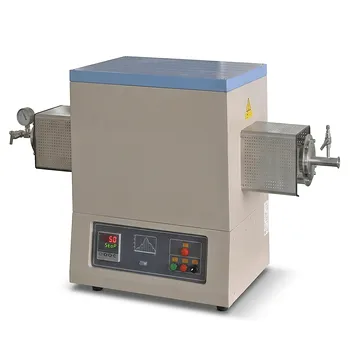
High Temperature 1700C Tube Furnace with 4 Inch OD Alumina Tube and Vacuum Sealing Flanges

1800C High Temperature Compact Vacuum Tube Furnace with 60mm OD Alumina Tube and Kanthal MoSi2 Heating Elements

High Temperature 1700C Six Zone Split Tube Furnace with Alumina Tube and Water Cooled Flanges

Compact Vertical Split Quartz Tube Furnace with Stainless Steel Vacuum Flanges for Rapid Thermal Quenching and Controlled Atmosphere Material Processing
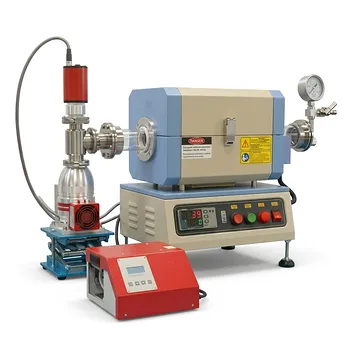
High Vacuum Compact Tube Furnace 1200C with Integrated Turbo Pump System and 8 Inch Heating Zone
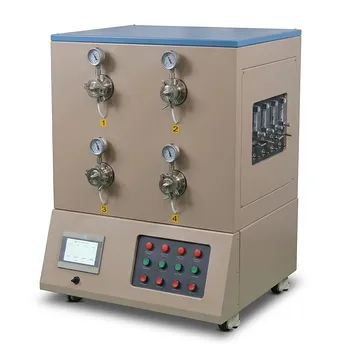
High Throughput 1200C Four Channel Tube Furnace with 3 Inch Quartz Tubes for Multi Zone Annealing and Material Research

High Temperature Automated 5 Inch Tube Furnace for Autonomous Material Research and Advanced Laboratory R&D
