Why is precision temperature programming in a tube furnace critical for the synthesis of molybdenum-based metal nitrides?
Updated 3 months ago
Precision temperature programming is the primary mechanism for regulating the reaction kinetics and phase purity of molybdenum-based metal nitrides. In a tube furnace, this level of control ensures that chemical transformations, such as ammonolysis or nitrogen-hydrogen reduction, occur within the narrow thermodynamic windows required to achieve specific crystal structures while preventing the loss of catalytic surface area.
Precise thermal regulation is the difference between a high-performance catalyst and a failed synthesis. By managing heating rates and isothermal hold times, researchers can dictate the exact crystal phase—such as the transition between Ni2Mo3N and Ni3Mo3N—and prevent the structural degradation caused by localized overheating.
The Role of Kinetics in Phase Selection
Navigating Transition Pathways
Molybdenum-based bimetallic nitrides are highly sensitive to the energy input during synthesis. Precise programming allows for the differentiation between closely related crystal phases, such as the transformation between Ni2Mo3N and Ni3Mo3N. Without this control, the resulting material may contain a mixture of phases, which significantly diminishes its specialized chemical properties.
Managing Reduction-Nitridation Sequences
The synthesis often involves a complex reduction and nitridation of active components, typically starting from molybdenum oxides. Accurate temperature fields ensure that the reduction by ammonia (NH3) or hydrogen occurs fully before the final nitridation stage begins. This sequence is critical for forming the desired γ-Mo2N crystal phase and ensuring structural stability.
Driving Atomic Ordering
Synthesizing complex nitrides often requires high energy levels to move cations into an ordered state. Precision control provides the stable, high-temperature environment needed for long isothermal reduction periods. This stability drives the arrangement of cations in the lattice from a disordered to an ordered pyrochlore-like phase.
Structural Integrity and Surface Morphology
Preventing Grain Coarsening and Sintering
Excessive heat or rapid temperature increases can trigger grain growth, which reduces the specific surface area of the nitride. Precision programming limits the time the material spends at peak temperatures, preventing sintering. This preservation of a high surface area is essential for materials intended for catalytic or electrochemical applications.
Facilitating Nano-Shield and Pore Formation
In advanced synthesis, additives like rare earth oxides are used to form a nano-shield structure on the surface of the molybdenum nitride. This requires a highly controlled thermal environment to ensure the shield forms correctly without interfering with the internal pore structure. Precise regulation also dictates the pore size distribution and nitrogen/oxygen doping levels, which are vital for electrocatalytic activity.
Identifying Critical Reaction Thresholds
Many nitridation reactions are endothermic and possess specific initiation temperature thresholds. High-precision controllers allow researchers to capture these subtle variations and maintain the exact equilibrium point necessary for the reaction to proceed. This prevents reaction loss of control or the generation of undesirable by-products caused by overshooting the target temperature.
Understanding the Trade-offs
The Balance of Ramp Rates
While slow heating rates (such as 3°C per minute) provide excellent control over reaction stages, they significantly increase the total processing time and energy consumption. Conversely, rapid ramping may save time but risks localized overheating, leading to non-uniform material properties across the tube furnace.
Atmosphere and Temperature Synergy
The effectiveness of temperature programming is strictly tied to the gas atmosphere (e.g., NH3, N2/H2). A precise temperature curve is useless if the gas flow is not synchronized; for instance, improper sublimation of precursors in a CVD process can lead to inconsistent stoichiometry even if the reaction zone temperature is perfectly maintained.
How to Apply This to Your Synthesis
Making the Right Choice for Your Goal
- If your primary focus is phase purity: Utilize multi-stage ramp rates and extended isothermal holds to ensure complete transformation into the target crystal structure (e.g., Ni3Mo3N).
- If your primary focus is catalytic activity: Prioritize low heating rates and minimized peak temperature duration to prevent grain growth and maintain a high specific surface area.
- If your primary focus is reproducibility: Implement a high-precision automatic temperature controller to eliminate manual variations and ensure identical thermal history across multiple batches.
By mastering the thermal profile of your tube furnace, you transform it from a simple heater into a precision instrument for molecular engineering.
Summary Table:
| Synthesis Factor | Impact of Precision Programming | Key Benefit for Nitrides |
|---|---|---|
| Phase Purity | Differentiates between Ni2Mo3N and Ni3Mo3N | High crystal phase selectivity |
| Thermal Kinetics | Manages reduction-nitridation sequences | Stable γ-Mo2N crystal formation |
| Surface Area | Limits peak temp duration to prevent sintering | High catalytic surface activity |
| Atomic Ordering | Maintains stable high-temperature isothermal holds | Formation of ordered pyrochlore phases |
| Morphology | Controls nano-shield and pore size formation | Enhanced electrocatalytic efficiency |
Achieve Uncompromising Phase Purity with THERMUNITS
At THERMUNITS, we recognize that for material scientists and industrial R&D teams, a few degrees or minutes can determine the success of a synthesis. As a leading manufacturer of high-temperature laboratory equipment, we provide the precision tools necessary for advanced heat treatments. Our comprehensive range of solutions—including Tube Furnaces, CVD/PECVD systems, Muffle, Vacuum, and Atmosphere Furnaces—is engineered to deliver the exact thermal profiles required for molybdenum-based nitrides and other complex catalysts.
Don't let sintering or phase impurities compromise your research. Leverage our expertise in thermal elements and furnace design to drive your atomic ordering and surface morphology results.
Ready to upgrade your laboratory’s thermal capabilities?
References
- Shuairen Qian, Yi Cheng. Design Principle of Molybdenum-Based Metal Nitrides for Lattice Nitrogen-Mediated Ammonia Production. DOI: 10.1021/jacsau.4c00194
Mentioned Products
- High Temperature Tube Furnace 1500C with Sliding Flanges and 50mm OD for Rapid Thermal Processing Fast Heating and Cooling
- Vertical 1700C Vacuum and Atmosphere Tube Furnace with 80mm Alumina Tube
- 1100C Tube Furnace with Vacuum Flange and Programmable Temperature Controller for Material Science and Industrial Heat Treatment
- Compact High Temperature 1600C Tube Furnace with 50mm Alumina Tube and Vacuum Flanges for Material Sintering
- 900°C Max Rotary Tube Furnace with 8 Inch 310S Alloy Tube and Optional Multi Zone Heating for Industrial Material Calcination
People Also Ask
- How are high-temperature tube furnaces utilized to repair etching damage? Precision Lattice Restoration Solutions
- What core conditions does a high-temperature tube furnace provide for rGO aerogels? Mastering Precision Synthesis.
- What role does a high-temperature tube furnace play in CVD synthesis of silicon nanowires? Master VLS Growth Precision.
- How does precision tube furnace control influence CoFe nanoparticle formation? Master Your Bimetallic Synthesis.
- What role does a high-temperature tube furnace play in the sulfidation heat treatment of CoS@C/MXene nanocomposites? Guide

Tech Team · ThermUnits
Last updated on Jun 03, 2026
Related Products

High Temperature Tube Furnace 1500C with Sliding Flanges and 50mm OD for Rapid Thermal Processing Fast Heating and Cooling

Vertical 1700C Vacuum and Atmosphere Tube Furnace with 80mm Alumina Tube

1100C Tube Furnace with Vacuum Flange and Programmable Temperature Controller for Material Science and Industrial Heat Treatment

Compact High Temperature 1600C Tube Furnace with 50mm Alumina Tube and Vacuum Flanges for Material Sintering
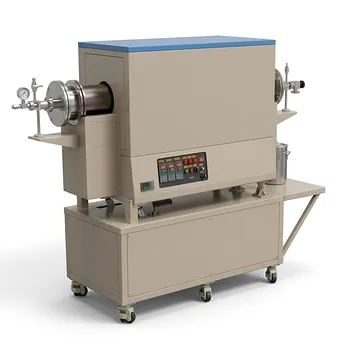
900°C Max Rotary Tube Furnace with 8 Inch 310S Alloy Tube and Optional Multi Zone Heating for Industrial Material Calcination
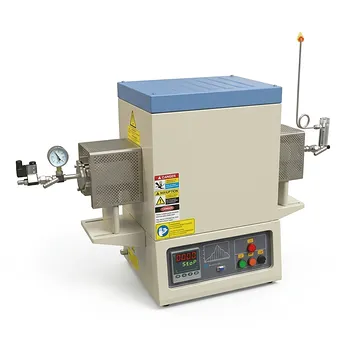
1700C Hydrogen Gas Tube Furnace with 60mm Alumina Process Tube and Integrated Hydrogen Safety Detector

High Temperature 1700C Tube Furnace with High Vacuum Turbomolecular Pump System and Multi Channel Mass Flow Controller Gas Mixer
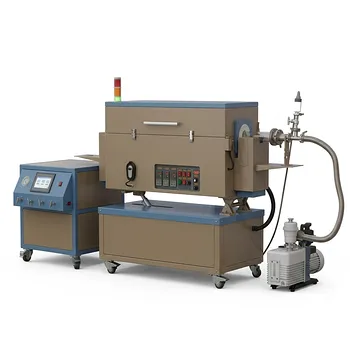
5 Inch Three Zone Rotary Tube Furnace with Integrated Gas Delivery System and 1200C Capability for Advanced Material CVD Processing
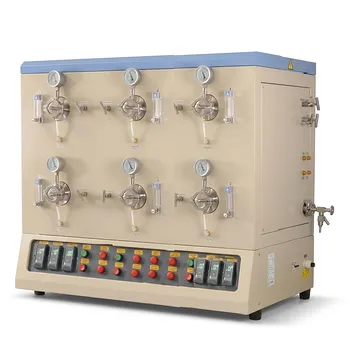
1200C High Throughput Multi Channel Tube Furnace with 50mm Quartz Tubes for Annealing and Material Phase Diagram Research
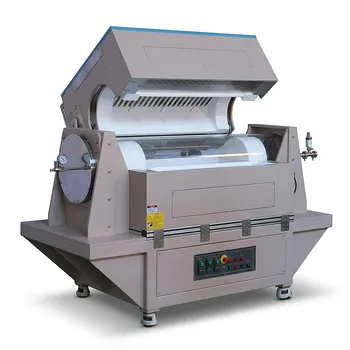
Three Zone Tube Furnace with 11 Inch or 15 Inch Quartz Tube and Hinged Flanges for Vacuum Atmosphere Heat Treatment

1200°C 5 Inch Vertical Quartz Tube Furnace with Stainless Steel Vacuum Flanges

High Temperature 1700C Six Zone Split Tube Furnace with Alumina Tube and Water Cooled Flanges
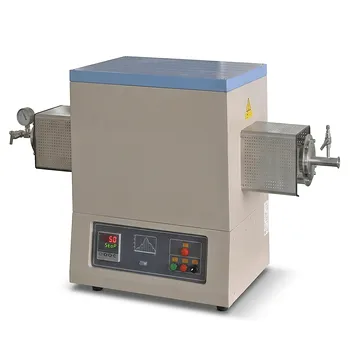
High Temperature 1700C Tube Furnace with 4 Inch OD Alumina Tube and Vacuum Sealing Flanges

High Temperature 1700C Benchtop Tube Furnace with 5 Inch Heating Zone High Purity Alumina Tube and Vacuum Sealing Flanges

Compact Vertical Split Quartz Tube Furnace with Stainless Steel Vacuum Flanges for Rapid Thermal Quenching and Controlled Atmosphere Material Processing

1800C High Temperature Compact Vacuum Tube Furnace with 60mm OD Alumina Tube and Kanthal MoSi2 Heating Elements
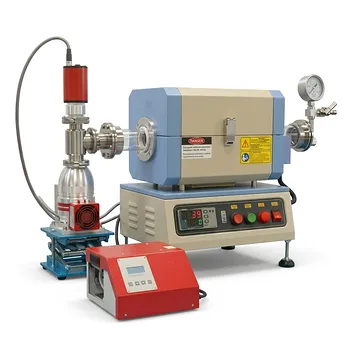
High Vacuum Compact Tube Furnace 1200C with Integrated Turbo Pump System and 8 Inch Heating Zone
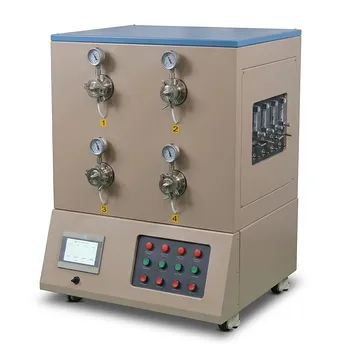
High Throughput 1200C Four Channel Tube Furnace with 3 Inch Quartz Tubes for Multi Zone Annealing and Material Research

High Temperature Automated 5 Inch Tube Furnace for Autonomous Material Research and Advanced Laboratory R&D
