Why is the control of the heating rate in an atmosphere tube furnace critical? Optimize Your Material Activation
Updated 3 months ago
Controlling the heating rate in an atmosphere tube furnace is the decisive factor in regulating the intensity of chemical activation reactions. At 800°C, a precise heating rate (such as 6°C/min) ensures an orderly etching process between the activating agent and the carbon skeleton, rather than a violent, uncontrolled reaction. This precision prevents the collapse of delicate pore walls and ensures the material achieves a high BET surface area and an optimized pore size distribution.
The heating rate acts as a kinetic governor that prevents structural failure and uncontrolled etching. By maintaining a steady temperature gradient, the furnace allows for the synchronized development of microporous and mesoporous structures across the entire sample.
Regulating Reaction Kinetics and Etching Intensity
Preventing Uncontrolled Chemical Etching
At high temperatures like 800°C, the chemical reaction between activating agents (such as KOH) and the carbon framework is highly sensitive to thermal input. A controlled heating rate ensures that the etching reaction proceeds in an orderly fashion, preventing the "over-etching" that occurs when rapid temperature spikes cause the reaction to become too intense.
Maximizing BET Surface Area
By guiding the temperature rise slowly, the furnace maximizes the activation effect, which is essential for creating materials with high specific surface areas. This stability allows the activating agent to precisely carve out the carbon matrix, resulting in a more sophisticated and functional porous structure.
Managing Thermal Cracking Pathways
In materials like biochar or macroalgae, the heating rate directly influences the thermal cracking pathways of organic molecules. A precise gradient ensures that these molecules break down in a way that contributes to pore formation rather than causing the internal structure to fuse or slag.
Maintaining Structural Integrity and Uniformity
Preventing Pore Wall Collapse
If the heating rate is excessive (e.g., significantly higher than 30°C/min), the rapid release of gases and intense thermal stress can lead to pore wall collapse. This structural failure destroys the very porosity the activation step is intended to create, leading to a lower quality material.
Ensuring Batch Consistency
Industrial-grade tube furnaces provide a stable thermal field and a uniform constant temperature zone. This ensures that the activation reaction occurs simultaneously throughout the entire sample batch, preventing local "hot spots" that would cause inconsistent pore size distributions.
Promoting Thermodynamic Equilibrium
A steady heating rate minimizes internal temperature gradients within the sample. This allows phase transitions and chemical reactions to occur near thermodynamic equilibrium, which is vital for the repeatable production of high-purity phases like iron phosphide (FeP) or specialized catalysts.
Understanding the Trade-offs
Throughput vs. Precision
While faster heating rates (e.g., 30°C/min) can significantly reduce processing time and increase laboratory throughput, they increase the risk of uncontrolled porosity. For high-performance applications, the time saved by rapid heating is often offset by the loss of material quality and surface area.
Energy Consumption and Wear
Maintaining a very slow, precise heating rate requires the furnace elements to be active for longer periods, increasing energy costs. However, this is generally preferred over the thermal shock that rapid heating can impose on the furnace's ceramic work tube and heating elements.
Atmosphere Sensitivity
At 800°C, the heating rate must be balanced with the flow of inert gases (like Nitrogen or Argon). If the heating is too fast, the protective atmosphere may not effectively sweep away evolved corrosive gases, potentially damaging the sample or the furnace interior.
How to Apply This to Your Project
Recommendations for High-Temperature Activation
- If your primary focus is maximizing BET surface area: Utilize a slower heating rate (approximately 5-6°C/min) to ensure the etching reaction is highly controlled and orderly.
- If your primary focus is preventing structural collapse in bio-based materials: Avoid rates exceeding 30°C/min to protect delicate pore walls from excessive thermal cracking stresses.
- If your primary focus is batch-to-batch repeatability: Prioritize a furnace with a large, stable constant temperature zone and programmed ramp rates to ensure uniform thermal distribution.
- If your primary focus is preventing sample oxidation: Ensure the inert atmosphere is fully established before the temperature exceeds 300°C, regardless of the heating rate used for the 800°C soak.
Precise thermal control transforms a blunt heating process into a surgical tool for molecular engineering.
Summary Table:
| Activation Objective | Recommended Heating Rate | Key Benefit / Outcome |
|---|---|---|
| Maximize BET Surface Area | 5–6°C/min | Orderly chemical etching; high porosity |
| Structural Integrity | <30°C/min | Prevents pore wall collapse and thermal stress |
| High Throughput | >30°C/min | Faster processing; risk of uncontrolled porosity |
| Uniformity | Steady Ramp Rate | Consistent pore distribution across batches |
Elevate Your Material Research with THERMUNITS Precision
Precise thermal control is the difference between a failed sample and a breakthrough. THERMUNITS is a leading manufacturer of high-temperature laboratory equipment dedicated to material science and industrial R&D. We empower your laboratory with high-precision thermal processing solutions, including:
- Atmosphere & Tube Furnaces for controlled activation
- Vacuum, Muffle, & Rotary Furnaces
- CVD/PECVD Systems and Vacuum Induction Melting (VIM)
- Dental Furnaces, Hot Press Furnaces, and Electric Rotary Kilns
Ensure your high-temperature activation steps are surgical and repeatable. Our advanced heating elements and programmable controllers provide the stability your research demands.
Ready to optimize your heat treatment workflow? Contact THERMUNITS today to find the ideal furnace solution for your application!
References
- Yuttapong Dumpan, Kittinan Maliwan. Synthesis and Characterization of Activated Carbon from Giant Sour Tamarind Fruit Shell by KOH Activation. DOI: 10.37934/armne.20.1.5158
Mentioned Products
- Vertical 1700C Vacuum and Atmosphere Tube Furnace with 80mm Alumina Tube
- 1750°C High Temperature Benchtop Vacuum Atmosphere Tube Furnace with Kanthal Super 1800 Heating Elements and 60mm Alumina Processing Tube
- 1200C Hybrid Muffle and Tube Furnace for Material Research with Dual Atmosphere Control Quartz Tubes
- Compact Hybrid Muffle and Tube Furnace for 1000C Controlled Atmosphere Laboratory Material Sintering
- Three Zone Tube Furnace with 11 Inch or 15 Inch Quartz Tube and Hinged Flanges for Vacuum Atmosphere Heat Treatment
People Also Ask
- How is an industrial-grade vertical tube furnace utilized in smelting leaching residues? Enhance Metal Recovery Efficiency
- What is the function of a laboratory-grade vertical tube furnace in fast pyrolysis? Optimize Composite Research.
- How does a vertical tube furnace facilitate thermoelectric alloy melting? Precision synthesis for material homogeneity.
- Why is a thermocouple sensor indispensable for monitoring the vertical tube furnace during gallium oxide nanowire production? Optimize VLS Growth
- What are the advantages of using a vertical tube furnace for crucible experiments simulating steel-slag interactions?

Tech Team · ThermUnits
Last updated on Jun 03, 2026
Related Products

Vertical 1700C Vacuum and Atmosphere Tube Furnace with 80mm Alumina Tube
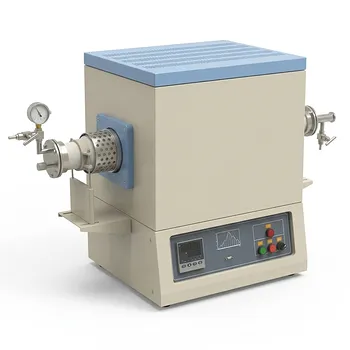
1750°C High Temperature Benchtop Vacuum Atmosphere Tube Furnace with Kanthal Super 1800 Heating Elements and 60mm Alumina Processing Tube
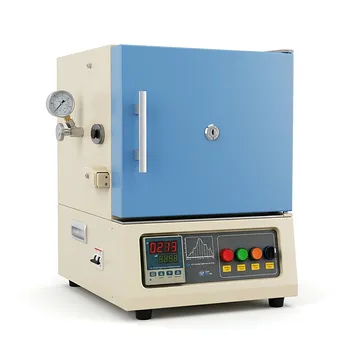
1200C Hybrid Muffle and Tube Furnace for Material Research with Dual Atmosphere Control Quartz Tubes
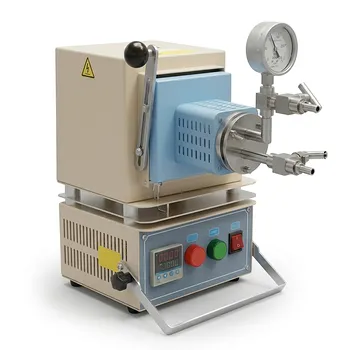
Compact Hybrid Muffle and Tube Furnace for 1000C Controlled Atmosphere Laboratory Material Sintering

Three Zone Tube Furnace with 11 Inch or 15 Inch Quartz Tube and Hinged Flanges for Vacuum Atmosphere Heat Treatment
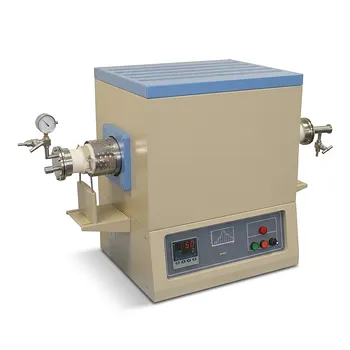
1700C High Temperature Alumina Tube Furnace with 18 Inch Heated Zone and Vacuum Sealing Flanges
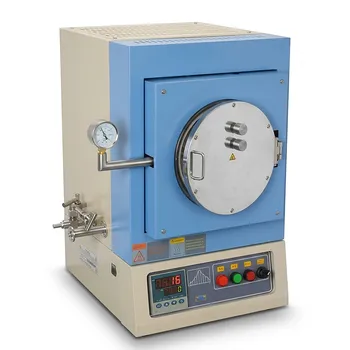
1100°C High Temperature Quartz Chamber Furnace 8 Inch OD with 7.6 Liter Capacity and Vacuum Atmosphere Capability
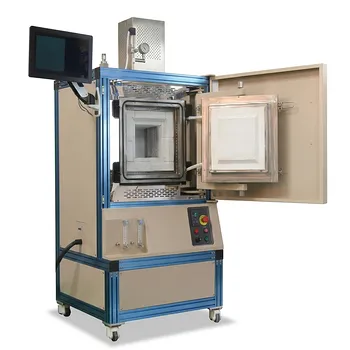
High Temperature Hydrogen Atmosphere Box Furnace 1650C Max Reducing Environment Material Synthesis System 8x8x8 Chamber

1200°C 5 Inch Vertical Quartz Tube Furnace with Stainless Steel Vacuum Flanges
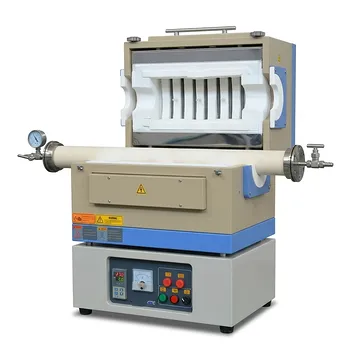
High Temperature 1600C Split Tube Furnace Vacuum Flanges Valves Optional 60mm 80mm Alumina Tube

High Temperature 1700C Tube Furnace with High Vacuum Turbomolecular Pump System and Multi Channel Mass Flow Controller Gas Mixer

1100C Tube Furnace with Vacuum Flange and Programmable Temperature Controller for Material Science and Industrial Heat Treatment

High Temperature 1700C Vertical Tube Furnace for Powder Spherification and Material Sintering

Compact High Temperature 1600C Tube Furnace with 50mm Alumina Tube and Vacuum Flanges for Material Sintering

High Temperature 1700C Six Zone Split Tube Furnace with Alumina Tube and Water Cooled Flanges

1800C High Temperature Compact Vacuum Tube Furnace with 60mm OD Alumina Tube and Kanthal MoSi2 Heating Elements

1700C Hydrogen Gas Tube Furnace with 60mm Alumina Process Tube and Integrated Hydrogen Safety Detector

High Temperature 1700C Benchtop Tube Furnace with 5 Inch Heating Zone High Purity Alumina Tube and Vacuum Sealing Flanges

High Temperature Automated 5 Inch Tube Furnace for Autonomous Material Research and Advanced Laboratory R&D