Why is the use of a tube furnace with argon gas flow necessary? Prevent Oxidation & Ensure Pure Copper Homogenization
Updated 3 months ago
Achieving precise homogenization in copper alloys requires a strictly controlled environment. The use of a tube furnace with argon gas flow is necessary during annealing to eliminate oxygen from the reaction chamber, thereby preventing surface oxidation and internal oxygen diffusion at high temperatures. By maintaining this inert atmosphere, the process ensures that the heat treatment focuses exclusively on resolving compositional segregation from the casting stage without interference from atmospheric impurities.
Core Takeaway: A tube furnace with argon flow acts as a protective shield that isolates copper alloys from reactive gases. This isolation is essential to maintain the material's chemical purity and structural integrity while allowing internal metallurgical changes, such as homogenization, to proceed undisturbed.
Preventing Chemical Degradation at High Temperatures
Eliminating Surface and Internal Oxidation
At elevated temperatures, such as 900°C, copper alloys become highly reactive to even trace amounts of oxygen. The argon flow in a tube furnace creates a protective inert atmosphere that physically displaces oxygen from the chamber. This prevents the formation of a thick oxide scale on the surface and stops oxygen from diffusing into the bulk of the metal, which could otherwise alter the alloy's chemistry.
Preserving Conductivity and Purity
For copper-based materials, maintaining high electrical and thermal conductivity is a primary objective. Oxidation during the sintering or annealing process introduces impurities and voids that degrade these physical properties. By using high-purity argon, the furnace ensures the copper matrix remains pure, preserving the performance characteristics required for technical applications.
Managing Highly Reactive Alloying Elements
Many copper alloys contain secondary elements like Titanium (Ti) or Niobium (Nb), which exhibit extreme chemical activity at high temperatures. These elements readily react with oxygen or nitrogen in the air to form unwanted oxides or nitrides. The inert environment provided by the tube furnace prevents these uncontrolled secondary reactions, ensuring the alloy reaches its intended phase equilibrium.
Ensuring the Integrity of Homogenization
Isolating Compositional Segregation
The primary goal of homogenization is to fix the "cored" structures and compositional segregation that occur during initial casting. A tube furnace provides a uniform thermal field that allows elements within the alloy to redistribute evenly over long periods, such as 6-hour cycles. Without the argon shield, chemical reactions with the atmosphere would compete with this internal diffusion, skewing the results of the treatment.
Maintaining Micro-Morphology
In specialized applications involving copper nanowires or coatings, the high aspect ratio and specific surface area must be preserved. A tube furnace allows for precise control over the heating rate and atmosphere, enabling the steady conversion of precursors without destroying delicate micro-structures. This level of control is impossible in open-air furnaces where oxidation would cause the structures to coarsen or collapse.
Facilitating Accurate Diffusion Analysis
When researchers study behaviors like sulfur diffusion, they require a "clean" environment where variables are strictly limited. The tube furnace ensures that the microstructural evolution is driven solely by thermodynamic processes rather than surface chemical reactions. This reliability is vital for gathering accurate data on how elements move within the copper lattice.
Understanding the Trade-offs
The Cost of High-Purity Inert Environments
While argon provides superior protection, it adds significant operational costs compared to vacuum or air-based treatments. High-purity argon (typically 99.99% or higher) is required because even minor contaminants can lead to detectable oxidation over long, 6-hour soaking periods.
Gas Flow and Thermal Uniformity Challenges
Maintaining a constant argon flow can sometimes introduce thermal gradients if the gas is not pre-heated or if the flow rate is too high. If the gas flow is insufficient, oxygen may "back-diffuse" into the tube, leading to localized "hot spot" oxidation. Finding the balance between gas consumption and atmospheric purity is a common challenge for technicians.
Potential for Element Volatilization
In some specific alloys, a flowing gas atmosphere at very high temperatures may encourage the volatilization of certain alloying elements with high vapor pressures. While argon prevents oxidation, it does not provide the overpressure that a closed, pressurized system might offer to keep volatile elements trapped within the metal.
How to Apply Knowledge of Atmosphere Control
Making the Right Choice for Your Goal
- If your primary focus is analyzing intrinsic diffusion behavior: Use a high-purity argon flow to ensure that surface reactions do not interfere with internal compositional changes.
- If your primary focus is preserving electrical conductivity: Prioritize the displacement of oxygen using a continuous argon purge to prevent the formation of resistive oxide phases.
- If your primary focus is maintaining delicate surface nanostructures: Utilize a tube furnace with precise heating rate controls (e.g., 5°C/min) alongside an inert gas to prevent morphological collapse.
- If your primary focus is preventing contamination in reactive alloys: Ensure the system is fully purged before heating to avoid reactions between the atmosphere and elements like Titanium or Niobium.
By strictly controlling the atmospheric environment within a tube furnace, you ensure that the physical and chemical properties of the copper alloy are dictated by your process parameters rather than environmental accidents.
Summary Table:
| Feature | Benefit for Copper Alloys | Primary Purpose |
|---|---|---|
| Argon Gas Flow | Displaces oxygen to prevent surface scaling | Maintains chemical purity and conductivity |
| Inert Atmosphere | Stabilizes reactive elements (e.g., Ti, Nb) | Prevents formation of unwanted oxides/nitrides |
| Tube Furnace Design | Provides a uniform thermal field | Ensures consistent redistribution of elements |
| Atmosphere Control | Preserves delicate micro-morphology | Critical for nanowires and high-aspect-ratio materials |
Elevate Your Material Research with THERMUNITS
Achieving precise homogenization requires the highest standards of thermal control and atmospheric purity. THERMUNITS is a leading manufacturer of high-temperature laboratory equipment dedicated to material science and industrial R&D. We offer a comprehensive suite of thermal processing solutions, including:
- Advanced Furnace Systems: Tube, Muffle, Vacuum, Atmosphere, Rotary, and Hot Press furnaces.
- Specialized Equipment: CVD/PECVD systems, Dental Furnaces, Electric Rotary Kilns, and Vacuum Induction Melting (VIM) furnaces.
- Precision Components: High-quality Thermal Elements and lab heat treatment tools.
Whether you are refining copper alloys or developing new composite materials, our expertise ensures your heat treatment process is flawless. Contact us today to find your custom thermal solution!
References
- Minkyu Ahn, Chansun Shin. Copper Alloy Design for Preventing Sulfur-Induced Embrittlement in Copper. DOI: 10.3390/ma17020350
Mentioned Products
- High Temperature Tube Furnace 1500C with Sliding Flanges and 50mm OD for Rapid Thermal Processing Fast Heating and Cooling
- Vertical 1700C Vacuum and Atmosphere Tube Furnace with 80mm Alumina Tube
- Compact High Temperature 1600C Tube Furnace with 50mm Alumina Tube and Vacuum Flanges for Material Sintering
- 900°C Max Rotary Tube Furnace with 8 Inch 310S Alloy Tube and Optional Multi Zone Heating for Industrial Material Calcination
- 1100C Tube Furnace with Vacuum Flange and Programmable Temperature Controller for Material Science and Industrial Heat Treatment
People Also Ask
- How are high-temperature tube furnaces utilized to repair etching damage? Precision Lattice Restoration Solutions
- What core conditions does a high-temperature tube furnace provide for rGO aerogels? Mastering Precision Synthesis.
- What role does a high-temperature tube furnace play in CVD synthesis of silicon nanowires? Master VLS Growth Precision.
- How does precision tube furnace control influence CoFe nanoparticle formation? Master Your Bimetallic Synthesis.
- What role does a high-temperature tube furnace play in the sulfidation heat treatment of CoS@C/MXene nanocomposites? Guide

Tech Team · ThermUnits
Last updated on Jun 02, 2026
Related Products
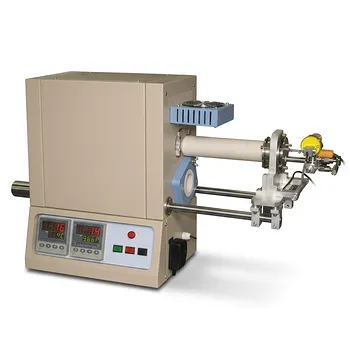
High Temperature Tube Furnace 1500C with Sliding Flanges and 50mm OD for Rapid Thermal Processing Fast Heating and Cooling

Vertical 1700C Vacuum and Atmosphere Tube Furnace with 80mm Alumina Tube

Compact High Temperature 1600C Tube Furnace with 50mm Alumina Tube and Vacuum Flanges for Material Sintering
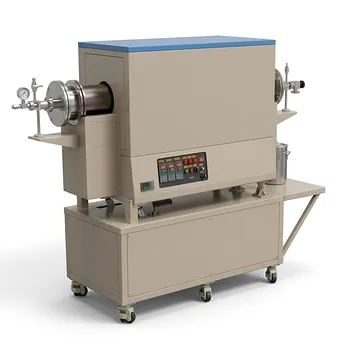
900°C Max Rotary Tube Furnace with 8 Inch 310S Alloy Tube and Optional Multi Zone Heating for Industrial Material Calcination

1100C Tube Furnace with Vacuum Flange and Programmable Temperature Controller for Material Science and Industrial Heat Treatment

High Temperature 1700C Tube Furnace with High Vacuum Turbomolecular Pump System and Multi Channel Mass Flow Controller Gas Mixer
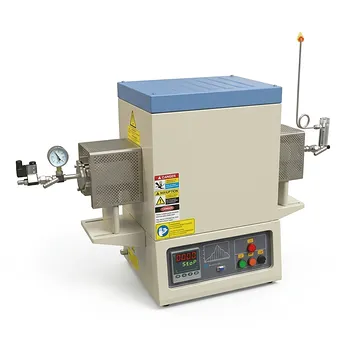
1700C Hydrogen Gas Tube Furnace with 60mm Alumina Process Tube and Integrated Hydrogen Safety Detector
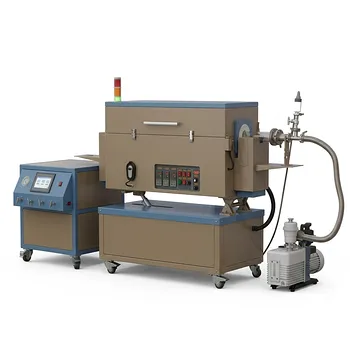
5 Inch Three Zone Rotary Tube Furnace with Integrated Gas Delivery System and 1200C Capability for Advanced Material CVD Processing
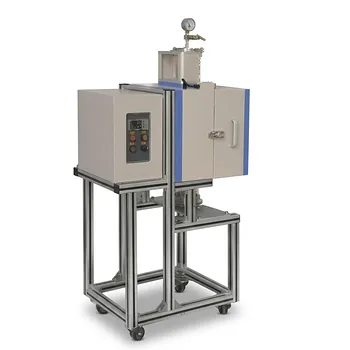
1200°C 5 Inch Vertical Quartz Tube Furnace with Stainless Steel Vacuum Flanges

High Temperature 1700C Six Zone Split Tube Furnace with Alumina Tube and Water Cooled Flanges

Compact Vertical Split Quartz Tube Furnace with Stainless Steel Vacuum Flanges for Rapid Thermal Quenching and Controlled Atmosphere Material Processing
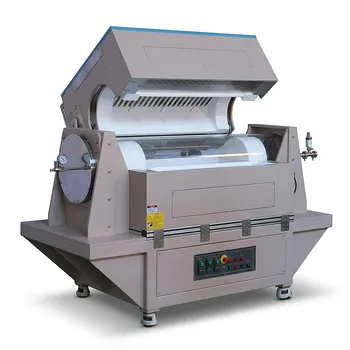
Three Zone Tube Furnace with 11 Inch or 15 Inch Quartz Tube and Hinged Flanges for Vacuum Atmosphere Heat Treatment
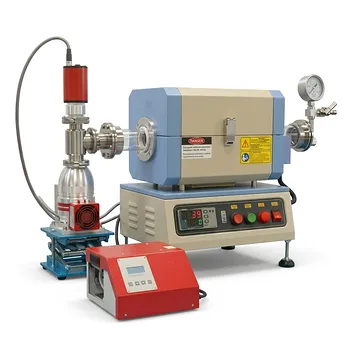
High Vacuum Compact Tube Furnace 1200C with Integrated Turbo Pump System and 8 Inch Heating Zone

High Temperature 1700C Benchtop Tube Furnace with 5 Inch Heating Zone High Purity Alumina Tube and Vacuum Sealing Flanges

1200C High Throughput Multi Channel Tube Furnace with 50mm Quartz Tubes for Annealing and Material Phase Diagram Research

1800C High Temperature Compact Vacuum Tube Furnace with 60mm OD Alumina Tube and Kanthal MoSi2 Heating Elements
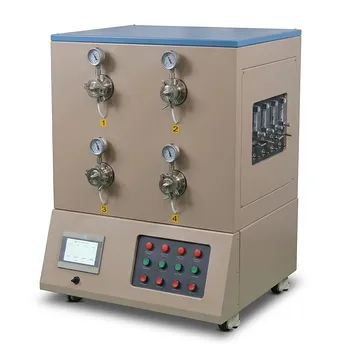
High Throughput 1200C Four Channel Tube Furnace with 3 Inch Quartz Tubes for Multi Zone Annealing and Material Research

High Temperature 1700C Vertical Tube Furnace for Powder Spherification and Material Sintering
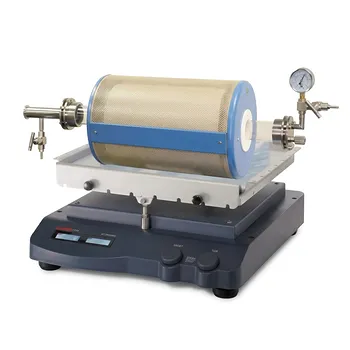
High Temperature Rocking Tube Furnace with Quartz Tube and Vacuum Flange for Materials Synthesis
