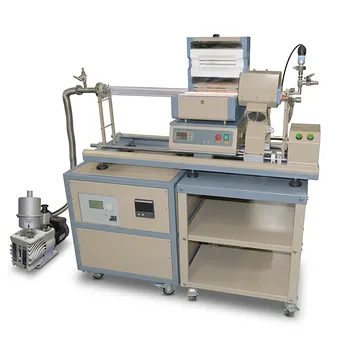
Why is the use of high-purity quartz boats essential in the CVD growth of WSe2? Key to Pure 2D Material Synthesis.
Updated 6 months ago
High-purity quartz boats are the essential vessels for WSe2 synthesis because they provide a chemically inert environment that survives temperatures up to 900°C without introducing contaminants. By preventing the release of impurity ions into the reaction zone, these boats ensure the resulting Tungsten Diselenide nanosheets achieve the structural perfection and electrical performance required for high-end semiconductor applications.
The necessity of high-purity quartz stems from its unique ability to remain non-reactive in the presence of aggressive precursors like selenium vapor at extreme temperatures. This material integrity is the primary safeguard for the intrinsic electronic and optical properties of 2D Transition Metal Dichalcogenides (TMDs).
The Role of Chemical Inertness in Synthesis
Eliminating Precursor Interference
Under the intense reaction conditions required for CVD growth, standard materials might react with selenium powder or carrier gases. High-purity quartz exhibits total chemical inertia, ensuring that the precursors transform into WSe2 without secondary chemical reactions that could derail the growth process.
Preventing Ion Diffusion and Contamination
At 900°C, even trace amounts of metal impurities in a container can diffuse into the growing crystal lattice. The high-purity nature of these quartz boats prevents the introduction of external ions, allowing the WSe2 nanosheets to maintain a "clean" crystal structure that is free from undesirable doping effects.
Critical Material Stability and Thermal Resilience
Surviving the 900°C Reaction Environment
Tungsten Diselenide growth requires sustained, extreme heat that would cause lesser materials to warp or degrade. High-purity quartz possesses exceptional high-temperature resistance, maintaining its physical shape and structural integrity throughout the entire Chemical Vapor Deposition cycle.
Resisting Thermal Shock and Volatilization
The synthesis process often involves rapid temperature changes that can crack standard ceramics. Quartz boats offer superior thermal shock stability, which prevents the material from fracturing or volatilizing impurities into the atmosphere during the heating and cooling phases.
Precision Control of the Growth Environment
Facilitating Uniform Gas-Solid Reactions
The open architecture of the quartz boat is designed to maximize contact between the reactant vapors and the substrate. This facilitates uniform gas transport, which is critical for achieving consistent thickness and quality across large-area WSe2 films under both atmospheric and low-pressure conditions.
Optimizing Vapor Transport Efficiency
Quartz boats act as a clean carrier that allows researchers to flexibly adjust precursor positioning relative to the gas flow. This spatial control is vital for fine-tuning the concentration of selenium vapor, which directly impacts the nucleation and growth rate of the nanosheets.
Understanding Technical Trade-offs and Limitations
Devitrification and Lifecycle Constraints
While quartz is highly resistant to heat, repeated exposure to high temperatures can eventually lead to devitrification, where the glass begins to crystallize and become brittle. Users must monitor boats for a "cloudy" appearance, which indicates a loss of structural integrity and an increased risk of failure.
Cost vs. Purity Requirements
Not all quartz is equal; lower-grade quartz may contain trace metals that leach out during the 900°C reaction. Choosing high-purity over industrial-grade quartz involves a higher initial investment, but it is a necessary cost to avoid the "noise" and defects that ruin semiconductor performance.
Applying This to Your Synthesis Goals
Strategic Recommendations for Implementation
Ensuring the quality of your WSe2 growth requires matching your container choice to your specific performance targets.
- If your primary focus is electrical mobility and low noise: You must prioritize high-purity quartz to eliminate metal ion contamination that creates deep-level defects in the semiconductor.
- If your primary focus is large-scale uniformity: Utilize the open-boat structure to ensure laminar gas flow and consistent exposure of the substrate to selenium vapor.
- If your primary focus is cost-effective prototyping: You may use standard quartz for lower-temperature preliminary runs (below 700°C), but you must switch to high-purity vessels for final device fabrication to ensure reproducible results.
By maintaining a contaminant-free environment at extreme temperatures, high-purity quartz boats act as the fundamental foundation for high-performance 2D material synthesis.
Summary Table:
| Key Property | Benefit for CVD Process | Impact on WSe2 Quality |
|---|---|---|
| Chemical Inertness | No reaction with selenium precursors | Prevents secondary chemical phases |
| Thermal Stability | Resists warping up to 900°C | Ensures structural integrity of the vessel |
| Low Ion Diffusion | Blocks metal impurity migration | Maintains high electrical mobility and low noise |
| Thermal Shock Resistance | Prevents cracking during rapid cycles | Increases boat longevity and reliability |
| Open Architecture | Optimizes laminar gas flow | Facilitates uniform thickness across large areas |
Elevate Your 2D Material Synthesis with THERMUNITS
Precision matters in semiconductor R&D. As a leading manufacturer of high-temperature laboratory equipment, THERMUNITS provides advanced CVD/PECVD systems, Tube furnaces, and high-purity thermal elements designed specifically for material science research. Our solutions empower industrial R&D teams to achieve the structural perfection required for high-end Tungsten Diselenide (WSe2) and other 2D Transition Metal Dichalcogenides (TMDs).
Ready to optimize your thermal processing workflow? Contact our experts today to discuss your specific furnace requirements!
References
- Siyuan Wang, Hai Li. Controllable Growth of Monolayer and Bilayer WSe2 by Liquid-Phase Precursor via Chemical Vapor Deposition for Photodetection. DOI: 10.3390/nano14242021
Mentioned Products
- 1100°C Large Diameter Quartz Tube Furnace with 24 Inch Heating Zone and Water Cooled Flanges
- 1200C Three Zone Vertical Tube Furnace with 2 Inch Quartz Tube and Vacuum Flanges
- Three Zone Quartz Tube Furnace with 3 Channel Gas Mixer Vacuum Pump and Anti Corrosive Vacuum Gauge
- 1100°C Dual Zone Split Vertical Tube Furnace with 4 Inch Quartz Tube and Vacuum Sealing Flanges
- Dual Zone Quartz Tube Furnace with 80mm Diameter 1200C Max Temperature 3 Channel Gas Mixer and Vacuum Pump System
People Also Ask
- Why is a quartz tube furnace necessary for phosphorus-doped MoS2/GO preparation? Ensure Purity & Precise Synthesis
- What are the advantages of 1100°C tube furnaces for ORR catalysts? Boost Conductivity and Structural Stability.
- What conditions does a quartz tube furnace provide for AlxCoCrFeNi steam corrosion tests? Achieve Precise R&D Control.
- What is the primary function of a Quartz Tube Furnace in ZnO VLS growth? Master High-Precision Nanowire Synthesis
- Why is a high-purity quartz tube used for SP-Fe3O4-C? Ensure Chemical Purity & Catalytic Stability

Tech Team · ThermUnits
Last updated on Apr 14, 2026
Related Products
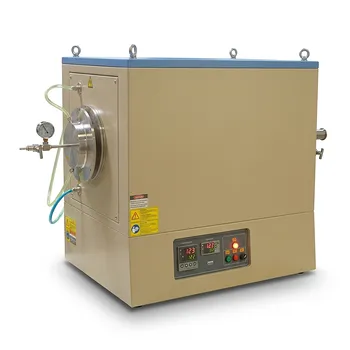
1100°C Large Diameter Quartz Tube Furnace with 24 Inch Heating Zone and Water Cooled Flanges
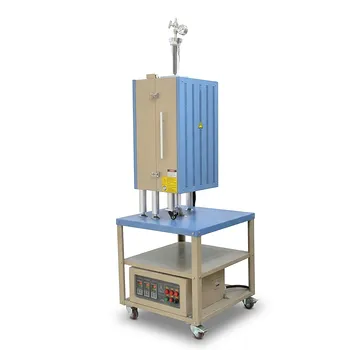
1200C Three Zone Vertical Tube Furnace with 2 Inch Quartz Tube and Vacuum Flanges
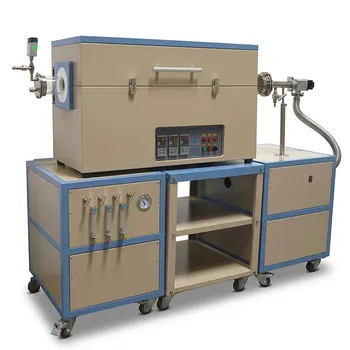
Three Zone Quartz Tube Furnace with 3 Channel Gas Mixer Vacuum Pump and Anti Corrosive Vacuum Gauge
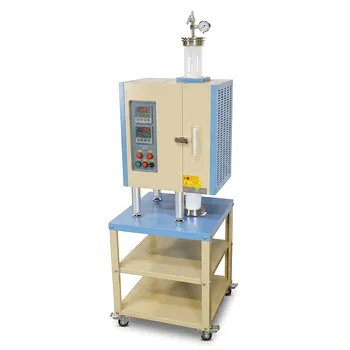
1100°C Dual Zone Split Vertical Tube Furnace with 4 Inch Quartz Tube and Vacuum Sealing Flanges
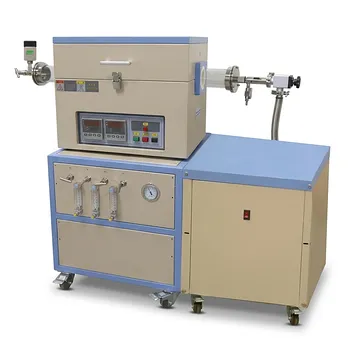
Dual Zone Quartz Tube Furnace with 80mm Diameter 1200C Max Temperature 3 Channel Gas Mixer and Vacuum Pump System
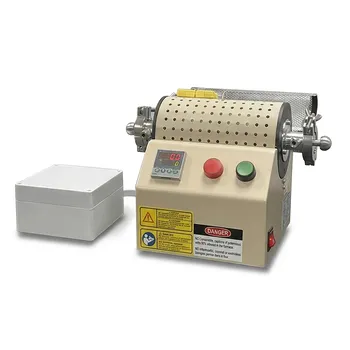
1000C Mini Tube Furnace with 20mm Quartz Tube and Vacuum Flanges for Material Science Research and Controlled Atmosphere Small Sample Processing
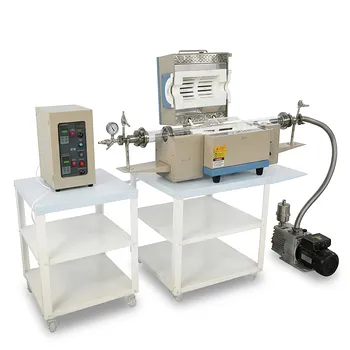
Two Zone Rotary Tube Furnace for Powder CVD Coating and Core Shell Material Synthesis 1100C
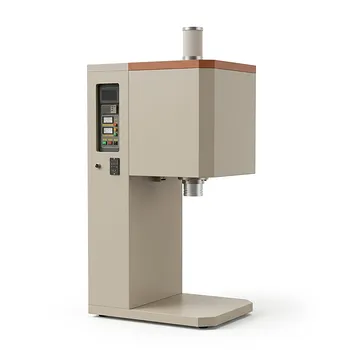
Vertical Openable Tube Furnace 0-1700c High Temperature Laboratory System for CVD and Vacuum Heat Treatment
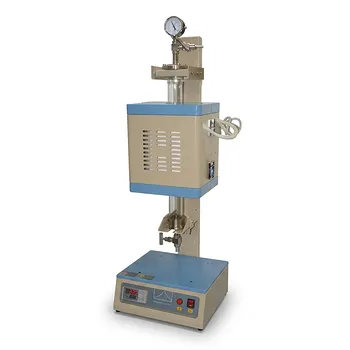
Compact Vertical Split Quartz Tube Furnace with Stainless Steel Vacuum Flanges for Rapid Thermal Quenching and Controlled Atmosphere Material Processing
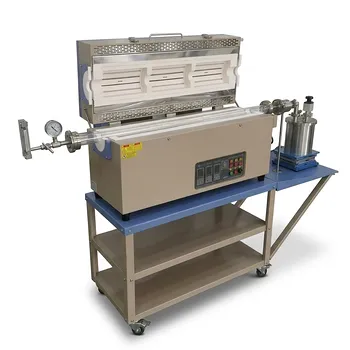
5 Inch Two Zone Rotary Tube Furnace 1100C for Powder CVD and Material Synthesis
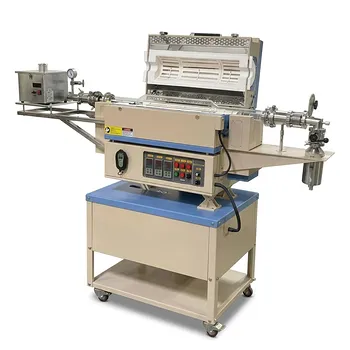
5 Inch Rotary Tube Furnace with Automatic Feeding and Receiving System 1200C Three Zone CVD Powder Processing
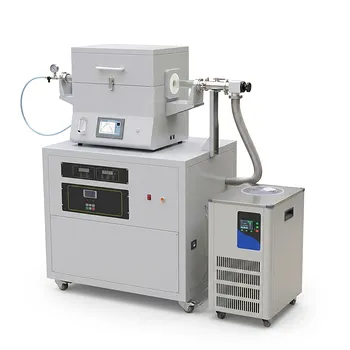
Split Chamber CVD Tube Furnace with Vacuum Station Chemical Vapor Deposition System Machine
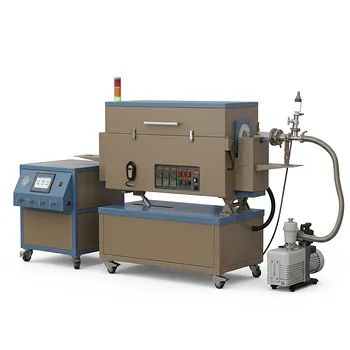
5 Inch Three Zone Rotary Tube Furnace with Integrated Gas Delivery System and 1200C Capability for Advanced Material CVD Processing
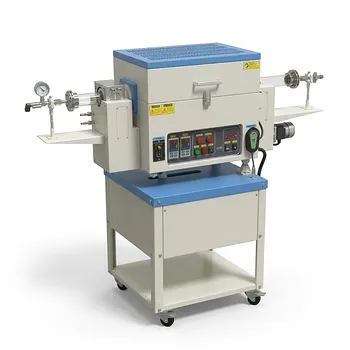
4 Inch Two Zone Rotary CVD Tube Furnace for High Temperature Battery Material Synthesis and Advanced Material Calcination
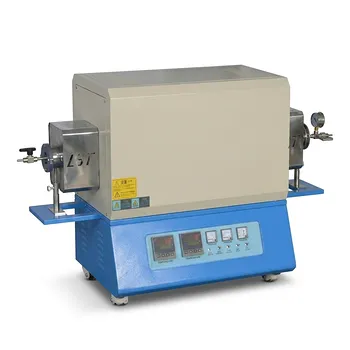
High Temperature Dual Zone Vacuum Tube Furnace for Material Research and CVD Processing
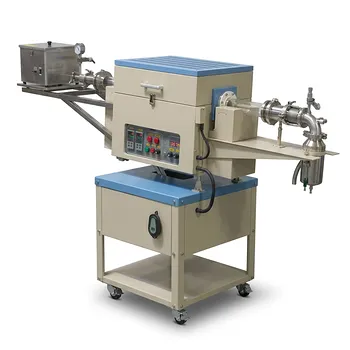
Two Zone Rotary CVD Furnace with Automatic Feeding and Receiving System for Powder Processing
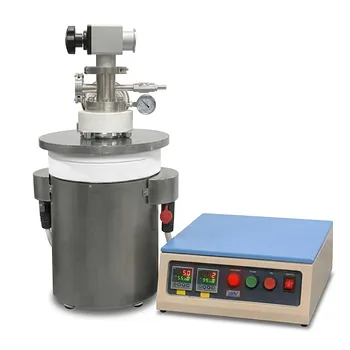
1100C High Temperature Vacuum Crucible Furnace with Quartz Chamber for Thermal Processing and Sintering