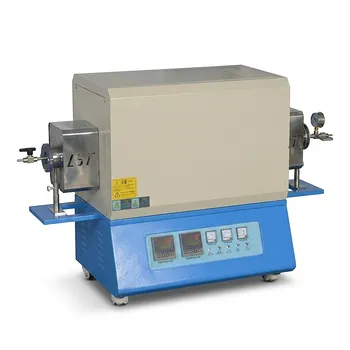
Why is vacuum hot pressing superior to pressureless sintering? Achieve 99% Density for Advanced Technical Ceramics
Updated 5 months ago
Vacuum hot pressing is superior because it enables full densification at significantly lower temperatures while simultaneously preventing the microstructural degradation common in pressureless methods. By applying uniaxial mechanical pressure within a vacuum, you can achieve over 99% theoretical density for ceramics like silicon carbide (SiC) and boron carbide ($B_4C$) at temperatures 200°C to 400°C lower than standard sintering. This combination of forces produces a material with finer grains, higher hardness, and superior mechanical strength.
Core Takeaway: Vacuum hot pressing replaces the reliance on high thermal energy alone with a synergistic "thermo-mechanical coupling." This allows for rapid densification and pore elimination at lower temperatures, preserving the fine microstructures essential for high-performance technical ceramics.
The Power of Thermo-Mechanical Coupling
Lowering Sintering Activation Energy
Traditional pressureless sintering relies entirely on extreme heat to drive atomic diffusion, which often requires temperatures near the material's melting point. Vacuum hot pressing introduces external mechanical work, which significantly lowers the sintering activation energy. This allows the powder particles to bond and densify without needing the excessive thermal energy that causes material degradation.
Accelerating Mass Transfer and Creep
The application of uniaxial pressure at high temperatures enhances diffusion, plastic flow, and grain boundary creep. This mechanical force physically pushes particles together, closing internal gaps much faster than surface tension alone. Consequently, the material reaches a compact structure in a significantly shorter timeframe.
Microstructural Control and Preservation
Inhibiting Abnormal Grain Growth
High temperatures in pressureless sintering often lead to "abnormal grain growth," where certain crystals grow excessively large at the expense of others. Because hot pressing operates at temperatures 200°C to 400°C lower, it effectively inhibits this growth. The result is a fine-grained microstructure that directly contributes to higher fracture toughness and wear resistance.
Achieving Near-Theoretical Density
Technical ceramics often struggle with residual porosity, which acts as a failure point under stress. Hot pressing achieves near-theoretical density (exceeding 99%) by using mechanical force to collapse closed pores. This level of density is rarely achievable with pressureless methods for "difficult-to-sinter" materials like SiC and $B_4C$.
The Strategic Advantage of a Vacuum Environment
Eliminating Trapped Gases and Micropores
In an atmospheric furnace, air can become trapped within micropores as they close, creating internal pressure that resists full densification. A vacuum environment removes these residual gases before the pores seal. This ensures that the final ceramic sheet or component is free of internal voids that would otherwise weaken its grain boundary strength.
Preventing Oxidation and Volatilization
Technical ceramics are highly sensitive to oxygen at elevated temperatures, which can form weak oxide layers on particle surfaces. The vacuum provides a controlled, low-pressure environment that prevents oxidation and suppresses the volatilization of critical components. This preservation of chemical purity is essential for maintaining high thermal shock resistance and ionic conductivity.
Understanding the Trade-offs
Limitations in Geometric Complexity
The primary drawback of hot pressing is its reliance on uniaxial pressure, which typically requires the use of high-strength graphite molds. This restricts the process to relatively simple shapes like plates, discs, or cylinders. Pressureless sintering remains superior for mass-producing complex, "near-net-shape" geometries that cannot be easily pressed.
Capital Cost and Throughput
Hot pressing is generally a batch process with higher equipment and tooling costs compared to continuous pressureless kilns. The need for specialized molds and the time required for vacuum cycles can result in a higher cost per part. It is a premium process reserved for applications where peak mechanical performance is a non-negotiable requirement.
How to Apply This to Your Project
Making the Right Choice for Your Goal
- If your primary focus is maximum hardness and strength: Use vacuum hot pressing to ensure near-theoretical density and a fine-grained structure.
- If your primary focus is complex part geometry: Opt for pressureless sintering, as it allows for intricate shapes that uniaxial pressing cannot accommodate.
- If your primary focus is cost-effective mass production: Pressureless sintering is likely the more viable route due to higher throughput and lower tooling overhead.
- If your primary focus is material purity and oxidation control: Choose vacuum hot pressing to eliminate atmospheric contamination during the densification phase.
By leveraging the synergy of pressure and vacuum, you can produce technical ceramics that push the absolute limits of material science.
Summary Table:
| Feature | Vacuum Hot Pressing | Pressureless Sintering |
|---|---|---|
| Sintering Temperature | 200°C - 400°C Lower | Extremely High (Near Melting Point) |
| Theoretical Density | > 99% (Near-theoretical) | Lower (Residual Porosity) |
| Grain Structure | Fine-grained (High Strength) | Risk of Abnormal Grain Growth |
| Atmospheric Control | Vacuum (Prevents Oxidation) | Air/Inert Gas (Risk of Trapped Pores) |
| Geometric Flexibility | Simple Shapes (Plates, Discs) | Complex, Near-Net Shapes |
| Primary Application | Peak Mechanical Performance | Mass Production / Complex Parts |
Elevate Your Ceramic Research with THERMUNITS Precision Engineering
Unlock the full potential of your materials with THERMUNITS, a leading manufacturer of high-temperature laboratory equipment for material science and industrial R&D. Whether you are aiming for near-theoretical density in Silicon Carbide or superior hardness in Boron Carbide, our advanced thermal solutions are designed to deliver.
Our comprehensive product range includes:
- Advanced Furnaces: Hot Press, Vacuum, Atmosphere, Muffle, Tube, and Rotary Furnaces.
- Specialized Systems: CVD/PECVD systems, Vacuum Induction Melting (VIM) furnaces, and Dental Furnaces.
- Precision Components: High-quality Thermal Elements and electric rotary kilns.
Ready to optimize your heat treatment process? Our experts are here to help you select the right thermo-mechanical coupling solutions for your specific R&D needs.
Contact THERMUNITS Today to Request a Quote
Mentioned Products
- High Temperature Vacuum Lamination Hot Press Furnace Machine for Semiconductor Wafer Bonding and Advanced Composite Thermal Processing
- Industrial Vacuum Hot Press Furnace Machine and High Temperature Heated Vacuum Press for Advanced Material Sintering
- Industrial High Temperature Vacuum Hot Press Furnace and Heated Vacuum Press Machine for Material Science Sintering
- High Pressure 600T Vacuum Induction Hot Press Furnace for Advanced Material Heat Treatment and Sintering
- 2500C High Vacuum Ultrafast Heating Pellet Press with Automated 8 Sample Loading System
People Also Ask
- What types of heating systems and insulation are used in Vacuum Hot Press Furnaces? Optimize Your Thermal Processing
- What is a Vacuum Hot Press Furnace and what are its primary industrial applications? Achieve Maximum Material Density
- What are the structural features of the furnace body and chamber in a Vacuum Hot Press Furnace? Master Material Density
- Why is graphite the preferred material for dies and heating elements in Vacuum Hot Press Furnaces? High-Temp Solutions
- What are the primary operational components and mechanisms of a vacuum hot press furnace? A Technical Breakdown

Tech Team · ThermUnits
Last updated on Apr 14, 2026
Related Products
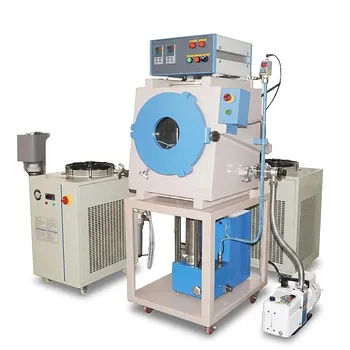
High Temperature Vacuum Lamination Hot Press Furnace Machine for Semiconductor Wafer Bonding and Advanced Composite Thermal Processing
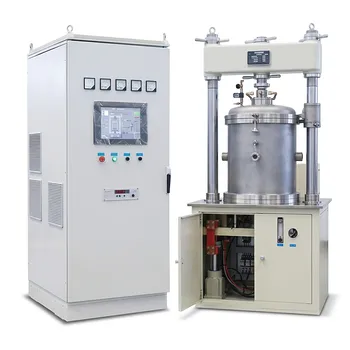
Industrial Vacuum Hot Press Furnace Machine and High Temperature Heated Vacuum Press for Advanced Material Sintering
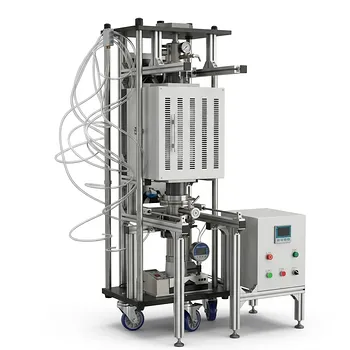
Industrial High Temperature Vacuum Hot Press Furnace and Heated Vacuum Press Machine for Material Science Sintering
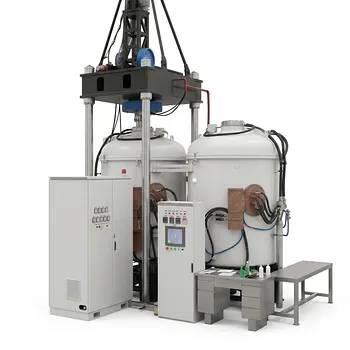
High Pressure 600T Vacuum Induction Hot Press Furnace for Advanced Material Heat Treatment and Sintering
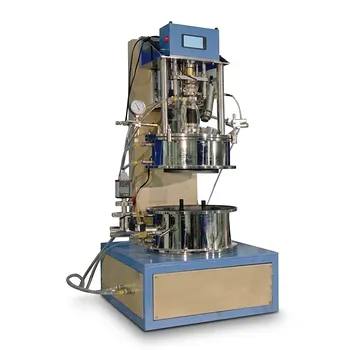
2500C High Vacuum Ultrafast Heating Pellet Press with Automated 8 Sample Loading System
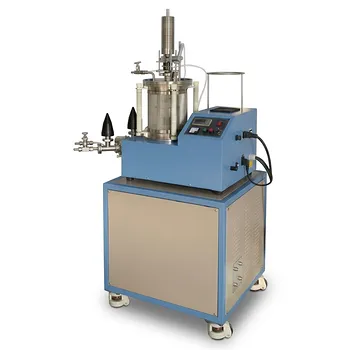
Ultrafast Thermal Pressing Furnace 2900C Max Temperature 200K per Second Heating Rate Vacuum Atmosphere Rapid Processing System
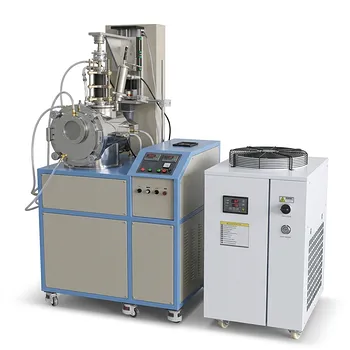
High Temperature Ultrafast Heating Pressing Furnace 2900C Max 100kgf Rapid Thermal Processing System
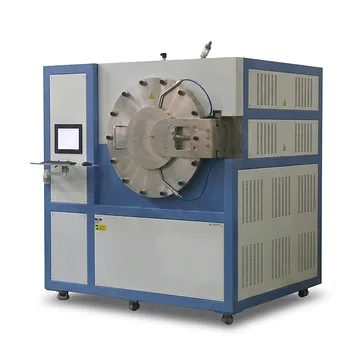
High Vacuum Pressure Chamber Furnace 800C 3.5 Bar Sintering System for Superconducting Materials
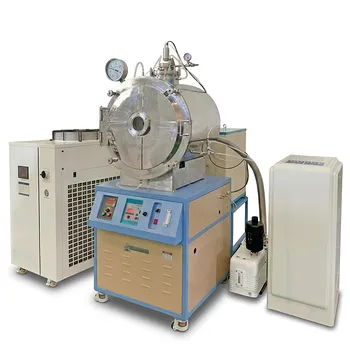
Ultra High Temperature Induction Heated Vacuum Furnace with Molten Salt Electrolysis Capability and 3000 Degree Precision Control
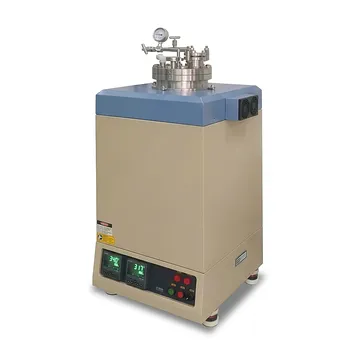
High Temperature 1000C Vacuum Furnace with 8 Inch ID Chamber for Material Sintering and Research Annealing
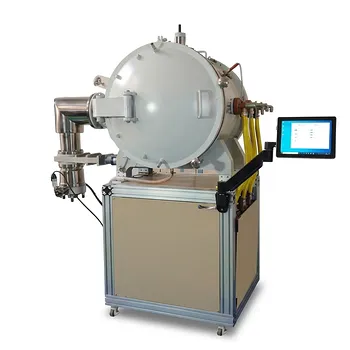
High Temperature Cold Wall Vacuum Furnace for Advanced Material Sintering and Annealing 1600C Heating Area 200x200x300mm

1800C High Temperature Compact Vacuum Tube Furnace with 60mm OD Alumina Tube and Kanthal MoSi2 Heating Elements
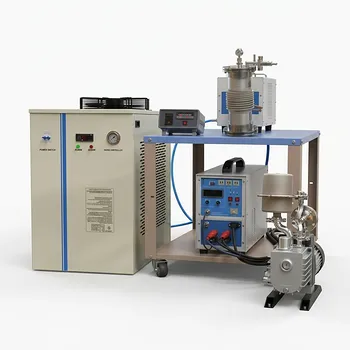
Induction Heating System with Temperature Control for High Temperature Vacuum Sintering and Melting
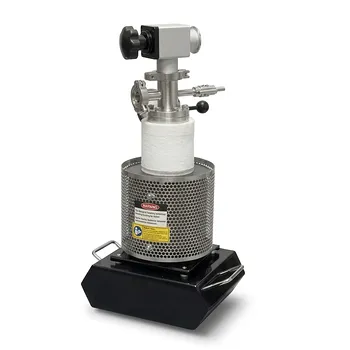
High Temperature 1100C Compact Top Loading Vertical Vacuum Tube Furnace for High Vacuum Noble Metal Melting and Material Research
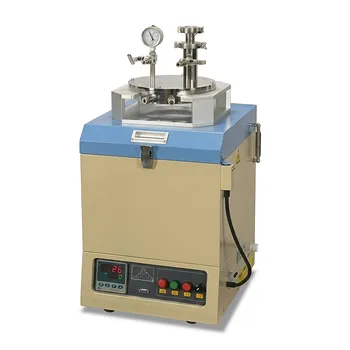
Vertical Vacuum Furnace 1100C High Temperature 8 Inch Quartz Chamber Water Cold Flange System
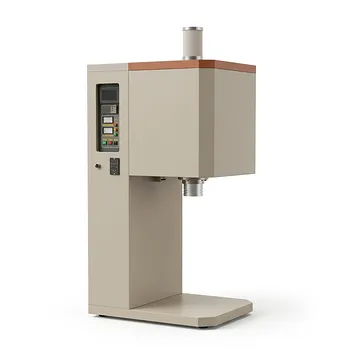
Vertical Openable Tube Furnace 0-1700c High Temperature Laboratory System for CVD and Vacuum Heat Treatment
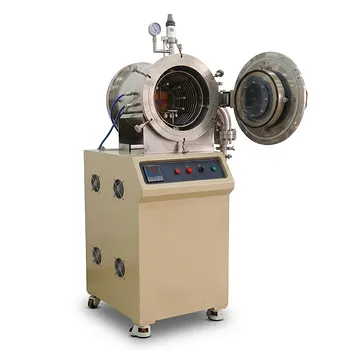
High Temperature Cold Wall High Vacuum Chamber Furnace 1400C for Advanced Material Processing
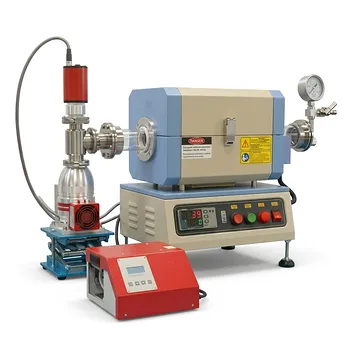
High Vacuum Compact Tube Furnace 1200C with Integrated Turbo Pump System and 8 Inch Heating Zone
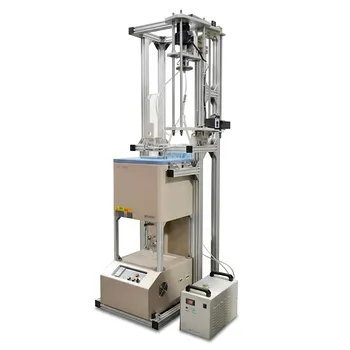
500C Vacuum Vertical Tube Furnace 84mm OD Sample Rotation Lifting System