How does vacuum hot pressing enhance the performance of sintered friction materials for braking systems? Ultimate Guide
Updated 5 months ago
Vacuum hot pressing (VHP) optimizes braking materials by combining high-temperature sintering with mechanical pressure within a vacuum environment. This synergy eliminates internal porosity and surface impurities, resulting in a nearly fully dense composite material. These advanced materials achieve superior thermal stability, consistent friction performance, and significantly lower wear rates compared to components produced through conventional sintering methods.
Vacuum hot pressing transforms friction powders into high-performance solids by simultaneously removing gas impurities and forcing atomic-level bonding through mechanical pressure. This process is the key to creating brake components that maintain structural integrity and heat dissipation under the extreme thermal and mechanical loads of high-speed transit.
The Mechanism of Advanced Densification
Removing Surface Impurities
The vacuum environment is critical for removing residual gases and volatile impurities adsorbed on the powder surfaces. By extracting these contaminants before the material solidifies, the process prevents internal gas pockets that would otherwise weaken the composite. This high-purity environment ensures that the resulting material has a clean, uniform microstructure.
Promoting Atomic Diffusion
By applying simultaneous axial pressure at high temperatures, the process forces particles into closer contact than heat alone could achieve. This mechanical force promotes rapid atomic diffusion and pore closure, bridging the gaps between material grains. The result is a nearly fully dense material that maximizes the contact area between the friction-generating particles and the structural matrix.
Creating Structural Integrity
The elimination of internal voids directly enhances the mechanical integrity of the friction material. High-density composites are far better at resisting the cyclic loading and physical stresses encountered during heavy braking. This structural robustness prevents the material from cracking or delaminating under the intense pressure of a braking caliper.
Impact on Braking Performance
Enhanced Heat Dissipation
Porosity acts as an insulator, trapping heat within the brake pad and leading to thermal failure. Because vacuum hot pressing creates a dense, pore-free structure, it significantly improves the material's thermal conductivity. This allows heat to flow away from the friction surface more efficiently, maintaining thermal stability during high-energy stops.
Consistent Friction Coefficients
Brake fade often occurs when material properties fluctuate under heat; however, VHP creates stable, high-density composites. These materials maintain a consistent friction coefficient across a wide range of temperatures and pressures. This predictability is essential for the safety systems of high-speed trains and heavy-duty trucks.
Reduced Wear Rates
The superior bonding achieved through VHP results in a material that is highly resistant to abrasive and adhesive wear. Because the particles are "locked" together at the atomic level, the rate of material loss during friction is significantly reduced. This extends the service life of the braking components and reduces maintenance intervals.
Understanding the Trade-offs
Equipment Complexity and Cost
The primary drawback of vacuum hot pressing is the high initial capital investment required for specialized vacuum furnaces and hydraulic press systems. The operational costs are also higher than traditional sintering due to the energy required to maintain both high vacuum and constant pressure. This typically limits the process to high-performance or safety-critical applications.
Throughput and Cycle Times
Vacuum hot pressing is generally a batch process that takes longer than continuous sintering methods. The time required to achieve a high vacuum and the controlled cooling phases can limit production volume. For mass-market automotive parts where cost-per-unit is the primary driver, this method may be less economically viable.
How to Apply VHP to Your Project
Making the Right Choice for Your Goal
To determine if vacuum hot pressing is the correct manufacturing path, consider the specific performance requirements of your braking system.
- If your primary focus is extreme thermal stability: VHP is the superior choice because it eliminates the insulating pores that cause heat buildup.
- If your primary focus is maximum component lifespan: VHP provides the high-density structure necessary to minimize wear rates under heavy cyclic loading.
- If your primary focus is cost-sensitive mass production: You may need to weigh the performance gains of VHP against the lower overhead of traditional atmospheric sintering.
Vacuum hot pressing represents the gold standard for producing friction materials where safety, density, and thermal durability cannot be compromised.
Summary Table:
| Feature | Vacuum Hot Pressing (VHP) | Conventional Sintering |
|---|---|---|
| Material Density | Nearly 100% (Full Densification) | Moderate (Residual Porosity) |
| Impurity Level | Minimal (Vacuum extraction) | Higher (Residual gases/oxides) |
| Thermal Conductivity | High (Efficient heat dissipation) | Lower (Pores act as insulators) |
| Friction Stability | Consistent at high temperatures | Prone to brake fade |
| Wear Resistance | Superior (Atomic-level bonding) | Moderate |
| Best Application | High-speed transit & heavy-duty | Mass-market automotive |
Elevate Your Material Research with THERMUNITS Precision Technology
Are you looking to achieve superior density and thermal durability in your braking materials? THERMUNITS is a leading manufacturer of high-temperature laboratory equipment specifically designed for material science and industrial R&D.
We provide a comprehensive range of thermal processing solutions, including specialized Hot Press furnaces, Vacuum Induction Melting (VIM), CVD/PECVD systems, and Vacuum/Atmosphere furnaces. Our advanced equipment empowers researchers to eliminate porosity and master atomic-level bonding for next-generation composites.
Ready to optimize your heat treatment process? Contact our experts today to find the perfect furnace solution for your specific performance requirements.
Mentioned Products
- High Temperature Vacuum Lamination Hot Press Furnace Machine for Semiconductor Wafer Bonding and Advanced Composite Thermal Processing
- Industrial Vacuum Hot Press Furnace Machine and High Temperature Heated Vacuum Press for Advanced Material Sintering
- Industrial High Temperature Vacuum Hot Press Furnace and Heated Vacuum Press Machine for Material Science Sintering
- High Pressure 600T Vacuum Induction Hot Press Furnace for Advanced Material Heat Treatment and Sintering
- 2500C High Vacuum Ultrafast Heating Pellet Press with Automated 8 Sample Loading System
People Also Ask
- What types of heating systems and insulation are used in Vacuum Hot Press Furnaces? Optimize Your Thermal Processing
- What is a Vacuum Hot Press Furnace and what are its primary industrial applications? Achieve Maximum Material Density
- What are the structural features of the furnace body and chamber in a Vacuum Hot Press Furnace? Master Material Density
- Why is graphite the preferred material for dies and heating elements in Vacuum Hot Press Furnaces? High-Temp Solutions
- What are the primary operational components and mechanisms of a vacuum hot press furnace? A Technical Breakdown

Tech Team · ThermUnits
Last updated on Apr 14, 2026
Related Products
High Temperature Vacuum Lamination Hot Press Furnace Machine for Semiconductor Wafer Bonding and Advanced Composite Thermal Processing
Industrial Vacuum Hot Press Furnace Machine and High Temperature Heated Vacuum Press for Advanced Material Sintering
Industrial High Temperature Vacuum Hot Press Furnace and Heated Vacuum Press Machine for Material Science Sintering
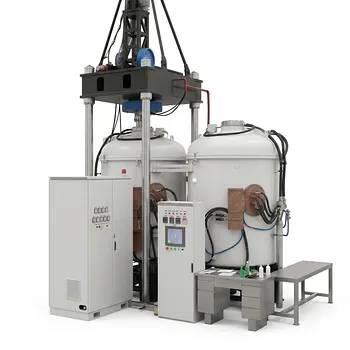
High Pressure 600T Vacuum Induction Hot Press Furnace for Advanced Material Heat Treatment and Sintering
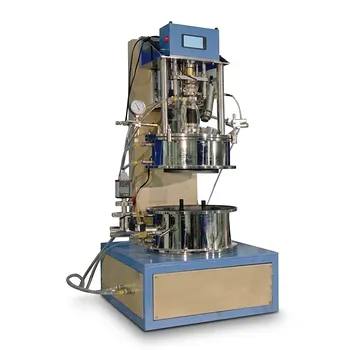
2500C High Vacuum Ultrafast Heating Pellet Press with Automated 8 Sample Loading System
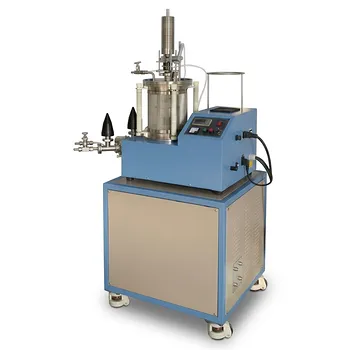
Ultrafast Thermal Pressing Furnace 2900C Max Temperature 200K per Second Heating Rate Vacuum Atmosphere Rapid Processing System
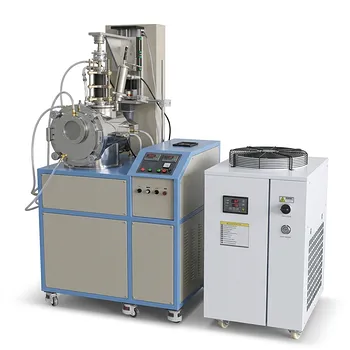
High Temperature Ultrafast Heating Pressing Furnace 2900C Max 100kgf Rapid Thermal Processing System
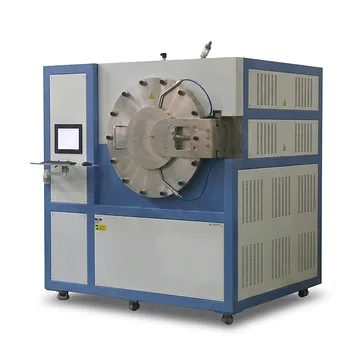
High Vacuum Pressure Chamber Furnace 800C 3.5 Bar Sintering System for Superconducting Materials
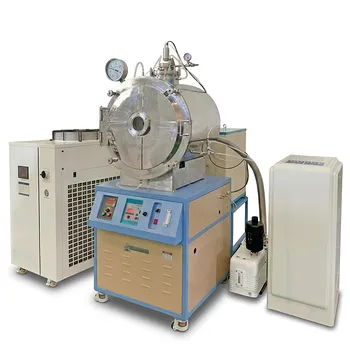
Ultra High Temperature Induction Heated Vacuum Furnace with Molten Salt Electrolysis Capability and 3000 Degree Precision Control
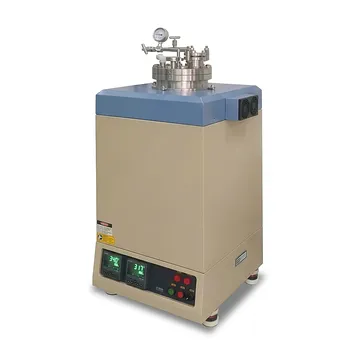
High Temperature 1000C Vacuum Furnace with 8 Inch ID Chamber for Material Sintering and Research Annealing
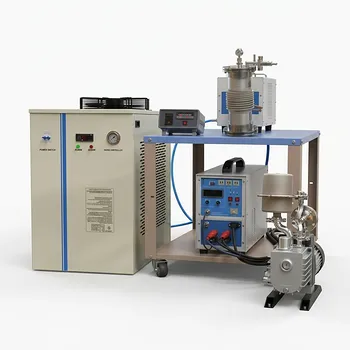
Induction Heating System with Temperature Control for High Temperature Vacuum Sintering and Melting
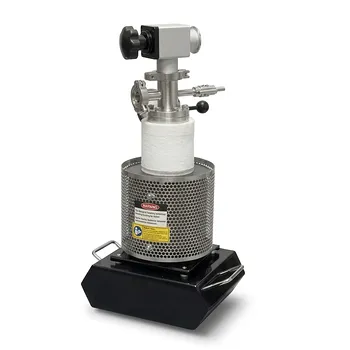
High Temperature 1100C Compact Top Loading Vertical Vacuum Tube Furnace for High Vacuum Noble Metal Melting and Material Research
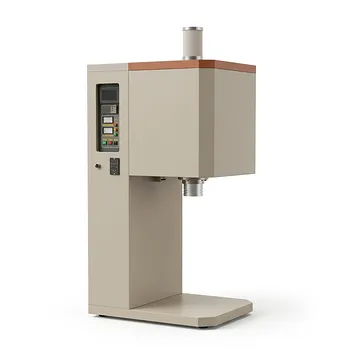
Vertical Openable Tube Furnace 0-1700c High Temperature Laboratory System for CVD and Vacuum Heat Treatment
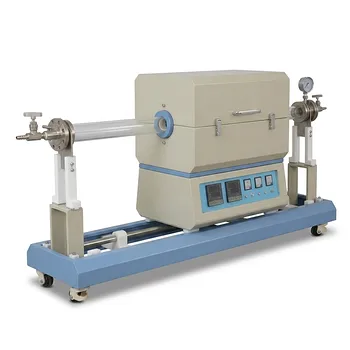
Double Zone Fast Heating Tube Furnace High Temperature Vacuum Atmosphere System
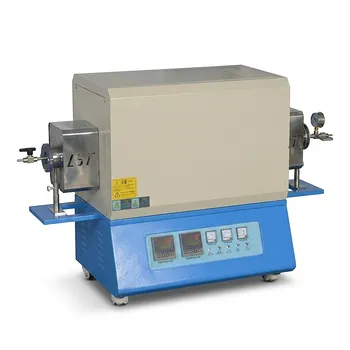
High Temperature Dual Zone Vacuum Tube Furnace for Material Research and CVD Processing
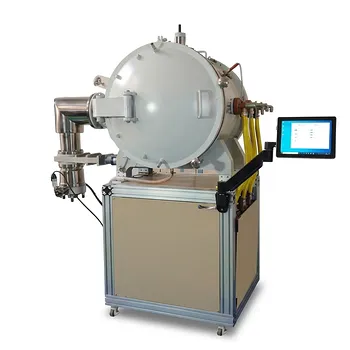
High Temperature Cold Wall Vacuum Furnace for Advanced Material Sintering and Annealing 1600C Heating Area 200x200x300mm
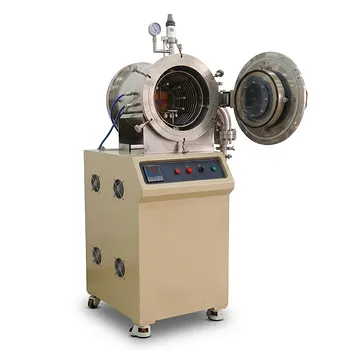
High Temperature Cold Wall High Vacuum Chamber Furnace 1400C for Advanced Material Processing
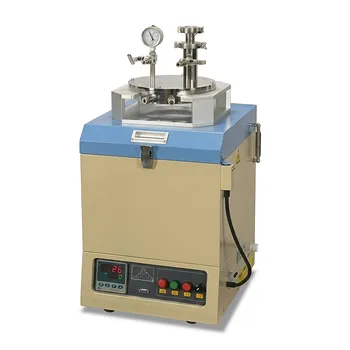
Vertical Vacuum Furnace 1100C High Temperature 8 Inch Quartz Chamber Water Cold Flange System
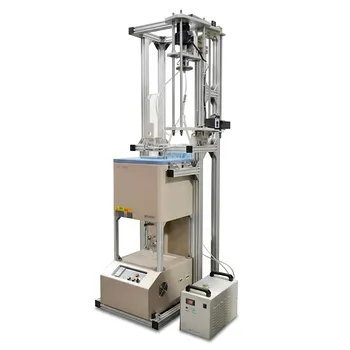
500C Vacuum Vertical Tube Furnace 84mm OD Sample Rotation Lifting System