Why must a tube furnace with high-precision control be used for MOF vitrification? Master the Narrow Thermal Window
Updated 3 months ago
The thermal vitrification of carboxylic acid-based Metal-Organic Frameworks (MOFs) demands extreme thermal precision because these materials exist only momentarily in a liquid state. To successfully transform a crystalline MOF into a functional glass, the system must navigate an exceptionally narrow temperature window between the melting point ($T_m$) and the thermal decomposition temperature ($T_d$). A high-precision tube furnace provides the stable heating rates and rigorous atmospheric control necessary to liquefy the framework without triggering irreversible chemical breakdown.
Core Takeaway: Successful MOF vitrification requires balancing the thermodynamics of melting against the kinetics of decomposition. High-precision tube furnaces provide the exact, programmable heating profiles needed to reach the liquid phase and quench it into glass before the organic linkers degrade.
The Thermodynamic Challenge of MOF Vitrification
Navigating the Narrow Processing Window
Carboxylic acid-based MOFs reside in a delicate state where the energy required to melt the crystal lattice is nearly equal to the energy that breaks their chemical bonds. The "working window" between the melting point ($T_m$) and decomposition ($T_d$) is often extremely small, leaving no room for thermal overshoot.
Preventing Irreversible Decomposition
If the temperature exceeds the $T_d$ threshold even slightly, the organic linkers within the MOF will undergo thermal degradation. High-precision control ensures the furnace captures subtle process variations, maintaining the material in a stable liquid phase just long enough for quenching.
Ensuring Complete Melting
To achieve a homogenous glass, the crystalline precursor must melt completely. A stable heating rate, such as 10 degrees Celsius per minute, allows the entire sample volume to reach the liquid state simultaneously, preventing a mixture of glass and unmelted crystals.
The Role of Programmable Thermal Management
Regulating Microscopic Structures
Programmable temperature control allows for the strict regulation of heating and cooling rates, which is vital for maintaining the original skeleton structure of the MOF. This prevents grain coarsening or the loss of specific microsphere morphologies that are essential for the material's final performance.
Controlling the Quenching Process
The transition from a liquid-phase MOF to a solid glass requires a controlled cooling curve. Precise management prevents the formation of micro-cracks caused by excessive temperature gradients, ensuring the structural transformation results in a durable, non-crystalline solid.
Maintaining Chemical Equilibrium
Many MOF transformations are endothermic and sensitive to specific initiation thresholds. High-precision automatic controllers maintain the necessary equilibrium points, ensuring that the final glassy product meets specific physical and chemical requirements without "overburning" or sintering.
Understanding the Trade-offs and Pitfalls
The Risk of Thermal Lag
In less precise furnaces, the temperature of the sample may lag significantly behind the furnace's sensor readout. This discrepancy can lead to the material spending too much time at high temperatures, causing the MOF to decompose before it has a chance to fully vitrify.
Impact of Temperature Fluctuations
Uncontrolled fluctuations during the heating phase can trigger premature phase transitions or lead to a "fully lamellar" structure where a glassy one was intended. Even a variation of a few degrees can shift the material from a stable liquid to a charred, decomposed state.
Atmospheric Sensitivity
Vitrification often requires a controlled atmosphere (such as nitrogen) to prevent oxidation. While temperature control is paramount, failing to integrate it with proper atmospheric purging can lead to the oxidation of the organic linkers, regardless of how precise the heating ramp is.
How to Apply High-Precision Control to Your Process
Implementation Strategies
- If your primary focus is material purity: Utilize a highly stable ramp rate (e.g., 2–10°C/min) to ensure the $T_m$ is reached uniformly without overshooting into the decomposition zone.
- If your primary focus is structural integrity: Prioritize a furnace with programmable cooling profiles to prevent micro-cracks and ensure the material transitions smoothly from a liquid to a stable glass phase.
- If your primary focus is experimental repeatability: Use automatic temperature controllers to capture and log subtle variations, ensuring that every batch of MOF glass adheres to the same thermal history.
Mastering the narrow thermal window of MOF vitrification transforms these complex frameworks from rigid crystals into versatile, high-performance glasses.
Summary Table:
| Key Factor | Impact on MOF Vitrification | Benefit of High-Precision Control |
|---|---|---|
| Processing Window | Melting ($T_m$) and Decomposition ($T_d$) are very close. | Prevents thermal overshoot and irreversible chemical breakdown. |
| Heating Rate | Requires uniform heat (e.g., 10°C/min). | Ensures complete melting without residual crystals or thermal lag. |
| Quenching Phase | Rapid cooling can cause micro-cracks. | Programmable cooling curves ensure structural integrity and durability. |
| Structure Retention | Vulnerable to grain coarsening or morphology loss. | Maintains the original framework skeleton and microsphere morphology. |
| Atmosphere Control | Organic linkers are sensitive to oxidation. | Integrates precise heating with gas purging for stable chemical equilibrium. |
Elevate Your Material Research with THERMUNITS Precision
Thermal vitrification of carboxylic acid-based MOFs leaves no room for error. At THERMUNITS, we specialize in providing the high-accuracy thermal processing solutions required for sensitive material science and industrial R&D.
Whether you need advanced Tube Furnaces for precise glass transitions, or specialized Vacuum, Atmosphere, and CVD/PECVD systems, our equipment is engineered to handle the most demanding temperature windows.
Ready to achieve repeatable, high-performance results? Contact our technical experts today to find the perfect furnace for your laboratory or production needs. Let us help you transform complex frameworks into superior functional materials.
References
- Minhyuk Kim, Hoi Ri Moon. Melt-quenched carboxylate metal–organic framework glasses. DOI: 10.1038/s41467-024-45326-8
Mentioned Products
- High Temperature Tube Furnace 1500C with Sliding Flanges and 50mm OD for Rapid Thermal Processing Fast Heating and Cooling
- Vertical 1700C Vacuum and Atmosphere Tube Furnace with 80mm Alumina Tube
- 1100C Tube Furnace with Vacuum Flange and Programmable Temperature Controller for Material Science and Industrial Heat Treatment
- Compact High Temperature 1600C Tube Furnace with 50mm Alumina Tube and Vacuum Flanges for Material Sintering
- 900°C Max Rotary Tube Furnace with 8 Inch 310S Alloy Tube and Optional Multi Zone Heating for Industrial Material Calcination
People Also Ask
- How are high-temperature tube furnaces utilized to repair etching damage? Precision Lattice Restoration Solutions
- What role does a high-temperature tube furnace play in CVD synthesis of silicon nanowires? Master VLS Growth Precision.
- What core conditions does a high-temperature tube furnace provide for rGO aerogels? Mastering Precision Synthesis.
- What role does a high-temperature tube furnace play in the sulfidation heat treatment of CoS@C/MXene nanocomposites? Guide
- How does precision tube furnace control influence CoFe nanoparticle formation? Master Your Bimetallic Synthesis.

Tech Team · ThermUnits
Last updated on Jun 03, 2026
Related Products

High Temperature Tube Furnace 1500C with Sliding Flanges and 50mm OD for Rapid Thermal Processing Fast Heating and Cooling

Vertical 1700C Vacuum and Atmosphere Tube Furnace with 80mm Alumina Tube

1100C Tube Furnace with Vacuum Flange and Programmable Temperature Controller for Material Science and Industrial Heat Treatment

Compact High Temperature 1600C Tube Furnace with 50mm Alumina Tube and Vacuum Flanges for Material Sintering
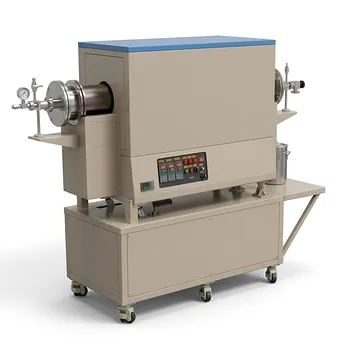
900°C Max Rotary Tube Furnace with 8 Inch 310S Alloy Tube and Optional Multi Zone Heating for Industrial Material Calcination
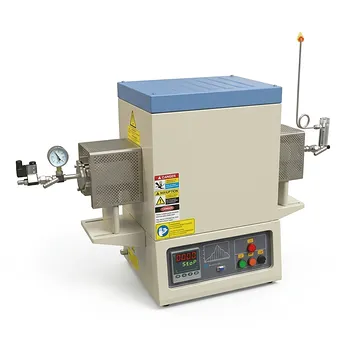
1700C Hydrogen Gas Tube Furnace with 60mm Alumina Process Tube and Integrated Hydrogen Safety Detector

High Temperature 1700C Tube Furnace with High Vacuum Turbomolecular Pump System and Multi Channel Mass Flow Controller Gas Mixer
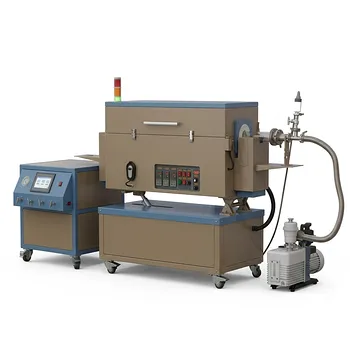
5 Inch Three Zone Rotary Tube Furnace with Integrated Gas Delivery System and 1200C Capability for Advanced Material CVD Processing
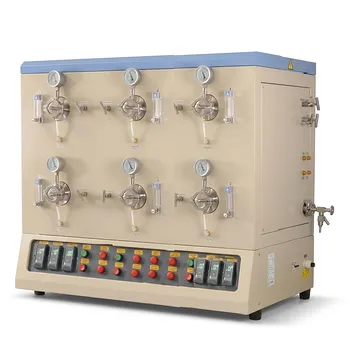
1200C High Throughput Multi Channel Tube Furnace with 50mm Quartz Tubes for Annealing and Material Phase Diagram Research

Three Zone Tube Furnace with 11 Inch or 15 Inch Quartz Tube and Hinged Flanges for Vacuum Atmosphere Heat Treatment

1200°C 5 Inch Vertical Quartz Tube Furnace with Stainless Steel Vacuum Flanges
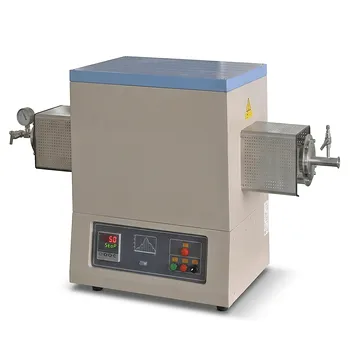
High Temperature 1700C Tube Furnace with 4 Inch OD Alumina Tube and Vacuum Sealing Flanges

High Temperature 1700C Benchtop Tube Furnace with 5 Inch Heating Zone High Purity Alumina Tube and Vacuum Sealing Flanges

Compact Vertical Split Quartz Tube Furnace with Stainless Steel Vacuum Flanges for Rapid Thermal Quenching and Controlled Atmosphere Material Processing

High Temperature 1700C Six Zone Split Tube Furnace with Alumina Tube and Water Cooled Flanges

1800C High Temperature Compact Vacuum Tube Furnace with 60mm OD Alumina Tube and Kanthal MoSi2 Heating Elements
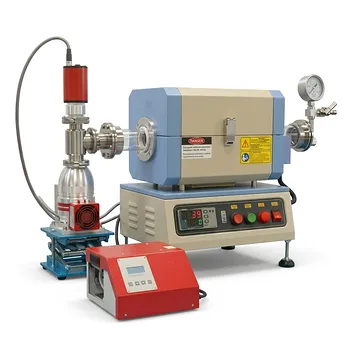
High Vacuum Compact Tube Furnace 1200C with Integrated Turbo Pump System and 8 Inch Heating Zone
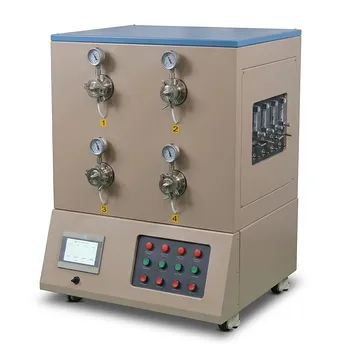
High Throughput 1200C Four Channel Tube Furnace with 3 Inch Quartz Tubes for Multi Zone Annealing and Material Research

High Temperature Automated 5 Inch Tube Furnace for Autonomous Material Research and Advanced Laboratory R&D
