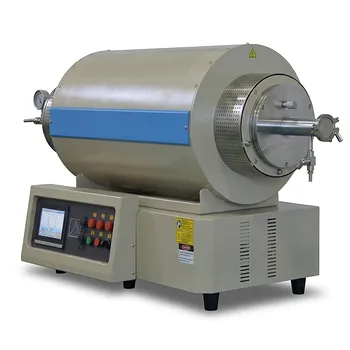
Why use N2 for high-entropy fluoride carbonization? Prevent oxidation & ensure material purity in tube furnaces.
Updated 3 months ago
The use of a nitrogen ($N_2$) environment is the critical safeguard that prevents the destructive oxidation of the material while facilitating the complex chemical reactions required to form high-entropy fluorides.
At temperatures such as 800°C, the presence of even trace amounts of oxygen would cause the carbon framework to undergo oxidative combustion and the metal components to form unwanted oxides rather than fluorides. The nitrogen atmosphere in a tube furnace creates a strictly anaerobic environment, allowing for the controlled thermal decomposition of precursors like PTFE to release fluorine gases, which then react in-situ with metal components to synthesize high-entropy fluoride nanoparticles.
Core Takeaway: Nitrogen acts as both a protective shield and a process enabler, preventing the combustion of the carbon structure and the oxidation of metals while ensuring that fluorine-containing gases can successfully react to form the target high-entropy fluoride phase.
Preventing Oxidative Degradation and Material Loss
The Risk of High-Temperature Combustion
At temperatures ranging from 400°C to 800°C, carbon sources—such as polymer frameworks or biomass—will rapidly react with oxygen in the air. This oxidative combustion would lead to the total loss of the carbon material, turning the intended conductive framework into volatile $CO_2$ gas.
Protecting Metal Components from Oxidation
High-entropy fluorides require the metal precursors to react specifically with fluorine. If oxygen is present in the furnace, the metals will preferentially react to form stable metal oxides, which are chemical impurities that prevent the formation of the desired high-entropy fluoride nanoparticles.
The Role of Atmospheric Displacement
Continuous nitrogen flow is used to physically displace the air within the furnace tube. By purging the system before and during the heating cycle, researchers ensure that the chemical potential of the environment remains inert, protecting the integrity of the precursors throughout the reaction.
Facilitating In-Situ Chemical Reactions
Enabling the Decomposition of Fluorine Sources
In many synthesis protocols, polytetrafluoroethylene (PTFE) is used as the fluorine source. The nitrogen environment allows PTFE to undergo thermal decomposition safely, releasing reactive fluorine-containing gases that are essential for the synthesis.
Promoting In-Situ Fluorination
Because the nitrogen atmosphere prevents oxygen from interfering, these released fluorine gases can react fully with the metal components. This "in-situ" reaction is what allows the high-entropy fluoride nanoparticles to form directly within the carbon fiber matrix.
Carbonization and Graphitization
The anaerobic environment facilitates the conversion of the polymer framework into highly conductive porous carbon fibers. This process, known as carbonization, allows for the thermal rearrangement of atoms into a graphitic structure, which is essential for the electrical conductivity of the final material.
Preserving Structural and Morphological Integrity
Shielding Delicate Nanostructures
High-entropy materials often feature complex geometries, such as one-dimensional hollow tubes or two-dimensional nanosheets. Nitrogen prevents "thermal erosion," a process where oxygen attacks the surface of these structures, ensuring that the precise morphology required for high performance is maintained.
Removal of Volatile Byproducts
The constant flow of high-purity nitrogen acts as a carrier gas that sweeps away volatile organic compounds (VOCs) and reaction byproducts like $CO$ or $CO_2$. This continuous removal prevents these byproducts from lingering in the reaction zone and contaminating the final product or interfering with the fluoride formation.
Optimizing Porosity and Surface Area
By preventing the uncontrolled burning of the carbon source, nitrogen ensures that the resulting material achieves the specific porosity and surface area required. This controlled environment allows for the creation of active defect sites that can enhance the electrochemical properties of the fluoride.
Understanding the Trade-offs
The Necessity of Nitrogen Purity
The success of this process is highly dependent on the purity of the nitrogen gas. Using low-purity nitrogen can introduce trace moisture or oxygen, leading to "oxidative ablation," which damages the surface of the carbon fibers and reduces the overall yield of the high-entropy phase.
Flow Rate Management
There is a delicate balance in managing the nitrogen flow rate. While a high flow rate is excellent for removing byproducts, it can also dilute the concentration of the reactive fluorine gases released from PTFE, potentially leading to incomplete fluorination of the metal components.
Cost and Complexity of Atmospheric Control
Maintaining a strict nitrogen environment requires specialized equipment, including vacuum-tight tube furnaces and precise gas flow controllers. This increases the operational complexity and cost compared to simple air-based calcination, but it is a non-negotiable requirement for non-oxide ceramic synthesis.
Applying This Knowledge to Your Synthesis
Making the Right Choice for Your Goal
- If your primary focus is maximizing electrical conductivity: Ensure the nitrogen atmosphere is maintained until the furnace has cooled below 200°C to prevent post-synthesis oxidation of the carbon framework.
- If your primary focus is achieving high phase purity in fluorides: Use a secondary nitrogen purging step before heating to ensure that residual oxygen levels are minimized within the furnace tube.
- If your primary focus is preserving delicate surface morphology: Maintain a constant, low-velocity nitrogen flow to gently remove byproducts without creating turbulent conditions that might disturb the nanostructures.
Proper nitrogen atmosphere control is the foundational requirement for transforming sensitive precursors into stable, high-performance high-entropy fluoride materials.
Summary Table:
| Feature | Role of Nitrogen (N2) Atmosphere | Impact of Oxygen Presence |
|---|---|---|
| Oxidation Control | Prevents carbon framework combustion and metal oxidation | Causes material loss and forms unwanted metal oxides |
| Chemical Reaction | Facilitates PTFE decomposition and in-situ fluorination | Interferes with fluorine reaction, leading to impurities |
| Structure | Preserves delicate morphology and porous carbon fibers | Causes thermal erosion and damages surface nanostructures |
| Purity | Sweeps away volatile byproducts (CO, CO2) | Retains contaminants that degrade electrochemical performance |
Elevate Your Material Research with THERMUNITS
Precise atmospheric control is the difference between success and failure in high-entropy material synthesis. THERMUNITS is a leading manufacturer of high-temperature laboratory equipment for material science and industrial R&D. We provide the advanced thermal processing solutions required to maintain high-purity anaerobic environments.
Our comprehensive product range includes:
- Tube and Atmosphere Furnaces (Optimized for Nitrogen/Inert environments)
- Vacuum, Muffle, and Rotary Furnaces
- CVD/PECVD Systems and Vacuum Induction Melting (VIM)
- Dental Furnaces and Electric Rotary Kilns
Ensure the integrity of your heat treatment process with equipment designed for precision. Contact THERMUNITS Today to discuss your specific laboratory requirements and discover how our solutions can enhance your research outcomes!
References
- Gang Wang, Bowen Cheng. Zinc-induced polycrystalline transformation of high-entropy fluorides and derived regulatory mechanisms for bifunctional oxygen electrocatalysis. DOI: 10.1039/d4ta02866j
Mentioned Products
- Vertical 1700C Vacuum and Atmosphere Tube Furnace with 80mm Alumina Tube
- 1200C Hybrid Muffle and Tube Furnace for Material Research with Dual Atmosphere Control Quartz Tubes
- Compact Vertical Split Quartz Tube Furnace with Stainless Steel Vacuum Flanges for Rapid Thermal Quenching and Controlled Atmosphere Material Processing
- Compact Hybrid Muffle and Tube Furnace for 1000C Controlled Atmosphere Laboratory Material Sintering
- 1200°C Atmosphere Controlled Automatic Bottom Loading Furnace with 6 Inch Quartz Tube
People Also Ask
- How is an industrial-grade vertical tube furnace utilized in smelting leaching residues? Enhance Metal Recovery Efficiency
- What is the function of a laboratory-grade vertical tube furnace in fast pyrolysis? Optimize Composite Research.
- How does a vertical tube furnace facilitate thermoelectric alloy melting? Precision synthesis for material homogeneity.
- Why is a thermocouple sensor indispensable for monitoring the vertical tube furnace during gallium oxide nanowire production? Optimize VLS Growth
- What are the advantages of using a vertical tube furnace for crucible experiments simulating steel-slag interactions?

Tech Team · ThermUnits
Last updated on Jun 02, 2026
Related Products

Vertical 1700C Vacuum and Atmosphere Tube Furnace with 80mm Alumina Tube
1200C Hybrid Muffle and Tube Furnace for Material Research with Dual Atmosphere Control Quartz Tubes

Compact Vertical Split Quartz Tube Furnace with Stainless Steel Vacuum Flanges for Rapid Thermal Quenching and Controlled Atmosphere Material Processing
Compact Hybrid Muffle and Tube Furnace for 1000C Controlled Atmosphere Laboratory Material Sintering
1200°C Atmosphere Controlled Automatic Bottom Loading Furnace with 6 Inch Quartz Tube

Three Zone Tube Furnace with 11 Inch or 15 Inch Quartz Tube and Hinged Flanges for Vacuum Atmosphere Heat Treatment

1200°C 5 Inch Vertical Quartz Tube Furnace with Stainless Steel Vacuum Flanges
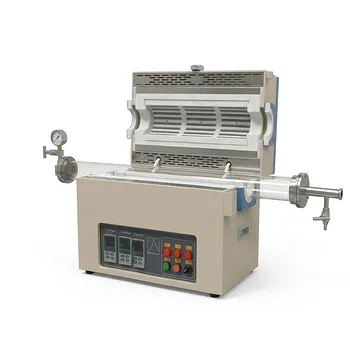
1200°C Three Zone Split Tube Furnace with 18 Inch Heating Length and Vacuum Flanges
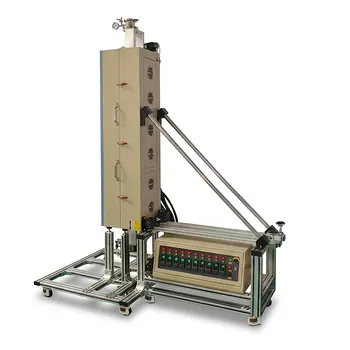
1200°C 10-Zone Split Tube Furnace with Horizontal and Vertical Mounting for Multi-Zone Thermal Gradients and Large Diameter Material Processing
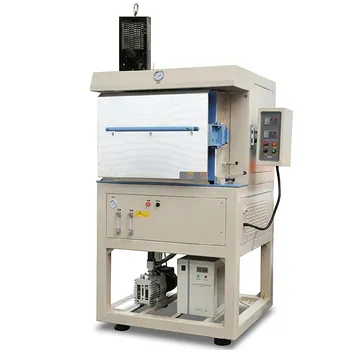
1200C Hydrogen Atmosphere Box Furnace with 5 Heated Sides and 64L Chamber

High Temperature 1700C Tube Furnace with High Vacuum Turbomolecular Pump System and Multi Channel Mass Flow Controller Gas Mixer
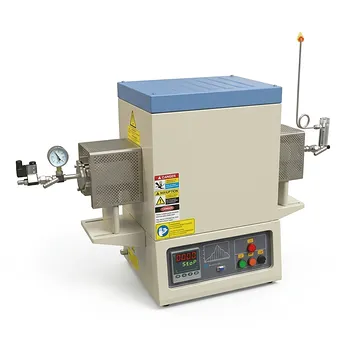
1700C Hydrogen Gas Tube Furnace with 60mm Alumina Process Tube and Integrated Hydrogen Safety Detector

High Temperature 1700C Vertical Tube Furnace for Powder Spherification and Material Sintering

High Temperature 1700C Six Zone Split Tube Furnace with Alumina Tube and Water Cooled Flanges
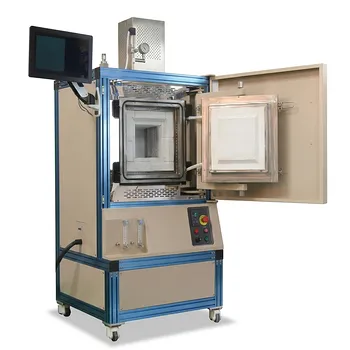
High Temperature Hydrogen Atmosphere Box Furnace 1650C Max Reducing Environment Material Synthesis System 8x8x8 Chamber
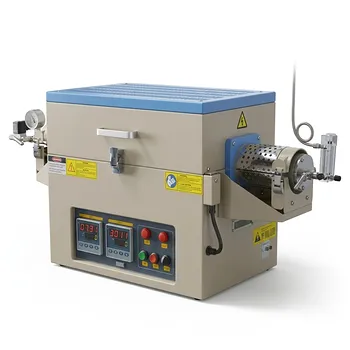
1100C Dual Zone Hydrogen Gas Tube Furnace with Quartz Tube and Integrated H2 Leak Detection System

1800C High Temperature Compact Vacuum Tube Furnace with 60mm OD Alumina Tube and Kanthal MoSi2 Heating Elements

High Temperature 1700C Benchtop Tube Furnace with 5 Inch Heating Zone High Purity Alumina Tube and Vacuum Sealing Flanges

High Temperature Automated 5 Inch Tube Furnace for Autonomous Material Research and Advanced Laboratory R&D