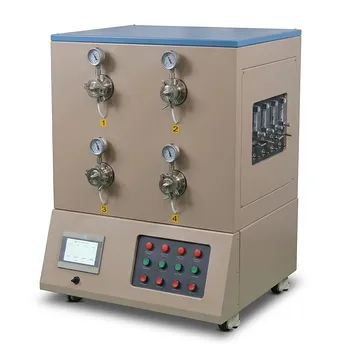
Why must mixed Al-TiC powders undergo a 400 Celsius pretreatment in a tube furnace? Key for Purity and Compaction.
Updated 3 months ago
The 400°C pretreatment of Al-TiC powders is a critical purification phase designed to eliminate volatile impurities before the material is compacted.
This specific step facilitates dewaxing—the thermal decomposition of stearic acid—and the removal of adsorbed moisture from the powder surfaces. By performing this in a tube furnace under an argon atmosphere, the process ensures that organic substances and water are purged without oxidizing the reactive aluminum powder or triggering premature chemical reactions.
This pretreatment serves as a protective purification step, using an inert argon environment to eliminate binders and moisture. This ensures the chemical purity and structural integrity of the aluminum matrix are preserved for successful cold pressing and sintering.
Eliminating Organic Binders and Additives
The Role of Stearic Acid Removal (Dewaxing)
Stearic acid is frequently added during the mixing or milling stage to act as a lubricant or process control agent. At 400°C, this organic compound undergoes thermal decomposition, allowing it to be removed as a gas before the powder is pressed.
Preventing Structural Defects
If organic binders are not removed prior to pressing, they can become trapped within the "green" body. During high-temperature sintering, these trapped organics can cause internal voids, bloating, or cracking as they attempt to escape.
Maintaining Surface Cleanliness
Removing these substances ensures that the aluminum and TiC particles can achieve direct contact during compaction. This improves the interfacial bonding and the overall density of the final composite.
Atmospheric Control and Oxidation Prevention
The Necessity of an Argon Environment
Aluminum is highly reactive and forms an oxide layer almost instantly when exposed to heat and oxygen. The argon atmosphere acts as an inert shield, displacing air and moisture to prevent the powder from oxidizing during the heating cycle.
Avoiding Premature Reactions
The temperature of 400°C is carefully selected to be high enough to drive off impurities but well below the melting point of aluminum. This prevents the matrix from melting or initiating unwanted solid-state reactions between the aluminum and the TiC reinforcement.
Preserving Powder Morphology
By using a controlled tube furnace, the powder maintains its original size and shape. This structural integrity is vital for achieving a uniform distribution of TiC particles during the subsequent cold pressing stage.
Moisture Removal and Chemical Stability
Eliminating Adsorbed Water
Powder surfaces naturally attract moisture from the environment, which can lead to the formation of aluminum hydroxides. Pre-drying at 400°C effectively strips away this adsorbed moisture and other volatile impurities that could compromise the material.
Preventing Side Reactions
In processes involving activators like ammonium chloride, the presence of moisture can trigger unnecessary side reactions. Ensuring the powder is dry maintains the purity of the atmosphere during the entire fabrication sequence.
Enhancing Coating Quality
For applications involving aluminizing or surface treatments, this pretreatment ensures a clean substrate. This leads to a more predictable and high-quality coating by removing variables that cause contamination.
Understanding the Trade-offs and Limitations
Temperature Sensitivity
If the temperature exceeds 400°C, the risk of the aluminum matrix softening or beginning to react with the TiC increases significantly. Conversely, temperatures significantly lower than this may fail to fully decompose complex organic binders, leading to residual carbon contamination.
Atmosphere Purity Risks
The success of this process relies entirely on the purity of the argon gas and the seal of the tube furnace. Even trace amounts of oxygen or water vapor in the argon stream can result in surface oxidation, which hinders the sintering process.
Processing Time vs. Thoroughness
Heating must be maintained long enough to ensure the core of the powder mass reaches the target temperature. However, excessive hold times can lead to unnecessary energy consumption or slight particle agglomeration, which may require additional sieving.
How to Apply This to Your Project
Before proceeding with cold pressing, ensure your pretreatment protocol aligns with your specific material requirements:
- If your primary focus is maximum density: Ensure the 400°C hold time is sufficient to completely remove all stearic acid to prevent gas-induced porosity.
- If your primary focus is chemical purity: Use high-purity (99.99%+) argon and verify the furnace seals to prevent the formation of brittle aluminum oxides.
- If your primary focus is structural uniformity: Maintain a slow heating rate to 400°C to ensure even thermal decomposition throughout the entire powder volume.
By strictly controlling this pretreatment environment, you safeguard the fundamental properties of the Al-TiC composite for high-performance applications.
Summary Table:
| Process Parameter | Action & Purpose | Impact on Al-TiC Quality |
|---|---|---|
| 400°C Temperature | Thermal decomposition of stearic acid (Dewaxing). | Prevents internal voids and bloating during sintering. |
| Argon Atmosphere | Displaces oxygen and moisture (Inert shielding). | Prevents reactive aluminum oxidation and side reactions. |
| Tube Furnace Control | Uniform heat distribution & controlled environment. | Preserves powder morphology and ensures chemical purity. |
| Moisture Removal | Strips away adsorbed water/hydroxides. | Improves interfacial bonding and coating predictability. |
Optimize Your Material Research with THERMUNITS Precision Furnaces
Achieving the perfect Al-TiC composite requires rigorous atmospheric control and thermal precision. THERMUNITS is a leading manufacturer of high-temperature laboratory equipment dedicated to supporting material science and industrial R&D.
We offer a comprehensive range of thermal processing solutions designed to ensure the chemical purity and structural integrity of your advanced materials, including:
- High-Precision Tube & Atmosphere Furnaces (Ideal for argon pretreatment)
- Vacuum & Hot Press Furnaces for advanced compaction
- CVD/PECVD Systems and Vacuum Induction Melting (VIM) units
- Muffle, Rotary, and Dental Furnaces for diverse heat treatment needs
Whether you are refining powder metallurgy or developing new alloys, our equipment provides the stability and performance your project demands.
Ready to upgrade your lab's capabilities? Contact our technical experts today to find your solution!
References
- Mohamed I. A. Habba, Fadel S. Hamid. Microstructure and tribological behavior of Al–TiC composite strips fabricated by a multi-step densification method. DOI: 10.1038/s41598-024-70560-x
Mentioned Products
- High Temperature 1700C Six Zone Split Tube Furnace with Alumina Tube and Water Cooled Flanges
- Compact High Temperature 1600C Tube Furnace with 50mm Alumina Tube and Vacuum Flanges for Material Sintering
- Vertical 1700C Vacuum and Atmosphere Tube Furnace with 80mm Alumina Tube
- High Temperature 1700C Vertical Tube Furnace for Powder Spherification and Material Sintering
- 1800C High Temperature Compact Vacuum Tube Furnace with 60mm OD Alumina Tube and Kanthal MoSi2 Heating Elements
People Also Ask
- What is the primary function of a high-temperature split tube furnace in nitrogen metastable particle research? Expert Guide
- Why is a high-temperature tube furnace required for assessing the reactivity of biocoke? Essential for CRI Validation
- What core processing conditions does a high-temperature tube furnace provide for lignin-derived carbon? Expert Guide.
- Why is it necessary to introduce steam into a high-temperature tube furnace during ACNN activation? Enhance Porosity.
- How does a high-temperature tube furnace contribute to MoS2/CNT photocathode formation? Optimizing Phase & Interface

Tech Team · ThermUnits
Last updated on Jun 03, 2026
Related Products
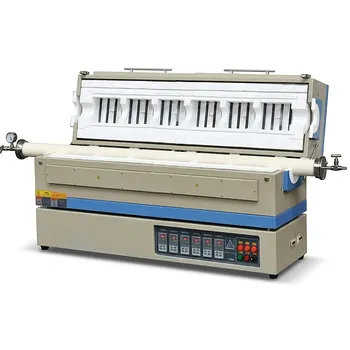
High Temperature 1700C Six Zone Split Tube Furnace with Alumina Tube and Water Cooled Flanges

Compact High Temperature 1600C Tube Furnace with 50mm Alumina Tube and Vacuum Flanges for Material Sintering

Vertical 1700C Vacuum and Atmosphere Tube Furnace with 80mm Alumina Tube

High Temperature 1700C Vertical Tube Furnace for Powder Spherification and Material Sintering

1800C High Temperature Compact Vacuum Tube Furnace with 60mm OD Alumina Tube and Kanthal MoSi2 Heating Elements
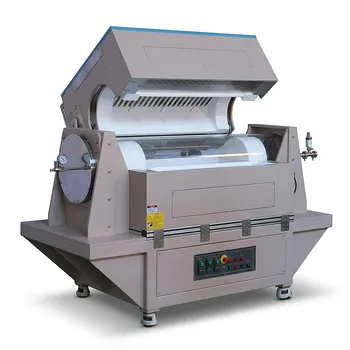
Three Zone Tube Furnace with 11 Inch or 15 Inch Quartz Tube and Hinged Flanges for Vacuum Atmosphere Heat Treatment
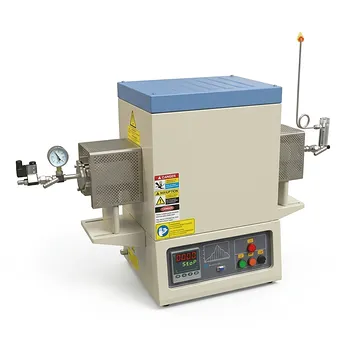
1700C Hydrogen Gas Tube Furnace with 60mm Alumina Process Tube and Integrated Hydrogen Safety Detector

High Temperature 1700C Benchtop Tube Furnace with 5 Inch Heating Zone High Purity Alumina Tube and Vacuum Sealing Flanges
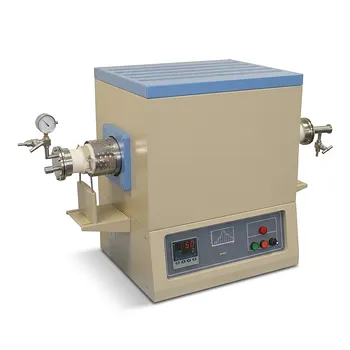
1700C High Temperature Alumina Tube Furnace with 18 Inch Heated Zone and Vacuum Sealing Flanges
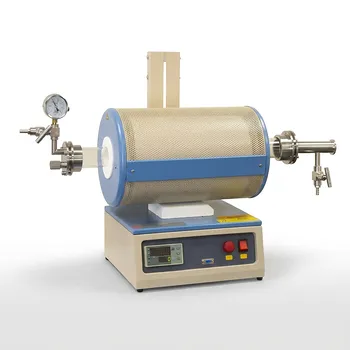
1100C Tube Furnace with Vacuum Flange and Programmable Temperature Controller for Material Science and Industrial Heat Treatment
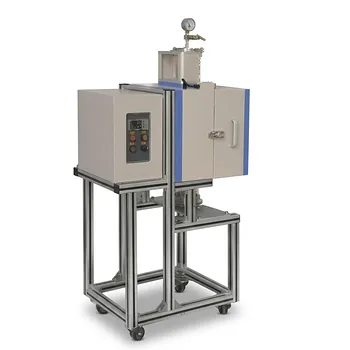
1200°C 5 Inch Vertical Quartz Tube Furnace with Stainless Steel Vacuum Flanges

Compact Vertical Split Quartz Tube Furnace with Stainless Steel Vacuum Flanges for Rapid Thermal Quenching and Controlled Atmosphere Material Processing
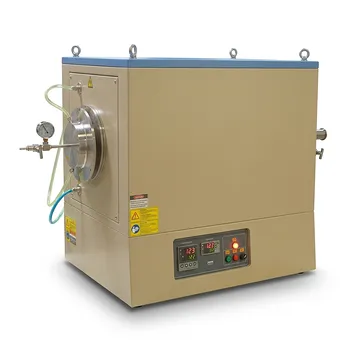
1100°C Large Diameter Quartz Tube Furnace with 24 Inch Heating Zone and Water Cooled Flanges

High Temperature 1700C Tube Furnace with High Vacuum Turbomolecular Pump System and Multi Channel Mass Flow Controller Gas Mixer

High Temperature Automated 5 Inch Tube Furnace for Autonomous Material Research and Advanced Laboratory R&D
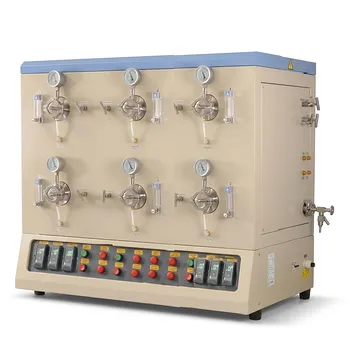
1200C High Throughput Multi Channel Tube Furnace with 50mm Quartz Tubes for Annealing and Material Phase Diagram Research
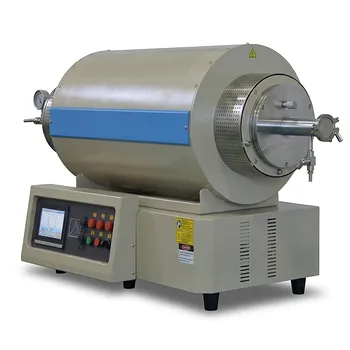
1200C Max Three Zone Tube Furnace 6 Inch OD Max with Tube and Flange

1100°C High Temperature Quartz Chamber Furnace 8 Inch OD with 7.6 Liter Capacity and Vacuum Atmosphere Capability
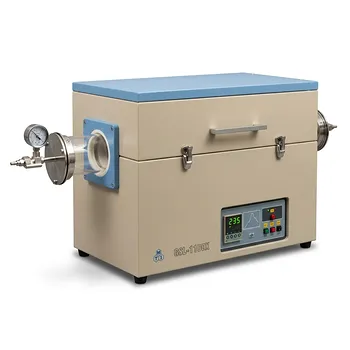
Single Zone Tube Furnace 5 Inch Quartz Tube 36 Inch Heating Zone Vacuum Flanges