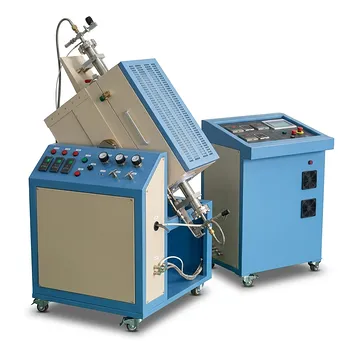
What role does a high-temperature tube furnace play in AlN nanofiber synthesis? Master Precision Carbothermal Reduction.
Updated 3 months ago
A high-temperature tube furnace acts as the essential reactor for carbothermal reduction nitridation, providing the extreme thermal energy (up to 1500°C) and controlled atmosphere required to convert boehmite and carbon precursors into Aluminum Nitride (AlN) nanofibers. Within this sealed environment, the furnace facilitates a multi-step chemical transformation where boehmite dehydrates into alumina and subsequently reacts with nitrogen and carbon to form the final crystalline structure.
Core Takeaway: The high-temperature tube furnace is the "chemical engine" of the synthesis process, simultaneously managing the precision heating rates necessary for crystal growth and the high-purity nitrogen atmosphere required for nitridation.
Facilitating the Carbothermal Reduction Reaction
Reaching the 1500°C Thermal Threshold
The synthesis of AlN nanofibers via carbothermal reduction requires energy-intensive conditions that only a high-temperature furnace can provide. These temperatures, often reaching 1500°C, are necessary to drive the chemical reaction between alumina (transformed from boehmite) and the carbon source.
Managing the Decomposition of Precursors
As the furnace heats up, it facilitates the internal transformation of raw materials. It manages the thermal decomposition of Polyvinyl Alcohol (PVA) into a carbon framework and the conversion of boehmite into reactive alumina, setting the stage for nitridation.
Ensuring Precise Heating Rates
The furnace’s control system maintains a stable heating rate, typically around 10°C per minute. This controlled ramp-up is critical for the uniform growth of AlN crystals and prevents structural defects in the resulting nanofibers.
Atmospheric Control and Chemical Synthesis
Providing Nitrogen as a Core Reactant
In this specific process, the furnace does not just provide heat; it acts as a gas-phase reactor. By maintaining a continuous nitrogen flow, the furnace ensures that nitrogen is available to react with the alumina-carbon mixture to form Aluminum Nitride.
Creating an Oxygen-Free Environment
The superior sealing performance of a tube furnace is vital to prevent the entry of oxygen. An oxygen-free environment protects the carbon generated from PVA from being lost to premature oxidation, ensuring it remains available for the reduction process.
Promoting Structural Integrity and Purity
The uniformity of the temperature field within the tube ensures that the nitridation process occurs evenly across the entire sample. This results in nanofibers with high chemical stability, uniform nitrogen doping, and consistent structural integrity.
Understanding the Trade-offs
Thermal Gradients and Sample Positioning
While tube furnaces offer excellent control, they can suffer from temperature gradients near the ends of the tube. If the sample is not placed precisely within the "constant temperature zone," the AlN nanofibers may exhibit inconsistent growth or incomplete nitridation.
Complexity of Gas Flow Dynamics
Managing the nitrogen flow rate is a delicate balance. If the flow is too low, the reaction may be incomplete; if it is too high, it can lead to thermal instability or carry away volatile intermediates necessary for nanofiber formation.
Equipment Wear and Contamination
Operating at 1500°C places significant stress on the furnace's heating elements and the ceramic work tube. Over time, material degradation can lead to potential contamination of the AlN samples if the tube is not regularly inspected and maintained.
How to Apply This to Your Project
Recommendations for Process Optimization
When using a high-temperature tube furnace for AlN nanofiber synthesis, your focus should shift based on your specific quality requirements.
- If your primary focus is Crystal Purity: Ensure the furnace is purged with high-purity nitrogen for an extended period before heating to eliminate all traces of residual oxygen.
- If your primary focus is Nanofiber Uniformity: Utilize a furnace with multi-zone heating control to maximize the length of the uniform temperature zone and ensure stable crystal growth.
- If your primary focus is Structural Integrity: Adhere strictly to a slow heating rate (10°C/min or less) to allow the organic precursors to decompose without damaging the alumina framework.
By mastering the thermal and atmospheric variables of the tube furnace, you can precisely control the transformation of boehmite into high-performance Aluminum Nitride nanofibers.
Summary Table:
| Key Parameter | Requirement / Value | Role in AlN Synthesis |
|---|---|---|
| Temperature | Up to 1500°C | Drives the chemical reaction between alumina and carbon precursors. |
| Atmosphere | High-purity Nitrogen (N₂) | Acts as a core reactant for nitridation and prevents oxidation. |
| Heating Rate | ~10°C / minute | Ensures uniform crystal growth and prevents structural defects. |
| Environment | Oxygen-free Sealed Tube | Protects the carbon framework from premature decomposition. |
| Uniformity | Constant Temp Zone | Ensures consistent nitridation and nanofiber structural integrity. |
Elevate Your Material Research with THERMUNITS
Are you looking to optimize the synthesis of Aluminum Nitride (AlN) nanofibers or other advanced materials? THERMUNITS is a leading manufacturer of high-temperature laboratory equipment specifically designed for material science and industrial R&D. We provide the thermal precision and atmospheric control necessary for successful carbothermal reduction and nitridation.
Our comprehensive range of thermal solutions includes:
- Tube & Rotary Furnaces for precise gas-phase reactions.
- Vacuum & Atmosphere Furnaces for oxygen-sensitive processes.
- Muffle, Hot Press, and Dental Furnaces.
- CVD/PECVD Systems and Vacuum Induction Melting Furnaces (VIM).
Achieve superior crystal purity and structural integrity in your heat treatment processes. Contact our technical experts today to find the perfect furnace for your lab!
References
- Md. Shakhawat Hossain, Koji Nakane. Enhancing heat dissipation in polyurethane sheets through the incorporation of freeze‐dried aluminum nitride nanofiber. DOI: 10.1111/ijac.14725
Mentioned Products
- High Temperature Tube Furnace 1500C with Sliding Flanges and 50mm OD for Rapid Thermal Processing Fast Heating and Cooling
- High Temperature 1700C Tube Furnace with High Vacuum Turbomolecular Pump System and Multi Channel Mass Flow Controller Gas Mixer
- 1750°C High Temperature Benchtop Vacuum Atmosphere Tube Furnace with Kanthal Super 1800 Heating Elements and 60mm Alumina Processing Tube
- High Temperature 1700C Benchtop Tube Furnace with 5 Inch Heating Zone High Purity Alumina Tube and Vacuum Sealing Flanges
- High Temperature Split Tube Furnace 1500C for Material Research Vacuum and Atmosphere Thermal Processing
People Also Ask
- How are high-temperature tube furnaces utilized to repair etching damage? Precision Lattice Restoration Solutions
- What core conditions does a high-temperature tube furnace provide for rGO aerogels? Mastering Precision Synthesis.
- What role does a high-temperature tube furnace play in CVD synthesis of silicon nanowires? Master VLS Growth Precision.
- How does precision tube furnace control influence CoFe nanoparticle formation? Master Your Bimetallic Synthesis.
- What role does a high-temperature tube furnace play in the sulfidation heat treatment of CoS@C/MXene nanocomposites? Guide

Tech Team · ThermUnits
Last updated on Jun 02, 2026
Related Products
High Temperature Tube Furnace 1500C with Sliding Flanges and 50mm OD for Rapid Thermal Processing Fast Heating and Cooling

High Temperature 1700C Tube Furnace with High Vacuum Turbomolecular Pump System and Multi Channel Mass Flow Controller Gas Mixer

1750°C High Temperature Benchtop Vacuum Atmosphere Tube Furnace with Kanthal Super 1800 Heating Elements and 60mm Alumina Processing Tube

High Temperature 1700C Benchtop Tube Furnace with 5 Inch Heating Zone High Purity Alumina Tube and Vacuum Sealing Flanges
High Temperature Split Tube Furnace 1500C for Material Research Vacuum and Atmosphere Thermal Processing
1700C High Temperature Alumina Tube Furnace with 18 Inch Heated Zone and Vacuum Sealing Flanges

Compact High Temperature 1600C Tube Furnace with 50mm Alumina Tube and Vacuum Flanges for Material Sintering

1800C High Temperature Compact Vacuum Tube Furnace with 60mm OD Alumina Tube and Kanthal MoSi2 Heating Elements
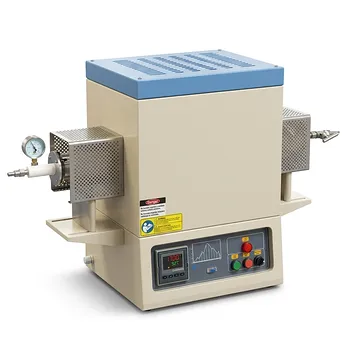
High Temperature Three Zone Tube Furnace 1700C with Alumina Tube and Water Cooled Flanges
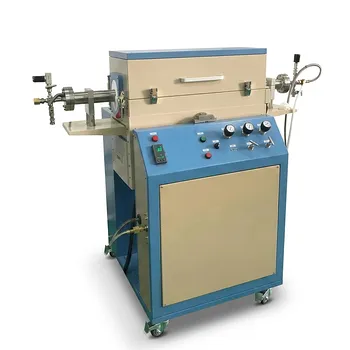
High Temperature Rocking Tube Furnace 1700°C Alumina Processing Tube with Precision Oscillation for Material Synthesis
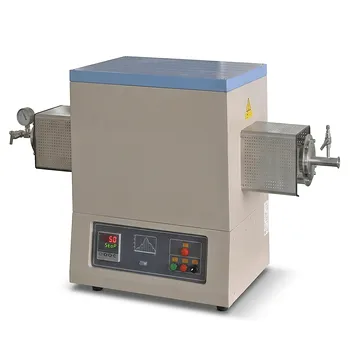
High Temperature 1700C Tube Furnace with 4 Inch OD Alumina Tube and Vacuum Sealing Flanges

High Temperature 1700C Vertical Tube Furnace for Powder Spherification and Material Sintering
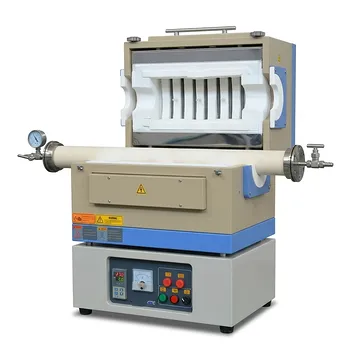
High Temperature 1600C Split Tube Furnace Vacuum Flanges Valves Optional 60mm 80mm Alumina Tube

High Temperature Automated 5 Inch Tube Furnace for Autonomous Material Research and Advanced Laboratory R&D

High Temperature 1700C Six Zone Split Tube Furnace with Alumina Tube and Water Cooled Flanges
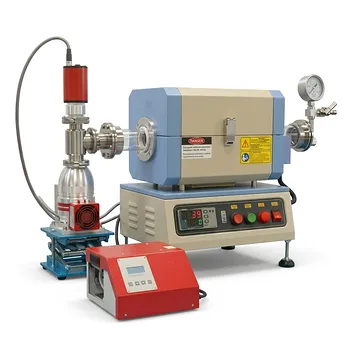
High Vacuum Compact Tube Furnace 1200C with Integrated Turbo Pump System and 8 Inch Heating Zone
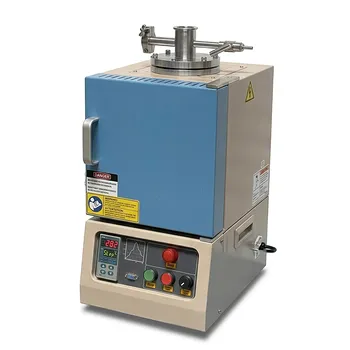
High Temperature Hybrid Muffle and Tube Furnace with Vacuum Capability and PID Control
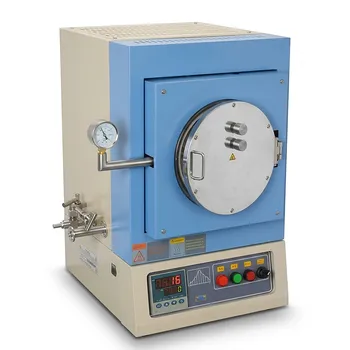
1100°C High Temperature Quartz Chamber Furnace 8 Inch OD with 7.6 Liter Capacity and Vacuum Atmosphere Capability

1100C Tube Furnace with Vacuum Flange and Programmable Temperature Controller for Material Science and Industrial Heat Treatment