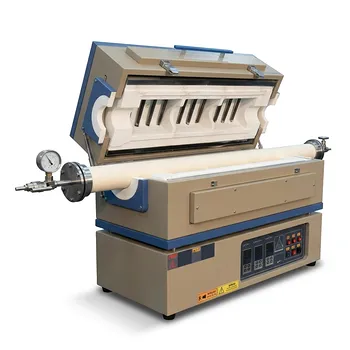
Which heating elements are commonly employed in tube furnaces for different temperature ranges? Expert Selection Guide
Updated 5 months ago
Selecting the correct heating element for a tube furnace depends entirely on the target operating temperature and the required precision. For moderate ranges up to 1,200°C, metallic alloys like Kanthal or nichrome are the standard; mid-to-high ranges reaching 1,550°C utilize Silicon Carbide (SiC); and ultra-high temperature applications up to 1,800°C require Molybdenum Disilicide (MoSi2). These materials are selected not just for their melting points, but for their ability to resist oxidation and maintain structural integrity at heat.
The choice of heating element is a balance between the required thermal limit, the chemical atmosphere of the process, and the necessary temperature stability. Matching the element material to the specific temperature bracket ensures both equipment longevity and process repeatability.
Moderate Temperature Solutions (Up to 1,200°C)
Metallic Resistance Alloys
For temperatures in the lower to mid-range, typically up to 1,200°C, high-resistance metallic alloys are the most common choice. Kanthal (iron-chromium-aluminum) and nichrome wires are favored for their ductility and ease of integration.
Application and Arrangement
These metallic elements are often arranged in helical or zoned patterns around the process tube. This configuration ensures even heat distribution across the reaction chamber, which is essential for uniform material processing.
Integration with Process Tubes
At these moderate temperatures, the process tube is frequently made of fused quartz. Quartz is transparent and chemically inert, making it ideal for visual monitoring and maintaining a clean environment up to approximately 1,200°C.
High-Temperature Ceramic Elements (1,200°C to 1,550°C)
Silicon Carbide (SiC) Rods
When temperatures exceed the limits of metallic wires, Silicon Carbide (SiC) becomes the primary heating material. SiC rods are capable of operating efficiently in the 1,400°C to 1,550°C range.
Mechanical and Thermal Properties
SiC is valued for its high power density and mechanical strength. These elements are often used in Drop Tube Furnaces where stable operation and high-temperature uniformity are critical for evaluating mineral phase evolution.
Stability through Passivation
Silicon carbide elements are naturally resistant to oxidation in aggressive industrial atmospheres. This durability is supported by the material's ability to maintain its physical shape even under significant thermal stress.
Ultra-High Temperature Applications (Up to 1,800°C)
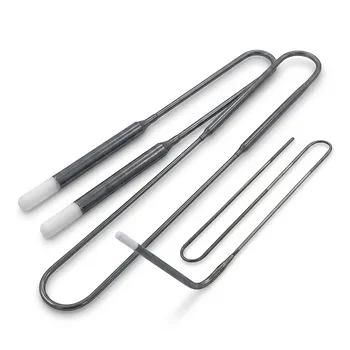
Molybdenum Disilicide (MoSi2)
For extreme applications such as sintering or smelting, Molybdenum Disilicide (MoSi2) is the preferred ceramic element. These elements allow tube furnaces to reach operating temperatures as high as 1,800°C to 1,850°C.
Oxidation Resistance and Longevity
MoSi2 elements develop a self-passivating oxide layer when heated. This glass-like surface protects the core material from further oxidation, ensuring long-term stability even in harsh environments.
Precision Control and Alumina Tubes
MoSi2 elements provide exceptional temperature stability, often controlled within a margin of ±1°C. At these extreme heats, the process tube must be upgraded to alumina or corundum to withstand the thermal load.
Understanding the Technical Trade-offs
Material Fragility and Handling
Unlike metallic wires, ceramic elements like SiC and MoSi2 are inherently brittle. They are susceptible to mechanical shock and must be handled with extreme care during installation or maintenance.
Resistance Aging
Silicon Carbide (SiC) elements undergo a process called "aging," where their electrical resistance increases over time. This requires the furnace power supply to have a variable voltage output to compensate for the higher resistance as the element matures.
Atmospheric Limitations
While MoSi2 is excellent in oxidizing atmospheres, it can be sensitive to certain reducing atmospheres. Additionally, at temperatures around 400°C to 700°C, MoSi2 can undergo "pest oxidation" if not transitioned through that range quickly.
How to Apply This to Your Project
Matching the heating element to your specific goal is critical for cost-efficiency and performance.
- If your primary focus is cost-effective laboratory work below 1,100°C: Use Kanthal or nichrome metallic elements paired with a quartz process tube for maximum visibility and ease of use.
- If your primary focus is high-temperature material testing up to 1,500°C: Select Silicon Carbide (SiC) elements, but ensure your power controller can compensate for the element's increasing resistance over time.
- If your primary focus is ultra-high precision sintering at 1,700°C or above: Invest in Molybdenum Disilicide (MoSi2) elements and high-purity alumina tubes to ensure stability and chemical inertness.
- If your primary focus is processing in highly corrosive environments: Consider utilizing refractory metal tubes made of molybdenum or tungsten to protect the furnace internals.
By aligning your heating element choice with your target temperature and atmospheric requirements, you ensure a stable, repeatable, and long-lasting thermal process.
Summary Table:
| Heating Element Material | Optimal Temp Range | Recommended Tube | Key Advantage |
|---|---|---|---|
| Metallic Alloys (Kanthal/Nichrome) | Up to 1,200°C | Fused Quartz | Cost-effective; ductile & uniform heating |
| Silicon Carbide (SiC) | 1,200°C - 1,550°C | Alumina / Ceramic | High power density; oxidation resistance |
| Molybdenum Disilicide (MoSi2) | 1,550°C - 1,800°C | High-Purity Alumina | Ultra-high precision; self-passivating |
| Refractory Metals (W/Mo) | Above 1,800°C | Specialty Ceramic | Extreme heat capability in vacuum/inert gas |
Elevate Your Material Research with THERMUNITS
As a global leader in high-temperature laboratory equipment, THERMUNITS specializes in delivering high-precision thermal solutions tailored for material science and industrial R&D. Whether your application requires standard Tube furnaces, advanced CVD/PECVD systems, or complex Vacuum Induction Melting (VIM) units, our engineering team ensures your equipment is outfitted with the ideal heating elements for your specific temperature and atmospheric needs.
Our Comprehensive Range Includes:
- Muffle, Vacuum, and Atmosphere Furnaces
- Rotary and Hot Press Furnaces
- High-Purity Dental Furnaces and Electric Rotary Kilns
- Premium Thermal Elements and Lab Heat Treatment Accessories
Maximize your process repeatability and equipment longevity today. Contact THERMUNITS now to receive a professional consultation and custom quote for your next high-temperature project!
Mentioned Products
- Molybdenum Disilicide MoSi2 Thermal Elements Electric Furnace Heating Element High Temperature Resistance
- High Temperature 1700C Benchtop Tube Furnace with 5 Inch Heating Zone High Purity Alumina Tube and Vacuum Sealing Flanges
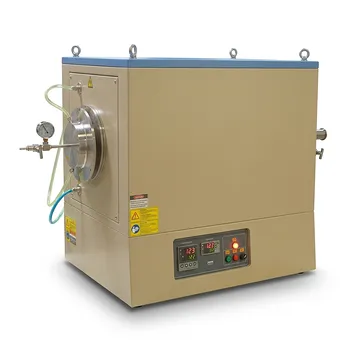
- 1100°C Large Diameter Quartz Tube Furnace with 24 Inch Heating Zone and Water Cooled Flanges
- High Temperature Tube Furnace 1500C with Sliding Flanges and 50mm OD for Rapid Thermal Processing Fast Heating and Cooling
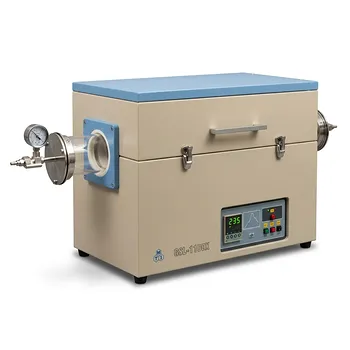
- Single Zone Tube Furnace 5 Inch Quartz Tube 36 Inch Heating Zone Vacuum Flanges
People Also Ask
- What role do MoSi2 heating elements play in high-temperature smelting? Precision for Ferronickel & Slag Research
- Why is the selection of high-performance thermal elements critical for high-temperature testing? Ensure Data Integrity.
- How do electric thermal elements compare to combustion-based heating systems? Maximize Your Lab's Energy Efficiency
- What are the primary functions of an electric resistance furnace? Enhancing Precision in Industrial Thermal Processing
- How do optimized control schemes for electric resistance furnaces ensure accuracy? Enhance Heat Treatment Stability.

Tech Team · ThermUnits
Last updated on Apr 14, 2026
Related Products
Molybdenum Disilicide MoSi2 Thermal Elements Electric Furnace Heating Element High Temperature Resistance

High Temperature 1700C Benchtop Tube Furnace with 5 Inch Heating Zone High Purity Alumina Tube and Vacuum Sealing Flanges
1100°C Large Diameter Quartz Tube Furnace with 24 Inch Heating Zone and Water Cooled Flanges

High Temperature Tube Furnace 1500C with Sliding Flanges and 50mm OD for Rapid Thermal Processing Fast Heating and Cooling
Single Zone Tube Furnace 5 Inch Quartz Tube 36 Inch Heating Zone Vacuum Flanges
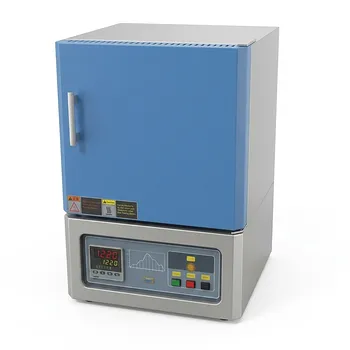
High Temperature Benchtop Muffle Furnace 1700C 10L Chamber Alumina Fiber Insulation MoSi2 Heating Elements
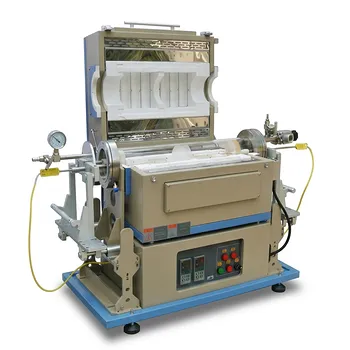
Two Zone IR Heating Rapid Thermal Processing RTP Tube Furnace with 4 Inch ID Quartz Tube and Sliding Sample Holders
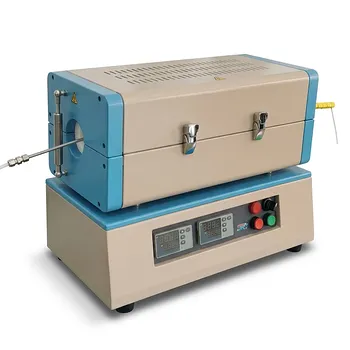
Gas Pre-Heating Tube Furnace for High Temperature Pyrolysis Reactors and Material Science Research
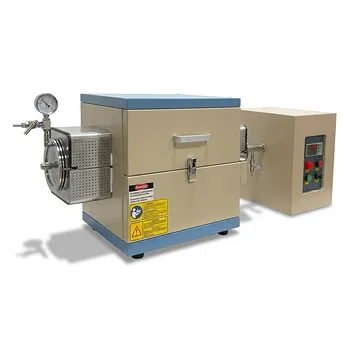
1200C High Temperature 5 Inch Split Vacuum Tube Furnace with 12 Inch Heating Zone and Separated PID Controller
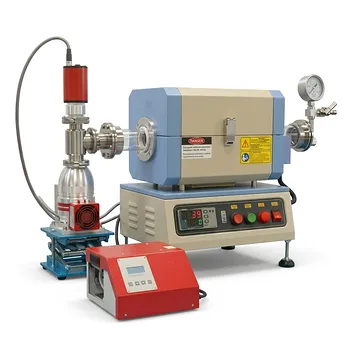
High Vacuum Compact Tube Furnace 1200C with Integrated Turbo Pump System and 8 Inch Heating Zone

1100C Tube Furnace with Vacuum Flange and Programmable Temperature Controller for Material Science and Industrial Heat Treatment
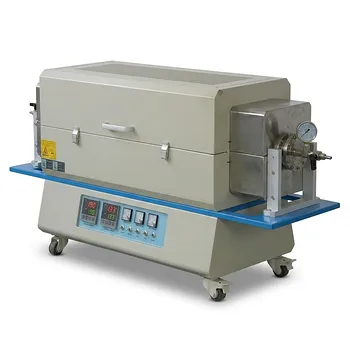
High Temperature Elongated Dual Zone Tube Furnace for Material Research and Industrial Heat Treatment

Vertical 1700C Vacuum and Atmosphere Tube Furnace with 80mm Alumina Tube
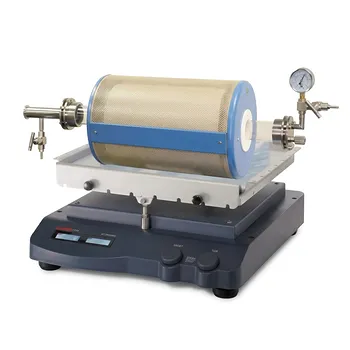
High Temperature Rocking Tube Furnace with Quartz Tube and Vacuum Flange for Materials Synthesis
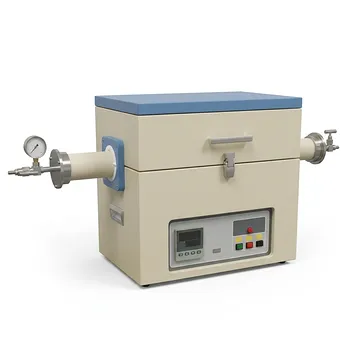
1250C Split Tube Furnace with 3 Inch Mullite Tube and Vacuum Sealing Flanges for Precision Thermal Processing

High Temperature 1700C Six Zone Split Tube Furnace with Alumina Tube and Water Cooled Flanges

1200°C 5 Inch Vertical Quartz Tube Furnace with Stainless Steel Vacuum Flanges
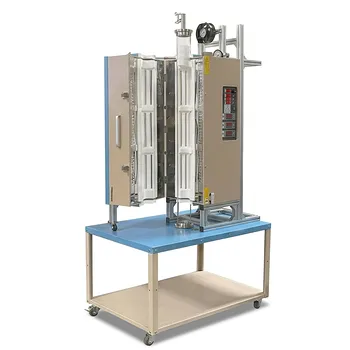
1200C Three Zone Split Vertical Tube Furnace 4 Inch Quartz Tube Stainless Steel Vacuum Flanges
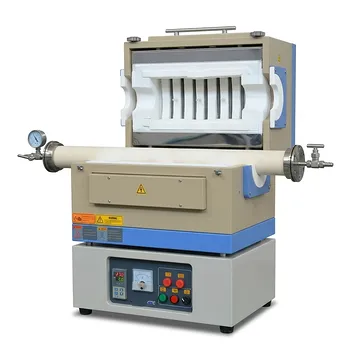
High Temperature 1600C Split Tube Furnace Vacuum Flanges Valves Optional 60mm 80mm Alumina Tube