Why must the synthesis of Bismuth Sulfide (Bi2S3) nanobelts be conducted under an inert atmosphere? Ensure Phase Purity
Updated 5 months ago
The synthesis of Bismuth Sulfide ($Bi_2S_3$) nanobelts requires an inert atmosphere primarily to prevent the rapid oxidation of chemical precursors and the final nanomaterial at high temperatures. Without this isolation from oxygen, the bismuth source undergoes unintended side reactions, and the resulting nanobelts re-oxidize, leading to contaminated, low-performance products.
Core Takeaway: Conducting the synthesis in an inert environment within a tube furnace ensures the complete chemical conversion of Bismuth Oxide to Bismuth Sulfide while preserving the material's specific crystal phase and electronic properties.
Preventing Oxidative Side Reactions
Protection of the Bismuth Precursor
The primary precursor, Bismuth Oxide ($Bi_2O_3$), is highly reactive when exposed to oxygen at elevated temperatures. In an ambient atmosphere, the intended sulfidation process is disrupted by competing oxidative reactions that prevent the precursor from bonding correctly with sulfur vapor.
Shielding the Final $Bi_2S_3$ Product
Even after the nanobelts have formed, they remain highly susceptible to re-oxidation while still at high temperatures. An inert atmosphere, usually created by continuously flowing high-purity Argon, displaces oxygen and moisture to ensure the $Bi_2S_3$ remains chemically stable until it cools.
Ensuring Phase Purity and Crystallinity
Overcoming Thermodynamic Barriers
The conversion of $Bi_2O_3$ to $Bi_2S_3$ is strictly temperature-dependent, requiring precise control to reach the necessary energy thresholds. Synthesis at lower temperatures (e.g., 150°C or 300°C) often results in incomplete reactions or unwanted intermediate phases.
Achieving the Orthorhombic Phase
A temperature of 500°C is typically required to ensure the bismuth source is completely converted into the orthorhombic phase of Bismuth Sulfide. The tube furnace provides the stable thermal environment and programmed heating rates necessary to overcome these thermodynamic barriers without the risk of oxidative ablation.
Preserving Electronic and Catalytic Integrity
Maintaining the Narrow Bandgap
Bismuth Sulfide is valued for its narrow bandgap and high activity, properties that are easily degraded by oxygen impurities. If oxygen is introduced into the lattice, it alters the electronic valence states of the active sites, significantly reducing the material's effectiveness in electrochemical applications.
Morphology and Directional Growth
The use of a vacuum or controlled atmosphere tube furnace allows for a stable low-pressure environment that facilitates directional growth. This precision is critical for the formation of "nanobelts," as the sealing integrity of the furnace chamber directly dictates the final morphological quality and crystal structure of the synthesized sheets.
Understanding the Trade-offs and Pitfalls
The Risk of Insufficient Purging
If the tube furnace is not purged thoroughly before heating begins, residual oxygen can lead to surface oxidation. This creates a core-shell structure where the $Bi_2S_3$ core is wrapped in an oxide layer, which acts as an insulating barrier and ruins the material’s conductivity.
Temperature Fluctuations
Inaccurate temperature control can result in heterogeneous products where only a portion of the material reaches the pure-phase state. Maintaining a consistent thermal profile is as vital as the inert gas flow; otherwise, the resulting nanobelts will exhibit inconsistent catalytic performance across different batches.
How to Apply This to Your Synthesis Project
Making the Right Choice for Your Goal
To achieve the best results in $Bi_2S_3$ synthesis, tailor your furnace parameters to your specific performance requirements:
- If your primary focus is Phase Purity: Ensure your tube furnace is programmed to maintain a stable 500°C for the duration of the sulfidation to achieve a complete orthorhombic transition.
- If your primary focus is Electronic Conductivity: Use high-purity Argon or Nitrogen and verify the sealing integrity of your tube to prevent even trace amounts of oxygen from altering valence states.
- If your primary focus is Morphological Uniformity: Utilize a vacuum-capable tube furnace to control vapor pressure, which facilitates the consistent directional growth required for nanobelts.
By strictly controlling the chemical environment and thermal profile, you can reliably produce high-purity Bismuth Sulfide nanobelts optimized for advanced technical applications.
Summary Table:
| Factor | Requirement | Impact on Bi2S3 Synthesis |
|---|---|---|
| Atmosphere | Inert (Argon/Nitrogen) | Prevents precursor oxidation and material contamination |
| Temperature | Stable 500°C | Facilitates complete conversion to the orthorhombic phase |
| Environment | Controlled Vacuum | Enables precise directional growth for nanobelt morphology |
| Thermal Profile | Programmed Heating | Ensures electronic integrity and consistent catalytic activity |
Elevate Your Material Research with THERMUNITS
Achieving the perfect crystal phase and morphology for Bismuth Sulfide nanobelts requires uncompromising thermal and atmospheric control. THERMUNITS is a leading manufacturer of high-temperature laboratory equipment designed specifically for material science and industrial R&D.
We offer a comprehensive range of thermal processing solutions, including:
- Tube & Atmosphere Furnaces: Perfect for inert gas processing and sulfidation.
- CVD/PECVD Systems: For advanced thin-film and nanostructure synthesis.
- Vacuum & Muffle Furnaces: High-precision heating for diverse heat treatments.
- Specialized Equipment: Rotary kilns, Hot Press furnaces, and Vacuum Induction Melting (VIM) systems.
Our equipment ensures the sealing integrity and temperature stability necessary to prevent oxidative defects and maximize the performance of your nanomaterials.
Optimize your laboratory's synthesis capabilities today.
Contact THERMUNITS for a Professional Consultation
References
- Shafqat Ali, M. A. Rafiq. Fast, Sensitive, and Selective Hydrogen Sensing of Silver-Doped Bismuth Sulfide Nanobelts. DOI: 10.1007/s11664-024-11036-6
Mentioned Products
- High Temperature Tube Furnace 1500C with Sliding Flanges and 50mm OD for Rapid Thermal Processing Fast Heating and Cooling
- Vertical 1700C Vacuum and Atmosphere Tube Furnace with 80mm Alumina Tube
- 1100C Tube Furnace with Vacuum Flange and Programmable Temperature Controller for Material Science and Industrial Heat Treatment
- Compact High Temperature 1600C Tube Furnace with 50mm Alumina Tube and Vacuum Flanges for Material Sintering
- 900°C Max Rotary Tube Furnace with 8 Inch 310S Alloy Tube and Optional Multi Zone Heating for Industrial Material Calcination
People Also Ask
- How are high-temperature tube furnaces utilized to repair etching damage? Precision Lattice Restoration Solutions
- What role does a high-temperature tube furnace play in CVD synthesis of silicon nanowires? Master VLS Growth Precision.
- What role does a high-temperature tube furnace play in the sulfidation heat treatment of CoS@C/MXene nanocomposites? Guide
- How does precision tube furnace control influence CoFe nanoparticle formation? Master Your Bimetallic Synthesis.
- What core conditions does a high-temperature tube furnace provide for rGO aerogels? Mastering Precision Synthesis.

Tech Team · ThermUnits
Last updated on Apr 14, 2026
Related Products
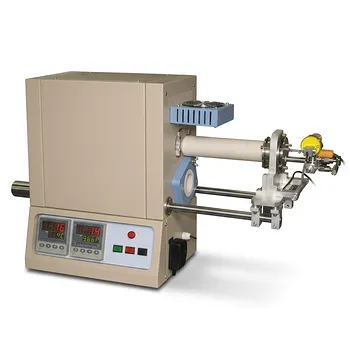
High Temperature Tube Furnace 1500C with Sliding Flanges and 50mm OD for Rapid Thermal Processing Fast Heating and Cooling

Vertical 1700C Vacuum and Atmosphere Tube Furnace with 80mm Alumina Tube
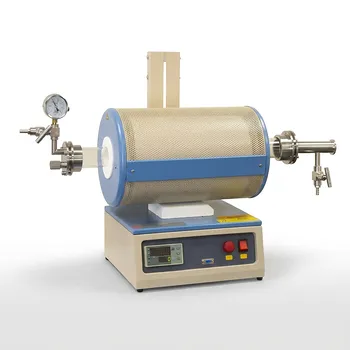
1100C Tube Furnace with Vacuum Flange and Programmable Temperature Controller for Material Science and Industrial Heat Treatment

Compact High Temperature 1600C Tube Furnace with 50mm Alumina Tube and Vacuum Flanges for Material Sintering
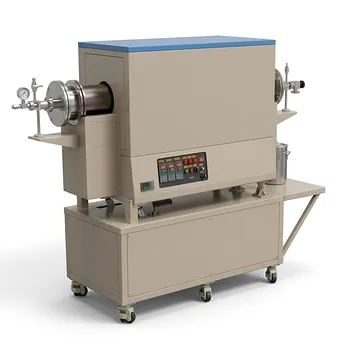
900°C Max Rotary Tube Furnace with 8 Inch 310S Alloy Tube and Optional Multi Zone Heating for Industrial Material Calcination
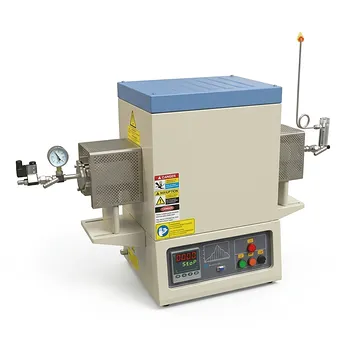
1700C Hydrogen Gas Tube Furnace with 60mm Alumina Process Tube and Integrated Hydrogen Safety Detector

High Temperature 1700C Tube Furnace with High Vacuum Turbomolecular Pump System and Multi Channel Mass Flow Controller Gas Mixer
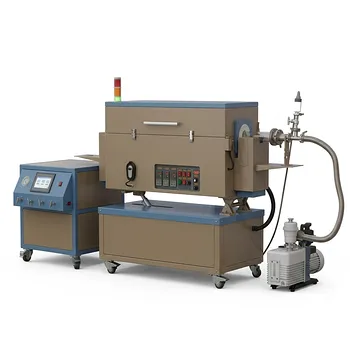
5 Inch Three Zone Rotary Tube Furnace with Integrated Gas Delivery System and 1200C Capability for Advanced Material CVD Processing
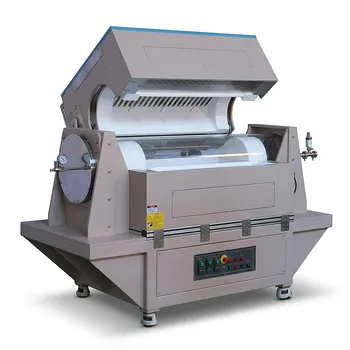
Three Zone Tube Furnace with 11 Inch or 15 Inch Quartz Tube and Hinged Flanges for Vacuum Atmosphere Heat Treatment
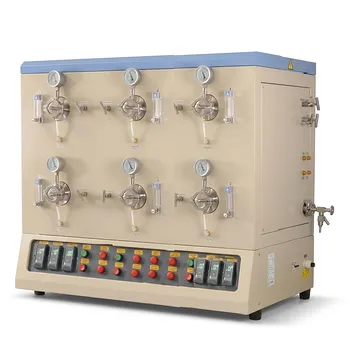
1200C High Throughput Multi Channel Tube Furnace with 50mm Quartz Tubes for Annealing and Material Phase Diagram Research

1200°C 5 Inch Vertical Quartz Tube Furnace with Stainless Steel Vacuum Flanges
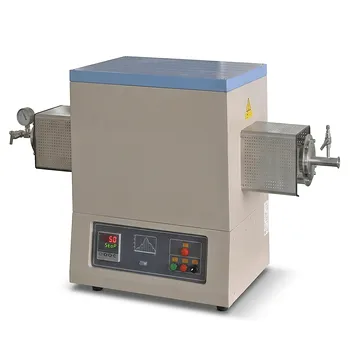
High Temperature 1700C Tube Furnace with 4 Inch OD Alumina Tube and Vacuum Sealing Flanges

High Temperature 1700C Benchtop Tube Furnace with 5 Inch Heating Zone High Purity Alumina Tube and Vacuum Sealing Flanges

High Temperature 1700C Six Zone Split Tube Furnace with Alumina Tube and Water Cooled Flanges

Compact Vertical Split Quartz Tube Furnace with Stainless Steel Vacuum Flanges for Rapid Thermal Quenching and Controlled Atmosphere Material Processing

1800C High Temperature Compact Vacuum Tube Furnace with 60mm OD Alumina Tube and Kanthal MoSi2 Heating Elements
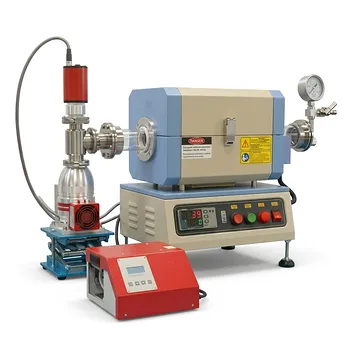
High Vacuum Compact Tube Furnace 1200C with Integrated Turbo Pump System and 8 Inch Heating Zone
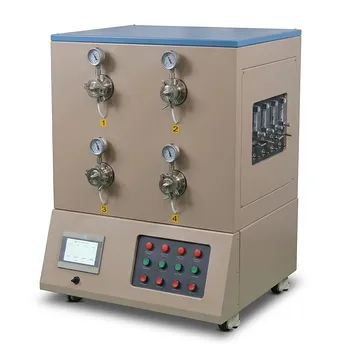
High Throughput 1200C Four Channel Tube Furnace with 3 Inch Quartz Tubes for Multi Zone Annealing and Material Research

High Temperature Automated 5 Inch Tube Furnace for Autonomous Material Research and Advanced Laboratory R&D
