The Architecture of Agility: Why Low Thermal Inertia is the Truth-Teller of Chemical Kinetics
Jun 08, 2026
The Invisible Lag
In the study of material science, we often mistake the limitations of our tools for the laws of nature.
When a researcher observes a carbonate decomposition peak shifting on a graph, the instinct is to search for a chemical explanation. But frequently, the culprit isn't the chemistry. It is the thermal inertia of the furnace itself.
High-mass furnaces act like heavy flywheels. They are slow to start and even slower to stop. In the high-stakes environment of vacuum kinetics, this "heaviess" creates a ghost in the data—a delay between what the controller demands and what the sample actually experiences.
The Problem of "Thermal Smearing"
Kinetic analysis is a dance with time. Methods like Kissinger or Friedman rely on extreme sensitivity to temperature peaks.
If your furnace has high thermal mass, it cannot pivot quickly. This results in "thermal smearing," where the decomposition peaks are stretched or shifted.
- The Lag: The sample temperature trails behind the program.
- The Shift: Peak temperatures appear higher than they truly are.
- The Error: Calculated activation energies become artifacts of the furnace masonry rather than the material's soul.
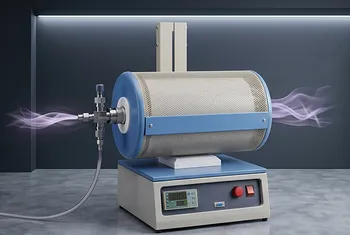
Low thermal inertia systems, built with low-mass ceramic fibers and precision elements, eliminate this lag. They offer the "agility" needed to ensure the data reflects the true chemical behavior.
Vacuum: The Loneliest Heat Transfer
Everything changes in a vacuum. Without air to carry heat through convection, we are left with the quiet efficiency of radiation.
In this environment, temperature control becomes a game of fourth-powers. Because heat transfer is radiation-dominant, a furnace with high thermal mass becomes nearly impossible to "tune" for linear heating rates. It absorbs too much energy and releases it too slowly.
A low thermal inertia tube furnace handles this by:
- Responding Instantly: Power adjustments translate directly to radiative output.
- Maintaining Uniformity: Engineering a consistent thermal field despite the lack of gas-driven distribution.
- Removing Volatiles: As carbonates release $CO_{2}$, the stable thermal environment ensures the vacuum system can sweep away volatiles without localized temperature spikes.
The Engineer’s Trade-off
Precision comes at a price. Low thermal inertia systems are highly responsive, which means they are also unforgiving.
| Feature | High-Mass Systems | Low-Inertia Systems (The Precision Choice) |
|---|---|---|
| Response Time | Sluggish, creates thermal "ballast" | Rapid, synchronized with real-time data |
| Control Logic | Forgiving of poor PID tuning | Requires high-precision PID calibration |
| Material Stress | Low (slow temperature changes) | Higher (susceptible to thermal shock) |
| Data Integrity | Prone to "peak shifting" | High fidelity; accurate activation energy |
To manage this, the system must be paired with sophisticated control logic. It is a balance between the speed of the experiment and the longevity of the ceramic components.
Designing the Experiment for Truth
If your goal is to transform vacuum decomposition from a series of "approximate observations" into repeatable science, the hardware choice is the first variable to solve.
- For Activation Energy: Prioritize linear heating stability.
- For Purity: Leverage the vacuum integration to prevent re-carbonation of the sample by clearing $CO_{2}$ immediately.
- For Throughput: Use rapid cooling to eliminate the "dead time" between experimental runs that plagues high-mass kilns.
The THERMUNITS Standard
At THERMUNITS, we understand that a furnace is more than a heating box; it is a scientific instrument designed to isolate variables.
We specialize in high-temperature solutions that bridge the gap between theoretical R&D and physical reality. Our range of equipment is engineered for those who cannot afford to have their data blurred by mechanical limitations:
- Vacuum & Tube Furnaces: Optimized for low thermal mass and rapid response.
- CVD/PECVD & VIM Systems: For advanced vapor deposition and induction melting.
- Rotary & Hot Press Furnaces: Tailored for industrial-scale research precision.
- Dental & Muffle Furnaces: High-uniformity solutions for specialized material processing.
Precision is not an accident; it is a choice of architecture. Contact Our Experts to discuss how our low-inertia thermal solutions can bring clarity to your kinetic research.
Quick Links
Suggested Products
Compact Vertical Split Quartz Tube Furnace with Stainless Steel Vacuum Flanges for Rapid Thermal Quenching and Controlled Atmosphere Material Processing Rapid Thermal Processing Sliding Tube Furnace with 4 Inch OD Quartz Tube and 900C IR Heating 1500C Eight Zone Split Tube Furnace for Thermal Gradient Processing and Advanced Material Research 900 ºC Max Sliding RTP Tube Furnace with Rapid IR Heating and 4 Inch OD Quartz Tube Automated Sliding Tube Furnace for Fast Heating and Cooling 2 Inch OD 1100C MaxFurther Reading
The Silent Guardian of Kinetics: The Engineering Logic Behind Stable Molten Salt Environments The Architecture of Isolation: Why Atmosphere Defines Material Destiny The Invisible Architect: Precision Thermal Oxidation in NiO@Ni Synthesis The Invisible Architect: Why Atmosphere Control Defines the High-Performance Catalyst The Architecture of Stability: Why Precision Aging is the Soul of Gas Sensor Reliability
ThermUnits
Last updated on Apr 14, 2026
Related Products

Compact Vertical Split Quartz Tube Furnace with Stainless Steel Vacuum Flanges for Rapid Thermal Quenching and Controlled Atmosphere Material Processing
Rapid Thermal Processing Sliding Tube Furnace with 4 Inch OD Quartz Tube and 900C IR Heating
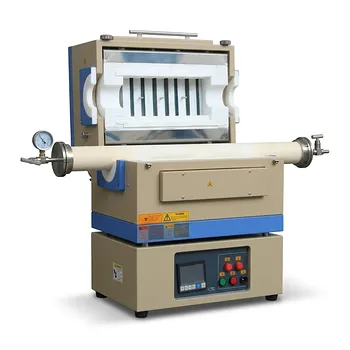
1500C Eight Zone Split Tube Furnace for Thermal Gradient Processing and Advanced Material Research
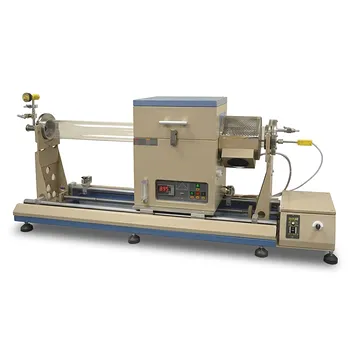
900 ºC Max Sliding RTP Tube Furnace with Rapid IR Heating and 4 Inch OD Quartz Tube
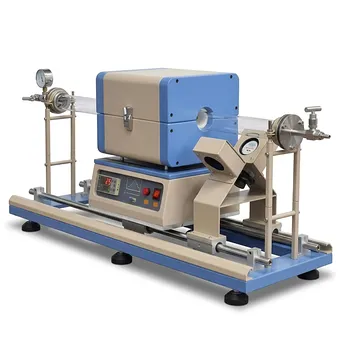
Automated Sliding Tube Furnace for Fast Heating and Cooling 2 Inch OD 1100C Max
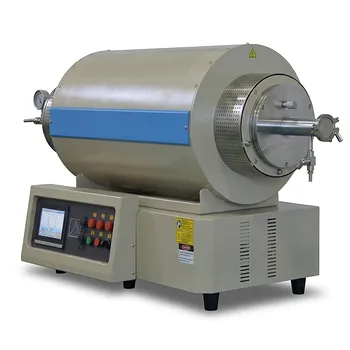
1200C Max Three Zone Tube Furnace 6 Inch OD Max with Tube and Flange
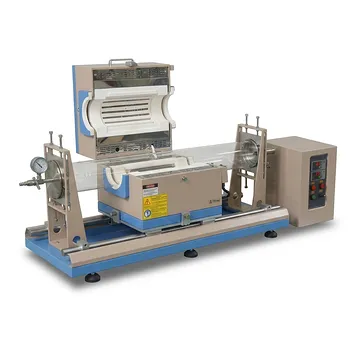
1200C High Temperature 5 Inch Sliding Tube Furnace for Rapid Thermal Processing RTP and Wafer Annealing

High Temperature Tube Furnace 1500C with Sliding Flanges and 50mm OD for Rapid Thermal Processing Fast Heating and Cooling
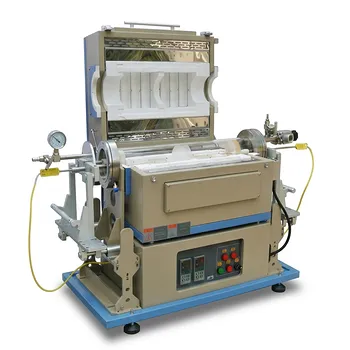
Two Zone IR Heating Rapid Thermal Processing RTP Tube Furnace with 4 Inch ID Quartz Tube and Sliding Sample Holders

Compact High Temperature 1600C Tube Furnace with 50mm Alumina Tube and Vacuum Flanges for Material Sintering

High Temperature 1700C Vertical Tube Furnace for Powder Spherification and Material Sintering

High Temperature 1700C Six Zone Split Tube Furnace with Alumina Tube and Water Cooled Flanges
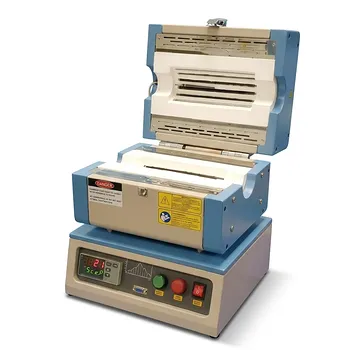
1250C Compact Split Tube Furnace with 8 Inch Heating Zone and Programmable Controller

Vertical 1700C Vacuum and Atmosphere Tube Furnace with 80mm Alumina Tube
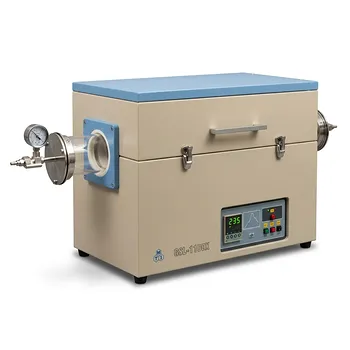
Single Zone Tube Furnace 5 Inch Quartz Tube 36 Inch Heating Zone Vacuum Flanges

1800C High Temperature Compact Vacuum Tube Furnace with 60mm OD Alumina Tube and Kanthal MoSi2 Heating Elements

High Temperature Automated 5 Inch Tube Furnace for Autonomous Material Research and Advanced Laboratory R&D

1700C Hydrogen Gas Tube Furnace with 60mm Alumina Process Tube and Integrated Hydrogen Safety Detector
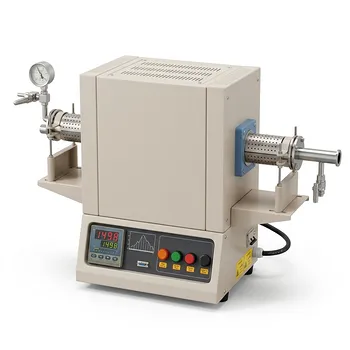
1500C High Temperature Compact Tube Furnace 2 Inch OD with Vacuum Flanges and Complete Accessories