The Geometry of Survival: Engineering the 1700°C Path from Diamonds to Onions
Jun 10, 2026
The Violence of Transformation
In materials science, transformation is rarely peaceful. To turn a detonation nanodiamond (ND) into Onion-Like Carbon (OLC), you are essentially forcing a fundamental reorganization of matter.
You are asking carbon atoms to abandon their rigid, diamond-like $sp^3$ bonds and embrace the curved, concentric $sp^2$ shells of graphene. This is not a shift that happens by accident; it is a forced migration driven by extreme thermal energy.
The process is a delicate balance between creation and destruction. Without a precise system, the material you are trying to build will simply vanish into thin air.
1700°C: The Threshold of Structure
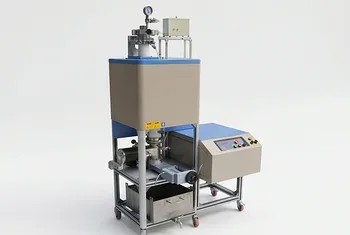
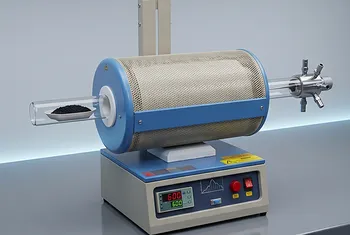
The primary challenge is the "energy barrier." At temperatures up to 1700°C, the industrial-grade tube furnace acts as a catalyst for a solid-phase transition.
Why 1700°C?
- Bond Recombination: It provides the kinetic energy necessary to break the $sp^3$ lattice.
- Aromatization: It drives the carbon skeleton to restructure into stable hexagonal rings.
- Concentricity: High heat allows the graphene layers to "self-assemble" into the signature spherical onion shape.
If the furnace fails to maintain a uniform temperature field, the batch becomes a graveyard of hybrid defects—half-diamond, half-disordered carbon—failing the requirements of modern R&D.
Helium: The Noble Guardian
As the temperature climbs past 500°C, carbon acquires a suicidal tendency: it wants to react with oxygen. In a standard atmosphere, your high-value nanocarbon would vanish as $CO_2$ long before it reaches its graphitic peak.
The functional role of Helium is one of total exclusion.
| Element | Role in OLC Synthesis | Engineering Benefit |
|---|---|---|
| Helium Atmosphere | Inert Shielding | Total displacement of oxygen to prevent mass loss. |
| High Conductivity | Thermal Regulation | Facilitates rapid, even distribution of heat within the tube. |
| Purity Flush | Waste Removal | Sweeps away volatile impurities released during transition. |
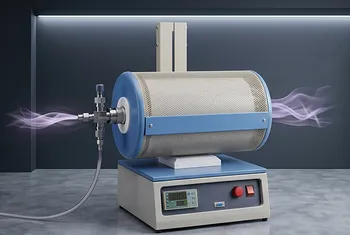
While nitrogen or argon are common for lower-temp carbonization, Helium is the "gold standard" for OLC. Its chemical inertness is absolute, ensuring that even at the peak of 1700°C, the only thing changing is the carbon's geometry, not its chemistry.
The Cost of Precision
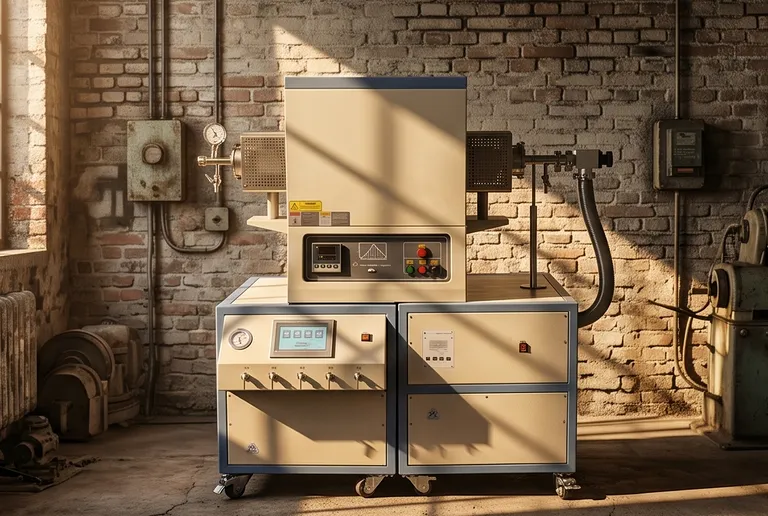
Engineering this environment is a psychological game of trade-offs. To gain structural perfection, you must accept systemic stress.
The Stress on the System:
- Thermal Fatigue: Repeated cycles to 1700°C push furnace tubes and vacuum seals to their elastic limits.
- Energy Density: Maintaining these temperatures requires specialized heating elements, such as Molybdenum Disilicide ($MoSi_2$), which require careful handling.
- Economic Friction: High-purity Helium is a finite, expensive resource. The decision to use it is a commitment to quality over cost.
Determining Your Strategic Path
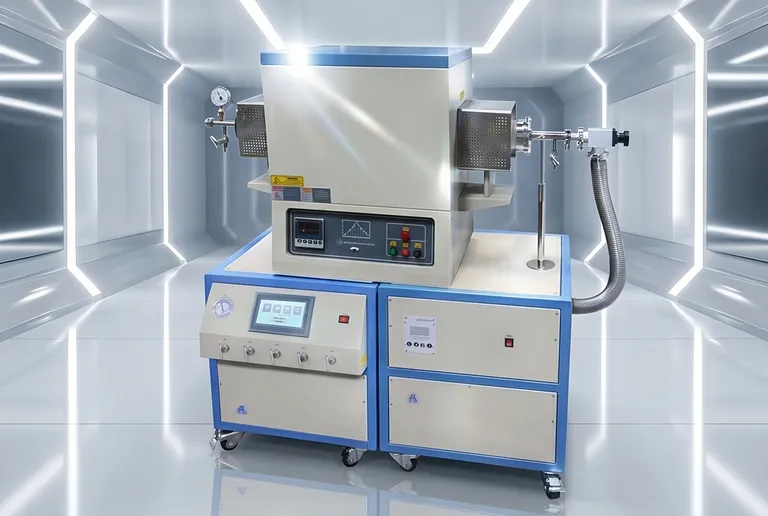
When synthesizing OLC, your technical choices should reflect your ultimate performance goals:
- For Electrical Conductivity: Maximize the temperature (near 1700°C) to ensure the highest degree of graphitization.
- For Specific Surface Area: Use a high-velocity Helium purge to keep the pores of the carbon shells free from decomposition byproducts.
- For Structural Tailoring: Focus on "dwell time"—the duration at peak heat—to control exactly how many graphene layers are formed.
The Architecture of Certainty
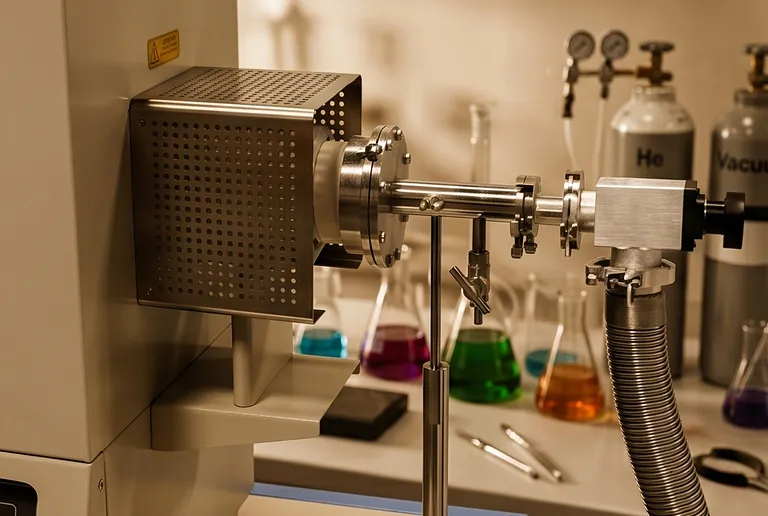
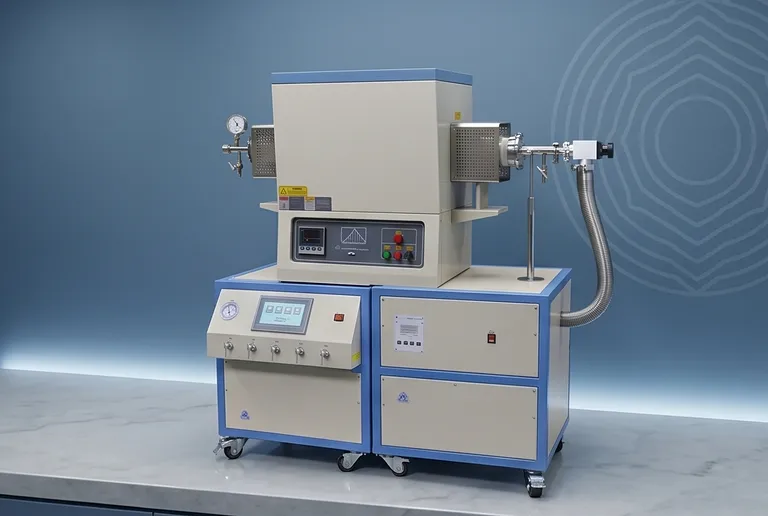
At THERMUNITS, we understand that in high-temperature R&D, "close enough" is a failure state. We design our industrial tube furnaces and atmosphere-controlled systems to be the silent partners in your transformation.
Our range of equipment—from Vacuum and Atmosphere Furnaces to CVD systems and Vacuum Induction Melting (VIM) units—is engineered to provide the thermal uniformity and gas-tight integrity required for the most demanding carbon nanomaterial syntheses.
When your research leaves no room for oxidative loss or thermal fluctuation, you need equipment built for the extremes.
Quick Links
Suggested Products
High Temperature 1700C Vertical Tube Furnace for Powder Spherification and Material Sintering High Temperature 1700C Tube Furnace with High Vacuum Turbomolecular Pump System and Multi Channel Mass Flow Controller Gas Mixer High Temperature Three Zone Tube Furnace 1700C with Alumina Tube and Water Cooled Flanges High Temperature 1700C Tube Furnace with 4 Inch OD Alumina Tube and Vacuum Sealing Flanges High Temperature 1700C Benchtop Tube Furnace with 5 Inch Heating Zone High Purity Alumina Tube and Vacuum Sealing FlangesFurther Reading
The Architecture of Heat: Why Verticality Defines Modern Metallurgical Simulation The Geometry of Heat: Engineering Magnetic Biochar Through Controlled Pyrolysis The Architecture of Absence: Why Atmosphere Control Defines the Fate of Mesoporous Carbon The Silent Guardian of Kinetics: The Engineering Logic Behind Stable Molten Salt Environments The Architecture of Isolation: Why Atmosphere Defines Material Destiny
ThermUnits
Last updated on Apr 14, 2026
Related Products

High Temperature 1700C Vertical Tube Furnace for Powder Spherification and Material Sintering

High Temperature 1700C Tube Furnace with High Vacuum Turbomolecular Pump System and Multi Channel Mass Flow Controller Gas Mixer
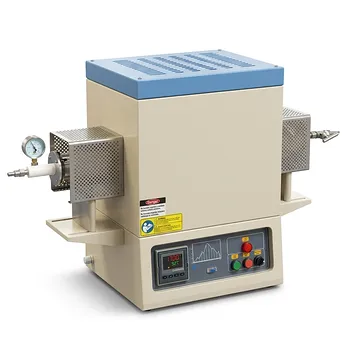
High Temperature Three Zone Tube Furnace 1700C with Alumina Tube and Water Cooled Flanges
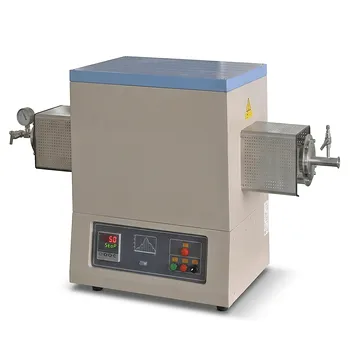
High Temperature 1700C Tube Furnace with 4 Inch OD Alumina Tube and Vacuum Sealing Flanges

High Temperature 1700C Benchtop Tube Furnace with 5 Inch Heating Zone High Purity Alumina Tube and Vacuum Sealing Flanges
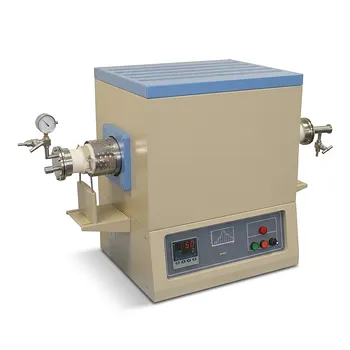
1700C High Temperature Alumina Tube Furnace with 18 Inch Heated Zone and Vacuum Sealing Flanges
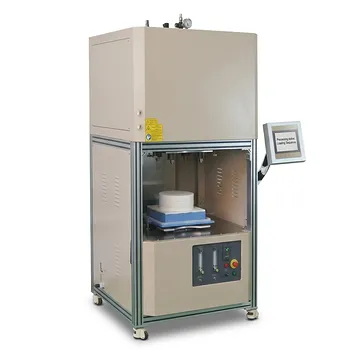
High Temperature Vertical Atmosphere Controlled Furnace with Automatic Bottom Loading and 1700°C Capacity for Advanced Material Research
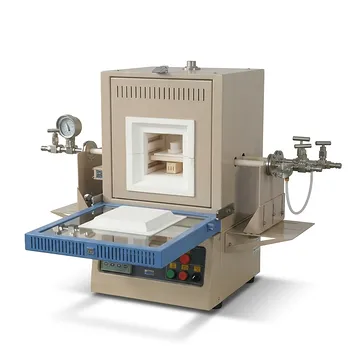
1700C Compact Hybrid Furnace with Dual Layer Box Sintering and Controlled Atmosphere Alumina Tubes

Vertical 1700C Vacuum and Atmosphere Tube Furnace with 80mm Alumina Tube
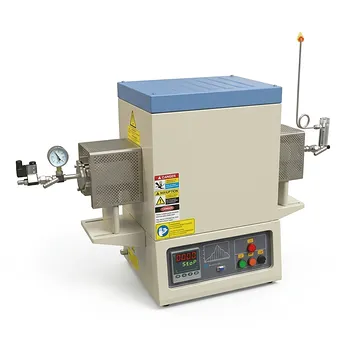
1700C Hydrogen Gas Tube Furnace with 60mm Alumina Process Tube and Integrated Hydrogen Safety Detector
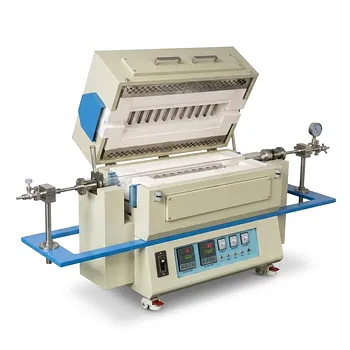
High Temperature Dual Zone Rotating Tube Furnace 1500C Silicon Carbide Heating for Advanced Material Synthesis

1800C High Temperature Compact Vacuum Tube Furnace with 60mm OD Alumina Tube and Kanthal MoSi2 Heating Elements

High Temperature Tube Furnace 1500C with Sliding Flanges and 50mm OD for Rapid Thermal Processing Fast Heating and Cooling
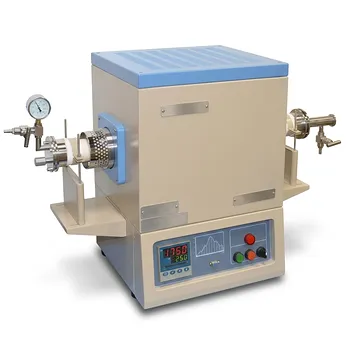
High Temperature Compact Vacuum Tube Furnace 1750C Max 60mm OD Alumina Tube

Compact High Temperature 1600C Tube Furnace with 50mm Alumina Tube and Vacuum Flanges for Material Sintering
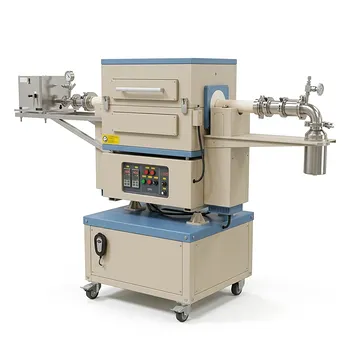
1500C Max Dual Zone Rotary Tube Furnace with 60 mm OD Alumina Tube for High Temperature Material Synthesis
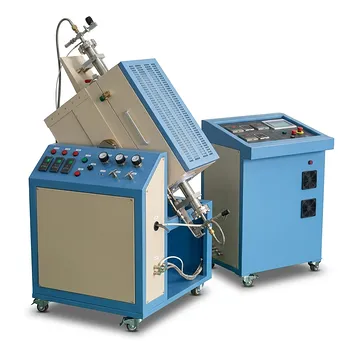
1100C High Pressure Rocking Tube Furnace with 2 Inch Super Alloy Processing Tube for Material Synthesis

1750°C High Temperature Benchtop Vacuum Atmosphere Tube Furnace with Kanthal Super 1800 Heating Elements and 60mm Alumina Processing Tube
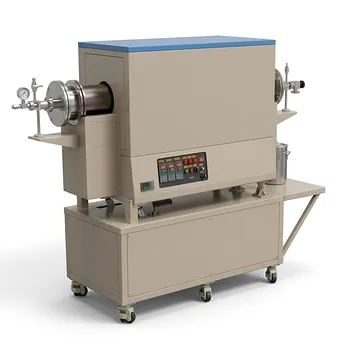
900°C Max Rotary Tube Furnace with 8 Inch 310S Alloy Tube and Optional Multi Zone Heating for Industrial Material Calcination