How do a high-temperature tube furnace and a controlled atmosphere contribute to NiWMo carbides? Key Synthesis Roles
Updated 3 months ago
The high-temperature tube furnace and controlled atmosphere act as the primary catalysts for material restructuring. By providing a sustained 900°C isothermal environment, the furnace serves as a thermal trigger that induces phase decomposition and the subsequent formation of MoNi3, WMo, and WC phases. The use of high-purity argon within a quartz tube creates an inert barrier that prevents the oxidation of nickel, tungsten, and molybdenum, ensuring the chemical integrity of the resulting carbide structures.
The core mechanism relies on a high-temperature thermal trigger to drive chemical decomposition while an inert gas environment isolates transition metals from oxygen. This synergy ensures that the phase transformation results in stable carbides rather than brittle oxides.
The Role of Isothermal Thermal Triggering
Inducing Phase Decomposition
The tube furnace provides the high-energy environment required to break existing chemical bonds in the precursor materials. At 900°C, the thermal energy is sufficient to initiate the decomposition of the initial material into its constituent elements or intermediate compounds.
Facilitating New Phase Formation
Once decomposition occurs, the furnace maintains a stable temperature that allows for the controlled growth of new phases. This specific thermal window is essential for the crystallization of MoNi3 (molybdenum-nickel), WMo (tungsten-molybdenum), and WC (tungsten carbide).
Maintaining Uniform Temperature Fields
A high-quality tube furnace ensures that the temperature remains consistent throughout the heating zone. This uniformity prevents localized variations in material properties, ensuring that the phase transformation occurs evenly across the entire sample.
The Necessity of Controlled Atmospheres
Preventing Transition Metal Oxidation
Transition metals like nickel, tungsten, and molybdenum are highly reactive with oxygen at elevated temperatures. By utilizing high-purity argon, the system displaces oxygen, preventing these metals from forming oxides that would otherwise compromise the carbide structure.
Ensuring Phase Stability
The inert atmosphere is critical for maintaining the thermodynamic stability of the carbide phases. Without this protection, the carbon components would likely react with trace oxygen to form CO or CO2, leading to decarburization and the loss of the desired material characteristics.
Utilizing Quartz Tube Environments
The quartz tube acts as a clean, non-reactive vessel for the reaction to take place. It allows for the precise containment of the argon gas while withstanding the thermal stress of 900°C cycles without contaminating the NiWMo carbides.
Understanding the Trade-offs
Thermal Limits and Material Integrity
Operating at 900°C is highly effective for NiWMo carbides, but exceeding these temperatures can lead to unwanted grain growth or the aggregation of metal atoms. This can reduce the surface area and effectiveness of the final composite material.
Gas Purity vs. Cost
While argon is an excellent inert shield, any impurity in the gas stream (such as moisture or trace oxygen) can lead to oxidative loss. Achieving the highest levels of phase purity requires expensive, high-purity gas sources and meticulous leak-checking of the quartz tube seals.
Heating Rates and Structural Stress
Rapid heating or cooling (high ramp rates) can induce thermal shock in both the quartz tube and the material itself. While slow heating rates (e.g., 2°C/min to 5°C/min) improve structural reorganization, they significantly increase the total processing time and energy consumption.
Applying This to Your Research or Production
Strategic Recommendations for Implementation
- If your primary focus is phase purity: Prioritize a high-purity argon flow and ensure the furnace seals are vacuum-tight to prevent even trace oxygen infiltration.
- If your primary focus is structural uniformity: Use a furnace with a long "constant temperature zone" and implement a slow heating ramp (5°C/min) to allow for even heat distribution.
- If your primary focus is preventing metal aggregation: Monitor the isothermal dwell time strictly, as excessive time at 900°C can cause nickel or molybdenum atoms to cluster, altering the material's properties.
Precise control over the thermal environment and gas composition is the only way to transform raw precursors into high-performance NiWMo carbide structures.
Summary Table:
| Component | Role in Phase Transformation | Key Benefit |
|---|---|---|
| Tube Furnace | Provides 900°C isothermal thermal trigger | Induces decomposition and growth of MoNi3, WMo, and WC phases. |
| Argon Atmosphere | Inert barrier and oxygen displacement | Prevents transition metal oxidation and ensures carbide phase stability. |
| Quartz Tube | High-purity reaction vessel | Provides clean, non-reactive containment for thermal cycles. |
| Thermal Control | Regulated heating/cooling rates | Maintains structural integrity and prevents grain growth or thermal shock. |
Optimize Your NiWMo Carbide Synthesis with THERMUNITS
Precision is paramount in high-temperature phase transformations. THERMUNITS is a leading manufacturer of high-temperature laboratory equipment for material science and industrial R&D. We provide the isothermal stability and gas purity required to transform raw precursors into high-performance carbide structures without oxidative loss.
Our comprehensive range of thermal solutions includes:
- Advanced Tube & Atmosphere Furnaces for precise phase control.
- Vacuum, Muffle, and Rotary Kilns for diverse heat treatment needs.
- CVD/PECVD Systems & VIM (Vacuum Induction Melting) for specialized R&D.
- High-Quality Thermal Elements and dental furnaces.
Ready to achieve superior structural uniformity in your materials? Contact our expert team today to find the perfect solution for your lab!
References
- Jesús Noé Rivera Olvera, Lucia Díaz-Barriga Arceo. Novel Morphology for NiWMo Carbides Obtained by Mechanical Alloying and Quenching. DOI: 10.3390/c10010011
Mentioned Products
- High Temperature Dual Zone Rotating Tube Furnace 1500C Silicon Carbide Heating for Advanced Material Synthesis
- High Temperature 1700C Vertical Tube Furnace for Powder Spherification and Material Sintering
- High Temperature Tube Furnace 1500C with Sliding Flanges and 50mm OD for Rapid Thermal Processing Fast Heating and Cooling
- Compact High Temperature 1600C Tube Furnace with 50mm Alumina Tube and Vacuum Flanges for Material Sintering
- High Temperature 1700C Tube Furnace with High Vacuum Turbomolecular Pump System and Multi Channel Mass Flow Controller Gas Mixer
People Also Ask
- What is the function of CVD furnaces in graphene prep? Enhancing Photodetector Charge Transport
- Why use CVD and a tube furnace for Pd3P0.95/NC catalyst phosphidation? Ensure high phase purity and performance.
- CVD Tube Furnace Advantages for Pd-P Catalyst Durability: Precision Control for 40,000+ Cycles
- How does a rotary tube furnace improve the processing of granular materials? Enhance Uniformity and Reaction Kinetics
- How does a Chemical Vapor Deposition (CVD) tube furnace facilitate synchronized nitridation? Precision Nano-Engineering.

Tech Team · ThermUnits
Last updated on Jun 02, 2026
Related Products
High Temperature Dual Zone Rotating Tube Furnace 1500C Silicon Carbide Heating for Advanced Material Synthesis

High Temperature 1700C Vertical Tube Furnace for Powder Spherification and Material Sintering

High Temperature Tube Furnace 1500C with Sliding Flanges and 50mm OD for Rapid Thermal Processing Fast Heating and Cooling

Compact High Temperature 1600C Tube Furnace with 50mm Alumina Tube and Vacuum Flanges for Material Sintering

High Temperature 1700C Tube Furnace with High Vacuum Turbomolecular Pump System and Multi Channel Mass Flow Controller Gas Mixer
1100C High Pressure Rocking Tube Furnace with 2 Inch Super Alloy Processing Tube for Material Synthesis
1500C Max Dual Zone Rotary Tube Furnace with 60 mm OD Alumina Tube for High Temperature Material Synthesis

1800C High Temperature Compact Vacuum Tube Furnace with 60mm OD Alumina Tube and Kanthal MoSi2 Heating Elements

High Temperature 1700C Benchtop Tube Furnace with 5 Inch Heating Zone High Purity Alumina Tube and Vacuum Sealing Flanges

High Temperature 1700C Tube Furnace with 4 Inch OD Alumina Tube and Vacuum Sealing Flanges

1750°C High Temperature Benchtop Vacuum Atmosphere Tube Furnace with Kanthal Super 1800 Heating Elements and 60mm Alumina Processing Tube
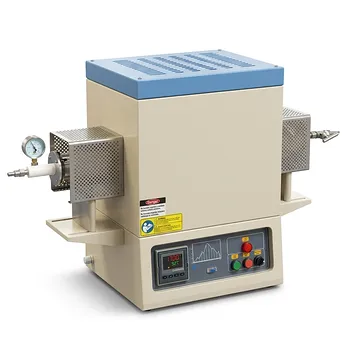
High Temperature Three Zone Tube Furnace 1700C with Alumina Tube and Water Cooled Flanges
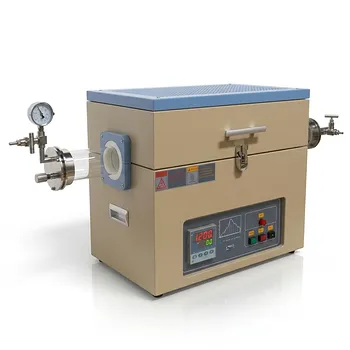
High Temperature 1200C Split Tube Furnace with Optional Quartz Tube Sizes and Vacuum Sealing Flanges for Material Science Research
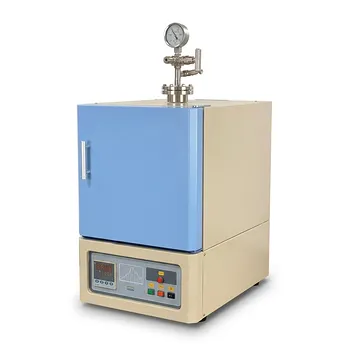
Hybrid High Temperature Muffle and Tube Furnace with 1500C Capability and Vacuum Flange Assembly

High Temperature Automated 5 Inch Tube Furnace for Autonomous Material Research and Advanced Laboratory R&D
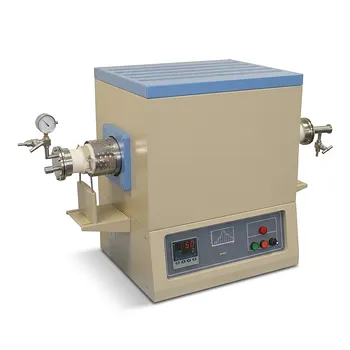
1700C High Temperature Alumina Tube Furnace with 18 Inch Heated Zone and Vacuum Sealing Flanges
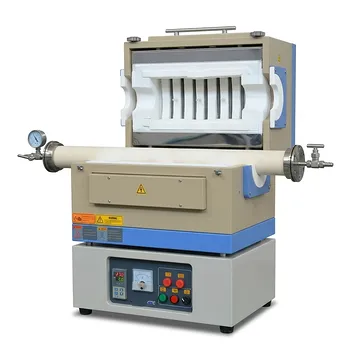
High Temperature 1600C Split Tube Furnace Vacuum Flanges Valves Optional 60mm 80mm Alumina Tube

1100C Tube Furnace with Vacuum Flange and Programmable Temperature Controller for Material Science and Industrial Heat Treatment
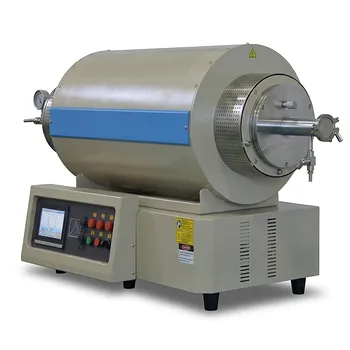
1200C Max Three Zone Tube Furnace 6 Inch OD Max with Tube and Flange