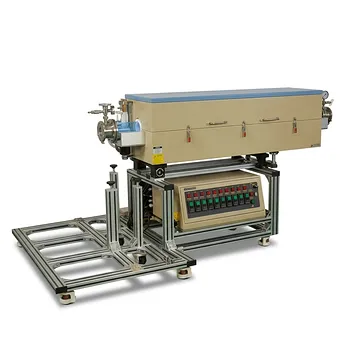
How do a high-temperature tube furnace and a vector network analyzer work together? In-situ Dielectric Analysis
Updated 3 months ago
The integration of a high-temperature tube furnace and a vector network analyzer (VNA) creates a specialized in-situ testing platform where the furnace provides a controlled thermal environment while the VNA simultaneously measures electromagnetic response. This synergy allows researchers to capture real-time changes in the complex permittivity of $C@TiC/SiO_2$ composites as they transition from ambient to extreme temperatures (e.g., 400°C to 800°C). By observing these dielectric properties under heat, engineers can determine how the material’s wave-absorbing efficiency fluctuates in real-world aerospace or industrial applications.
Core Takeaway: This dual-system setup enables "in-situ" characterization, meaning the material is measured while it is hot, rather than after it cools. This provides an accurate map of how thermal energy alters the electronic and molecular behavior of the composite, which is essential for validating its performance in high-heat environments.
The Role of the High-Temperature Tube Furnace
The furnace acts as a dynamic thermal reactor that simulates the extreme environments the composite will encounter.
Establishing Thermal Equilibrium
A high-temperature tube furnace ensures the $C@TiC/SiO_2$ sample reaches a state of complete thermal equilibrium. This stability is critical; if the core of the sample is cooler than the surface, the VNA data will be skewed by internal temperature gradients.
Atmosphere and Phase Control
Many composites, particularly those containing carbon ($C$), are sensitive to oxidation at high temperatures. The tube furnace allows for controlled atmospheres—such as argon or nitrogen—to prevent the material from degrading or changing its chemical phase during the test.
Uniform Heating Zones
Advanced furnaces use multi-zone heating to maintain a uniform temperature across the entire length of the waveguide sample. This prevents localized "hot spots" that could lead to inconsistent dielectric readings across the material's surface.
The Role of the Vector Network Analyzer (VNA)
While the furnace manages the heat, the VNA serves as the "eyes" of the experiment, measuring how the material interacts with microwave radiation.
In-Situ Electromagnetic Monitoring
The VNA is connected to the furnace via specialized high-temperature coaxial cables or waveguides. It sends a known signal through the $C@TiC/SiO_2$ sample and measures how much energy is reflected and transmitted.
Calculating Complex Permittivity
The VNA's primary output for this test is complex permittivity, which consists of a real part (storage) and an imaginary part (loss). These values tell the researcher how well the $C@TiC/SiO_2$ composite can store and dissipate electromagnetic energy at a specific temperature.
Real-Time Data Acquisition
Because the VNA operates in real-time, it can capture data points at precise temperature intervals. This allows for the creation of a "dielectric profile," showing exactly at what temperature the material's absorption capabilities might begin to fail or improve.
Understanding the Trade-offs
Integrating these two high-precision instruments introduces several technical challenges that must be managed.
Thermal Expansion and Signal Drift
As the temperature rises, the metal waveguides or coaxial systems inside the furnace will physically expand. This expansion can change the "electrical length" of the system, leading to phase errors in the VNA data if not properly calibrated using high-temperature standards.
Signal Attenuation in Cables
The specialized cables required to withstand furnace temperatures often have higher signal loss than standard laboratory cables. This can reduce the dynamic range of the VNA, potentially masking subtle dielectric changes in the composite material.
Sample Geometry Constraints
Testing inside a tube furnace requires the $C@TiC/SiO_2$ sample to be precisely machined to fit within a waveguide. Any air gaps between the sample and the waveguide walls at high temperatures can lead to significant measurement errors.
Applying This Setup to Your Project
The specific configuration of your furnace and VNA system should be dictated by your end-use requirements for the $C@TiC/SiO_2$ composite.
- If your primary focus is stealth or aerospace shielding: Prioritize a setup that can reach at least 800°C with a VNA capable of wide-band frequency sweeps (e.g., X-band or Ku-band) to ensure the material remains effective under friction-induced heat.
- If your primary focus is material synthesis and stability: Use a furnace with high-purity atmosphere control (like Argon) to monitor how the dielectric properties change during the carbonization or sintering process.
- If your primary focus is extreme accuracy: Invest in a multi-zone horizontal tube furnace to ensure the sample is heated with maximum uniformity, reducing the margin of error in the permittivity calculations.
The successful combination of these tools transforms a static material into a predictable component for high-performance thermal and electromagnetic applications.
Summary Table:
| Component | Primary Function | Key Benefit for Testing |
|---|---|---|
| High-Temp Tube Furnace | Provides controlled thermal environment | Ensures thermal equilibrium & prevents oxidation |
| Vector Network Analyzer | Electromagnetic signal monitoring | Real-time measurement of complex permittivity |
| Coaxial/Waveguides | Signal transmission path | Connects furnace environment to measuring electronics |
| In-Situ Integration | Real-time characterization | Captures behavior at heat (400°C–800°C+) |
Optimize Your In-Situ Material Testing with THERMUNITS
Precision in material science starts with a reliable thermal environment. THERMUNITS is a leading manufacturer of high-temperature laboratory equipment, specializing in the thermal processing solutions needed for cutting-edge industrial R&D.
Our comprehensive range includes:
- Tube & Atmosphere Furnaces: Perfect for the uniform heating and gas control required in dielectric property testing.
- Advanced Solutions: From Muffle and Vacuum furnaces to Hot Press, CVD/PECVD systems, and Vacuum Induction Melting (VIM) furnaces.
- Precision Components: High-quality dental furnaces, electric rotary kilns, and specialized thermal elements.
Whether you are analyzing $C@TiC/SiO_2$ composites for aerospace shielding or developing new wave-absorbing materials, THERMUNITS provides the stability and uniformity your experiments demand.
Ready to upgrade your laboratory’s heat treatment capabilities?
Contact our technical experts today for a tailored solution!
References
- Yan Wang, Junyang Jin. Influence of Absorber Contents and Temperatures on the Dielectric Properties and Microwave Absorbing Performances of C@TiC/SiO2 Composites. DOI: 10.3390/nano14242033
Mentioned Products
- High Temperature Tube Furnace 1500C with Sliding Flanges and 50mm OD for Rapid Thermal Processing Fast Heating and Cooling
- High Temperature 1700C Tube Furnace with High Vacuum Turbomolecular Pump System and Multi Channel Mass Flow Controller Gas Mixer
- High Temperature 1700C Benchtop Tube Furnace with 5 Inch Heating Zone High Purity Alumina Tube and Vacuum Sealing Flanges
- 1750°C High Temperature Benchtop Vacuum Atmosphere Tube Furnace with Kanthal Super 1800 Heating Elements and 60mm Alumina Processing Tube
- Compact High Temperature 1600C Tube Furnace with 50mm Alumina Tube and Vacuum Flanges for Material Sintering
People Also Ask
- How are high-temperature tube furnaces utilized to repair etching damage? Precision Lattice Restoration Solutions
- What core conditions does a high-temperature tube furnace provide for rGO aerogels? Mastering Precision Synthesis.
- What role does a high-temperature tube furnace play in CVD synthesis of silicon nanowires? Master VLS Growth Precision.
- How does precision tube furnace control influence CoFe nanoparticle formation? Master Your Bimetallic Synthesis.
- What role does a high-temperature tube furnace play in the sulfidation heat treatment of CoS@C/MXene nanocomposites? Guide

Tech Team · ThermUnits
Last updated on Jun 03, 2026
Related Products

High Temperature Tube Furnace 1500C with Sliding Flanges and 50mm OD for Rapid Thermal Processing Fast Heating and Cooling

High Temperature 1700C Tube Furnace with High Vacuum Turbomolecular Pump System and Multi Channel Mass Flow Controller Gas Mixer

High Temperature 1700C Benchtop Tube Furnace with 5 Inch Heating Zone High Purity Alumina Tube and Vacuum Sealing Flanges

1750°C High Temperature Benchtop Vacuum Atmosphere Tube Furnace with Kanthal Super 1800 Heating Elements and 60mm Alumina Processing Tube

Compact High Temperature 1600C Tube Furnace with 50mm Alumina Tube and Vacuum Flanges for Material Sintering
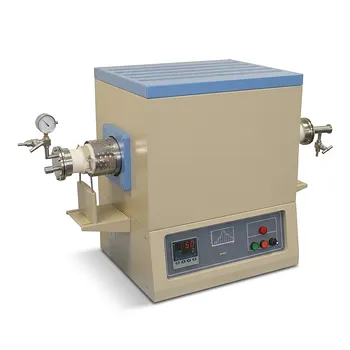
1700C High Temperature Alumina Tube Furnace with 18 Inch Heated Zone and Vacuum Sealing Flanges

1800C High Temperature Compact Vacuum Tube Furnace with 60mm OD Alumina Tube and Kanthal MoSi2 Heating Elements
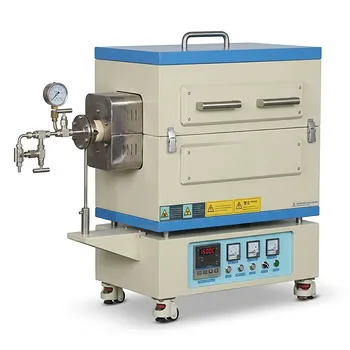
High Temperature Split Tube Furnace 1500C for Material Research Vacuum and Atmosphere Thermal Processing

High Temperature 1700C Vertical Tube Furnace for Powder Spherification and Material Sintering
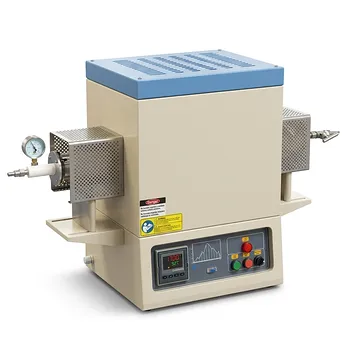
High Temperature Three Zone Tube Furnace 1700C with Alumina Tube and Water Cooled Flanges

High Temperature 1700C Six Zone Split Tube Furnace with Alumina Tube and Water Cooled Flanges
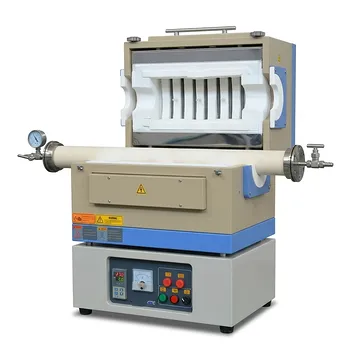
High Temperature 1600C Split Tube Furnace Vacuum Flanges Valves Optional 60mm 80mm Alumina Tube

High Temperature Automated 5 Inch Tube Furnace for Autonomous Material Research and Advanced Laboratory R&D

1100C Tube Furnace with Vacuum Flange and Programmable Temperature Controller for Material Science and Industrial Heat Treatment
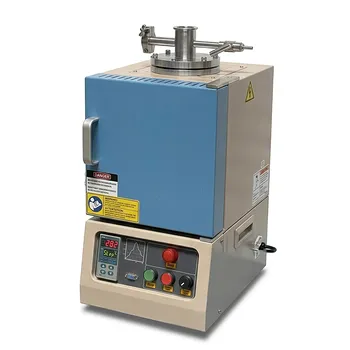
High Temperature Hybrid Muffle and Tube Furnace with Vacuum Capability and PID Control

High Vacuum Compact Tube Furnace 1200C with Integrated Turbo Pump System and 8 Inch Heating Zone
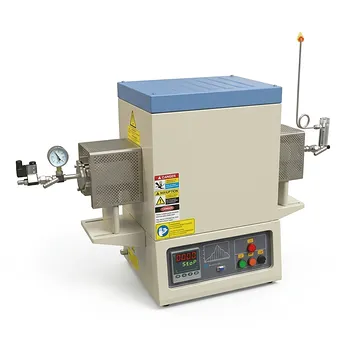
1700C Hydrogen Gas Tube Furnace with 60mm Alumina Process Tube and Integrated Hydrogen Safety Detector

1100°C High Temperature Quartz Chamber Furnace 8 Inch OD with 7.6 Liter Capacity and Vacuum Atmosphere Capability
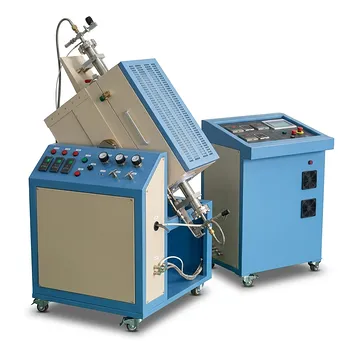
1100C High Pressure Rocking Tube Furnace with 2 Inch Super Alloy Processing Tube for Material Synthesis