How do high-precision mass flow controllers contribute to simulating oxygen fugacity? Achieve Precise Atmosphere Control
Updated 5 months ago
High-precision mass flow controllers (MFCs) enable the simulation of oxygen fugacity by accurately regulating the mixing ratios of specific buffer gases introduced into a thermal processing furnace. By precisely controlling the volume of gases such as carbon monoxide (CO) and carbon dioxide ($CO_2$), these devices allow researchers to quantitatively adjust the oxygen chemical potential ($\log fO_2$) within the chamber. This technical precision is what makes it possible to replicate complex redox environments, ranging from highly reducing industrial processes to standard oxidizing atmospheres.
Core Takeaway: High-precision MFCs provide the essential quantitative control required to translate thermodynamic models into physical reality. By maintaining stable, milliliter-level flow ratios of reactive gases, they establish a predictable and repeatable oxygen fugacity environment necessary for materials science and kinetic research.
The Mechanics of Oxygen Fugacity Control
The Role of Buffer Gas Systems
Oxygen fugacity is rarely controlled by introducing pure oxygen at low pressures, which is physically difficult to maintain. Instead, MFCs regulate buffer gas pairs like $CO/CO_2$ or $H_2/H_2O$ that react at high temperatures to "buffer" the oxygen level at a specific value. The ratio of these gases, strictly managed by the MFC, determines the resulting oxygen partial pressure.
Achieving Quantitative Precision
High-precision MFCs operate with minimal error, often within a range of $\pm 2$ cc/min. This level of accuracy is critical because even minor fluctuations in the gas ratio can cause exponential shifts in oxygen fugacity, potentially leading to incorrect phase transitions in the sample being studied.
Digital Control and Repeatability
Modern digital MFCs allow for the automated switching and ramping of gas concentrations. This capability is vital for pulse experiments or studies involving phase transitions where the environment must change dynamically while maintaining a high degree of fidelity to the experimental design.
Impact on Experimental Validity
Simulating Industrial and Natural Environments
By mixing various gases like nitrogen, sulfur dioxide, and hydrogen chloride, MFC systems can replicate the complex flue gas components of biomass combustion. This allows for high-fidelity studies of superheater corrosion and other degradation mechanisms that occur in specific industrial atmospheres.
Influence on Reaction Kinetics
MFCs provide a stable flow velocity that prevents the accumulation of volatiles above a sample. This stability is essential for accurately measuring mass loss rates and understanding the kinetics of pyrolysis or auto-ignition, as inconsistent flow can lead to unintended thermal convection.
Validating Thermodynamic Models
High-precision atmosphere control allows researchers to test the phase transition points predicted by theoretical models. When the MFC accurately establishes the oxygen and sulfur potentials, the resulting metal distribution or mineral stability can be compared directly to thermodynamic calculations to verify their accuracy.
Understanding the Trade-offs
Calibration and Gas Compatibility
A primary challenge is that MFCs are typically calibrated for specific gases based on their thermal properties. If a researcher switches from $CO_2$ to a gas with a significantly different heat capacity without recalibrating, the flow readings will be inaccurate, compromising the fugacity calculations.
The Impact of Gas Purity
The precision of an MFC is only as good as the purity of the source gas. Trace impurities in "pure" nitrogen or argon can introduce enough stray oxygen to shift the fugacity in highly reducing experiments, potentially masking the effects of the intended gas mixture.
Flow Rate vs. Equilibrium Time
While higher flow rates can minimize the impact of leaks or outgassing from furnace walls, they may also prevent the gas mixture from reaching thermal and chemical equilibrium. Finding the balance between "high-fidelity flow" and "sufficient residence time" is a constant struggle in high-temperature research.
How to Apply This to Your Project
Recommendations for Atmosphere Control
- If your primary focus is exploring wide redox ranges: Use a $CO/CO_2$ gas mixing system regulated by high-precision MFCs to achieve the most stable and reproducible $\log fO_2$ values.
- If your primary focus is corrosion or flue gas simulation: Prioritize an MFC array capable of handling corrosive gases like $SO_2$ and $HCl$ to replicate complex chemical potentials accurately.
- If your primary focus is kinetic or mass-loss studies: Ensure your MFCs are rated for high stability at low flow rates to prevent volatile buildup and erratic thermal convection.
By mastering the precise delivery of gas ratios, you transform a simple furnace into a sophisticated chemical reactor capable of simulating nearly any environment on Earth or beyond.
Summary Table:
| Feature | Function/Benefit | Importance in Thermal Processing |
|---|---|---|
| Buffer Gas Regulation | Manages $CO/CO_2$ or $H_2/H_2O$ ratios | Sets specific oxygen chemical potential ($\log fO_2$) |
| High-Precision Accuracy | Flow error within $\pm 2$ cc/min | Prevents unintended phase transitions in samples |
| Digital Automation | Dynamic concentration switching/ramping | Enables complex pulse and kinetic studies |
| Stable Flow Velocity | Consistent atmospheric environment | Prevents volatile buildup and erratic thermal convection |
| Complex Mixing | Simulates industrial flue gas components | Allows for high-fidelity corrosion and degradation studies |
Elevate Your Material Research with Precision Thermal Solutions
Are you looking to achieve pinpoint accuracy in your high-temperature redox experiments? THERMUNITS is a leading manufacturer specializing in high-precision laboratory equipment for material science and industrial R&D. We offer a comprehensive range of thermal processing solutions—including Atmosphere, Tube, CVD/PECVD, Vacuum, and Hot Press furnaces—engineered to integrate seamlessly with advanced gas delivery systems for reliable oxygen fugacity control.
From Rotary Kilns and Vacuum Induction Melting (VIM) furnaces to high-performance Thermal Elements, THERMUNITS provides the technical expertise and equipment necessary to translate your thermodynamic models into physical reality.
Contact our experts today to discuss how we can customize a thermal solution that enhances your lab's efficiency and research repeatability!
References
- Stamatis Flemetakis, Stephan Klemme. The effect of oxygen fugacity on the evaporation of boron from aluminoborosilicate melt. DOI: 10.5194/ejm-36-173-2024
Mentioned Products
- High Temperature 800C Rapid Thermal Processing Furnace with Rotating Sample Holder for Close Spaced Sublimation and Thin Film Solar Cell Research
- Triple Tube Compact Hybrid Muffle Furnace 1000C High Vacuum Thermal Processing System
- High Temperature Ultrafast Heating Pressing Furnace 2900C Max 100kgf Rapid Thermal Processing System
- Rapid Thermal Processing RTP Atmosphere Controlled Bottom Loading Furnace 1100C High Throughput 50C per Second Heating Rate
- High Temperature 1500C Benchtop Muffle Furnace 3.6L Alumina Fiber Chamber Programmable Controller Sintering Annealing Carbonization Thermal Processing System
People Also Ask
- What role does a SiC-coated graphite susceptor play in H2Se selenization? Boost RTP Thermal Uniformity & Film Purity.
- What is the purpose of coating ceramic sheets with platinum paste? Achieve Stable High-Temp Ohmic Contacts
- What are the functional advantages of an RTP system for surface deposition? Enhance Heterojunction Interface Integrity
- What are the advantages of RTPR for Pd1/PU catalyst synthesis? Achieve superior single-atom dispersion and stability.
- How does a high-temperature tube furnace optimize palladium thin film pre-annealing? Improve Grain Growth & Stress Relief

Tech Team · ThermUnits
Last updated on Apr 14, 2026
Related Products
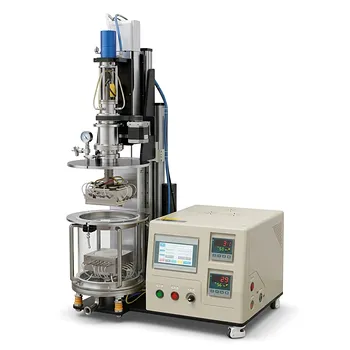
High Temperature 800C Rapid Thermal Processing Furnace with Rotating Sample Holder for Close Spaced Sublimation and Thin Film Solar Cell Research
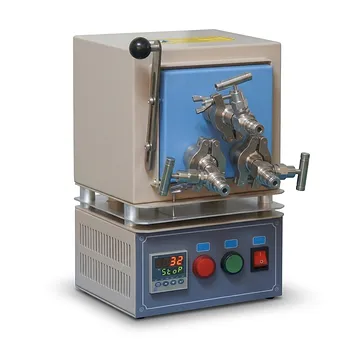
Triple Tube Compact Hybrid Muffle Furnace 1000C High Vacuum Thermal Processing System
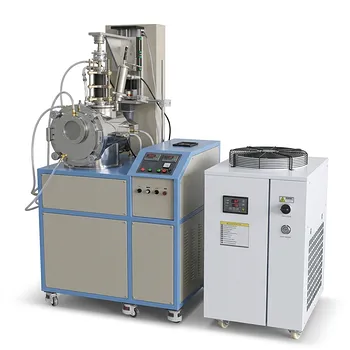
High Temperature Ultrafast Heating Pressing Furnace 2900C Max 100kgf Rapid Thermal Processing System
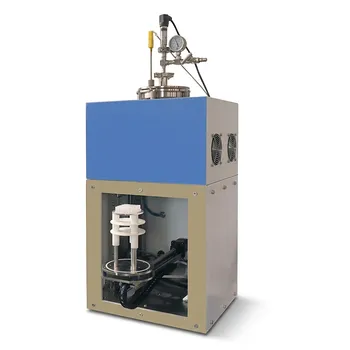
Rapid Thermal Processing RTP Atmosphere Controlled Bottom Loading Furnace 1100C High Throughput 50C per Second Heating Rate
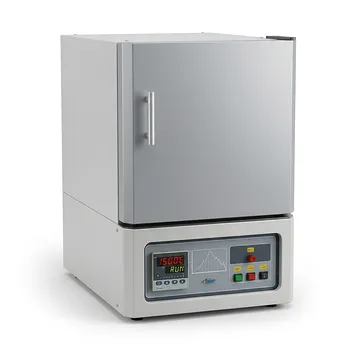
High Temperature 1500C Benchtop Muffle Furnace 3.6L Alumina Fiber Chamber Programmable Controller Sintering Annealing Carbonization Thermal Processing System
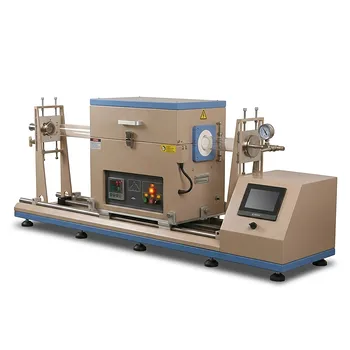
1200C Sliding Tube Furnace for Rapid Thermal Processing and CVD Graphene Growth with 100mm OD Capacity
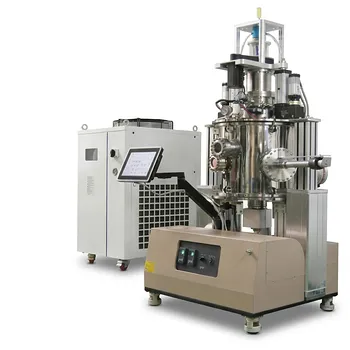
950C Rapid Thermal Processing Furnace for 12 Inch Wafer CSS Coating with Rotating Substrate Holder
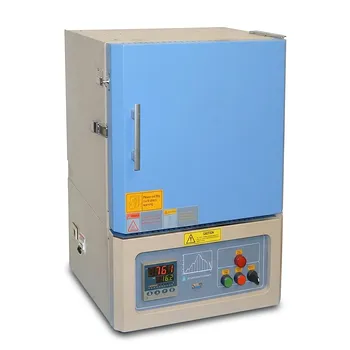
High Temperature 1700C Bench Top Muffle Furnace with Alumina Fiber Insulation and 3.6L Chamber Capacity for Precision Sintering and Heat Treatment
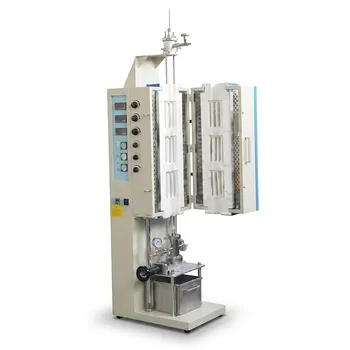
High Temperature Dual Zone Tube Furnace for Material Science Research and Professional Thermal Processing
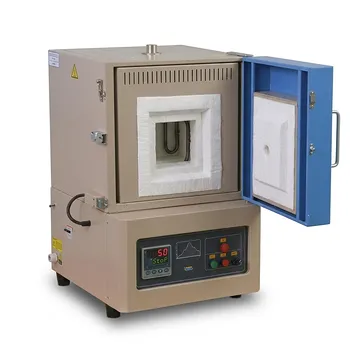
1800°C Bench Top Ultra High Temperature Muffle Furnace with Sapphire Observation Window and Top Feeding Port for Materials Research and Thermal Processing
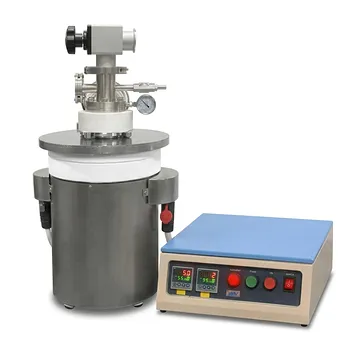
1100C High Temperature Vacuum Crucible Furnace with Quartz Chamber for Thermal Processing and Sintering

1200C High Throughput Multi Channel Tube Furnace with 50mm Quartz Tubes for Annealing and Material Phase Diagram Research

High Temperature Tube Furnace 1500C with Sliding Flanges and 50mm OD for Rapid Thermal Processing Fast Heating and Cooling
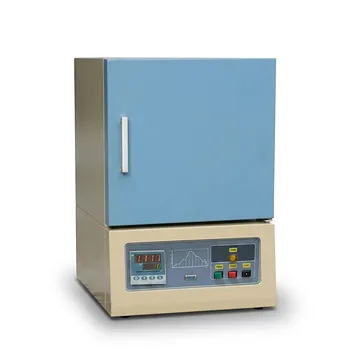
Ultra High Temperature Bench Top Muffle Furnace 1750C Sintering System with Kanthal Super Heating Elements and Precision Digital Control
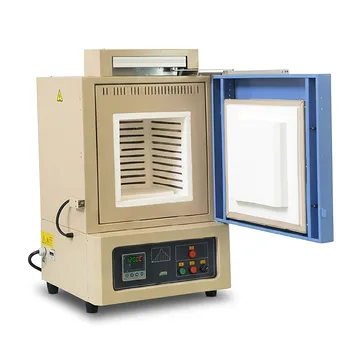
1200C High Temperature Muffle Furnace with Motorized Door and Automated PC Control for Industrial Sintering and Material Processing 27 Liter
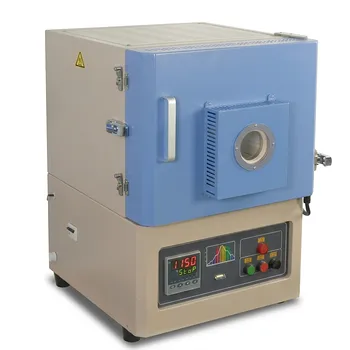
High Temperature Benchtop Muffle Furnace with Quartz Observation Window for Thermal Imaging and Material Analysis
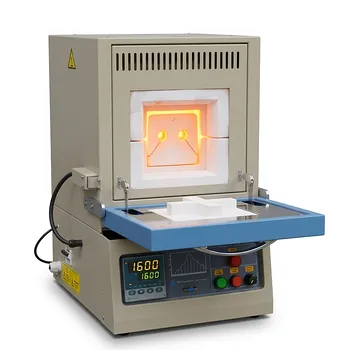
High Temperature Compact Muffle Furnace 1700 C with 30 Segment Programmable Controller and 1.7L Cubic Chamber
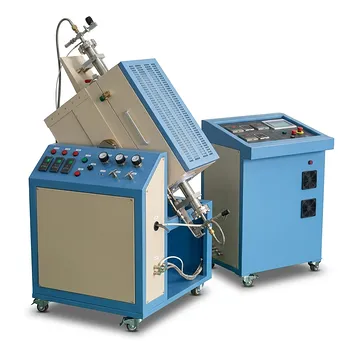
1100C High Pressure Rocking Tube Furnace with 2 Inch Super Alloy Processing Tube for Material Synthesis
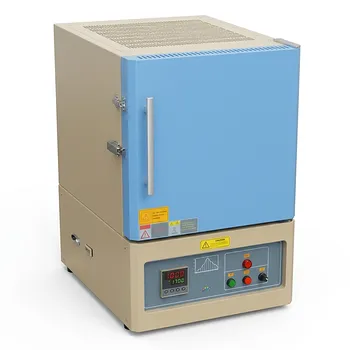
Large Bench Top 1700C High Temperature Muffle Furnace with 19L Chamber for Advanced Material Sintering and Annealing