How do MFCs regulate oxygen partial pressure in nickel research? Achieve Precise Control & Accurate Results.
Updated 3 months ago
Mass Flow Controllers (MFCs) serve as the primary mechanism for establishing a stable oxygen partial pressure ($P_{O_2}$) by precisely regulating the mixing ratios of reactive gases. In nickel solubility research, MFCs blend specific volumes of gases like Carbon Monoxide (CO) and Carbon Dioxide ($CO_2$) to create a chemically defined atmosphere. This precise control is the technical foundation required to study how nickel oxidizes and dissolves into slag under extreme conditions.
Core Takeaway: MFCs enable high-fidelity nickel solubility research by maintaining exact gas ratios to control $P_{O_2}$ and regulating total flow rates to ensure reactants reach a true thermodynamic steady state within the furnace's isothermal zone.
Establishing the Thermodynamic Environment
The Role of Gas Mixing Ratios
The primary function of an MFC is to manage the inlet flow rates of component gases to achieve an exact ratio. For example, a researcher might set a flow of 200 cc/min of CO and 50 cc/min of $CO_2$ to induce a specific chemical equilibrium. This ratio directly determines the oxygen partial pressure, allowing for the creation of the extremely low-oxygen environments necessary for metallurgy.
Impact on Nickel Oxidation Kinetics
The precision of the $P_{O_2}$ environment directly influences the oxidation kinetics of metallic nickel. By maintaining a stable atmosphere, researchers can accurately observe the mechanisms by which nickel is lost to the slag. Without the granular control provided by MFCs, fluctuations in gas composition would lead to inconsistent oxidation rates, masking the true behavior of the metal.
Managing Experimental Stability and Accuracy
Regulating Gas Residence Time
Beyond simple mixing, MFCs work in tandem with pressure regulation systems to control the total flow of reaction gases. This control is vital for managing the residence time of the reactants within the furnace’s isothermal zone. If the gas moves too quickly or too slowly, the chemical reactions may not occur as intended, leading to data that does not reflect actual solubility limits.
Achieving Thermodynamic Steady State
High-temperature nickel research often requires a significant amount of time to reach thermal and mechanical steady states. MFCs provide the long-term stability required to ensure that experimental parameters remain constant throughout the duration of the test. This consistency prevents kinetic rate analysis errors that typically occur when residence times deviate from the experimental design.
Understanding the Trade-offs
Calibration and Gas Sensitivity
MFCs are often calibrated for specific gases; using an MFC calibrated for Nitrogen with CO or $CO_2$ requires the application of conversion factors. These factors can introduce small margins of error if not handled with expert precision. Furthermore, gas purity is critical, as even minor contaminants in the gas supply can shift the $P_{O_2}$ and invalidate the solubility data.
System Latency and Stabilization
While MFCs are highly accurate, they are not instantaneous. There is always a stabilization period required after changing flow setpoints before the atmosphere within the furnace reaches the new equilibrium. Researchers must account for this "dead time" to avoid collecting data during a transient state, which would lead to incorrect kinetic interpretations.
How to Apply This to Your Research
When integrating MFCs into a nickel solubility study, your configuration should align with your specific analytical goals:
- If your primary focus is Thermodynamic Equilibrium: Prioritize MFCs with high repeatability and low-flow stability to maintain a constant $CO/CO_2$ ratio over extended periods.
- If your primary focus is Kinetic Rate Analysis: Ensure your MFCs are integrated with a back-pressure regulator to strictly control the residence time of gases within the hot zone.
- If your primary focus is Trace Element Solubility: Use high-purity gas streams and ensure your MFCs are constructed with 316L stainless steel or similar alloys to prevent gas-phase contamination.
By masterfully controlling the gas phase via MFC technology, researchers can transform unpredictable furnace environments into precise, repeatable laboratories for investigating nickel behavior.
Summary Table:
| Function | Impact on Research | Key Parameters |
|---|---|---|
| Gas Mixing (CO/CO2) | Regulates Oxygen Partial Pressure (PO2) | Mixing ratios, Gas purity |
| Total Flow Control | Manages gas residence time in isothermal zone | cc/min, Pressure regulation |
| Long-term Stability | Ensures thermodynamic steady state | Repeatability, Stabilization time |
Elevate Your Material Science Research with THERMUNITS
Precision is the backbone of metallurgy and high-temperature research. As a leading manufacturer of high-performance laboratory equipment, THERMUNITS provides advanced thermal processing solutions designed for the most demanding R&D environments. Our expertise in Atmosphere, Vacuum, Tube, and CVD/PECVD systems ensures you achieve the exact oxygen partial pressure required for nickel solubility and oxidation studies.
Our Value to You:
- Advanced Control: Precise gas regulation for Muffle, Rotary, and Hot Press furnaces.
- Reliable Results: Achieve true thermodynamic steady state with our high-stability systems.
- Comprehensive Support: Expert solutions for VIM, Dental furnaces, and thermal elements.
Contact THERMUNITS today to discuss how our high-temperature laboratory heat treatment equipment can enhance your lab's accuracy and efficiency!
References
- Erdenebold Urtnasan, Jei‐Pil Wang. Artificial Slags with Modulated Properties for Controlled Nickel Dissolution in Smelting Process. DOI: 10.1007/s12666-024-03304-0
Mentioned Products
- High Temperature Dual Zone Tube Furnace for Material Science Research and Professional Thermal Processing
- Elongated Two Temperature Zone Pipe Furnace for Industrial Heat Treatment and Material Science Research
- Two Zone Rotary CVD Furnace with Automatic Feeding and Receiving System for Powder Processing
- 1200C Max Compact Auto-Sliding PECVD Furnace with 2 Inch Tube and Vacuum Pump
- Compact Hybrid Muffle and Tube Furnace for 1000C Controlled Atmosphere Laboratory Material Sintering
People Also Ask
- What is the primary function of an industrial-grade dual-zone tube furnace? Mastering CuInP2S6 CVT Crystal Growth
- Why is it necessary to place MoS2 devices in a dual-zone tube furnace for annealing? Optimize Lattice Repair & Doping
- What are the advantages of using a dual-zone tube furnace for MoS2 CVD? Optimize Precursor Control and Material Quality
- Purpose of the reverse gradient step in CVT growth? Master Crystal Purity with Dual-Zone Furnaces
- Why is a dual-zone tube furnace necessary for ReO3-doped Cu2Te CVD? Essential for precise precursor synchronization.

Tech Team · ThermUnits
Last updated on Jun 03, 2026
Related Products
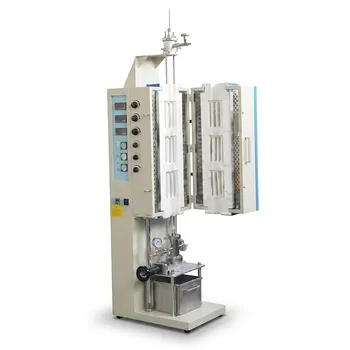
High Temperature Dual Zone Tube Furnace for Material Science Research and Professional Thermal Processing
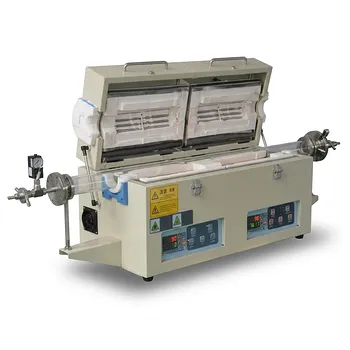
Elongated Two Temperature Zone Pipe Furnace for Industrial Heat Treatment and Material Science Research
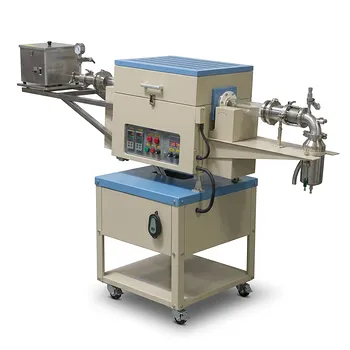
Two Zone Rotary CVD Furnace with Automatic Feeding and Receiving System for Powder Processing
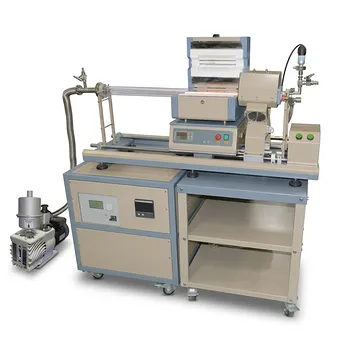
1200C Max Compact Auto-Sliding PECVD Furnace with 2 Inch Tube and Vacuum Pump
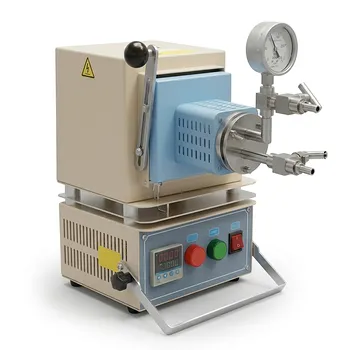
Compact Hybrid Muffle and Tube Furnace for 1000C Controlled Atmosphere Laboratory Material Sintering
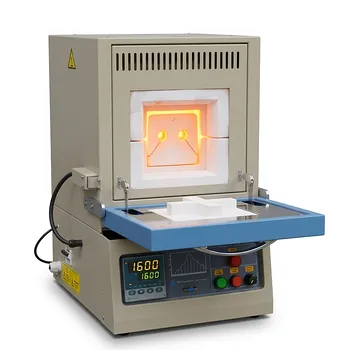
High Temperature Compact Muffle Furnace 1700 C with 30 Segment Programmable Controller and 1.7L Cubic Chamber
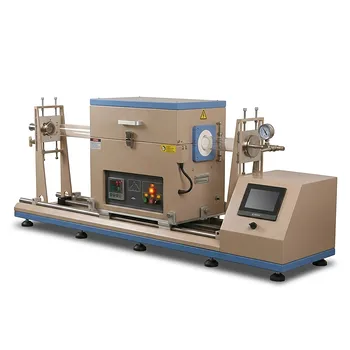
1200C Sliding Tube Furnace for Rapid Thermal Processing and CVD Graphene Growth with 100mm OD Capacity
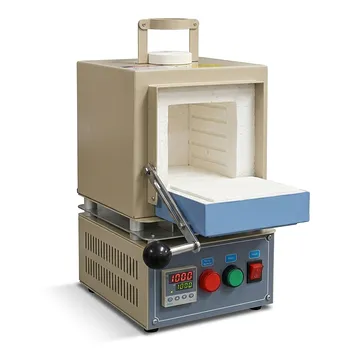
Compact 1000C Muffle Furnace with Programmable Controller and 2 Inch Top Port for Vacuum and Atmosphere Material Research
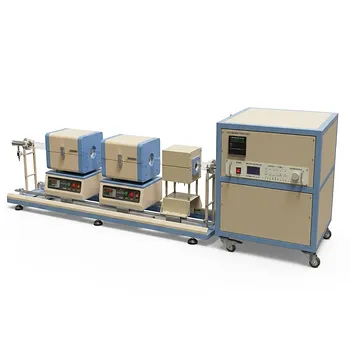
1200C Dual Sliding Tube Furnace with Dual Tubes and Flanges for PECVD Processes
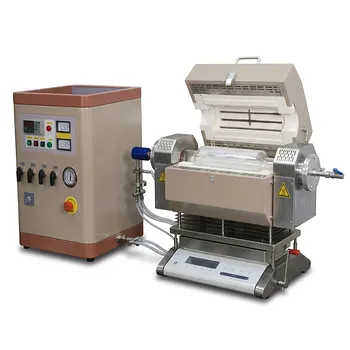
Weighable Mini Rotary Tube Furnace for Dynamic Thermogravimetric Analysis and Powder Processing

Compact Vertical Split Quartz Tube Furnace with Stainless Steel Vacuum Flanges for Rapid Thermal Quenching and Controlled Atmosphere Material Processing
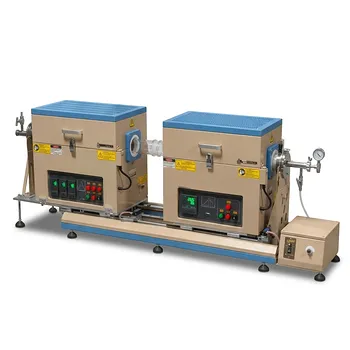
1200C Dual Temperature Zone Slidable Tube Furnace for 2D Material Growth and TCVD Synthesis
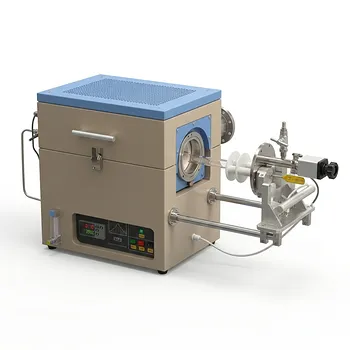
Compact Atmosphere Controlled Rapid Thermal Processing RTP Furnace with 4 Inch ID Quartz Tube 1100C
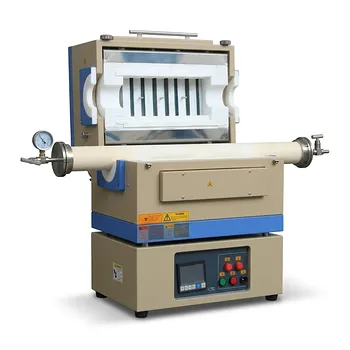
1500C Eight Zone Split Tube Furnace for Thermal Gradient Processing and Advanced Material Research
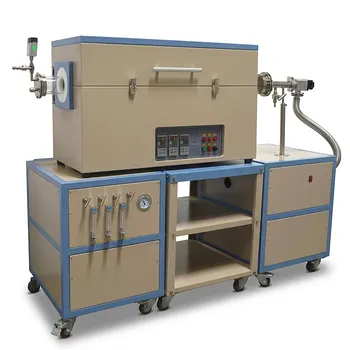
Three Zone Quartz Tube Furnace with 3 Channel Gas Mixer Vacuum Pump and Anti Corrosive Vacuum Gauge

5 Inch Three Zone Rotary Tube Furnace with Integrated Gas Delivery System and 1200C Capability for Advanced Material CVD Processing
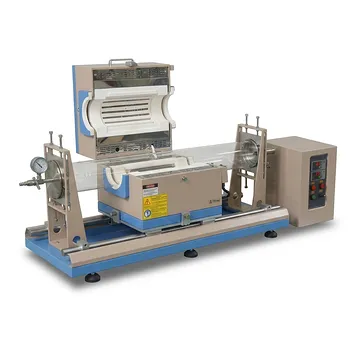
1200C High Temperature 5 Inch Sliding Tube Furnace for Rapid Thermal Processing RTP and Wafer Annealing
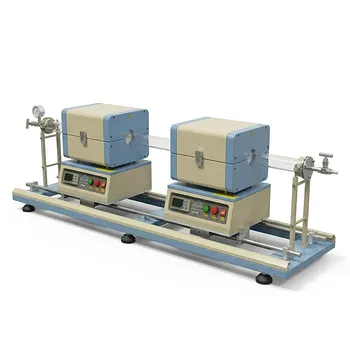
1200C Max Dual Sliding Tube Furnace with 50 mm Tube Flanges for CVD
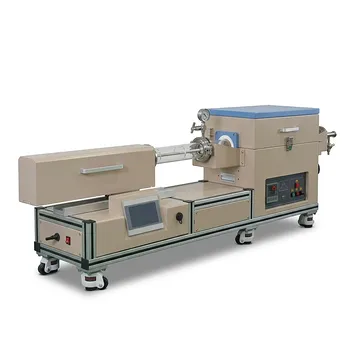
1200C Sliding Internal Crucible Tube Furnace for Controlled Atmosphere Thin Film Deposition and Material Sublimation Research
