How do the integrated closed-loop feedback and resistance detection units function in R2R CVD? Maximize Graphene Quality
Updated 3 months ago
The integrated closed-loop feedback module and real-time sheet resistance detection unit act as a self-correcting brain for the R2R CVD process. By measuring the electrical conductivity of graphene-coated fabric as it is produced, the detection unit provides data that allows the feedback module to automatically adjust transmission speed and gas concentration. This immediate synchronization ensures that any fluctuations in the deposition environment are compensated for instantly, maintaining high-quality batch consistency.
This automated system eliminates the need for manual sampling and post-production testing by linking the material's electrical performance directly to the machine's mechanical and chemical controls. It transforms a standard deposition process into an intelligent, responsive manufacturing line.
The Mechanics of Real-Time Monitoring
The Role of the Detection Unit
The real-time sheet resistance detection unit is positioned along the production line to measure the electrical conductivity of the fabric as it exits the reaction zone. It provides a continuous stream of data regarding the quality of the graphene layer being deposited.
Translating Conductivity into Data
This unit monitors the sheet resistance, which is a direct indicator of the graphene's thickness, coverage, and structural integrity. Any deviation from the target resistance signals that the chemical vapor deposition (CVD) process has drifted from its optimal parameters.
Establishing the Feedback Loop
The closed-loop feedback module receives this data and compares it against a pre-defined setpoint. If the resistance is too high or too low, the module calculates the necessary adjustment and sends commands to the system's hardware to correct the error in real time.
How the System Compensates for Fluctuations
Adjusting Fabric Transmission Speed
One of the primary levers the system uses is the fabric transmission speed. If the detection unit senses that the graphene layer is too thin (high resistance), the feedback loop slows down the rollers to increase the material's residence time in the reaction chamber.
Modulating Reaction Gas Concentration
The system can also alter the concentration of reaction gases. Based on the 5-step CVD sequence—including precursor delivery, diffusion, and surface reaction—increasing the precursor gas concentration can accelerate the deposition rate to meet conductivity requirements.
Managing Minor Process Fluctuations
Temperature shifts, pressure changes, or minor clogs in gas delivery can disrupt the boundary layer diffusion or surface chemical reactions. The feedback system provides dynamic compensation, ensuring these invisible variables do not compromise the final composite material's quality.
Understanding the Trade-offs and Challenges
The Risk of Sensor Lag
While real-time detection is fast, there is an inherent physical lag between the moment a gas adjustment is made and the moment that "new" material reaches the sensor. If the feedback loop is tuned too aggressively, the system may over-correct, leading to "oscillations" in material quality.
Balancing Speed vs. Uniformity
Increasing gas concentration to fix resistance issues can sometimes lead to non-uniform deposition if the gas-phase transport is not carefully managed. Relying solely on speed adjustments can similarly impact production throughput and lead times.
Sensor Sensitivity and Environmental Noise
The detection unit must be highly sensitive to pick up subtle changes in electrical conductivity. However, in an industrial R2R environment, mechanical vibrations or electromagnetic interference can introduce "noise" into the data, requiring sophisticated filtering to avoid false adjustments.
How to Optimize Your R2R CVD Production
To get the most out of an integrated feedback system, you must align your control logic with your specific production goals.
- If your primary focus is Maximum Throughput: Set the feedback loop to prioritize gas concentration adjustments over speed changes to keep the line moving at a constant, high velocity.
- If your primary focus is Ultra-High Precision: Prioritize transmission speed adjustments, as they often provide more linear and predictable changes to the graphene layer thickness than gas modulation.
- If your primary focus is Minimizing Precursor Waste: Configure the system to maintain a "lean" gas mixture and use speed as the primary variable for maintaining the required sheet resistance.
By integrating measurement and control into a single responsive loop, you ensure that every meter of graphene composite meets the exact specifications required for high-performance applications.
Summary Table:
| Feature | Function | Adjustment Mechanism | Impact on Production |
|---|---|---|---|
| Detection Unit | Monitors electrical conductivity | Real-time sheet resistance sensing | Instant quality verification |
| Feedback Module | Data processing & command | Automated hardware signaling | Self-correcting batch control |
| Speed Control | Manages residence time | Adjusting fabric roller velocity | Controls coating thickness |
| Gas Modulation | Adjusts precursor flow | Tuning reaction concentration | Optimizes deposition rates |
Elevate Your Material Research with THERMUNITS Precision
At THERMUNITS, we understand that consistency is the backbone of groundbreaking material science. As a leading manufacturer of high-temperature laboratory equipment, we offer a comprehensive suite of thermal processing solutions tailored for industrial R&D.
Whether you are scaling CVD/PECVD systems, utilizing Vacuum Induction Melting (VIM), or requiring precision Muffle, Tube, or Hot Press furnaces, our equipment is engineered to provide the stable, intelligent environment your research demands.
Ready to optimize your laboratory's heat treatment capabilities?
Contact our technical experts today to discover how THERMUNITS can bring superior control and efficiency to your next project!
References
- Wenjuan Li, Zhongfan Liu. Graphene-skinned alumina fiber fabricated through metalloid-catalytic graphene CVD growth on nonmetallic substrate and its mass production. DOI: 10.1038/s41467-024-51118-x
Mentioned Products
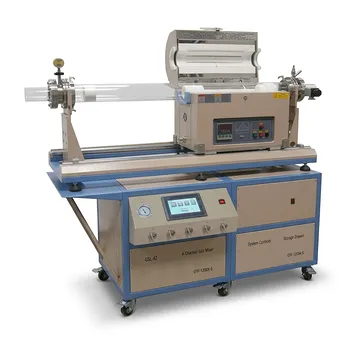
- Versatile Chemical Vapor Deposition Tube Furnace System for Advanced Material Research and Industrial Coating Processes
- Chemical Vapor Deposition CVD System Slide PECVD Tube Furnace with Liquid Gasifier PECVD Machine
- Radio Frequency Plasma Enhanced Chemical Vapor Deposition RF PECVD System for Laboratory and Industrial Thin Film Growth
- HFCVD Machine System for Nano Diamond Coating on Drawing Dies and Industrial Tools
- Inclined Rotary Plasma Enhanced Chemical Vapor Deposition PECVD System for Thin Film Deposition and Nanomaterial Synthesis
People Also Ask
- How does a sliding rail design benefit the CVD process within a furnace ventilation hood? Enhance Control & Quenching
- What role do by-product desorption and evacuation play in CVD film quality? Key Factors for High-Purity Films
- How does the deposition process occur within a Chemical Vapor Deposition (CVD) reactor? Explore the 5-Stage Growth Cycle
- Why is CVD preferred over PVD for high-aspect-ratio features? Superior Conformality for Semiconductor Fabrication
- How do temperature regimes influence the growth rate of films in a CVD system? Master CVD Kinetics for Superior Thin Films

Tech Team · ThermUnits
Last updated on Jun 02, 2026
Related Products
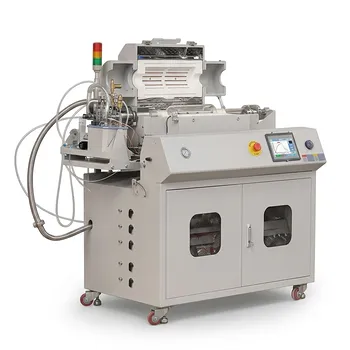
Versatile Chemical Vapor Deposition Tube Furnace System for Advanced Material Research and Industrial Coating Processes
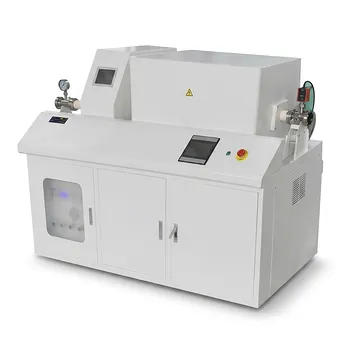
Chemical Vapor Deposition CVD System Slide PECVD Tube Furnace with Liquid Gasifier PECVD Machine
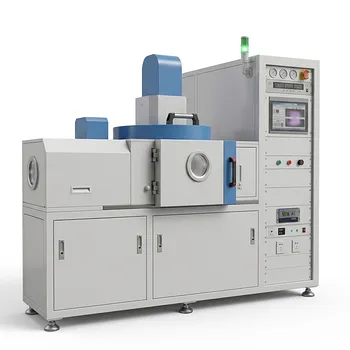
Radio Frequency Plasma Enhanced Chemical Vapor Deposition RF PECVD System for Laboratory and Industrial Thin Film Growth
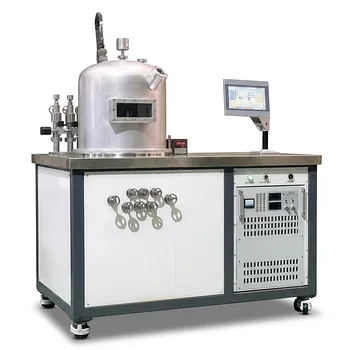
HFCVD Machine System for Nano Diamond Coating on Drawing Dies and Industrial Tools
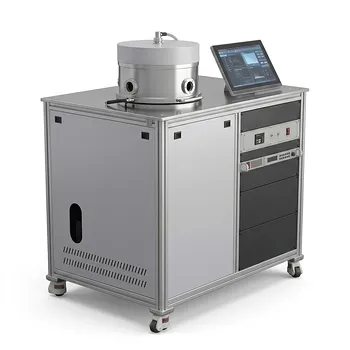
Inclined Rotary Plasma Enhanced Chemical Vapor Deposition PECVD System for Thin Film Deposition and Nanomaterial Synthesis
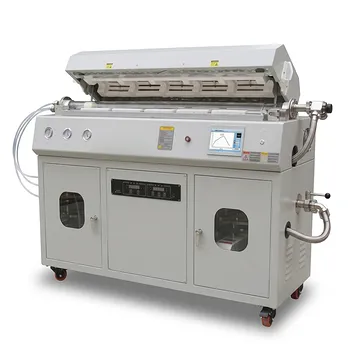
Multi Heating Zones CVD Tube Furnace System for Precision Chemical Vapor Deposition and Advanced Material Synthesis
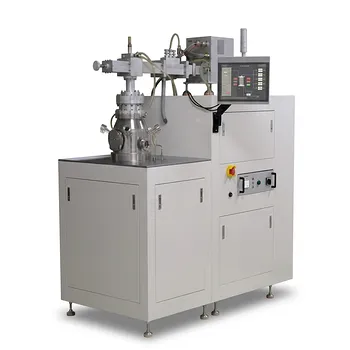
Cylindrical Resonator MPCVD Machine System for Microwave Plasma Chemical Vapor Deposition and Lab Diamond Growth
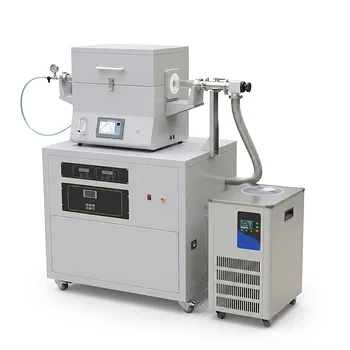
Split Chamber CVD Tube Furnace with Vacuum Station Chemical Vapor Deposition System Machine
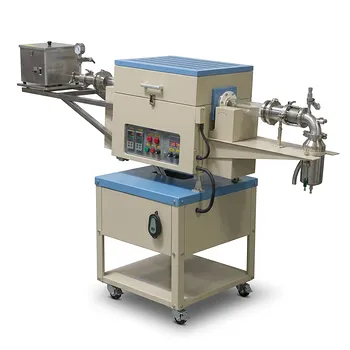
Two Zone Rotary CVD Furnace with Automatic Feeding and Receiving System for Powder Processing
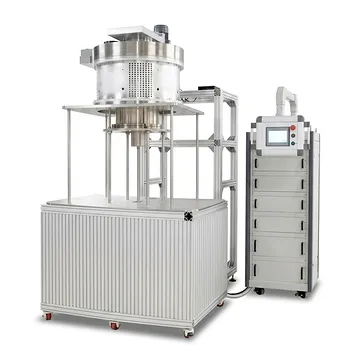
915MHz MPCVD Diamond Machine Microwave Plasma Chemical Vapor Deposition System Reactor
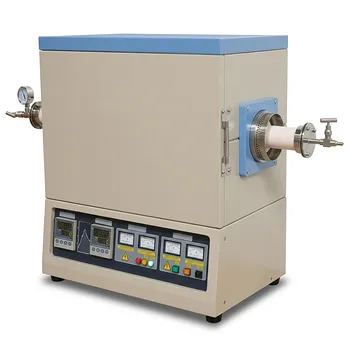
High Temperature 1700C Dual Zone Tube Furnace for Material Science and Industrial Chemical Vapor Deposition Research
1200C Tube Furnace with Internal Magnetic Sample Sliding for Direct Vaporizing Deposition and Rapid Thermal Processing
950C Rapid Thermal Processing Furnace for 12 Inch Wafer CSS Coating with Rotating Substrate Holder