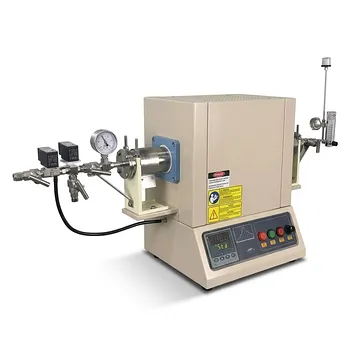
How does a high-precision constant flow pump work with a tube furnace for low oxygen atmospheres? Master Phase Control.
Updated 3 months ago
Precise control of oxygen partial pressure is achieved through the metered injection of water vapor into a controlled gas stream. A high-precision constant flow pump delivers deionized water at a steady, minute rate into the furnace's gasification zone, where it converts to steam. By modulating this flow rate relative to a carrier gas, the system establishes a specific chemical equilibrium that dictates the exact oxygen partial pressure ($p\text{O}_2$) required for sensitive material processing.
The synergy between a constant flow pump and a tube furnace allows for the creation of stable, low-oxygen environments by leveraging the thermodynamic equilibrium of water dissociation. By precisely controlling the volume percentage of $\text{H}_2\text{O}$ in the gas mix, researchers can prevent unwanted oxidation and ensure the formation of specific phases, such as magnetite.
The Mechanics of Atmosphere Control
Metered Liquid Delivery
The high-precision pump acts as the primary regulator for the system's chemical potential. It delivers deionized water at extremely low, constant flow rates that are often measured in microliters or milliliters per minute. This level of precision is necessary because even minor fluctuations in liquid delivery can cause significant swings in the resulting furnace atmosphere.
The Gasification Interface
The liquid water is injected into a gasification section of the tube furnace. In this heated zone, the water undergoes a phase change into vapor (steam) and mixes thoroughly with the primary carrier gases. This ensures that the atmosphere reaching the sample is a homogeneous mixture of gas and water vapor.
Precise Volume Control
By adjusting the pump's flow rate, the volume percentage of water vapor (e.g., 30 vol% $\text{H}_2\text{O}$) can be dialed in with high resolution. This allows the user to transition between different atmospheric compositions without changing gas cylinders or interrupting the heating cycle.
The Thermodynamics of $p\text{O}_2$ Regulation
The $\text{H}_2/\text{H}_2\text{O}$ Buffer System
Oxygen partial pressure is often managed indirectly by utilizing the dissociation equilibrium of water at high temperatures. In the presence of hydrogen, the ratio of $\text{H}_2$ to $\text{H}_2\text{O}$ determines the amount of free oxygen available in the system. This method allows for the creation of $p\text{O}_2$ levels far lower than what could be achieved by mixing pure oxygen and inert gases.
Targeting Specific Mineral Phases
Precise control is vital when working with materials that have multiple oxidation states, such as iron. Maintaining a specific $p\text{O}_2$ window allows the researcher to promote the formation of magnetite ($\text{Fe}_3\text{O}_4$) while preventing the sample from further oxidizing into hematite ($\text{Fe}_2\text{O}_3$).
Understanding the Trade-offs and Pitfalls
Pulsation and Flow Stability
Low-quality pumps may introduce pulsations in the liquid flow, which translate into "waves" of varying oxygen concentration within the furnace. These fluctuations can lead to non-homogeneous samples or the formation of surface impurities. High-precision constant flow pumps are specifically designed to eliminate these pulses for a steady-state environment.
Condensation Risks
Integrating water vapor into a gas system requires careful temperature management of the delivery lines. If any portion of the tubing between the gasification zone and the furnace inlet drops below the dew point, water will condense. This not only alters the intended atmosphere but can also lead to physical damage or "spitting" within the furnace tube.
Calculation Complexity
The relationship between the pump's flow rate and the final $p\text{O}_2$ is temperature-dependent and follows logarithmic scales. Users must perform rigorous thermodynamic calculations or use specialized software to determine the exact flow rate needed for their specific target temperature and carrier gas flow.
How to Apply This to Your Project
To successfully implement this system, your approach should vary based on your specific material goals:
- If your primary focus is phase purity (e.g., Magnetite): Use the pump to maintain a strict $\text{H}_2/\text{H}_2\text{O}$ ratio that sits safely within the stability field of your target phase on a Richardson-Jeffes diagram.
- If your primary focus is process repeatability: Regularly calibrate the pump and use only high-purity deionized water to prevent mineral buildup or "scaling" in the gasification nozzle.
- If your primary focus is preventing system failure: Install heated trace lines on all gas delivery tubes to ensure the water remains in a gaseous state until it reaches the hot zone of the furnace.
By mastering the precise delivery of liquid precursors, you transform a standard tube furnace into a sophisticated tool for thermodynamic phase control.
Summary Table:
| Component | Role in Atmosphere Control | Key Benefit |
|---|---|---|
| High-Precision Pump | Delivers deionized water at microliter rates | Eliminates atmospheric pulses/fluctuations |
| Gasification Zone | Converts liquid water into homogeneous steam | Ensures uniform gas mixing before sample contact |
| H2/H2O Buffer | Manages dissociation equilibrium | Achieves ultra-low pO2 levels precisely |
| Heat Trace Lines | Maintains temperature above dew point | Prevents condensation and system damage |
Elevate Your Research Precision with THERMUNITS
Achieving the perfect thermodynamic equilibrium requires equipment designed for absolute stability. THERMUNITS is a leading manufacturer of high-temperature laboratory equipment, providing the tools needed for advanced material science and industrial R&D.
Whether you are targeting specific mineral phases like magnetite or developing new alloys, our comprehensive range of thermal solutions—including Tube, Atmosphere, Vacuum, and Rotary furnaces, CVD/PECVD systems, and Vacuum Induction Melting (VIM) furnaces—delivers the reliability your project demands. We also offer specialized Hot Press furnaces, Dental furnaces, and high-quality Thermal Elements to complete your lab setup.
Ready to master your furnace atmosphere? Contact our technical experts today to discuss your specific heat treatment requirements and discover how THERMUNITS can optimize your workflow!
References
- Alice Moya Núñez, Rikard Norling. Effect of KCl on high‐temperature corrosion of low‐alloyed steel under low oxygen partial pressure. DOI: 10.1002/maco.202414314
Mentioned Products
- Vertical 1700C Vacuum and Atmosphere Tube Furnace with 80mm Alumina Tube
- Compact Vertical Split Quartz Tube Furnace with Stainless Steel Vacuum Flanges for Rapid Thermal Quenching and Controlled Atmosphere Material Processing
- 1200°C Atmosphere Controlled Automatic Bottom Loading Furnace with 6 Inch Quartz Tube
- High Temperature Tilting Rotary Tubular Furnace for Continuous Powder Thermal Processing and Controlled Atmosphere Sintering
- 1200C Max Compact Auto-Sliding PECVD Furnace with 2 Inch Tube and Vacuum Pump
People Also Ask
- How is an industrial-grade vertical tube furnace utilized in smelting leaching residues? Enhance Metal Recovery Efficiency
- What is the function of a laboratory-grade vertical tube furnace in fast pyrolysis? Optimize Composite Research.
- How does a vertical tube furnace facilitate thermoelectric alloy melting? Precision synthesis for material homogeneity.
- Why is a thermocouple sensor indispensable for monitoring the vertical tube furnace during gallium oxide nanowire production? Optimize VLS Growth
- What are the advantages of using a vertical tube furnace for crucible experiments simulating steel-slag interactions?

Tech Team · ThermUnits
Last updated on Jun 03, 2026
Related Products
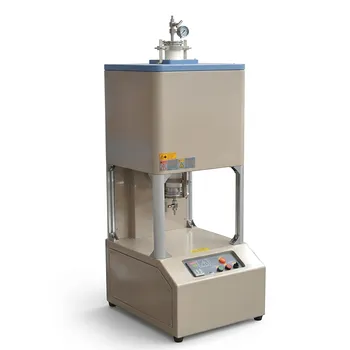
Vertical 1700C Vacuum and Atmosphere Tube Furnace with 80mm Alumina Tube
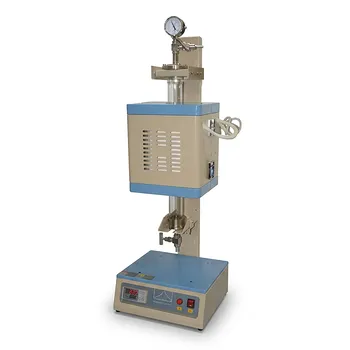
Compact Vertical Split Quartz Tube Furnace with Stainless Steel Vacuum Flanges for Rapid Thermal Quenching and Controlled Atmosphere Material Processing
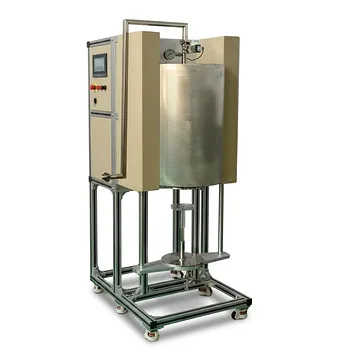
1200°C Atmosphere Controlled Automatic Bottom Loading Furnace with 6 Inch Quartz Tube
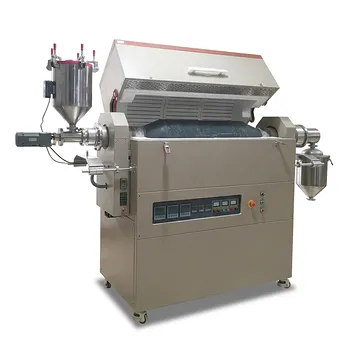
High Temperature Tilting Rotary Tubular Furnace for Continuous Powder Thermal Processing and Controlled Atmosphere Sintering
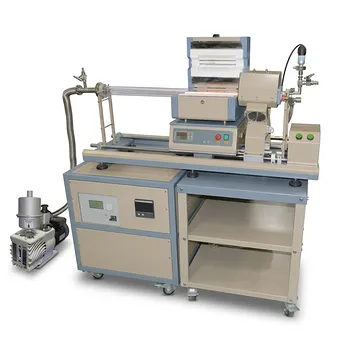
1200C Max Compact Auto-Sliding PECVD Furnace with 2 Inch Tube and Vacuum Pump
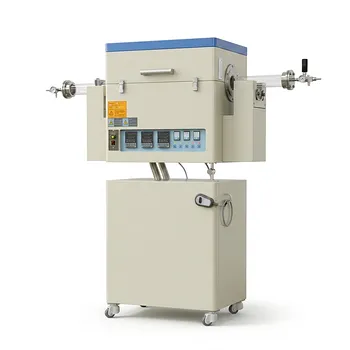
Three Temperature Zone Rotating Tube Furnace for Material Sintering and Controlled Atmospheric Heat Treatment
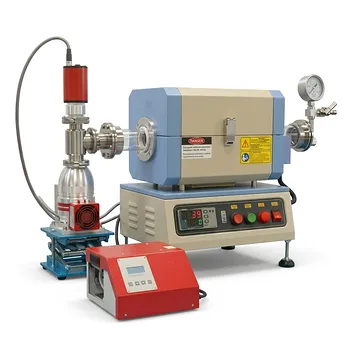
High Vacuum Compact Tube Furnace 1200C with Integrated Turbo Pump System and 8 Inch Heating Zone
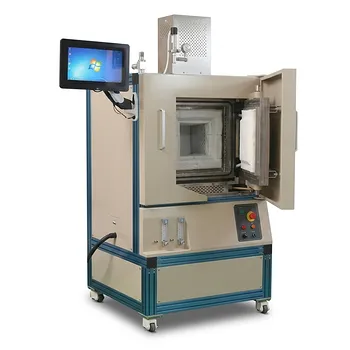
High Temperature Oxygen and Inert Atmosphere Controlled Furnace 8 Liter 1700C Sintering System for Advanced Materials RD
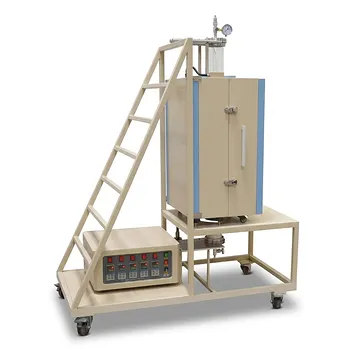
Five Zone Split Vertical Tube Furnace 1200C Max with 4 Inch Quartz Tube and Stainless Steel Vacuum Flanges
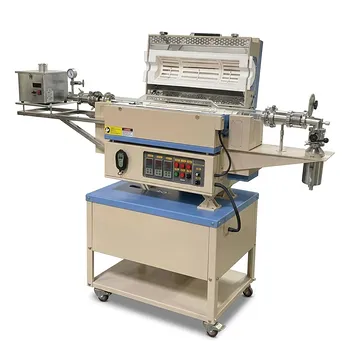
5 Inch Rotary Tube Furnace with Automatic Feeding and Receiving System 1200C Three Zone CVD Powder Processing
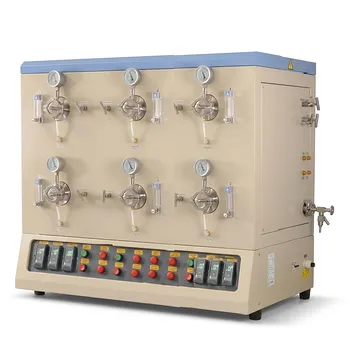
1200C High Throughput Multi Channel Tube Furnace with 50mm Quartz Tubes for Annealing and Material Phase Diagram Research
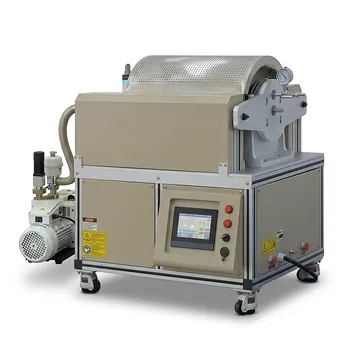
Automated 1200 C Tube Furnace for AI Material Research with 6 Inch OD and Sliding Flange
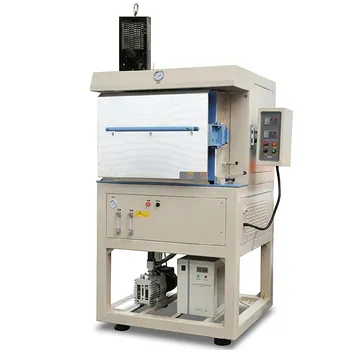
1200C Hydrogen Atmosphere Box Furnace with 5 Heated Sides and 64L Chamber
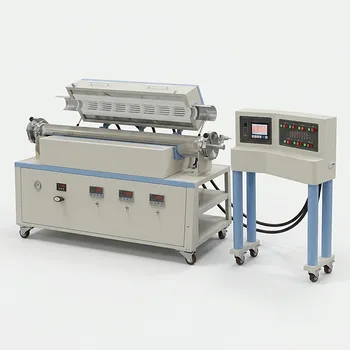
1100C Eight Zone High Pressure Super Alloy Tube Furnace with Integrated High Pressure Gas Control System
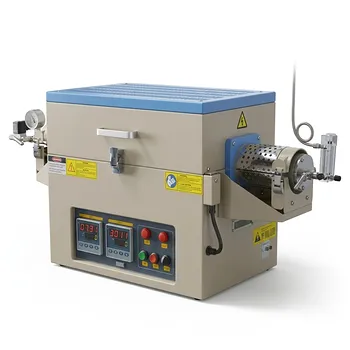
1100C Dual Zone Hydrogen Gas Tube Furnace with Quartz Tube and Integrated H2 Leak Detection System
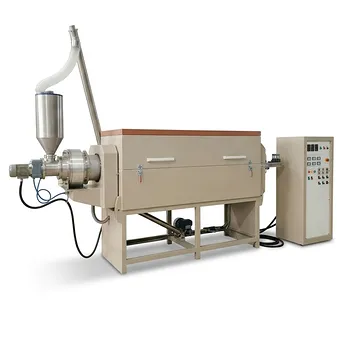
Continuous Feeding Rotary Tube Furnace for Industrial Powder Heat Treatment and Material Research
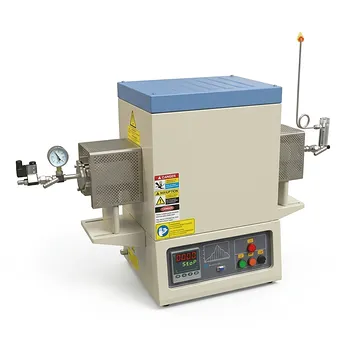
1700C Hydrogen Gas Tube Furnace with 60mm Alumina Process Tube and Integrated Hydrogen Safety Detector
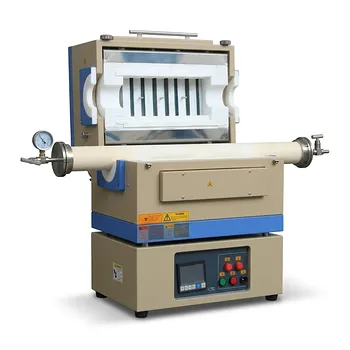
1500C Eight Zone Split Tube Furnace for Thermal Gradient Processing and Advanced Material Research
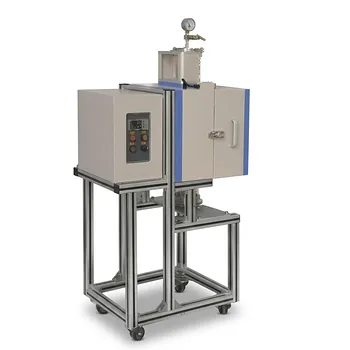
1200°C 5 Inch Vertical Quartz Tube Furnace with Stainless Steel Vacuum Flanges