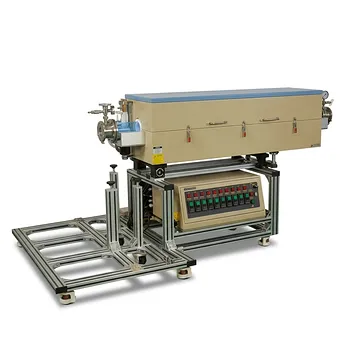
How does a high-temperature tube furnace achieve morphology control? Precision ZnO Nanowire Growth Techniques
Updated 3 months ago
The high-temperature tube furnace achieves morphology control by acting as a precision-regulated thermal reactor. By establishing a stable thermal field and controlling the delivery of reactive gases, the furnace dictates the growth kinetics, allowing for the fine-tuning of nanowire diameter, length, and tip sharpness.
Morphology control in ZnO nanowire growth is the result of balancing temperature-driven vapor transport with gas-phase chemical reactions. This process ensures the structural integrity and high aspect ratio required for advanced electronic and sensing applications.
Thermal Field Management and Gradient Control
Establishing Temperature Gradients
In processes like Horizontal Vapor Phase Growth (HVPG), the tube furnace creates a distinct temperature gradient between the source material and the deposition substrate. Temperatures reaching up to 1200°C at the source zone vaporize the ZnO, while the cooler deposition zone encourages controlled recrystallization.
Driving Phase Transitions
Precise thermal control allows for the specific gasification of raw materials, such as ZnO and graphite mixtures, at temperatures around 940°C. This steady heat supply ensures a constant supply of vapor, which is essential for maintaining a uniform growth rate across the nanowire array.
Eliminating Structural Defects
Beyond growth, the stable thermal environment reduces structural defects within the crystal lattice. By maintaining specific temperature ranges, the furnace promotes atomic rearrangement, leading to a high-purity hexagonal wurtzite structure.
Gas-Phase Dynamics and Chemical Regulation
Carrier Gas Modulation
The furnace environment allows for the precise regulation of carrier gases like argon and oxygen. These flows transport the vaporized zinc to the deposition sites and control the thermal oxidation reactions that define the nanowire's final dimensions.
Influencing Aspect Ratio and Tip Morphology
By adjusting the flow rate and concentration of oxygen, the furnace modifies the growth rates along different crystallographic axes. This modulation results in nanowires with high aspect ratios and sharp tips, which are critical for improving electron emission efficiency.
Catalyst-Driven Directional Growth
In Chemical Vapor Deposition (CVD) setups, the tube furnace facilitates directional growth at preset catalytic sites. The furnace ensures that the vapor-liquid-solid (VLS) process remains stable, allowing nanowires to grow with specific diameters based on the catalyst size.
Understanding the Trade-offs
Sintering vs. Growth
Excessive heat or prolonged exposure can lead to the sintering of nanostructures, where individual grains merge and lose their nanowire morphology. Precise control of the heat treatment duration is vital to inhibit this grain growth and preserve the high-surface-area nanowire structure.
Thermal Lag and Uniformity
In a horizontal tube furnace, achieving perfect uniformity across a large substrate can be challenging due to inherent thermal gradients. If the temperature is not perfectly calibrated, the morphology may vary from the center of the tube to the edges, resulting in inconsistent nanowire lengths.
Vapor Pressure Sensitivity
The morphology is highly sensitive to the balance between temperature and gas flow; even minor fluctuations can shift the growth from one-dimensional nanowires to two-dimensional flakes or bulk crystals. Maintaining a vacuum-tight environment is necessary to prevent unintended oxidation from atmospheric leaks.
Optimizing the Growth Process for Your Goal
To achieve the desired Zinc Oxide nanostructure, the furnace parameters must be aligned with the specific application of the material.
- If your primary focus is field emission efficiency: Focus on high-temperature oxidation and rapid gas flow to produce nanowires with high aspect ratios and sharp tips.
- If your primary focus is electrical sensing: Prioritize a stable VLS growth environment at approximately 940°C with precise argon/oxygen ratios to ensure high crystallinity and consistent diameters.
- If your primary focus is crystal purity: Utilize a stable horizontal temperature gradient to drive spontaneous recrystallization while removing volatile impurities through a steady carrier gas stream.
By mastering the interplay between the furnace’s thermal gradient and its gas-flow dynamics, you can transform a simple chemical reaction into a precise nanostructure engineering process.
Summary Table:
| Control Factor | Mechanism | Resulting Morphology |
|---|---|---|
| Temperature Gradient | Vaporization & Recrystallization | High Purity & Length Consistency |
| Carrier Gas (O2/Ar) | Oxidation & Transport Modulation | High Aspect Ratio & Sharp Tips |
| VLS Process | Catalyst-Driven Site Growth | Precise Diameter Control |
| Thermal Stability | Lattice Rearrangement | Reduced Defects & Wurtzite Structure |
Optimize Your Nanotechnology Research with THERMUNITS
Achieving precise morphology in ZnO nanowires requires world-class thermal stability and gas regulation. THERMUNITS is a leading manufacturer of high-temperature laboratory equipment specifically designed for material science and industrial R&D.
Our comprehensive range of thermal processing solutions includes:
- Tube and Rotary Furnaces for high-precision growth gradients.
- CVD/PECVD Systems for advanced thin-film and nanowire deposition.
- Vacuum, Atmosphere, and Muffle Furnaces for diverse heat treatments.
- Specialized equipment like Hot Press, Dental, and Vacuum Induction Melting (VIM) Furnaces.
Contact our technical team today to discover how THERMUNITS can provide the precision heating solutions necessary to elevate your laboratory's output and research accuracy.
References
- Chengyun Wang, Jun Chen. Fabrication of ZnO Nanowire Cold Cathode Flat-Panel X-ray Source with a Reflective Anode. DOI: 10.3390/nano14181504
Mentioned Products
- High Temperature Tube Furnace 1500C with Sliding Flanges and 50mm OD for Rapid Thermal Processing Fast Heating and Cooling
- High Temperature 1700C Tube Furnace with High Vacuum Turbomolecular Pump System and Multi Channel Mass Flow Controller Gas Mixer
- High Temperature 1700C Benchtop Tube Furnace with 5 Inch Heating Zone High Purity Alumina Tube and Vacuum Sealing Flanges
- 1750°C High Temperature Benchtop Vacuum Atmosphere Tube Furnace with Kanthal Super 1800 Heating Elements and 60mm Alumina Processing Tube
- Compact High Temperature 1600C Tube Furnace with 50mm Alumina Tube and Vacuum Flanges for Material Sintering
People Also Ask
- How are high-temperature tube furnaces utilized to repair etching damage? Precision Lattice Restoration Solutions
- What role does a high-temperature tube furnace play in CVD synthesis of silicon nanowires? Master VLS Growth Precision.
- What core conditions does a high-temperature tube furnace provide for rGO aerogels? Mastering Precision Synthesis.
- What role does a high-temperature tube furnace play in the sulfidation heat treatment of CoS@C/MXene nanocomposites? Guide
- How does precision tube furnace control influence CoFe nanoparticle formation? Master Your Bimetallic Synthesis.

Tech Team · ThermUnits
Last updated on Jun 03, 2026
Related Products

High Temperature Tube Furnace 1500C with Sliding Flanges and 50mm OD for Rapid Thermal Processing Fast Heating and Cooling

High Temperature 1700C Tube Furnace with High Vacuum Turbomolecular Pump System and Multi Channel Mass Flow Controller Gas Mixer

High Temperature 1700C Benchtop Tube Furnace with 5 Inch Heating Zone High Purity Alumina Tube and Vacuum Sealing Flanges

1750°C High Temperature Benchtop Vacuum Atmosphere Tube Furnace with Kanthal Super 1800 Heating Elements and 60mm Alumina Processing Tube

Compact High Temperature 1600C Tube Furnace with 50mm Alumina Tube and Vacuum Flanges for Material Sintering
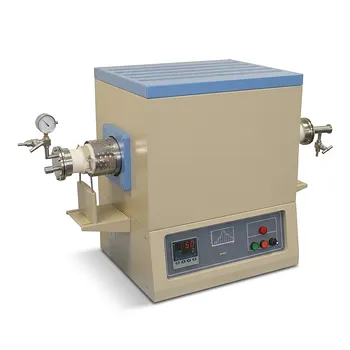
1700C High Temperature Alumina Tube Furnace with 18 Inch Heated Zone and Vacuum Sealing Flanges

1800C High Temperature Compact Vacuum Tube Furnace with 60mm OD Alumina Tube and Kanthal MoSi2 Heating Elements
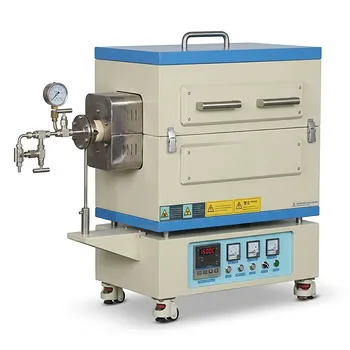
High Temperature Split Tube Furnace 1500C for Material Research Vacuum and Atmosphere Thermal Processing

High Temperature 1700C Vertical Tube Furnace for Powder Spherification and Material Sintering
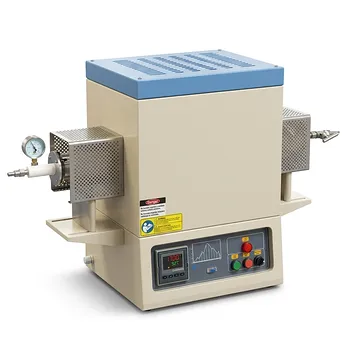
High Temperature Three Zone Tube Furnace 1700C with Alumina Tube and Water Cooled Flanges

High Temperature 1700C Six Zone Split Tube Furnace with Alumina Tube and Water Cooled Flanges
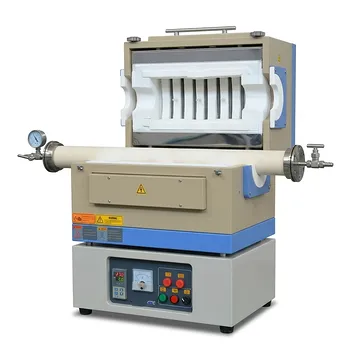
High Temperature 1600C Split Tube Furnace Vacuum Flanges Valves Optional 60mm 80mm Alumina Tube

High Temperature Automated 5 Inch Tube Furnace for Autonomous Material Research and Advanced Laboratory R&D

1100C Tube Furnace with Vacuum Flange and Programmable Temperature Controller for Material Science and Industrial Heat Treatment
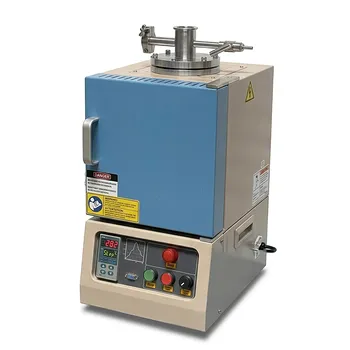
High Temperature Hybrid Muffle and Tube Furnace with Vacuum Capability and PID Control
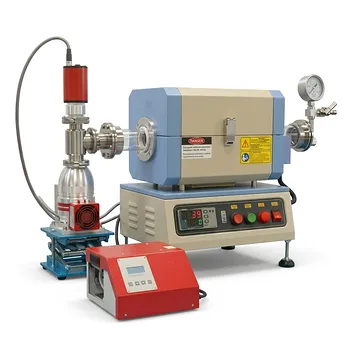
High Vacuum Compact Tube Furnace 1200C with Integrated Turbo Pump System and 8 Inch Heating Zone
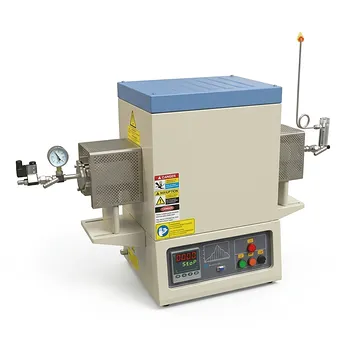
1700C Hydrogen Gas Tube Furnace with 60mm Alumina Process Tube and Integrated Hydrogen Safety Detector
1100°C High Temperature Quartz Chamber Furnace 8 Inch OD with 7.6 Liter Capacity and Vacuum Atmosphere Capability
1100C High Pressure Rocking Tube Furnace with 2 Inch Super Alloy Processing Tube for Material Synthesis