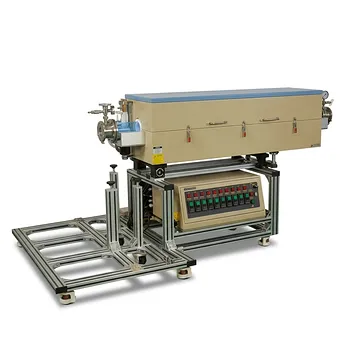
How does a tube furnace assist HEA isothermal oxidation? Achieve Precise Thermal & Atmosphere Control
Updated 3 months ago
High-temperature tube furnaces act as the controlled environment necessary to simulate the extreme service conditions that high-entropy alloys (HEAs) must endure. These furnaces provide a precise thermal field and a customizable atmosphere, allowing researchers to measure how an alloy reacts over time when exposed to heat and oxygen. By maintaining a constant temperature for hundreds of hours, the furnace enables the accurate calculation of oxidation rates and the observation of protective oxide scale formation.
Core Takeaway: A high-temperature tube furnace is the foundational tool for establishing the "isothermal" condition required to isolate a material's chemical resistance from external variables. It allows for the precise determination of oxidation kinetics ($K_p$) and the structural evolution of protective scales, which are essential for predicting the long-term viability of HEAs in industrial applications.
Establishing a Stable Thermal Environment
Precision Temperature Regulation
The primary function of a tube furnace is to maintain a constant temperature, often reaching up to 1200°C, with minimal fluctuation. This stability ensures that any observed degradation in the HEA sample is a result of the material’s inherent properties rather than thermal cycling or inconsistent heat.
Facilitating Extended Isothermal Exposure
Many oxidation experiments require long durations, ranging from 168 hours to over 1,000 hours, to reach a steady state. The furnace provides the high-duty cycle necessary to sustain these temperatures, allowing researchers to observe how elements like Aluminum or Chromium migrate to the surface over time.
Uniformity of the Thermal Field
A high-quality tube furnace provides a uniform hot zone that prevents localized overheating or cooling of the sample. This uniformity is critical for identifying genuine "oxide film evolution patterns" across the entire surface of alloys like Al0.25CoCrCuFeNi.
Assessing Oxidation Kinetics and Morphology
Calculating the Parabolic Rate Constant ($K_p$)
By providing a controlled static air or oxygen environment, the furnace allows for the accurate application of parabolic rate laws. Researchers use the mass change data collected after furnace exposure to calculate the oxidation rate constant ($K_p$), a definitive metric for material durability.
Observing Scale Formation and Evolution
The furnace environment promotes the transition of metal atoms into an oxide state, driving the formation of protective scales like Al2O3 and Cr2O3. Identifying these scales and their adherence to the substrate is vital for determining if an HEA can self-protect in high-heat environments.
Driving Atomic Diffusion and Densification
In cases involving HEA precursor powders, the furnace facilitates atomic diffusion and grain boundary migration. This process is essential for achieving a fully dense material state, which is a prerequisite for testing the mechanical strength and ionic conductivity of specialized materials like SOFC electrolytes.
Environmental and Atmospheric Versatility
Simulating Specific Industrial Atmospheres
Tube furnaces feature a sealed design that allows for the introduction of specific gas mixtures, such as pure oxygen or reducing gases like Hydrogen/Argon. This capability is used to simulate the "fireside" conditions of power plant boilers or the internal environments of gas turbines.
Controlling Oxygen Partial Pressure
By adjusting the atmosphere within the tube, researchers can evaluate how HEAs perform under varying oxygen partial pressures. This helps in understanding the transition from internal oxidation to the formation of a continuous external scale.
Understanding the Trade-offs
The Risk of Surface-to-Volume Ratio Errors
Because samples in a tube furnace are often small, the surface-to-volume ratio can exaggerate the impact of oxidation. This can lead to results that appear more severe than what would occur in large-scale industrial components.
Limitations of Static Environments
While these furnaces excel at static isothermal testing, they do not naturally simulate the high-velocity gas flows or mechanical stresses found in real turbine engines. Relying solely on tube furnace data may overlook "spallation" (scale flaking) caused by high-speed erosion.
Thermal Gradients and Sample Placement
If a sample is placed outside the furnace's calibrated "sweet spot" (the central hot zone), the actual temperature of the specimen may differ from the thermostat’s reading. This error can lead to inaccurate $K_p$ calculations and a misunderstanding of the material's thermal limits.
How to Apply These Findings to Your Research
To effectively evaluate high-entropy alloys using a tube furnace, align your experimental setup with your specific material goals.
- If your primary focus is long-term durability: Prioritize a furnace capable of 1000+ hour stability to ensure the oxidation kinetics reach a definitive steady state.
- If your primary focus is protective scale chemistry: Utilize a furnace with precise atmospheric control to simulate the exact oxygen or gas concentrations the material will encounter in service.
- If your primary focus is material synthesis and density: Choose a furnace with high-temperature sintering capabilities (up to 1500°C) to promote the necessary atomic diffusion for full densification.
The high-temperature tube furnace remains the gold standard for isolating and measuring the chemical stability of alloys in the world's most demanding environments.
Summary Table:
| Feature | Capability | Benefit for HEA Research |
|---|---|---|
| Temperature Range | Up to 1200°C - 1500°C | Simulates extreme service environments |
| Stability Over Time | 1000+ hour duty cycles | Essential for long-term oxidation rate ($K_p$) studies |
| Atmosphere Control | O2, Ar, H2, and vacuum | Simulates turbine or industrial furnace conditions |
| Thermal Uniformity | Precision-calibrated hot zones | Prevents localized overheating and data errors |
| Application | Sintering & Oxidation | Promotes atomic diffusion for high-density alloys |
Maximize Your Material Research with THERMUNITS Precision
Are you looking to isolate variables and achieve definitive oxidation kinetics for your high-entropy alloys? THERMUNITS is a leading manufacturer of high-performance laboratory equipment, providing the thermal stability and atmospheric precision required for world-class material science R&D.
From High-Temperature Tube and Muffle Furnaces to advanced CVD/PECVD systems and Vacuum Induction Melting (VIM) furnaces, our solutions are engineered for the rigorous demands of industrial and academic laboratories.
Why partner with THERMUNITS?
- Unmatched Stability: Sustained temperatures for long-duration isothermal experiments.
- Versatile Solutions: Comprehensive range including Rotary, Hot Press, and Dental Furnaces.
- Expert Engineering: Customized thermal fields to ensure experimental accuracy.
Contact our technical team today to find the perfect thermal processing solution for your next breakthrough.
References
- Fadhli Muhammad, Eddy Agus Basuki. Microstructural Stability and High-Temperature Oxidation Behavior of Al0.25CoCrCuFeNi High Entropy Alloy. DOI: 10.55981/metalurgi.2024.745
Mentioned Products
- High Temperature Tube Furnace 1500C with Sliding Flanges and 50mm OD for Rapid Thermal Processing Fast Heating and Cooling
- High Temperature 1700C Tube Furnace with High Vacuum Turbomolecular Pump System and Multi Channel Mass Flow Controller Gas Mixer
- High Temperature 1700C Benchtop Tube Furnace with 5 Inch Heating Zone High Purity Alumina Tube and Vacuum Sealing Flanges
- 1750°C High Temperature Benchtop Vacuum Atmosphere Tube Furnace with Kanthal Super 1800 Heating Elements and 60mm Alumina Processing Tube
- Compact High Temperature 1600C Tube Furnace with 50mm Alumina Tube and Vacuum Flanges for Material Sintering
People Also Ask
- How are high-temperature tube furnaces utilized to repair etching damage? Precision Lattice Restoration Solutions
- What core conditions does a high-temperature tube furnace provide for rGO aerogels? Mastering Precision Synthesis.
- What role does a high-temperature tube furnace play in CVD synthesis of silicon nanowires? Master VLS Growth Precision.
- How does precision tube furnace control influence CoFe nanoparticle formation? Master Your Bimetallic Synthesis.
- What role does a high-temperature tube furnace play in the sulfidation heat treatment of CoS@C/MXene nanocomposites? Guide

Tech Team · ThermUnits
Last updated on Jun 02, 2026
Related Products

High Temperature Tube Furnace 1500C with Sliding Flanges and 50mm OD for Rapid Thermal Processing Fast Heating and Cooling

High Temperature 1700C Tube Furnace with High Vacuum Turbomolecular Pump System and Multi Channel Mass Flow Controller Gas Mixer

High Temperature 1700C Benchtop Tube Furnace with 5 Inch Heating Zone High Purity Alumina Tube and Vacuum Sealing Flanges
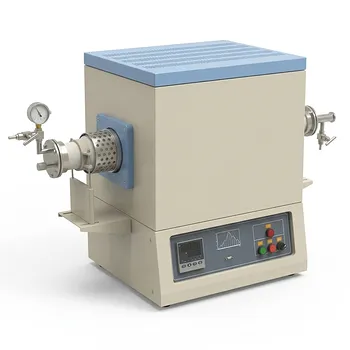
1750°C High Temperature Benchtop Vacuum Atmosphere Tube Furnace with Kanthal Super 1800 Heating Elements and 60mm Alumina Processing Tube

Compact High Temperature 1600C Tube Furnace with 50mm Alumina Tube and Vacuum Flanges for Material Sintering
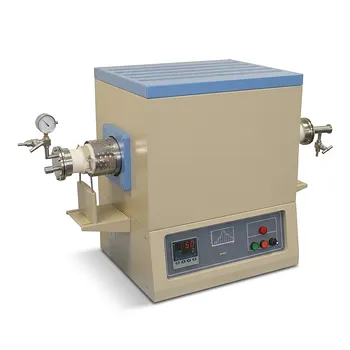
1700C High Temperature Alumina Tube Furnace with 18 Inch Heated Zone and Vacuum Sealing Flanges

1800C High Temperature Compact Vacuum Tube Furnace with 60mm OD Alumina Tube and Kanthal MoSi2 Heating Elements
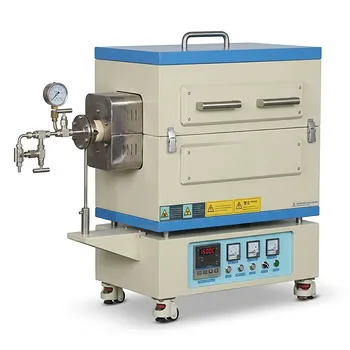
High Temperature Split Tube Furnace 1500C for Material Research Vacuum and Atmosphere Thermal Processing

High Temperature 1700C Vertical Tube Furnace for Powder Spherification and Material Sintering
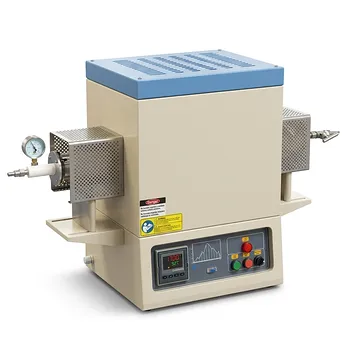
High Temperature Three Zone Tube Furnace 1700C with Alumina Tube and Water Cooled Flanges

High Temperature 1700C Six Zone Split Tube Furnace with Alumina Tube and Water Cooled Flanges
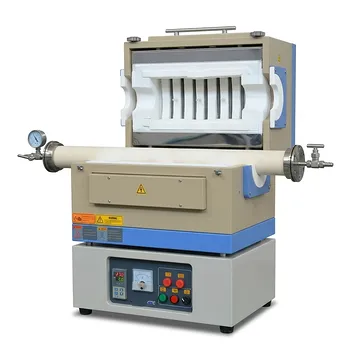
High Temperature 1600C Split Tube Furnace Vacuum Flanges Valves Optional 60mm 80mm Alumina Tube

High Temperature Automated 5 Inch Tube Furnace for Autonomous Material Research and Advanced Laboratory R&D

1100C Tube Furnace with Vacuum Flange and Programmable Temperature Controller for Material Science and Industrial Heat Treatment
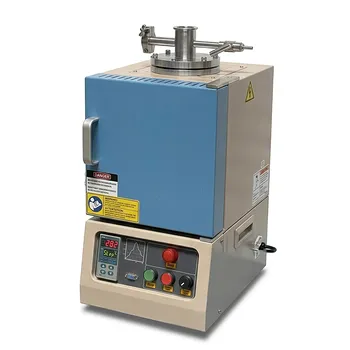
High Temperature Hybrid Muffle and Tube Furnace with Vacuum Capability and PID Control
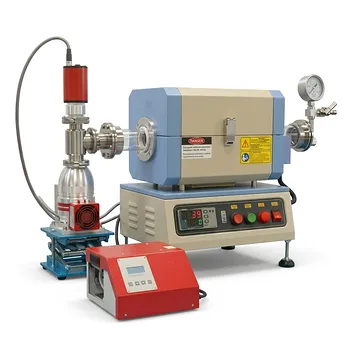
High Vacuum Compact Tube Furnace 1200C with Integrated Turbo Pump System and 8 Inch Heating Zone

1700C Hydrogen Gas Tube Furnace with 60mm Alumina Process Tube and Integrated Hydrogen Safety Detector
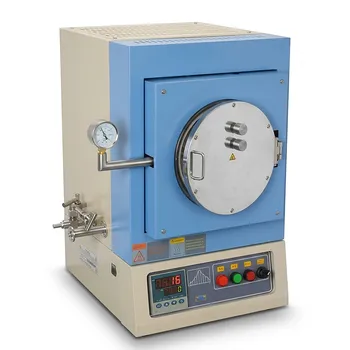
1100°C High Temperature Quartz Chamber Furnace 8 Inch OD with 7.6 Liter Capacity and Vacuum Atmosphere Capability
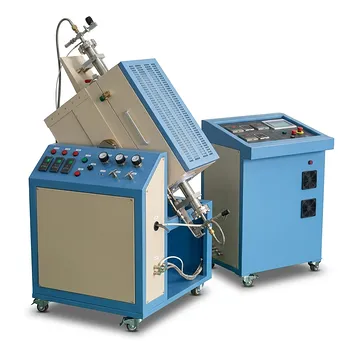
1100C High Pressure Rocking Tube Furnace with 2 Inch Super Alloy Processing Tube for Material Synthesis