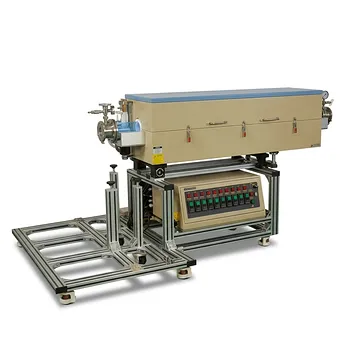
How a high-temperature tube furnace evaluates diamond grain thermal stability: Precision Testing for Abrasives
Updated 3 months ago
The high-temperature tube furnace is the primary tool for quantifying thermal stability by simulating the extreme thermal stress encountered during high-intensity grinding. By subjecting modified diamond grains to controlled atmospheres—such as air at 900°C—researchers can precisely measure mass loss and thermal resistance coefficients. This process allows for the objective verification of how specific coatings, such as boron anhydride (B2O3) or alumina (Al2O3), delay carbonization and inhibit oxidation.
Core Takeaway: A high-temperature tube furnace provides a repeatable, controlled environment to measure the protective efficacy of diamond grain modifications, transforming qualitative observations of "heat resistance" into quantifiable data on mass retention and chemical stability.
Simulating High-Intensity Industrial Environments
Replication of Thermal Stress
High-intensity grinding generates localized heat that can exceed the structural limits of industrial diamonds. The tube furnace simulates these extreme environments by maintaining constant temperatures, often reaching 900°C or higher, to mimic real-world friction.
Atmospheric Control
The furnace allows for the introduction of specific gases, such as compressed air or inert atmospheres. This is critical for evaluating oxidation resistance, as the presence of oxygen at high temperatures is the primary catalyst for diamond-to-graphite transformation (carbonization).
Quantifying the Efficacy of Surface Modifications
Mass Change Analysis
Researchers use the tube furnace to compare the mass of diamond grains before and after thermal exposure. A significant reduction in mass indicates oxidation and carbonization, while minimal change proves the effectiveness of the protective coating.
Thermal Resistance Coefficients
The furnace provides the stable environment necessary to calculate thermal resistance coefficients. These metrics allow engineers to rank different modification techniques, such as Al2O3 vs. B2O3 coatings, based on their ability to shield the diamond core from thermal degradation.
Verification of Coating Integrity
Beyond chemical changes, the furnace helps identify physical failures like cracking or peeling of the protective layers. Observing the phase evolution within the coating helps determine if the modification remains structurally sound during prolonged heating.
The Role of Precision Control in Testing
Programmable Thermal Profiles
Modern tube furnaces utilize PID-based controllers and thermocouples (Type K, S, or B) to ensure temperature stability within ±1 °C. This precision allows for standardized temperature-time curves, ensuring that all samples undergo identical thermal histories.
Uniform Temperature Fields
The design of the quartz or ceramic process tube ensures a uniform temperature field. This uniformity is vital for consistent results, as it prevents thermal gradients that could lead to uneven oxidation and skewed data.
Understanding the Trade-offs
Simulation vs. Reality
While a tube furnace provides excellent thermal control, it cannot fully replicate the mechanical stresses (impact and shear) of actual grinding. It evaluates thermal stability in isolation, which is a necessary scientific control but only one part of the total performance equation.
Heating and Cooling Rates
Rapid thermal cycling can sometimes exceed the capabilities of standard tube furnaces. If a diamond modification is intended for extreme thermal shock applications, the ramp rates of a standard furnace may be too slow to trigger the specific failure modes seen in the field.
Applying Furnace Data to Your Project
Recommendations for Material Evaluation
- If your primary focus is validating chemical oxidation resistance: Use the furnace to perform a long-term soak in an air atmosphere to measure the precise mass loss of coated versus uncoated grains.
- If your primary focus is simulating high-speed grinding friction: Program the furnace for rapid heating to a high-temperature threshold (e.g., 900°C) to observe the immediate carbonization response.
- If your primary focus is coating durability and adhesion: Conduct cyclic thermal fatigue tests, moving the samples between room temperature and the operating temperature to check for coating delamination.
By isolating thermal variables within a controlled tube furnace, you can scientifically validate that your diamond modifications will survive the heat of industrial application.
Summary Table:
| Furnace Feature | Role in Diamond Evaluation | Key Metrics Tracked |
|---|---|---|
| Atmospheric Control | Simulates oxidation or inert environments | Oxidation Resistance |
| Precision PID Control | Ensures repeatable, stable thermal stress | Thermal Resistance Coeff. |
| Uniform Heat Zones | Prevents thermal gradients during testing | Mass Loss / Retention % |
| Vacuum/Gas Loading | Tests coating integrity under specific gases | Coating Phase Evolution |
Elevate Your R&D with THERMUNITS Thermal Excellence
Precise material evaluation requires high-performance heat treatment. THERMUNITS is a leading manufacturer of high-temperature laboratory equipment, empowering material science and industrial R&D teams worldwide.
Our comprehensive thermal solutions include:
- Tube & Rotary Furnaces for specialized material processing.
- Muffle, Vacuum, and Atmosphere Furnaces for versatile heat treatment.
- CVD/PECVD Systems for advanced coating applications.
- Hot Press & Induction Melting Furnaces (VIM) for metallurgy.
- Dental Furnaces & Thermal Elements for precision needs.
Whether you are validating diamond stability or developing new alloys, our equipment provides the uniform temperature fields and programmable control you need. Contact our experts today to discuss your specific application and find the ideal furnace for your laboratory.
References
- V. I. Lavrinenko, Volodymyr Solod. ПОЛІПШЕННЯ ЕКСПЛУАТАЦІЙНИХ ХАРАКТЕРИСТИК АЛМАЗНОГО ШЛІФУВАЛЬНОГО ІНСТРУМЕНТУ МОДИФІКАЦІЄЮ ПОВЕРХНІ ЗЕРЕН СИНТЕТИЧНИХ АЛМАЗІВ. DOI: 10.15407/scine20.01.003
Mentioned Products
- High Temperature Tube Furnace 1500C with Sliding Flanges and 50mm OD for Rapid Thermal Processing Fast Heating and Cooling
- High Temperature 1700C Tube Furnace with High Vacuum Turbomolecular Pump System and Multi Channel Mass Flow Controller Gas Mixer
- High Temperature 1700C Benchtop Tube Furnace with 5 Inch Heating Zone High Purity Alumina Tube and Vacuum Sealing Flanges
- 1750°C High Temperature Benchtop Vacuum Atmosphere Tube Furnace with Kanthal Super 1800 Heating Elements and 60mm Alumina Processing Tube
- Compact High Temperature 1600C Tube Furnace with 50mm Alumina Tube and Vacuum Flanges for Material Sintering
People Also Ask
- How are high-temperature tube furnaces utilized to repair etching damage? Precision Lattice Restoration Solutions
- What role does a high-temperature tube furnace play in CVD synthesis of silicon nanowires? Master VLS Growth Precision.
- What core conditions does a high-temperature tube furnace provide for rGO aerogels? Mastering Precision Synthesis.
- What role does a high-temperature tube furnace play in the sulfidation heat treatment of CoS@C/MXene nanocomposites? Guide
- How does precision tube furnace control influence CoFe nanoparticle formation? Master Your Bimetallic Synthesis.

Tech Team · ThermUnits
Last updated on Jun 03, 2026
Related Products
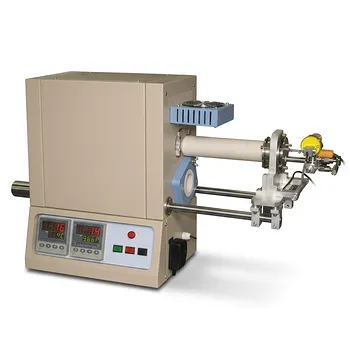
High Temperature Tube Furnace 1500C with Sliding Flanges and 50mm OD for Rapid Thermal Processing Fast Heating and Cooling

High Temperature 1700C Tube Furnace with High Vacuum Turbomolecular Pump System and Multi Channel Mass Flow Controller Gas Mixer

High Temperature 1700C Benchtop Tube Furnace with 5 Inch Heating Zone High Purity Alumina Tube and Vacuum Sealing Flanges
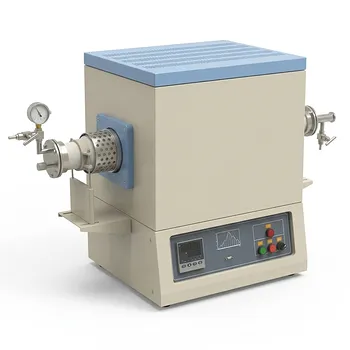
1750°C High Temperature Benchtop Vacuum Atmosphere Tube Furnace with Kanthal Super 1800 Heating Elements and 60mm Alumina Processing Tube

Compact High Temperature 1600C Tube Furnace with 50mm Alumina Tube and Vacuum Flanges for Material Sintering
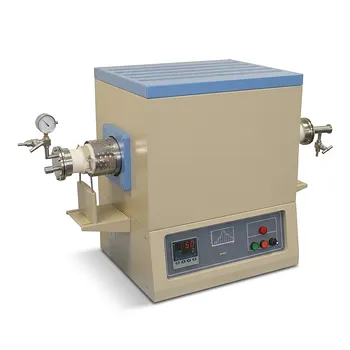
1700C High Temperature Alumina Tube Furnace with 18 Inch Heated Zone and Vacuum Sealing Flanges

1800C High Temperature Compact Vacuum Tube Furnace with 60mm OD Alumina Tube and Kanthal MoSi2 Heating Elements
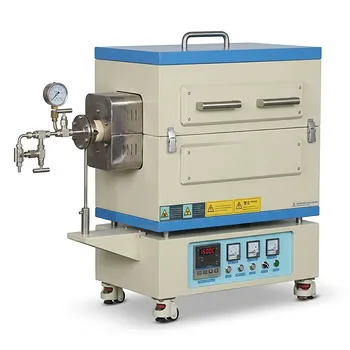
High Temperature Split Tube Furnace 1500C for Material Research Vacuum and Atmosphere Thermal Processing

High Temperature 1700C Vertical Tube Furnace for Powder Spherification and Material Sintering
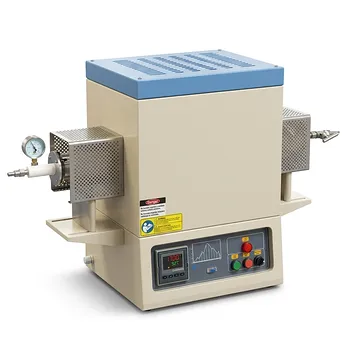
High Temperature Three Zone Tube Furnace 1700C with Alumina Tube and Water Cooled Flanges

High Temperature 1700C Six Zone Split Tube Furnace with Alumina Tube and Water Cooled Flanges
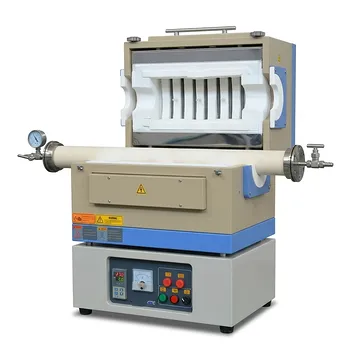
High Temperature 1600C Split Tube Furnace Vacuum Flanges Valves Optional 60mm 80mm Alumina Tube

High Temperature Automated 5 Inch Tube Furnace for Autonomous Material Research and Advanced Laboratory R&D

1100C Tube Furnace with Vacuum Flange and Programmable Temperature Controller for Material Science and Industrial Heat Treatment
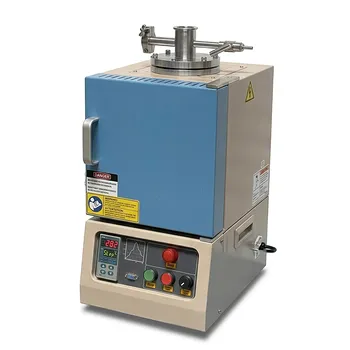
High Temperature Hybrid Muffle and Tube Furnace with Vacuum Capability and PID Control
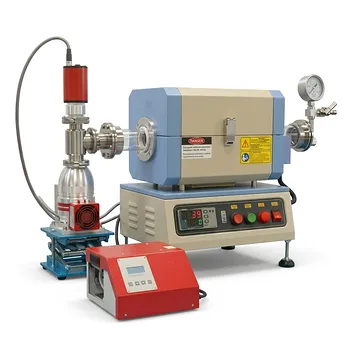
High Vacuum Compact Tube Furnace 1200C with Integrated Turbo Pump System and 8 Inch Heating Zone

1700C Hydrogen Gas Tube Furnace with 60mm Alumina Process Tube and Integrated Hydrogen Safety Detector
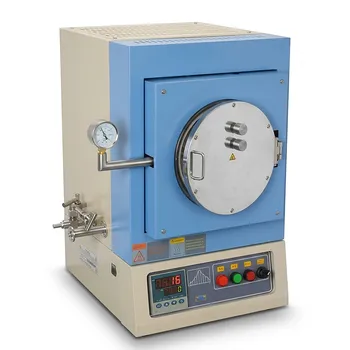
1100°C High Temperature Quartz Chamber Furnace 8 Inch OD with 7.6 Liter Capacity and Vacuum Atmosphere Capability
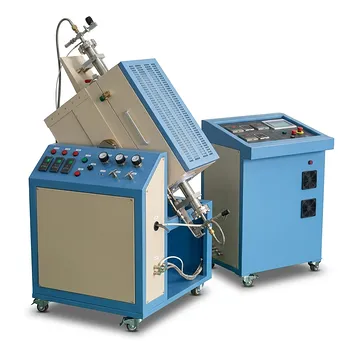
1100C High Pressure Rocking Tube Furnace with 2 Inch Super Alloy Processing Tube for Material Synthesis