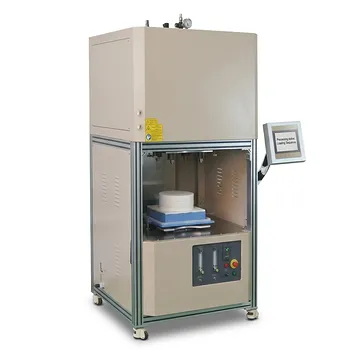
How does a high-temperature tube furnace impact coal-based hard carbon evolution? Master 1300°C Structural Control.
Updated 3 months ago
The high-temperature tube furnace acts as the primary catalyst for structural transformation in coal-based hard carbon by facilitating atomic rearrangement and pore closure. At 1300°C, the furnace provides the thermal energy required to transition from an open, disordered carbon matrix into a structure dominated by closed pores and a pseudo-graphitic framework. This specific temperature threshold triggers the bending and folding of carbon layers, which "self-repairs" surface openings and creates the internal voids necessary for high-capacity sodium-ion storage.
The 1300°C carbonization process in a tube furnace transforms coal into hard carbon by converting open pores into closed ones through carbon layer folding. This structural evolution is critical for enhancing the material's low-voltage plateau capacity while maintaining a stable, amorphous framework.
Atomic Reorganization and Layer Spacing
Facilitating Solid-State Pyrolysis
The intense thermal field of the tube furnace promotes solid-state pyrolysis, converting organic networks into a pseudo-graphitic structure. This process involves the deep dehydrogenation and deoxygenation of the coal precursor, stripping away non-carbon elements to leave behind a pure carbon skeleton.
Optimization of Interlayer Spacing
At 1300°C, the furnace helps maintain a wide interlayer spacing, typically between 0.37 and 0.40 nm. This specific spacing is wider than that of graphite, allowing for the efficient intercalation of larger ions, such as sodium, into the carbon structure.
Control of Graphitization Degree
The furnace temperature is the decisive factor in determining the graphitization degree of the final product. While high temperatures generally increase graphitization, the tube furnace allows for precise control to ensure the carbon remains "hard" (amorphous) rather than converting into "soft" (graphitizable) carbon.
The Pore Closure Mechanism
Self-Repairing of Surface Pores
A critical structural evolution at 1300°C is the self-repairing process of open surface pores. The furnace's heat causes carbon layers to bend and fold, effectively sealing off surface-exposed voids and trapping them within the bulk material.
Formation of Closed Pores
The transition from open to closed pores is fundamental to the material's electrochemical performance. These internal, sealed voids serve as primary storage sites for ions during the low-voltage plateau phase of battery discharge.
Impact on Plateau Capacity
By increasing the density of closed pores, the tube furnace directly enhances the plateau capacity of the hard carbon. This structural shift allows for a higher volume of ion storage without the structural degradation often associated with surface-level adsorption.
Precision Control and Environmental Integrity
The Role of Inert Atmospheres
Tube furnaces provide a strictly controlled inert environment, usually employing nitrogen or argon gas. This prevents the oxidative loss of carbon atoms at 1300°C, ensuring the precursor transforms into hard carbon rather than combusting into ash.
Regulating Volatile Release
Precise control over the heating rate (e.g., 2°C/min) ensures a slow and steady release of volatile matter from coal and binders. This prevents the formation of internal cracks or excessively large pores that can occur when gases escape too rapidly during the carbonization phase.
Thermal Uniformity
The design of the tube furnace ensures temperature uniformity across the entire specimen. Consistency in the thermal field is vital for producing a material with a uniform carbonization degree, which directly influences the mechanical strength and consistency of the final batch.
Understanding the Trade-offs
While 1300°C is highly effective for pore closure, it represents a delicate balance in material science. Exceeding this temperature can lead to over-graphitization, where the wide interlayer spacing collapses, reducing the sites available for ion storage.
Furthermore, the "self-repair" of pores reduces the BET surface area, which can lower the initial rate capability while improving the Initial Coulombic Efficiency (ICE). There is also an inherent trade-off between the energy cost of maintaining 1300°C and the incremental gains in plateau capacity achieved at these higher ranges.
How to Apply This to Your Project
Recommendations for Material Development
- If your primary focus is maximizing sodium-ion storage capacity: Prioritize the 1300°C threshold to maximize the formation of closed pores and optimize the low-voltage plateau.
- If your primary focus is high-rate performance: Consider a slightly lower carbonization temperature to maintain more open pores, accepting a lower total capacity for faster ion transport.
- If your primary focus is structural consistency: Utilize multi-stage programmable heating curves in the tube furnace to coordinate volatile release with the specific decomposition windows of your coal precursor.
By mastering the thermal environment of the tube furnace, researchers can precisely tune the architecture of coal-based hard carbon for next-generation energy storage.
Summary Table:
| Parameter | Impact at 1300°C | Benefit for Hard Carbon |
|---|---|---|
| Pore Structure | Transition from open to closed pores | Increases low-voltage plateau capacity |
| Atomic Layer | Maintains 0.37–0.40 nm spacing | Enhances sodium-ion intercalation |
| Atmosphere | Controlled inert (N2/Ar) environment | Prevents oxidation & ensures purity |
| Surface Area | Pore folding and self-repairing | Improves Initial Coulombic Efficiency (ICE) |
| Thermal Control | Precise heating rates (e.g., 2°C/min) | Prevents cracks and ensures uniformity |
Elevate Your Material Research with THERMUNITS
Precision is the difference between a failed experiment and a breakthrough in sodium-ion battery technology. THERMUNITS is a leading manufacturer of high-temperature laboratory equipment specifically designed for material science and industrial R&D.
Our advanced Tube Furnaces, Vacuum Atmosphere Furnaces, and CVD/PECVD systems provide the exceptional thermal uniformity and atmosphere integrity required for the delicate 1300°C carbonization of coal-based hard carbon. Whether you are optimizing pore closure or tuning interlayer spacing, our equipment—including Muffle, Rotary, and Hot Press furnaces—is engineered to give you complete control over your thermal processing.
Ready to achieve superior heat treatment results?
Contact our technical experts today to find the perfect solution for your lab.
References
- Wen-Yu Qian, Xing‐Long Wu. Breakage of the dense structure of coal precursors increases the plateau capacity of hard carbon for sodium storage. DOI: 10.1039/d4sc06549b
Mentioned Products
- High Temperature Tube Furnace 1500C with Sliding Flanges and 50mm OD for Rapid Thermal Processing Fast Heating and Cooling
- High Temperature 1700C Tube Furnace with High Vacuum Turbomolecular Pump System and Multi Channel Mass Flow Controller Gas Mixer
- High Temperature 1700C Vertical Tube Furnace for Powder Spherification and Material Sintering
- High Temperature Three Zone Tube Furnace 1700C with Alumina Tube and Water Cooled Flanges
- High Temperature 1700C Tube Furnace with 4 Inch OD Alumina Tube and Vacuum Sealing Flanges
People Also Ask
- How are high-temperature tube furnaces utilized to repair etching damage? Precision Lattice Restoration Solutions
- What role does a high-temperature tube furnace play in CVD synthesis of silicon nanowires? Master VLS Growth Precision.
- What core conditions does a high-temperature tube furnace provide for rGO aerogels? Mastering Precision Synthesis.
- What role does a high-temperature tube furnace play in the sulfidation heat treatment of CoS@C/MXene nanocomposites? Guide
- How does precision tube furnace control influence CoFe nanoparticle formation? Master Your Bimetallic Synthesis.

Tech Team · ThermUnits
Last updated on Jun 02, 2026
Related Products

High Temperature Tube Furnace 1500C with Sliding Flanges and 50mm OD for Rapid Thermal Processing Fast Heating and Cooling

High Temperature 1700C Tube Furnace with High Vacuum Turbomolecular Pump System and Multi Channel Mass Flow Controller Gas Mixer

High Temperature 1700C Vertical Tube Furnace for Powder Spherification and Material Sintering
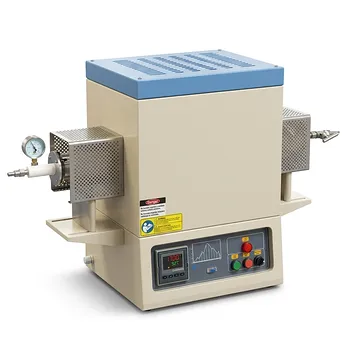
High Temperature Three Zone Tube Furnace 1700C with Alumina Tube and Water Cooled Flanges
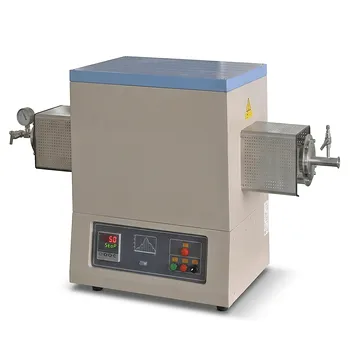
High Temperature 1700C Tube Furnace with 4 Inch OD Alumina Tube and Vacuum Sealing Flanges

High Temperature 1700C Benchtop Tube Furnace with 5 Inch Heating Zone High Purity Alumina Tube and Vacuum Sealing Flanges
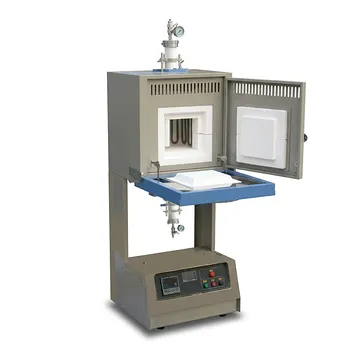
Vertical Hybrid High Temperature Furnace 1500C Alumina Tube SOFC Fuel Cell Testing Laboratory Heat Treatment Research Equipment

High Temperature Automated 5 Inch Tube Furnace for Autonomous Material Research and Advanced Laboratory R&D
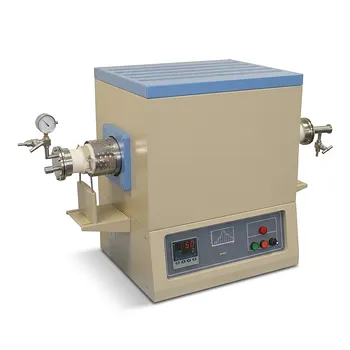
1700C High Temperature Alumina Tube Furnace with 18 Inch Heated Zone and Vacuum Sealing Flanges

1200°C 5 Inch Vertical Quartz Tube Furnace with Stainless Steel Vacuum Flanges
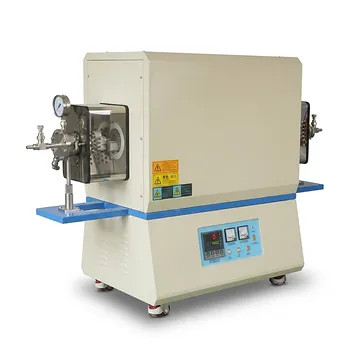
High Temperature 1800C Atmosphere Tube Furnace for CVD Research and Vacuum Sintering Precision Heat Treatment

Compact High Temperature 1600C Tube Furnace with 50mm Alumina Tube and Vacuum Flanges for Material Sintering
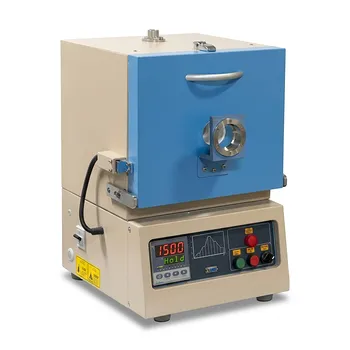
1500C Hybrid Muffle Tube Furnace 1.7L Box with 2 Inch Mullite Tube and Programmable PID Controller
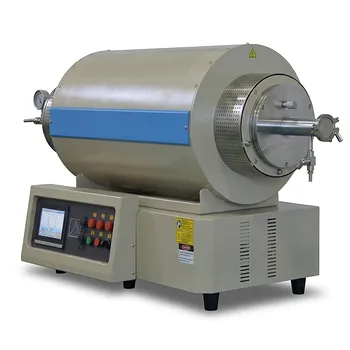
1200C Max Three Zone Tube Furnace 6 Inch OD Max with Tube and Flange
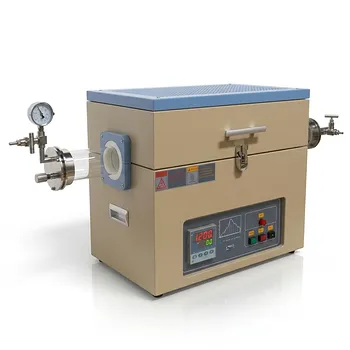
High Temperature 1200C Split Tube Furnace with Optional Quartz Tube Sizes and Vacuum Sealing Flanges for Material Science Research
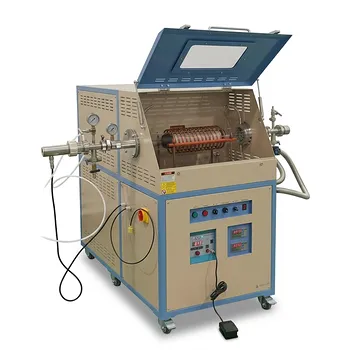
Ultra High Temperature 2300C Induction Heated Graphite Tube Furnace with Infrared Control
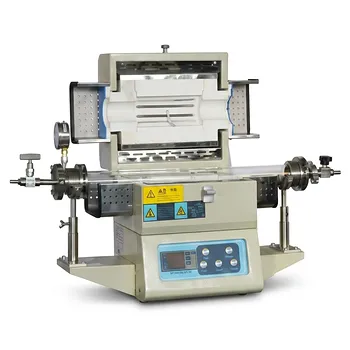
High Temperature 1200C Split Tube Furnace for CVD Research and Vacuum Atmosphere Heat Treatment
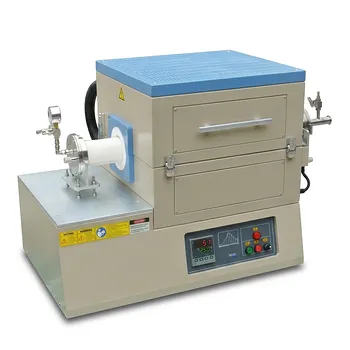
High Temperature 1700C Split Tube Furnace with Vacuum Flanges Valves and 60mm Alumina Tube
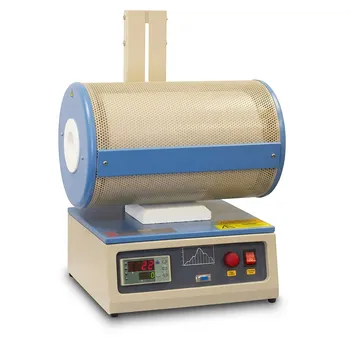
Multi Position Tube Furnace 1100C for Laboratory Material Research and Advanced Industrial Thermal Processing