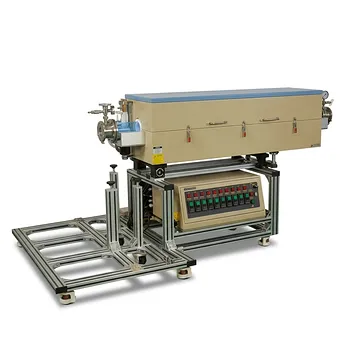
How does a high-temperature Tube Furnace contribute to (Ti, Nb)2AlC MAX phase synthesis? Precision Thermal Solutions.
Updated 5 months ago
A high-temperature tube furnace is the fundamental reactor for (Ti, Nb)2AlC synthesis, providing the 1500°C thermal energy required for solid-state diffusion. By maintaining a sealed environment and a continuous flow of high-purity argon, it prevents the rapid oxidation of metallic titanium, niobium, and aluminum. This precise combination of extreme heat and atmospheric control ensures the precursors transform into the specific ternary layered crystal structure characteristic of MAX phases.
The tube furnace serves as a precision-controlled environment that facilitates high-temperature chemical reactions while shielding sensitive metallic materials from oxygen. Its primary role is to drive the thermodynamic conversion of raw powders into high-purity, layered MAX phase structures through stable thermal fields and inert gas protection.
Facilitating High-Temperature Solid-State Diffusion
Reaching the Thermal Threshold for Atomic Migration
The synthesis of (Ti, Nb)2AlC requires a sustained temperature of 1500°C to initiate the solid-state reaction between metal powders. At these extreme temperatures, atomic mobility increases, allowing titanium, niobium, aluminum, and carbon atoms to diffuse across grain boundaries. This movement is necessary to organize individual elements into the complex, periodic lattice of the MAX phase.
Stabilizing the Layered Crystal Morphology
A tube furnace provides a precise thermal field distribution that is critical for maintaining structural integrity. Uniform heating prevents localized temperature spikes that could cause the material to melt or decompose into unwanted sub-carbides. Stable heating ensures that the reactants remain at the target temperature long enough to complete the transformation into the final ternary layered structure.
Atmospheric Shielding and Oxidation Control
Excluding Oxygen with Argon Flow
Metallic components like titanium and aluminum are highly reactive and oxidize instantly at high temperatures. The furnace’s sealed tube and atmosphere control system allow for the continuous introduction of high-purity argon gas. This process displaces oxygen, creating an inert environment that protects the chemical purity of the precursors during the entire sintering cycle.
Utilizing Reducing Environments for Enhanced Purity
In some advanced synthesis protocols, the furnace can support Ar/H2 reducing atmospheres or high-vacuum levels (down to 10⁻⁵ mbar). These conditions further inhibit oxidation and can help remove residual surface oxides from the raw powder particles. Eliminating oxygen interference is essential for ensuring that the final (Ti, Nb)2AlC product demonstrates the intended mechanical and electrical properties.
Precision Control of Reaction Pathways
Managing Heating Rates and Dwell Times
The furnace’s programmable controller allows for specific heating rates, often around 10°C/min, and dedicated holding stages. For example, a lower-temperature dwell stage may be used to burn off residual binders or impurities before the main sintering phase begins. This step-by-step control prevents rapid gas evolution that could disrupt the density of the final material.
Facilitating Light Sintering for Post-Processing
Industrial-grade tube furnaces, often utilizing high-alumina crucibles, can produce a "lightly sintered" product. This state is ideal for (Ti, Nb)2AlC precursors because it results in a material that is structurally sound yet brittle enough to be easily crushed. This ease of processing is vital for users who need to transform the bulk MAX phase into fine powders for further applications.
Understanding the Trade-offs
Thermal Uniformity vs. Sample Volume
While tube furnaces offer exceptional control, the "sweet spot" of thermal uniformity is usually limited to a specific central zone within the tube. Samples placed too close to the ends of the furnace may experience temperature gradients, leading to incomplete reactions or phase impurities. This limits the volume of high-quality material that can be synthesized in a single batch compared to larger industrial kilns.
Gas Flow Dynamics and Cooling Rates
High flow rates of argon ensure purity but can create cooling effects that disturb the temperature stability of the sample. Conversely, slow cooling rates are often necessary to prevent thermal shock to the ceramic tube, but this extends the total processing time. Balancing gas consumption and cooling protocols is a constant operational challenge in maintaining furnace longevity and product consistency.
How to Apply This to Your Project
Recommendations for Targeted Outcomes
- If your primary focus is phase purity: Utilize a high-vacuum or Ar/H2 atmosphere to minimize oxygen content to the lowest possible levels.
- If your primary focus is grain morphology: Use a slow heating rate (10°C/min) and an extended dwell time at 1500°C to allow for full crystal growth.
- If your primary focus is scalability: Identify the "constant temperature zone" of your specific furnace tube and ensure all crucibles stay within those boundaries.
By mastering the balance between thermal energy and atmospheric protection, the tube furnace becomes the definitive tool for engineering the complex atomic architecture of (Ti, Nb)2AlC MAX phases.
Summary Table:
| Key Feature | Role in MAX Phase Synthesis | Technical Requirement |
|---|---|---|
| High Thermal Energy | Drives solid-state atomic diffusion | Sustained 1500°C environment |
| Atmosphere Control | Prevents oxidation of Ti, Nb, and Al | High-purity Argon flow or Vacuum |
| Thermal Uniformity | Stabilizes layered crystal morphology | Optimized constant temperature zone |
| Precision Ramp | Manages reaction pathways & purity | Programmable heating (e.g., 10°C/min) |
Elevate Your Material Research with THERMUNITS
Achieving the precise atomic architecture of (Ti, Nb)2AlC MAX phases requires absolute control over thermal energy and atmosphere. THERMUNITS is a leading manufacturer of high-temperature laboratory equipment specifically designed for material science and industrial R&D.
Our comprehensive range of thermal processing solutions includes:
- Tube & Rotary Furnaces for high-purity precursor synthesis.
- Vacuum & Atmosphere Furnaces for controlled sintering environments.
- Muffle, Hot Press, & CVD/PECVD Systems for advanced material engineering.
- VIM (Vacuum Induction Melting) & Dental Furnaces for specialized heat treatments.
Whether you are scaling up production or refining grain morphology, our expert-engineered equipment ensures consistent, high-quality results. Contact THERMUNITS today to find the perfect thermal solution for your laboratory’s needs!
References
- Shalu Atri, Olivier Monfort. MXene-Derived Oxide Nanoheterostructures for Photocatalytic Sulfamethoxazole Degradation. DOI: 10.1021/acsanm.4c02523
Mentioned Products
- High Temperature Tube Furnace 1500C with Sliding Flanges and 50mm OD for Rapid Thermal Processing Fast Heating and Cooling
- High Temperature 1700C Tube Furnace with High Vacuum Turbomolecular Pump System and Multi Channel Mass Flow Controller Gas Mixer
- High Temperature 1700C Benchtop Tube Furnace with 5 Inch Heating Zone High Purity Alumina Tube and Vacuum Sealing Flanges
- 1750°C High Temperature Benchtop Vacuum Atmosphere Tube Furnace with Kanthal Super 1800 Heating Elements and 60mm Alumina Processing Tube
- Compact High Temperature 1600C Tube Furnace with 50mm Alumina Tube and Vacuum Flanges for Material Sintering
People Also Ask
- How are high-temperature tube furnaces utilized to repair etching damage? Precision Lattice Restoration Solutions
- What core conditions does a high-temperature tube furnace provide for rGO aerogels? Mastering Precision Synthesis.
- What role does a high-temperature tube furnace play in CVD synthesis of silicon nanowires? Master VLS Growth Precision.
- How does precision tube furnace control influence CoFe nanoparticle formation? Master Your Bimetallic Synthesis.
- What role does a high-temperature tube furnace play in the sulfidation heat treatment of CoS@C/MXene nanocomposites? Guide

Tech Team · ThermUnits
Last updated on Apr 14, 2026
Related Products

High Temperature Tube Furnace 1500C with Sliding Flanges and 50mm OD for Rapid Thermal Processing Fast Heating and Cooling

High Temperature 1700C Tube Furnace with High Vacuum Turbomolecular Pump System and Multi Channel Mass Flow Controller Gas Mixer

High Temperature 1700C Benchtop Tube Furnace with 5 Inch Heating Zone High Purity Alumina Tube and Vacuum Sealing Flanges
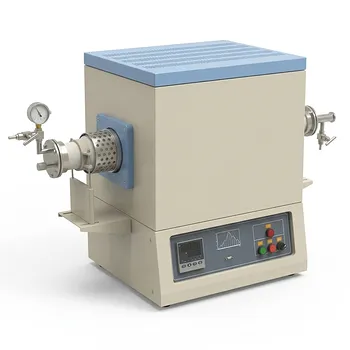
1750°C High Temperature Benchtop Vacuum Atmosphere Tube Furnace with Kanthal Super 1800 Heating Elements and 60mm Alumina Processing Tube

Compact High Temperature 1600C Tube Furnace with 50mm Alumina Tube and Vacuum Flanges for Material Sintering
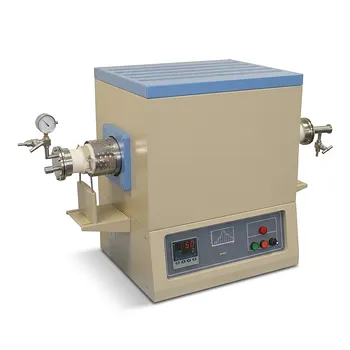
1700C High Temperature Alumina Tube Furnace with 18 Inch Heated Zone and Vacuum Sealing Flanges

1800C High Temperature Compact Vacuum Tube Furnace with 60mm OD Alumina Tube and Kanthal MoSi2 Heating Elements
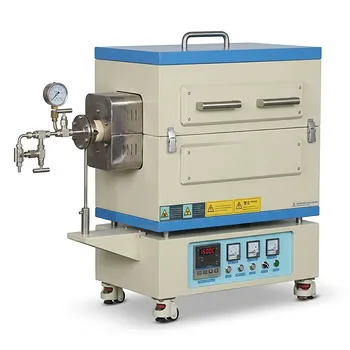
High Temperature Split Tube Furnace 1500C for Material Research Vacuum and Atmosphere Thermal Processing

High Temperature 1700C Vertical Tube Furnace for Powder Spherification and Material Sintering
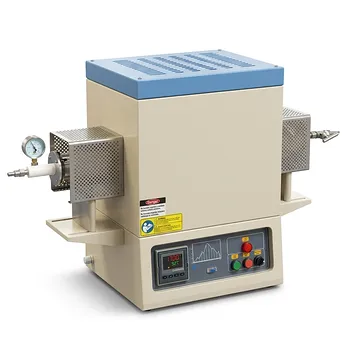
High Temperature Three Zone Tube Furnace 1700C with Alumina Tube and Water Cooled Flanges

High Temperature 1700C Six Zone Split Tube Furnace with Alumina Tube and Water Cooled Flanges
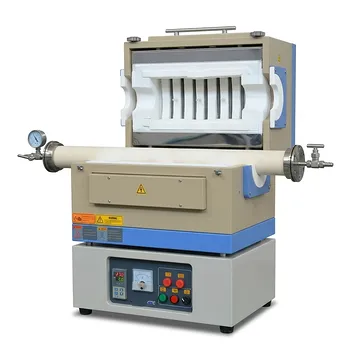
High Temperature 1600C Split Tube Furnace Vacuum Flanges Valves Optional 60mm 80mm Alumina Tube

High Temperature Automated 5 Inch Tube Furnace for Autonomous Material Research and Advanced Laboratory R&D
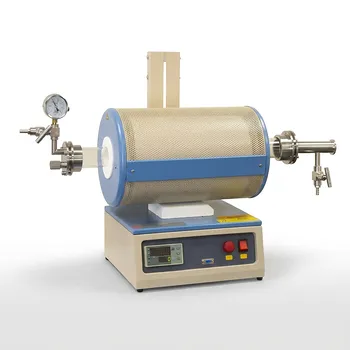
1100C Tube Furnace with Vacuum Flange and Programmable Temperature Controller for Material Science and Industrial Heat Treatment
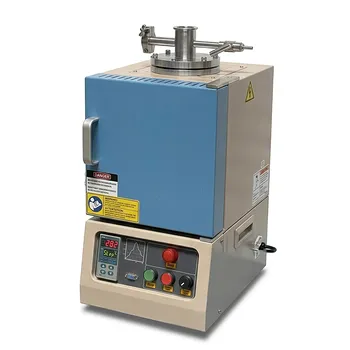
High Temperature Hybrid Muffle and Tube Furnace with Vacuum Capability and PID Control
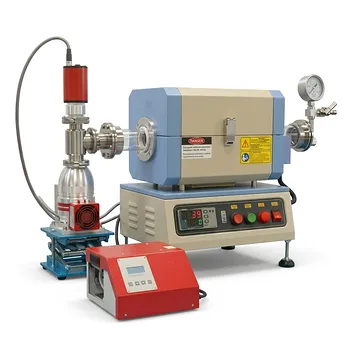
High Vacuum Compact Tube Furnace 1200C with Integrated Turbo Pump System and 8 Inch Heating Zone
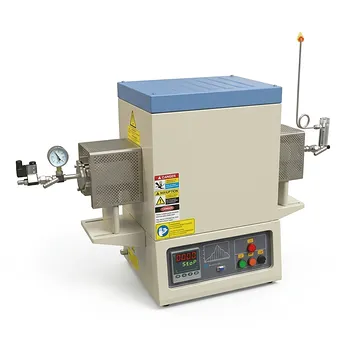
1700C Hydrogen Gas Tube Furnace with 60mm Alumina Process Tube and Integrated Hydrogen Safety Detector
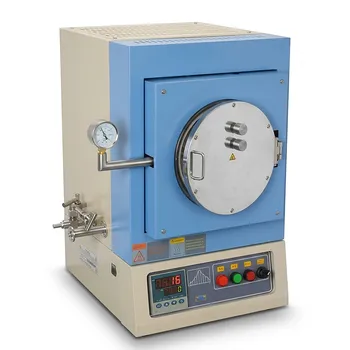
1100°C High Temperature Quartz Chamber Furnace 8 Inch OD with 7.6 Liter Capacity and Vacuum Atmosphere Capability
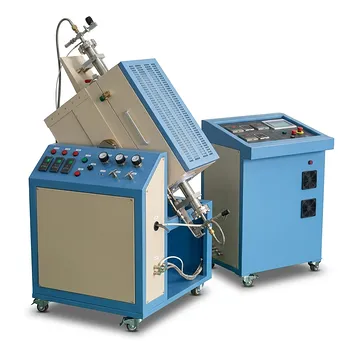
1100C High Pressure Rocking Tube Furnace with 2 Inch Super Alloy Processing Tube for Material Synthesis