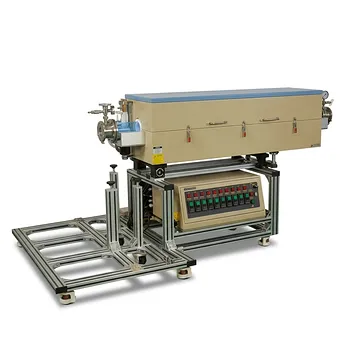
How does a high-temperature tube furnace facilitate the activation and stabilization of FeOx@KCC-1 catalysts? Guide
Updated 3 months ago
The high-temperature tube furnace serves as the precision reactor required to transform FeOx@KCC-1 precursors into chemically active and structurally stable catalysts. It achieves this by providing a strictly controlled thermal field and the ability to switch gas atmospheres in a single, continuous process, which is essential for defining the iron species' oxidation state and crystallinity.
The core utility of the tube furnace lies in its dual-functionality: it facilitates a multi-stage chemical activation through programmable atmosphere switching while simultaneously leveraging the physical structure of the KCC-1 support to anchor nanoparticles, effectively preventing the performance-degrading effects of sintering.
Precision Control of Chemical Activation
The activation of FeOx@KCC-1 is not a simple heating process but a choreographed chemical transition. The tube furnace allows for the exact manipulation of the catalyst’s chemical environment at specific temperature thresholds.
Programmable Atmosphere Switching
A critical feature of the tube furnace is the ability to shift from an inert environment to an oxidizing one. For FeOx@KCC-1, the process typically begins in nitrogen (N2) at 550°C for 4 hours, followed by a switch to air for 2 hours.
This transition is vital because it determines the final oxidation state and crystallinity of the iron species. Without this precise switching, the iron could result in an inactive or unstable chemical form.
Removal of Organic Templates
During the synthesis of molecular sieve-style catalysts like KCC-1, organic template agents such as CTAB are often present. The stable high-temperature thermal field of the tube furnace (often 550°C or higher) ensures these templates are completely removed.
The removal of these templates is necessary to open the pore structure of the silica support. This provides the surface area required for the active metal components to function effectively.
Mechanisms of Structural Stabilization
Stabilization is the process of ensuring the catalyst remains effective over long periods of operation. The tube furnace utilizes the unique geometry of the KCC-1 support to achieve this.
Physical Confinement and Anchoring
KCC-1 is characterized by a unique fibrous silica structure. The tube furnace environment facilitates the physical confinement of FeOx nanoparticles within these silica fibers.
By providing a controlled thermal environment, the furnace helps "anchor" the nanoparticles to the support surface. This anchoring prevents the particles from migrating and merging, a process known as sintering.
Promoting Chemical Bonding and Dispersion
The constant thermal stress within the furnace promotes high dispersion and strong chemical bonding between the active iron components and the silica support.
This high dispersion ensures that the maximum number of active sites are exposed for catalysis. The strong bonding ensures that the FeOx species do not detach or agglomerate during repeated oxidation-reduction cycles.
Understanding the Trade-offs and Pitfalls
While the tube furnace is essential, its operation involves critical trade-offs that can impact the final catalyst quality if not managed correctly.
Thermal Stress vs. Structural Integrity
Exceeding the required temperature (e.g., moving significantly past 550°C) can lead to the collapse of the fibrous KCC-1 structure. While higher heat might improve crystallinity, it risks reducing the specific surface area and destroying the physical confinement mechanism.
Atmosphere Contamination Risks
The sealing properties of the furnace are paramount. If the furnace fails to maintain a strictly anaerobic (oxygen-free) environment during the nitrogen phase, the iron species may oxidize prematurely, leading to a loss of control over the final catalytic properties.
How to Optimize Furnace Parameters for Your Goal
To achieve the best results with FeOx@KCC-1 catalysts, the furnace settings must be aligned with your specific performance requirements.
- If your primary focus is Maximum Surface Area: Utilize a slower heating rate (e.g., 5°C/min) and ensure the nitrogen phase is strictly maintained to prevent premature pore etching or structural collapse.
- If your primary focus is High-Temperature Stability: Prioritize the air-calcination phase at 550°C to ensure the iron species are fully anchored and the tetragonal crystal structures are stabilized.
- If your primary focus is Chemical Specificity: Use multi-stage insulation processes to allow the iron oxidation states to reach equilibrium before switching atmospheres.
By masterfully controlling the interplay between heat and atmosphere, the high-temperature tube furnace transforms raw materials into a robust, high-performance catalytic system.
Summary Table:
| Process Step | Key Function | Recommended Parameter |
|---|---|---|
| Inert Phase (N2) | Removes organic templates (CTAB) & opens pores | 550°C for 4 Hours |
| Oxidation Phase (Air) | Defines Fe species oxidation state & crystallinity | 550°C for 2 Hours |
| Structural Anchoring | Prevents sintering via physical confinement | Controlled 5°C/min heating |
| Atmosphere Control | Ensures chemical specificity and phase purity | Gas-tight sealing required |
Elevate Your Catalyst R&D with THERMUNITS
Precise thermal processing is the backbone of material science. As a leading manufacturer of high-temperature laboratory equipment, THERMUNITS provides the advanced solutions needed to achieve perfect catalyst activation.
Our comprehensive range of equipment—including Tube Furnaces, Vacuum and Atmosphere Furnaces, CVD/PECVD systems, and Rotary Kilns—is engineered to provide the stable thermal fields and atmosphere control required for complex syntheses like FeOx@KCC-1. Whether you are focused on maximizing surface area or ensuring long-term structural stability, our furnaces deliver the accuracy your research demands.
Ready to optimize your lab’s efficiency? Contact our technical experts today to find the ideal furnace for your high-temperature R&D applications.
References
- Guobo Li, Honggen Peng. Unraveling FeOx Nanoparticles Confined on Fibrous Mesoporous Silica Catalyst Construction and CO Catalytic Oxidation Performance. DOI: 10.3390/catal14010063
Mentioned Products
- High Temperature Tube Furnace 1500C with Sliding Flanges and 50mm OD for Rapid Thermal Processing Fast Heating and Cooling
- High Temperature 1700C Tube Furnace with High Vacuum Turbomolecular Pump System and Multi Channel Mass Flow Controller Gas Mixer
- High Temperature 1700C Benchtop Tube Furnace with 5 Inch Heating Zone High Purity Alumina Tube and Vacuum Sealing Flanges
- 1750°C High Temperature Benchtop Vacuum Atmosphere Tube Furnace with Kanthal Super 1800 Heating Elements and 60mm Alumina Processing Tube
- Compact High Temperature 1600C Tube Furnace with 50mm Alumina Tube and Vacuum Flanges for Material Sintering
People Also Ask
- How are high-temperature tube furnaces utilized to repair etching damage? Precision Lattice Restoration Solutions
- What role does a high-temperature tube furnace play in CVD synthesis of silicon nanowires? Master VLS Growth Precision.
- What core conditions does a high-temperature tube furnace provide for rGO aerogels? Mastering Precision Synthesis.
- What role does a high-temperature tube furnace play in the sulfidation heat treatment of CoS@C/MXene nanocomposites? Guide
- How does precision tube furnace control influence CoFe nanoparticle formation? Master Your Bimetallic Synthesis.

Tech Team · ThermUnits
Last updated on Jun 02, 2026
Related Products
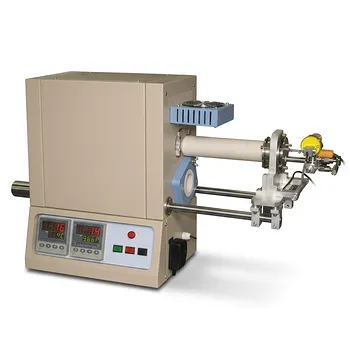
High Temperature Tube Furnace 1500C with Sliding Flanges and 50mm OD for Rapid Thermal Processing Fast Heating and Cooling

High Temperature 1700C Tube Furnace with High Vacuum Turbomolecular Pump System and Multi Channel Mass Flow Controller Gas Mixer

High Temperature 1700C Benchtop Tube Furnace with 5 Inch Heating Zone High Purity Alumina Tube and Vacuum Sealing Flanges

1750°C High Temperature Benchtop Vacuum Atmosphere Tube Furnace with Kanthal Super 1800 Heating Elements and 60mm Alumina Processing Tube

Compact High Temperature 1600C Tube Furnace with 50mm Alumina Tube and Vacuum Flanges for Material Sintering
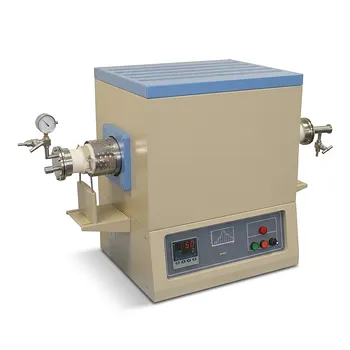
1700C High Temperature Alumina Tube Furnace with 18 Inch Heated Zone and Vacuum Sealing Flanges

1800C High Temperature Compact Vacuum Tube Furnace with 60mm OD Alumina Tube and Kanthal MoSi2 Heating Elements
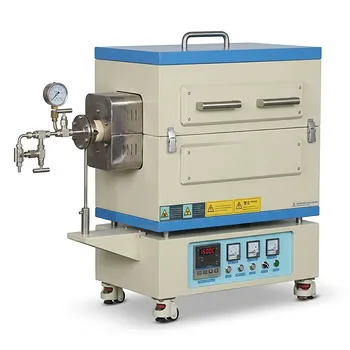
High Temperature Split Tube Furnace 1500C for Material Research Vacuum and Atmosphere Thermal Processing

High Temperature 1700C Vertical Tube Furnace for Powder Spherification and Material Sintering
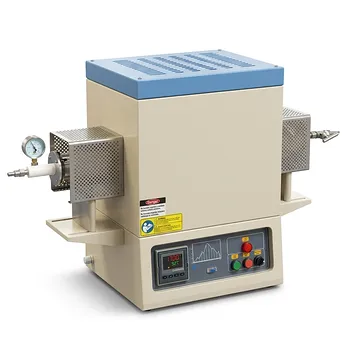
High Temperature Three Zone Tube Furnace 1700C with Alumina Tube and Water Cooled Flanges

High Temperature 1700C Six Zone Split Tube Furnace with Alumina Tube and Water Cooled Flanges
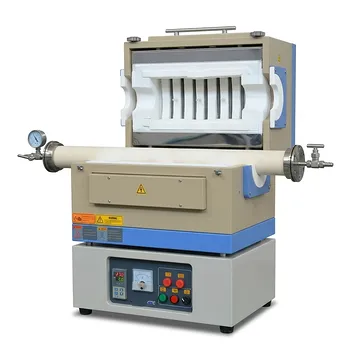
High Temperature 1600C Split Tube Furnace Vacuum Flanges Valves Optional 60mm 80mm Alumina Tube

High Temperature Automated 5 Inch Tube Furnace for Autonomous Material Research and Advanced Laboratory R&D

1100C Tube Furnace with Vacuum Flange and Programmable Temperature Controller for Material Science and Industrial Heat Treatment
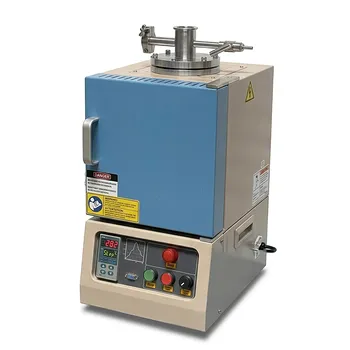
High Temperature Hybrid Muffle and Tube Furnace with Vacuum Capability and PID Control
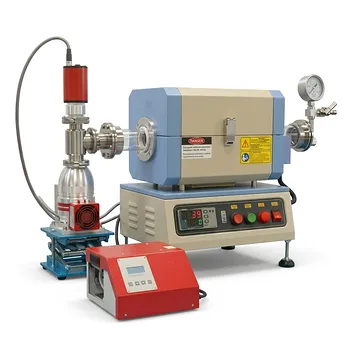
High Vacuum Compact Tube Furnace 1200C with Integrated Turbo Pump System and 8 Inch Heating Zone
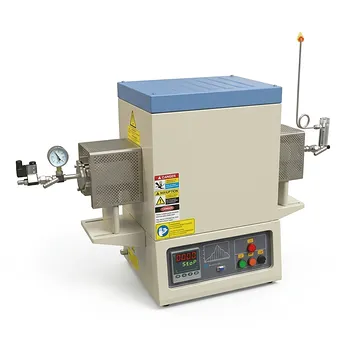
1700C Hydrogen Gas Tube Furnace with 60mm Alumina Process Tube and Integrated Hydrogen Safety Detector
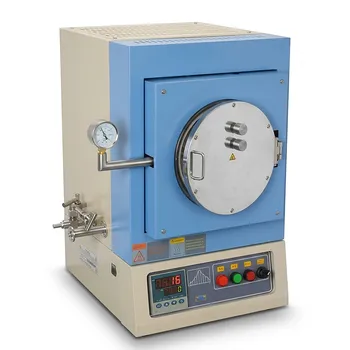
1100°C High Temperature Quartz Chamber Furnace 8 Inch OD with 7.6 Liter Capacity and Vacuum Atmosphere Capability
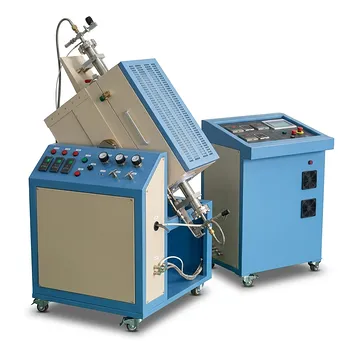
1100C High Pressure Rocking Tube Furnace with 2 Inch Super Alloy Processing Tube for Material Synthesis