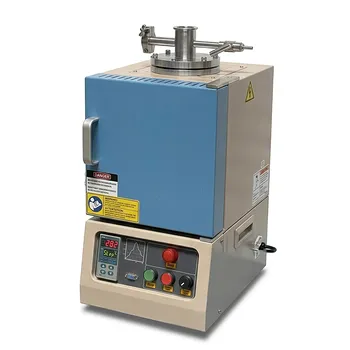
How does a high-temperature tube furnace facilitate the material transformation for Ni/GDC sensor preparation? Precision
Updated 3 months ago
A high-temperature tube furnace facilitates Ni/GDC sensor preparation by providing a controlled thermal environment that induces the chemical decomposition and crystallization of precursor gels. By heating the material at a specific rate (typically 5 °C/min) to a peak temperature of 950 °C, the furnace transforms the raw gel into a stable Ni/Gd-doped $CeO_2$ (GDC) nanocomposite thin film.
Core Takeaway: The tube furnace acts as a precision reactor that converts chemical precursors into functional sensing films through controlled crystallization. This process ensures the material achieves the specific nanostructure and phase stability required for reliable chemical sensing.
Driving the Material Phase Transformation
Chemical Decomposition of the Precursor Gel
The transformation begins with the removal of volatile components and organic binders from the precursor gel. The tube furnace provides the sustained heat necessary to break chemical bonds within the gel, initiating a chemical decomposition process.
This stage is critical because it clears the path for the inorganic components to begin organizing into a solid-state structure. Without precise temperature control during this phase, the material may suffer from internal stresses or incomplete reactions.
Controlled Crystallization into Nanocomposites
As the temperature reaches and maintains 950 °C, the furnace triggers the crystallization of the sensor material. This thermal energy allows the atoms to rearrange into a highly ordered Ni/Gd-doped $CeO_2$ lattice.
The result is a nanocomposite thin film where nickel is effectively integrated with the gadolinium-doped ceria. This specific nanostructure is what gives the sensor its unique ability to detect chemical changes in its environment.
Ensuring Sensor Performance and Stability
The Importance of a Uniform Temperature Field
A tube furnace is designed to provide a uniform temperature field, which is essential for consistent material properties across the entire sensor surface. If the temperature fluctuates, different parts of the thin film may exhibit different crystalline structures.
Uniformity ensures that the thermophysical properties of the Ni/GDC sensor remain stable. This stability is the foundation of the sensor's accuracy and its ability to operate in demanding high-temperature environments.
Stability of Chemical Sensing Capabilities
The precise "holding time" at peak temperature allows the material to reach an equilibrium state. This ensures that the sensor's chemical sensing capabilities are reproducible and do not drift significantly during operation.
By facilitating a complete and uniform reaction, the furnace eliminates "under-reacted" zones that could otherwise lead to unpredictable sensor behavior. This controlled environment is what makes the Ni/GDC material a reliable diagnostic tool.
Understanding the Trade-offs
Heating Rate vs. Structural Integrity
While a high-temperature tube furnace offers precision, the heating rate must be carefully balanced. Heating too quickly (faster than 5 °C/min) can cause rapid gas evolution during decomposition, leading to cracks or delamination in the thin film.
Conversely, excessively slow heating may lead to grain overgrowth, which reduces the active surface area of the nanocomposite. Finding the "sweet spot" is essential for maintaining the nanoscale porosity required for high sensitivity.
Atmospheric Influence and Oxidation Risks
In many metal-based transformations, the presence of oxygen can be detrimental. While Ni/GDC preparation focuses on crystallization, other sensor materials processed in tube furnaces often require a protective inert atmosphere (such as Nitrogen or Argon).
If the furnace seal is compromised, oxygen ingress can lead to the unwanted oxidation of nickel components. This would alter the electrical conductivity and chemical reactivity of the final sensor, rendering it ineffective.
Implementing Thermal Processing for Sensor Success
How to Apply This to Your Project
To achieve the best results when using a high-temperature tube furnace for sensor material synthesis, consider your specific performance requirements.
- If your primary focus is High Sensitivity: Prioritize a controlled, slower heating rate to maintain a high-surface-area nanostructure and prevent film cracking.
- If your primary focus is Long-term Stability: Ensure a sufficient "soak time" at the peak temperature (e.g., 950 °C) to allow for full crystallization and phase equilibrium.
- If your primary focus is Material Purity: Utilize a high-purity quartz tube and verify the integrity of the gas flow system to prevent atmospheric contamination during the calcination process.
The precision of the tube furnace is the bridge between a chemical precursor and a high-performance sensing device.
Summary Table:
| Processing Phase | Primary Function | Critical Parameters |
|---|---|---|
| Decomposition | Removes volatile binders & organic components | Sustained heat application |
| Crystallization | Forms the Ni/GDC nanocomposite lattice | 950°C Peak Temperature |
| Uniform Heating | Ensures stable thermophysical properties | Constant temperature field |
| Structure Control | Prevents film cracks & grain overgrowth | 5 °C/min Heating Rate |
| Atmosphere Control | Prevents unwanted nickel oxidation | Inert gas flow (Ar/N2) |
Precision Thermal Solutions for Advanced Material Science
Achieve flawless material transformation with THERMUNITS, your leading partner in high-temperature laboratory equipment. We specialize in providing researchers and industrial R&D teams with high-performance Tube, Muffle, Vacuum, Atmosphere, Rotary, and Hot Press furnaces, as well as CVD/PECVD systems, Dental Furnaces, and Vacuum Induction Melting (VIM) furnaces.
Our equipment is engineered to deliver the exacting precision needed for complex processes like Ni/GDC sensor preparation, ensuring stable nanostructures and reproducible results every time. Contact our experts today to learn how our comprehensive thermal solutions can optimize your laboratory workflow and enhance your material research outcomes.
References
- Jeffrey Wuenschell, Michael Buric. Fiber-based distributed hydrogen measurement at high temperatures. DOI: 10.1117/12.3012957
Mentioned Products
- Ultra High Temperature 2300C Induction Heated Graphite Tube Furnace with Infrared Control
- 1700C Hydrogen Gas Tube Furnace with 60mm Alumina Process Tube and Integrated Hydrogen Safety Detector
- Three Zone Hydrogen Gas Tube Furnace with 82mm Superalloy Tube and Dual Hydrogen Detectors 1200C High Temperature Material Processing System
- High Temperature 1700C Vertical Tube Furnace for Powder Spherification and Material Sintering
- High Temperature Tube Furnace 1500C with Sliding Flanges and 50mm OD for Rapid Thermal Processing Fast Heating and Cooling
People Also Ask
- How does a high-temp furnace enhance thermal conductivity of graphene & CNT films? Superior Material Graphitization
- What conditions does a graphitization furnace provide for pitch-based carbon? Achieve Superior Crystalline Quality
- Why is an ultra-high temperature graphitization furnace required for coal-based graphite? Unlock Crystalline Performance
- What core technical conditions must an ultra-high temperature graphitization furnace meet? Achieve 2800°C Peak Performance
- Why is a high-temperature graphitization furnace needed for ZrC/SiC/C ceramic aerogels? Master UHTC Synthesis at 1700°C

Tech Team · ThermUnits
Last updated on Jun 03, 2026
Related Products
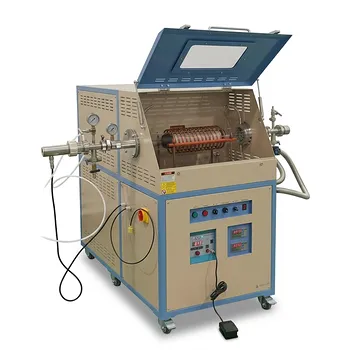
Ultra High Temperature 2300C Induction Heated Graphite Tube Furnace with Infrared Control
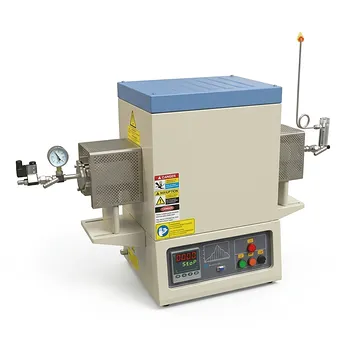
1700C Hydrogen Gas Tube Furnace with 60mm Alumina Process Tube and Integrated Hydrogen Safety Detector
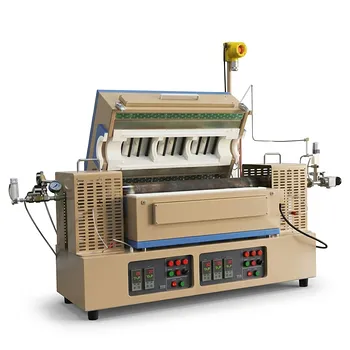
Three Zone Hydrogen Gas Tube Furnace with 82mm Superalloy Tube and Dual Hydrogen Detectors 1200C High Temperature Material Processing System

High Temperature 1700C Vertical Tube Furnace for Powder Spherification and Material Sintering
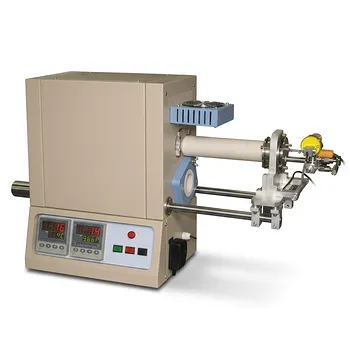
High Temperature Tube Furnace 1500C with Sliding Flanges and 50mm OD for Rapid Thermal Processing Fast Heating and Cooling

High Temperature 1700C Tube Furnace with High Vacuum Turbomolecular Pump System and Multi Channel Mass Flow Controller Gas Mixer
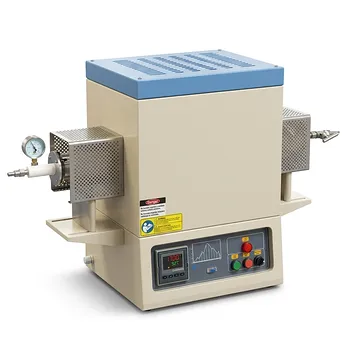
High Temperature Three Zone Tube Furnace 1700C with Alumina Tube and Water Cooled Flanges
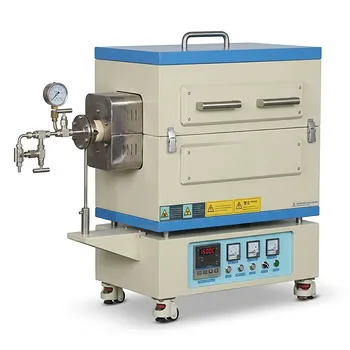
High Temperature Split Tube Furnace 1500C for Material Research Vacuum and Atmosphere Thermal Processing

Compact High Temperature 1600C Tube Furnace with 50mm Alumina Tube and Vacuum Flanges for Material Sintering
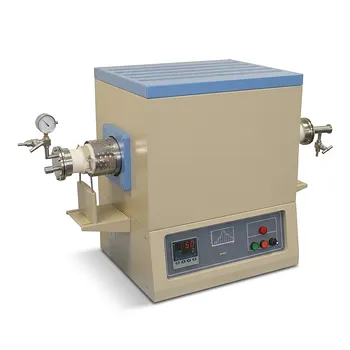
1700C High Temperature Alumina Tube Furnace with 18 Inch Heated Zone and Vacuum Sealing Flanges
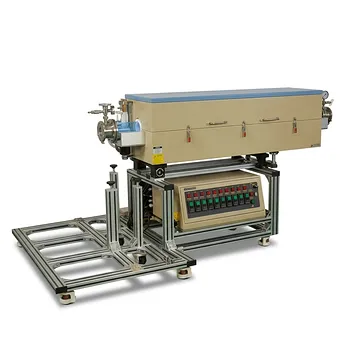
Ten Zone Multi Orientation Laboratory Tube Furnace for 1200C High Temperature Gradient Thermal Processing

High Temperature 1700C Benchtop Tube Furnace with 5 Inch Heating Zone High Purity Alumina Tube and Vacuum Sealing Flanges
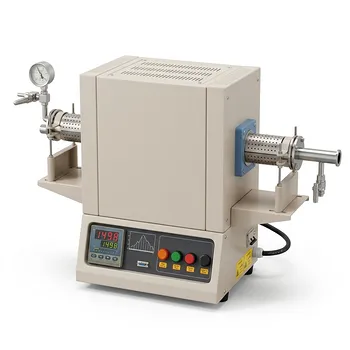
1500C High Temperature Compact Tube Furnace 2 Inch OD with Vacuum Flanges and Complete Accessories

1800C High Temperature Compact Vacuum Tube Furnace with 60mm OD Alumina Tube and Kanthal MoSi2 Heating Elements
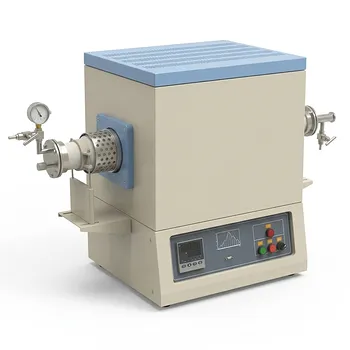
1750°C High Temperature Benchtop Vacuum Atmosphere Tube Furnace with Kanthal Super 1800 Heating Elements and 60mm Alumina Processing Tube
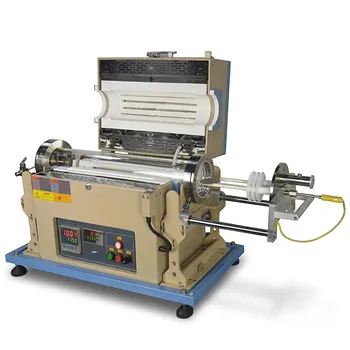
1200°C High Temperature 4 Inch Tube Furnace with Sliding Flange for CVD Systems
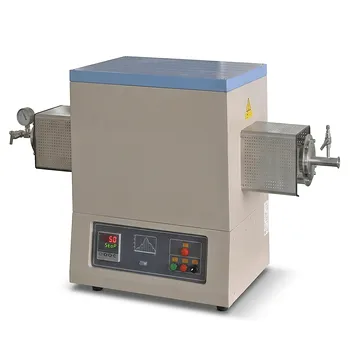
High Temperature 1700C Tube Furnace with 4 Inch OD Alumina Tube and Vacuum Sealing Flanges

1100C Tube Furnace with Vacuum Flange and Programmable Temperature Controller for Material Science and Industrial Heat Treatment

High Temperature Automated 5 Inch Tube Furnace for Autonomous Material Research and Advanced Laboratory R&D