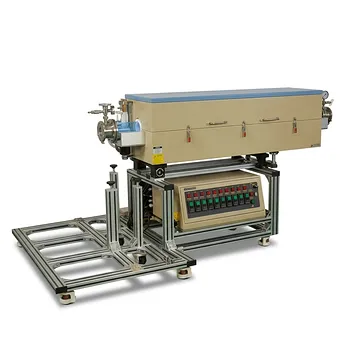
How does a high-temperature tube furnace facilitate the reduction activation of PtSn nanoparticle catalysts? Optimize Prep
Updated 3 months ago
A high-temperature tube furnace activates PtSn catalysts by providing the precise thermal energy and controlled hydrogen atmosphere required to reduce metal ions into a functional metallic state. In this process, the furnace heats dried precursors—typically to 750°C for approximately 2 hours—under a flowing hydrogen (H₂) environment to drive the chemical conversion of platinum and tin ions into active, alloyed nanoparticles with specific coordination states.
The tube furnace serves as a precision reactor that transforms inactive chemical precursors into highly dispersed nanocatalysts by balancing aggressive thermal reduction with strict atmospheric control to prevent particle degradation.
The Mechanism of Chemical Reduction
Thermal Energy as a Reaction Driver
The furnace provides the necessary heat to break chemical bonds within catalyst precursors. This thermal energy facilitates the transfer of electrons from the hydrogen gas to the platinum and tin ions, successfully reducing them from an oxide or ionic state to a zero-valent metallic state (Pt⁰ and Sn⁰).
Atmospheric Control and Hydrogen Flow
A tube furnace ensures a constant, regulated flow of hydrogen (H₂) or hydrogen mixtures (such as H₂/N₂ or H₂/Ar). This controlled environment is critical because it ensures that the reduction happens in-situ, preventing the metal species from re-oxidizing during the high-temperature phase.
Precise Temperature Compensation
Advanced tube furnaces utilize high-precision thermal field control to ensure temperature consistency throughout the reaction zone. This uniformity is vital for achieving a complete and even conversion of precursors across the entire catalyst batch, which directly impacts the consistency of the final catalytic performance.
Structural Engineering of PtSn Nanoparticles
Facilitating Alloy Formation
The high-temperature environment (750°C) allows platinum and tin atoms to migrate and integrate into specific alloy structures. This atomic rearrangement is necessary to create the synergistic electronic effects between Pt and Sn that are required for specialized industrial reactions.
Promoting Specific Coordination States
By strictly regulating the duration and intensity of the heat, the furnace allows the catalyst to reach a targeted coordination state. This ensures that the platinum and tin atoms are positioned correctly within the nanoparticle lattice to maximize the number of active catalytic sites.
Managing Metal Dispersion
One of the primary roles of the tube furnace is to maintain high metal dispersion. By utilizing a specific heating profile, the furnace helps the nanoparticles remain small and well-distributed across the support surface, rather than allowing them to clump together.
Understanding the Trade-offs
Temperature vs. Particle Size
While higher temperatures (like 750°C) are often necessary to ensure complete alloy formation, they also increase the risk of sintering. Sintering is the process where small nanoparticles merge into larger clusters, which reduces the available surface area and diminishes the catalyst's overall activity.
Reduction Time vs. Precursor Conversion
Insufficient time in the furnace can lead to incomplete reduction, leaving inactive oxide phases within the catalyst. Conversely, excessive heating time can lead to agglomeration, where the metal particles grow too large, effectively "burying" active sites and reducing the efficiency of the material.
Atmosphere Composition Risks
The choice of gas—whether pure H₂ or a diluted H₂/Ar mixture—impacts the rate of reduction. While pure hydrogen is a more powerful reducing agent, it can sometimes lead to uncontrolled exothermic reactions; diluted mixtures provide more stability but may require longer residence times or higher temperatures to achieve the same result.
How to Apply This to Your Project
Recommendations for Catalyst Activation
- If your primary focus is maximizing active surface area: Use the lowest possible reduction temperature that still achieves full precursor conversion to prevent sintering and particle growth.
- If your primary focus is forming stable PtSn alloys: Prioritize a higher temperature (e.g., 750°C) and a stable 2-hour soak time to ensure the atoms have enough thermal energy to integrate into the alloy lattice.
- If your primary focus is preventing oxidation of sensitive species: Ensure the tube furnace is perfectly sealed and utilize a continuous flow of H₂/Ar throughout both the heating and cooling phases.
The high-temperature tube furnace is the fundamental tool for converting inert chemical precursors into high-performance PtSn catalysts through the rigorous control of thermal and atmospheric variables.
Summary Table:
| Key Function | Mechanism | Impact on Catalyst |
|---|---|---|
| Chemical Reduction | H₂ flow + Thermal energy (750°C) | Converts metal ions into active metallic states (Pt⁰, Sn⁰). |
| Alloy Formation | Atomic migration & integration | Creates synergistic electronic effects and stable alloy structures. |
| Dispersion Control | Precise heating profile management | Prevents sintering and maintains high active surface area. |
| Atmospheric Control | In-situ gas regulation (H₂/N₂/Ar) | Ensures complete reduction and prevents re-oxidation. |
Elevate Your Material Research with THERMUNITS
Are you looking to achieve superior precision in catalyst activation and nanoparticle synthesis? THERMUNITS is a leading manufacturer of high-temperature laboratory equipment dedicated to material science and industrial R&D.
We provide a comprehensive range of high-performance thermal solutions, including Tube, Muffle, Vacuum, and Atmosphere furnaces, as well as CVD/PECVD systems, Rotary kilns, and Vacuum Induction Melting (VIM) furnaces. Our equipment is engineered to deliver the exact temperature uniformity and atmospheric control required to facilitate complex chemical reductions and stable alloy formation.
Why choose THERMUNITS?
- Precision Control: Advanced thermal field management for consistent batch results.
- Versatile Solutions: Tailored equipment for everything from dental furnaces to hot press systems.
- Expert Support: Deep industry knowledge to help you select the right heating profile for your specific catalysts.
Don't let sintering or inconsistent reduction limit your research potential. Contact us today to discuss your laboratory heat treatment needs and discover how our equipment can enhance your lab's efficiency and innovation.
References
- Xinlong Ma, Jie Zeng. Propane wet reforming over PtSn nanoparticles on γ-Al2O3 for acetone synthesis. DOI: 10.1038/s41467-024-52702-x
Mentioned Products
- High Temperature Tube Furnace 1500C with Sliding Flanges and 50mm OD for Rapid Thermal Processing Fast Heating and Cooling
- High Temperature 1700C Tube Furnace with High Vacuum Turbomolecular Pump System and Multi Channel Mass Flow Controller Gas Mixer
- High Temperature 1700C Benchtop Tube Furnace with 5 Inch Heating Zone High Purity Alumina Tube and Vacuum Sealing Flanges
- 1750°C High Temperature Benchtop Vacuum Atmosphere Tube Furnace with Kanthal Super 1800 Heating Elements and 60mm Alumina Processing Tube
- Compact High Temperature 1600C Tube Furnace with 50mm Alumina Tube and Vacuum Flanges for Material Sintering
People Also Ask
- How are high-temperature tube furnaces utilized to repair etching damage? Precision Lattice Restoration Solutions
- What role does a high-temperature tube furnace play in CVD synthesis of silicon nanowires? Master VLS Growth Precision.
- What core conditions does a high-temperature tube furnace provide for rGO aerogels? Mastering Precision Synthesis.
- What role does a high-temperature tube furnace play in the sulfidation heat treatment of CoS@C/MXene nanocomposites? Guide
- How does precision tube furnace control influence CoFe nanoparticle formation? Master Your Bimetallic Synthesis.

Tech Team · ThermUnits
Last updated on Jun 03, 2026
Related Products

High Temperature Tube Furnace 1500C with Sliding Flanges and 50mm OD for Rapid Thermal Processing Fast Heating and Cooling

High Temperature 1700C Tube Furnace with High Vacuum Turbomolecular Pump System and Multi Channel Mass Flow Controller Gas Mixer

High Temperature 1700C Benchtop Tube Furnace with 5 Inch Heating Zone High Purity Alumina Tube and Vacuum Sealing Flanges
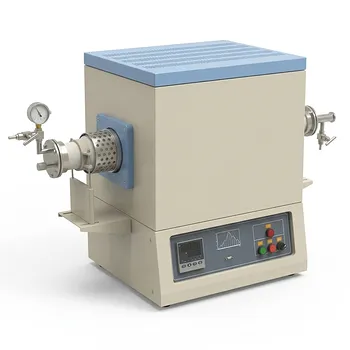
1750°C High Temperature Benchtop Vacuum Atmosphere Tube Furnace with Kanthal Super 1800 Heating Elements and 60mm Alumina Processing Tube

Compact High Temperature 1600C Tube Furnace with 50mm Alumina Tube and Vacuum Flanges for Material Sintering
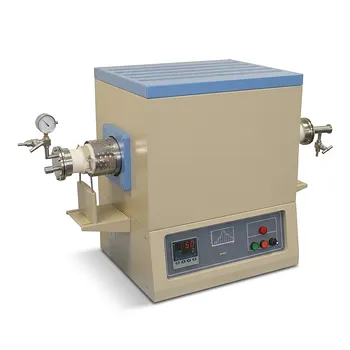
1700C High Temperature Alumina Tube Furnace with 18 Inch Heated Zone and Vacuum Sealing Flanges

1800C High Temperature Compact Vacuum Tube Furnace with 60mm OD Alumina Tube and Kanthal MoSi2 Heating Elements
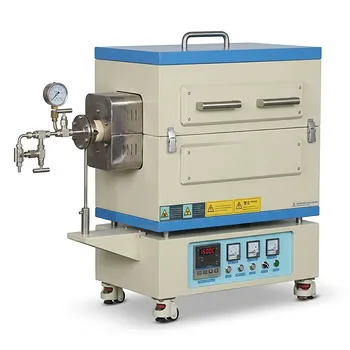
High Temperature Split Tube Furnace 1500C for Material Research Vacuum and Atmosphere Thermal Processing

High Temperature 1700C Vertical Tube Furnace for Powder Spherification and Material Sintering
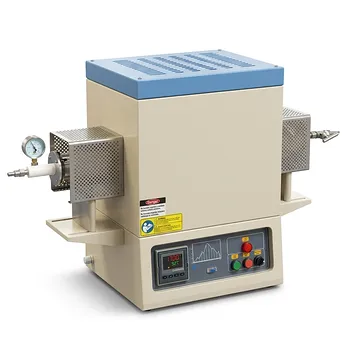
High Temperature Three Zone Tube Furnace 1700C with Alumina Tube and Water Cooled Flanges

High Temperature 1700C Six Zone Split Tube Furnace with Alumina Tube and Water Cooled Flanges
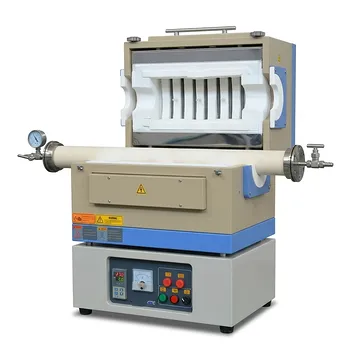
High Temperature 1600C Split Tube Furnace Vacuum Flanges Valves Optional 60mm 80mm Alumina Tube

High Temperature Automated 5 Inch Tube Furnace for Autonomous Material Research and Advanced Laboratory R&D

1100C Tube Furnace with Vacuum Flange and Programmable Temperature Controller for Material Science and Industrial Heat Treatment
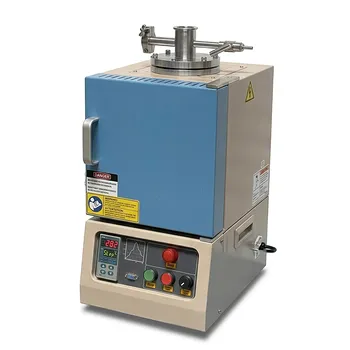
High Temperature Hybrid Muffle and Tube Furnace with Vacuum Capability and PID Control
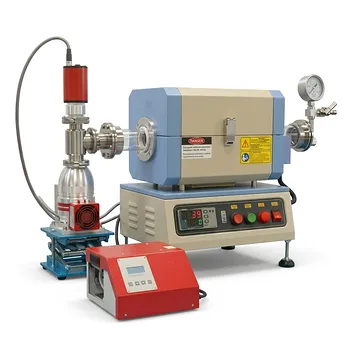
High Vacuum Compact Tube Furnace 1200C with Integrated Turbo Pump System and 8 Inch Heating Zone

1700C Hydrogen Gas Tube Furnace with 60mm Alumina Process Tube and Integrated Hydrogen Safety Detector
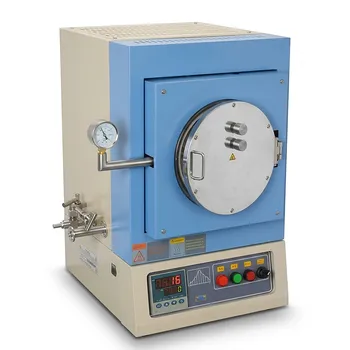
1100°C High Temperature Quartz Chamber Furnace 8 Inch OD with 7.6 Liter Capacity and Vacuum Atmosphere Capability
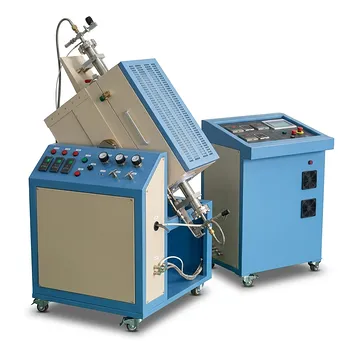
1100C High Pressure Rocking Tube Furnace with 2 Inch Super Alloy Processing Tube for Material Synthesis