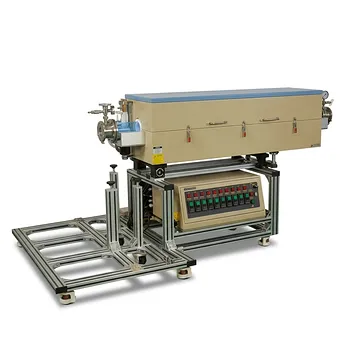
How does a high-temperature tube furnace facilitate SiC nanowire aerogel synthesis? Master Precise 1500°C Thermal Control
Updated 3 months ago
Synthesizing silicon carbide (SiC) nanowire aerogels requires a high-temperature tube furnace to provide a stable 1500 °C environment that triggers carbothermal reduction. This thermal energy facilitates the conversion of solid precursors into gaseous intermediates, which then crystallize into a three-dimensional interconnected nanowire network through specific vapor-phase and liquid-phase mechanisms.
Core Takeaway: The high-temperature tube furnace acts as a controlled reactor that maintains the extreme thermal and chemical conditions necessary to drive the transformation of silicon and carbon precursors into a structural SiC nanowire matrix while preventing unwanted oxidation.
The Role of Thermal Energy in Chemical Transformation
Triggering the Carbothermal Reduction
The furnace provides the critical 1500 °C threshold required to induce a complex carbothermal reduction reaction. At this temperature, the carbon template reacts with loaded silicon oxide to begin the chemical breakdown of the raw materials.
Generation of Gaseous Intermediates
Continuous high heat within the furnace promotes the generation of gaseous silicon monoxide (SiO) and carbon monoxide (CO). These gases are the essential building blocks that migrate through the furnace to facilitate nanowire growth.
Establishing Kinetic Equilibrium
The furnace maintains a constant thermal environment that allows these gas-phase products to reach the necessary supersaturation levels. This stability is vital for ensuring that the chemical reactions proceed at a predictable and uniform rate throughout the material.
Mechanisms of Nanowire Growth and Assembly
Vapor-Phase and Solid-Phase Interactions
The high-temperature environment enables two primary growth mechanisms: "vapor-vapor" (VV) and "solid-liquid-solid" (SLS). These mechanisms describe how the gaseous precursors deposit and crystallize into solid fibers.
Formation of 3D Interconnected Networks
As the SiC nanowires grow, the furnace conditions allow them to branch and intersect, creating a three-dimensional framework. This interconnectedness is what gives the resulting aerogel its structural integrity and unique physical properties.
Migration and Deposition Control
Under the guidance of a controlled inert gas flow, the furnace allows gas-phase intermediates to migrate and deposit onto the template. This ensures that the high-quality one-dimensional structures are distributed evenly across the aerogel volume.
Atmospheric Protection and Precise Control
Maintaining an Inert Environment
The tube furnace provides a closed, oxygen-free environment typically filled with high-purity argon (Ar). This protective atmosphere is critical to prevent the oxidation of the silicon and carbon precursors, which would otherwise result in impurities or failed synthesis.
Managing Gas Flow Dynamics
Integrated precise flow control systems allow for the introduction of specific atmospheres at exact rates. This control determines the concentration of reactive gases, directly influencing the final crystal structure and morphology of the SiC nanowires.
Sustained Ultra-High Temperature Stability
Unlike standard ovens, a high-temperature tube furnace is designed for extended operation at 1500 °C. This stability ensures that the graphitization and crystallization processes are completed without thermal fluctuations that could weaken the aerogel structure.
Understanding the Trade-offs
Thermal Strain and Equipment Longevity
Operating a furnace at 1500 °C places extreme stress on heating elements and the ceramic work tube. Frequent cycling to these temperatures can lead to material fatigue and eventual failure of the furnace components.
Energy Consumption vs. Material Quality
Achieving the high-quality SiC crystal structures required for aerogels demands high energy input. There is a direct trade-off between the duration of the high-temperature soak—which improves crystallinity—and the total operational cost of the synthesis.
Sensitivity to Atmospheric Leaks
Even microscopic leaks in the furnace seals can introduce trace oxygen, which disrupts the carbothermal reduction. This sensitivity requires rigorous maintenance of vacuum seals and gas lines to avoid ruining an entire batch of material.
How to Apply This to Your Project
The use of a high-temperature tube furnace should be tailored to the specific mechanical or thermal properties you desire in your final SiC aerogel.
- If your primary focus is Maximum Structural Strength: Prioritize longer dwell times at 1500 °C to ensure complete carbothermal reduction and robust interconnected growth.
- If your primary focus is High Chemical Purity: Utilize a high-purity argon flow and implement a pre-synthesis vacuum purge to eliminate all traces of oxygen and moisture.
- If your primary focus is Specific Nanowire Morphology: Carefully calibrate the gas flow rate to control the transport of SiO gas, which dictates the thickness and length of the nanowires.
By precisely mastering the thermal and atmospheric variables of the tube furnace, you can successfully engineer the complex transition from raw precursors to a high-performance SiC nanowire aerogel.
Summary Table:
| Process Phase | Furnace Function | Key Outcome |
|---|---|---|
| Carbothermal Reduction | Provides 1500°C energy threshold | Initiates precursor chemical breakdown |
| Gas Generation | Maintains kinetic equilibrium | Produces SiO and CO building blocks |
| Nanowire Growth | Facilitates VV & SLS mechanisms | Forms 3D interconnected networks |
| Atmospheric Control | High-purity Argon environment | Prevents oxidation and ensures purity |
Elevate Your Advanced Material Synthesis with THERMUNITS
As a leading manufacturer of high-temperature laboratory equipment, THERMUNITS provides the precision and reliability required for complex processes like SiC nanowire aerogel synthesis. Our advanced Tube Furnaces, CVD/PECVD systems, and Atmosphere Furnaces are engineered to maintain stable 1500°C environments with superior gas flow control.
Whether you are in material science research or industrial R&D, our comprehensive range of thermal solutions—including Muffle, Vacuum, Rotary, and Hot Press furnaces—ensures your heat treatment is efficient and predictable.
Achieve superior results in your next project—contact our experts today to find your ideal thermal solution!
References
- Chunxue Zheng, Yue Li. Biomass-derived lightweight SiC aerogels for superior thermal insulation. DOI: 10.1039/d3nr06076d
Mentioned Products
- High Temperature Tube Furnace 1500C with Sliding Flanges and 50mm OD for Rapid Thermal Processing Fast Heating and Cooling
- High Temperature 1700C Tube Furnace with High Vacuum Turbomolecular Pump System and Multi Channel Mass Flow Controller Gas Mixer
- High Temperature 1700C Benchtop Tube Furnace with 5 Inch Heating Zone High Purity Alumina Tube and Vacuum Sealing Flanges
- 1750°C High Temperature Benchtop Vacuum Atmosphere Tube Furnace with Kanthal Super 1800 Heating Elements and 60mm Alumina Processing Tube
- Compact High Temperature 1600C Tube Furnace with 50mm Alumina Tube and Vacuum Flanges for Material Sintering
People Also Ask
- How are high-temperature tube furnaces utilized to repair etching damage? Precision Lattice Restoration Solutions
- What role does a high-temperature tube furnace play in CVD synthesis of silicon nanowires? Master VLS Growth Precision.
- What core conditions does a high-temperature tube furnace provide for rGO aerogels? Mastering Precision Synthesis.
- What role does a high-temperature tube furnace play in the sulfidation heat treatment of CoS@C/MXene nanocomposites? Guide
- How does precision tube furnace control influence CoFe nanoparticle formation? Master Your Bimetallic Synthesis.

Tech Team · ThermUnits
Last updated on Jun 02, 2026
Related Products

High Temperature Tube Furnace 1500C with Sliding Flanges and 50mm OD for Rapid Thermal Processing Fast Heating and Cooling

High Temperature 1700C Tube Furnace with High Vacuum Turbomolecular Pump System and Multi Channel Mass Flow Controller Gas Mixer

High Temperature 1700C Benchtop Tube Furnace with 5 Inch Heating Zone High Purity Alumina Tube and Vacuum Sealing Flanges

1750°C High Temperature Benchtop Vacuum Atmosphere Tube Furnace with Kanthal Super 1800 Heating Elements and 60mm Alumina Processing Tube

Compact High Temperature 1600C Tube Furnace with 50mm Alumina Tube and Vacuum Flanges for Material Sintering
1700C High Temperature Alumina Tube Furnace with 18 Inch Heated Zone and Vacuum Sealing Flanges

1800C High Temperature Compact Vacuum Tube Furnace with 60mm OD Alumina Tube and Kanthal MoSi2 Heating Elements
High Temperature Split Tube Furnace 1500C for Material Research Vacuum and Atmosphere Thermal Processing

High Temperature 1700C Vertical Tube Furnace for Powder Spherification and Material Sintering
High Temperature Three Zone Tube Furnace 1700C with Alumina Tube and Water Cooled Flanges

High Temperature 1700C Six Zone Split Tube Furnace with Alumina Tube and Water Cooled Flanges
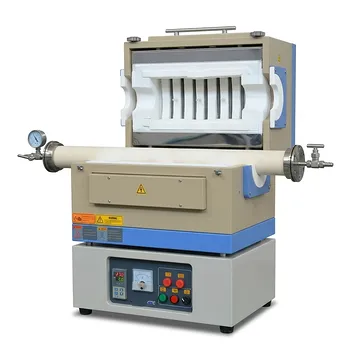
High Temperature 1600C Split Tube Furnace Vacuum Flanges Valves Optional 60mm 80mm Alumina Tube

High Temperature Automated 5 Inch Tube Furnace for Autonomous Material Research and Advanced Laboratory R&D

1100C Tube Furnace with Vacuum Flange and Programmable Temperature Controller for Material Science and Industrial Heat Treatment
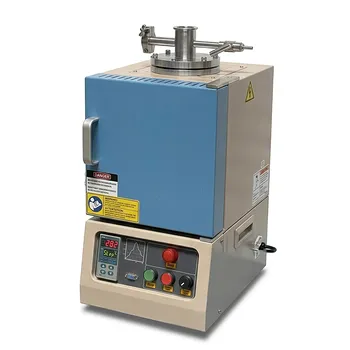
High Temperature Hybrid Muffle and Tube Furnace with Vacuum Capability and PID Control
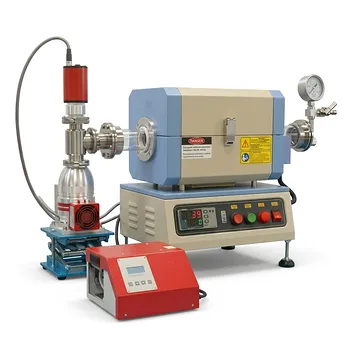
High Vacuum Compact Tube Furnace 1200C with Integrated Turbo Pump System and 8 Inch Heating Zone

1700C Hydrogen Gas Tube Furnace with 60mm Alumina Process Tube and Integrated Hydrogen Safety Detector
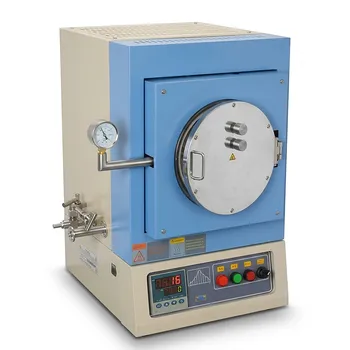
1100°C High Temperature Quartz Chamber Furnace 8 Inch OD with 7.6 Liter Capacity and Vacuum Atmosphere Capability
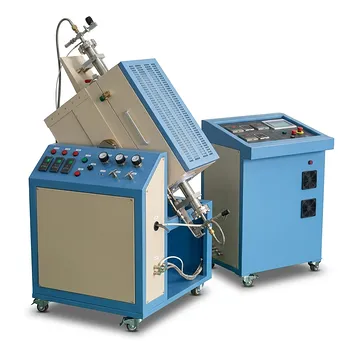
1100C High Pressure Rocking Tube Furnace with 2 Inch Super Alloy Processing Tube for Material Synthesis