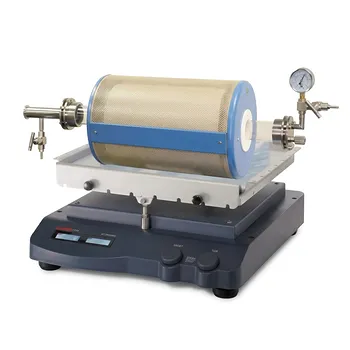
How does a lab tube furnace facilitate RuAl thermal stability assessment? Advanced Research for Microelectronics
Updated 3 months ago
The laboratory tube furnace facilitates RuAl thermal stability assessment by providing a highly controlled, high-temperature environment that simulates extreme operating conditions over extended durations. By maintaining constant temperatures—specifically at benchmarks like 600°C, 700°C, and 800°C—for up to 192 hours, the furnace allows researchers to precisely quantify oxidation kinetics and structural degradation mechanisms in microelectronic components.
A laboratory tube furnace acts as an accelerated aging platform, providing the thermal uniformity and atmospheric control necessary to map the degradation of RuAl electrodes. This stability is critical for transitioning from qualitative observations to quantitative models of diffusion and oxidation.
Simulating Extreme Operating Environments
Replicating Real-World Thermal Stress
Microelectronic devices in applications like internal combustion engines face harsh thermal environments that RuAl electrodes must withstand. The tube furnace provides a constant high-temperature air environment that mimics these conditions, allowing for a controlled study of how the material behaves over time.
Sustained Heating for Long-Term Data
To assess long-term stability, the equipment must support continuous operation for hundreds of hours. High-performance furnaces can maintain these conditions for up to 192 hours, providing the temporal depth required to observe slow-acting degradation that wouldn't be visible in short-term tests.
Multi-Stage Heating and Calibration
Beyond constant temperatures, tube furnaces can simulate complex industrial sintering process curves through multi-stage heating. This versatility allows the furnace to serve as both a testing environment for the RuAl electrodes and a calibration platform for the sensors used to monitor them.
Quantifying Material Degradation and Kinetics
Measuring Oxidation and Diffusion Rates
A stable input of thermal activation energy is a prerequisite for calculating diffusion coefficients. The furnace's high temperature uniformity ensures that measurements—such as the Precipitated Phase Zone (PPZ) width—are repeatable and scientifically reliable.
Assessing Phase Evolution and Integrity
Researchers use the furnace to observe phase evolution, where the chemical structure of the RuAl electrode shifts under heat. By subjecting samples to prolonged heat, technicians can identify the onset of physical integrity failures, such as cracking, peeling, or sintering of active components.
Establishing Predictive Dynamic Models
The data gathered from these controlled heat treatments allows for the creation of dynamic models. These models use the observed oxidation resistance and kinetic data to predict the service life of RuAl electrodes in the field.
Understanding the Trade-offs
Steady-State vs. Dynamic Cycling
While a tube furnace excels at providing a constant thermal stress environment, it may not perfectly replicate the rapid thermal cycling found in some engines. Relying solely on constant temperature tests can lead to underestimating failures caused by thermal expansion mismatch during quick start-stop cycles.
Atmospheric Limitations
Although tube furnaces offer controllable atmospheres, the interaction between RuAl and complex combustion byproducts (like sulfur or specific hydrocarbons) can be difficult to simulate. Technical advisors must ensure the furnace atmosphere matches the industrial operating conditions as closely as possible to maintain experimental validity.
How to Apply This to Your Project
Recommendations for Implementation
- If your primary focus is predicting electrode lifespan: Utilize long-duration burns (150+ hours) at 800°C to establish a clear baseline for oxidation kinetics.
- If your primary focus is material integrity and adhesion: Perform post-heating inspections specifically looking for cracking or peeling after exposure to the 450°C–600°C range.
- If your primary focus is precision modeling: Ensure the furnace provides a high "constant temperature zone" to minimize variables when calculating diffusion coefficients.
By leveraging the precise control and stability of a laboratory tube furnace, engineers can transform RuAl from an experimental material into a reliable component for high-heat electronics.
Summary Table:
| Feature | Test Parameter | Key Insight / Benefit |
|---|---|---|
| Temperature Range | 600°C to 800°C+ | Simulates extreme operating environments for RuAl. |
| Temporal Stability | Up to 192+ hours | Accurately quantifies long-term oxidation kinetics. |
| Heating Precision | Uniform Thermal Zone | Ensures repeatable diffusion coefficient calculations. |
| Modeling Capability | Multi-stage Curves | Supports the creation of predictive service-life models. |
| Atmosphere Control | Air or Inert Gas | Analyzes phase evolution and environmental resistance. |
Elevate Your Material Research with THERMUNITS
Precision at high temperatures is critical for predicting the performance of microelectronic components like RuAl electrodes. THERMUNITS is a leading manufacturer of high-performance thermal processing solutions designed for demanding laboratory and industrial R&D environments.
We offer a comprehensive selection of laboratory equipment, including Tube, Muffle, Vacuum, Atmosphere, and Rotary furnaces, as well as CVD/PECVD systems, Hot Press furnaces, and Vacuum Induction Melting (VIM) furnaces. Whether you are studying oxidation kinetics or establishing predictive dynamic models, our equipment provides the uniform heating and strict atmospheric control your research requires.
Ready to optimize your thermal assessment processes? Contact our technical experts today to find the ideal thermal treatment solution tailored to your material science goals.
References
- Marietta Seifert, Thomas Gemming. Study of the Long-Term High-Temperature Structural Stability of RuAl Electrodes for Microelectronic Devices. DOI: 10.3390/ma17102431
Mentioned Products
- Multi Position Tube Furnace 1100C for Laboratory Material Research and Advanced Industrial Thermal Processing
- Ten Zone Multi Orientation Laboratory Tube Furnace for 1200C High Temperature Gradient Thermal Processing
- High Temperature 1200C Split Tube Furnace with Hinged Vacuum Flanges and 4 Inch Quartz Tube for Laboratory Research
- High Temperature Automated 5 Inch Tube Furnace for Autonomous Material Research and Advanced Laboratory R&D
- 1800C High Temperature Compact Vacuum Tube Furnace with 60mm OD Alumina Tube and Kanthal MoSi2 Heating Elements
People Also Ask
- Why use a tube furnace for oxygen annealing LaCrO3/LaMnO3? Optimize Phase Transition & Magnetic Performance.
- What key role does a laboratory high-temperature tube furnace play in the production of carbon nanofibers? Guide
- How is a laboratory high-temperature tube furnace utilized to research the products of aluminothermic reduction? Advanced Metallurgical Solutions
- What is the role of a laboratory tube furnace in the carbonization process of porous carbon foam (PCF)? Master 3D Synthesis
- What role does a laboratory tube furnace play in the pyrolysis and carbonization of biomass? Optimize Thermal Research.

Tech Team · ThermUnits
Last updated on Jun 03, 2026
Related Products
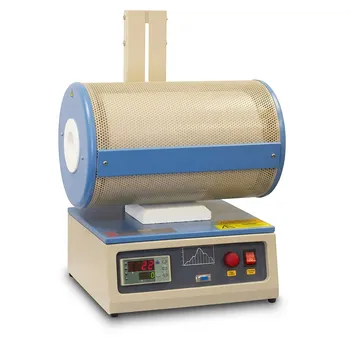
Multi Position Tube Furnace 1100C for Laboratory Material Research and Advanced Industrial Thermal Processing
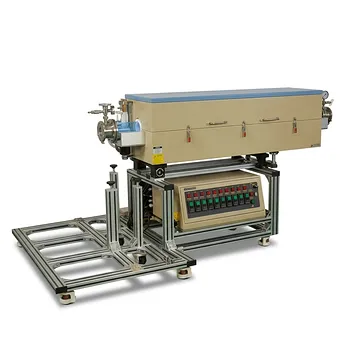
Ten Zone Multi Orientation Laboratory Tube Furnace for 1200C High Temperature Gradient Thermal Processing
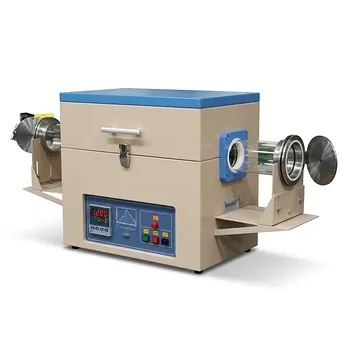
High Temperature 1200C Split Tube Furnace with Hinged Vacuum Flanges and 4 Inch Quartz Tube for Laboratory Research

High Temperature Automated 5 Inch Tube Furnace for Autonomous Material Research and Advanced Laboratory R&D

1800C High Temperature Compact Vacuum Tube Furnace with 60mm OD Alumina Tube and Kanthal MoSi2 Heating Elements
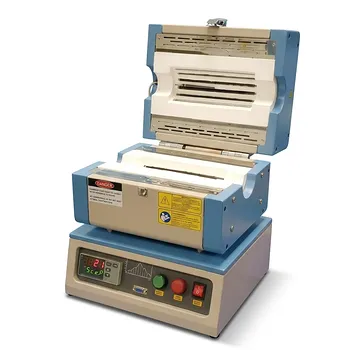
1250C Compact Split Tube Furnace with 8 Inch Heating Zone and Programmable Controller
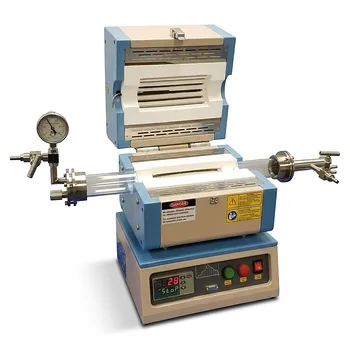
Compact Split Tube Furnace with Integrated Vacuum System and Precision Temperature Calibrator
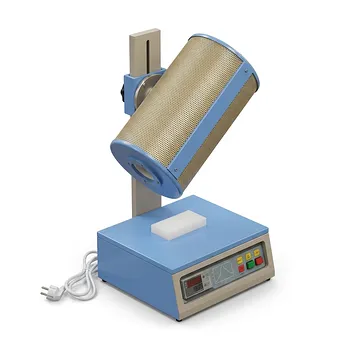
1100°C Vertical Laboratory Furnace for DIY Tubular Reactors with PID Temperature Controller
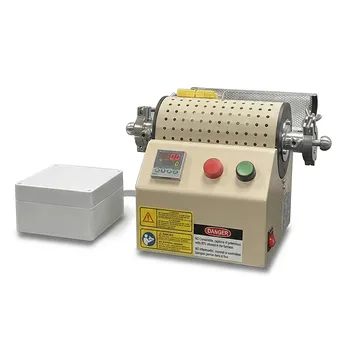
1000C Mini Tube Furnace with 20mm Quartz Tube and Vacuum Flanges for Material Science Research and Controlled Atmosphere Small Sample Processing
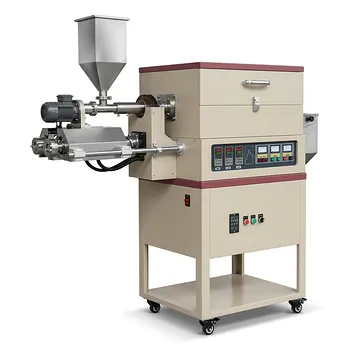
Laboratory Tilting Rotary Tubular Furnaces for Material Science and Industrial Heat Treatment
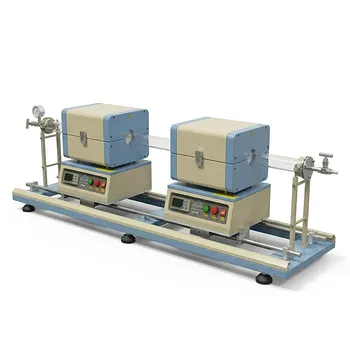
1200C Max Dual Sliding Tube Furnace with 50 mm Tube Flanges for CVD
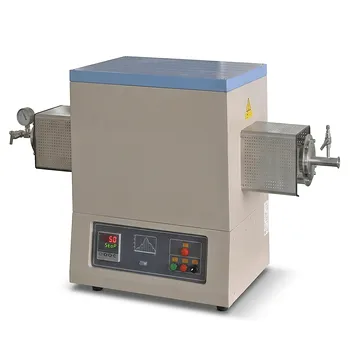
High Temperature 1700C Tube Furnace with 4 Inch OD Alumina Tube and Vacuum Sealing Flanges
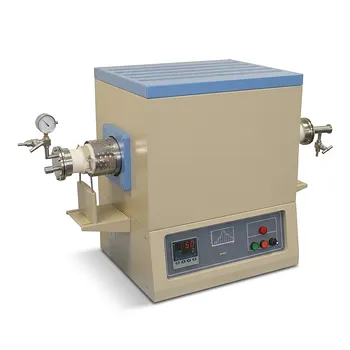
1700C High Temperature Alumina Tube Furnace with 18 Inch Heated Zone and Vacuum Sealing Flanges
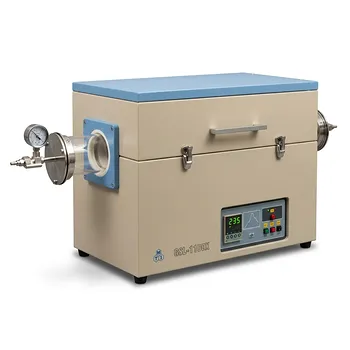
Single Zone Tube Furnace 5 Inch Quartz Tube 36 Inch Heating Zone Vacuum Flanges
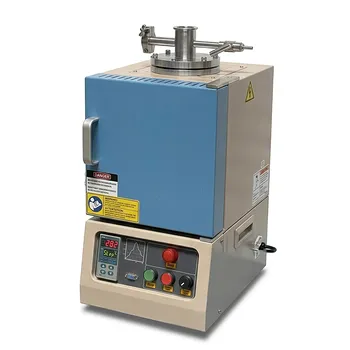
High Temperature Hybrid Muffle and Tube Furnace with Vacuum Capability and PID Control
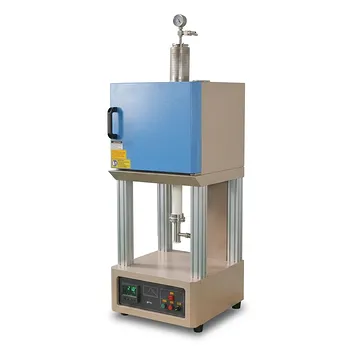
Hybrid High Temperature Tube and Box Furnace 1700C with 2 Inch Alumina Tube for Material Research
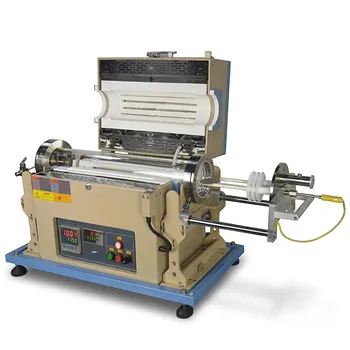
1200°C High Temperature 4 Inch Tube Furnace with Sliding Flange for CVD Systems
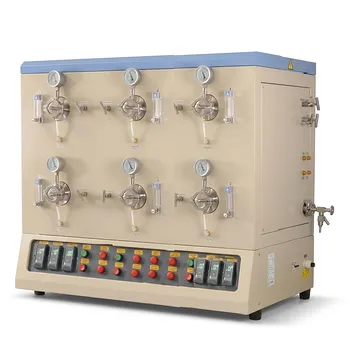
1200C High Throughput Multi Channel Tube Furnace with 50mm Quartz Tubes for Annealing and Material Phase Diagram Research

High Temperature 1700C Vertical Tube Furnace for Powder Spherification and Material Sintering