How does a precision tube furnace provide technical support for metal corrosion experiments? Simulate Reducing Conditions
Updated 3 months ago
Precision tube furnaces facilitate metal corrosion research by providing a hermetically sealed environment with extreme thermal stability and precise gas composition control. These systems allow researchers to simulate low oxygen partial pressure environments, such as those found in biomass gasifiers or chemical plants, by introducing complex gas mixtures like hydrogen, carbon monoxide, and water vapor. By maintaining temperature fluctuations within $\pm 3^\circ\text{C}$, the furnace ensures that corrosion kinetics remain consistent across the entire sample surface.
Core Takeaway: A precision tube furnace acts as a controlled micro-reactor that isolates the specimen from the ambient atmosphere, allowing for the exact replication of industrial reducing conditions while ensuring that temperature and gas flow remain constant variables throughout the experiment.
Maintaining Thermal Field Integrity
Eliminating Temperature Fluctuations
Precision furnaces are engineered to maintain a constant thermal field, often limiting fluctuations to within $\pm 3^\circ\text{C}$. This stability is critical because corrosion rates are exponentially dependent on temperature; even minor shifts can lead to inconsistent oxide scale formation or localized pitting.
Ensuring Uniform Reaction Kinetics
Uniform heat distribution across the heating zone ensures that the entire metal specimen experiences the same thermal energy. This uniformity prevents "hot spots" that could artificially accelerate corrosion in specific areas, thereby ensuring that the resulting data reflects the material's true resistance to the atmosphere.
Support for Long-Term Exposure
Many corrosion studies require hundreds or thousands of hours of exposure to simulate real-world component lifespans. The ability of a high-precision furnace to maintain its thermal profile over extended periods is essential for gathering reliable data on long-term degradation mechanisms.
Simulating Complex Reducing Environments
Managing Gas Chemistry and Partial Pressure
In reducing atmospheres, such as those in biomass gasifiers, the oxygen partial pressure is extremely low. Precision tube furnaces use sophisticated gas inlet systems to mix hydrogen ($H_2$), water vapor ($H_2O$), and argon ($Ar$), allowing researchers to precisely tune the chemical potential of the environment.
Controlling Flow Velocity and Pressure
Advanced horizontal tube furnaces can operate under high pressures (e.g., $18\text{ bar}$) while controlling the velocity of gas mixtures like $CO$, $CO_2$, and $H_2$. This simulates the aggressive carbonaceous atmospheres of chemical processing plants, where both chemical reaction and physical gas flow contribute to metal wastage.
Enabling Chemical Vapor Deposition (CVD)
Beyond simple exposure, these furnaces support material synthesis and annealing under specific atmospheres. By controlling the transformation of precursors under set physical conditions, researchers can create specific crystal structures or protective coatings to test against corrosion.
Protecting Sample Integrity
Preventing Uncontrolled Pre-Oxidation
Before a formal experiment begins, samples must often be preheated or "soaked." The tube furnace provides an inert environment, typically using argon, to protect the specimen from oxidation during this ramp-up phase, ensuring the material’s initial state remains scientifically "clean."
Sealing Against Atmospheric Contamination
The highly sealed nature of the quartz or ceramic tube is the first line of defense against ambient oxygen. Without a perfect seal, the reducing atmosphere would be compromised, leading to the formation of oxides that would not occur in the actual industrial process being simulated.
Managing Residual Element Enrichment
When studying how trace elements in steel migrate to the surface, a stable thermal environment is paramount. The furnace allows for the precise study of how these residual elements enrich or deplete under specific gas protections, which is vital for developing high-performance alloys.
Understanding the Trade-offs
Geometry and Sample Size Limitations
The primary drawback of a tube furnace is the restricted internal diameter of the tube. This limits the size and number of specimens that can be tested simultaneously, which may be a bottleneck for high-throughput screening of various alloys.
Safety Risks of Reducing Gases
Simulating reducing atmospheres often involves flammable or toxic gases like hydrogen ($H_2$) and carbon monoxide ($CO$). While the furnace provides the technical control needed, it requires extensive safety infrastructure, including gas sensors and burn-off pilots, to mitigate the risk of explosion or poisoning.
Heating and Cooling Latency
Because tube furnaces rely on thermal radiation and convection within a sealed tube, they generally have slower heating and cooling rates compared to box furnaces. This makes them less suitable for experiments requiring rapid thermal cycling or "quench" simulations.
Making the Right Choice for Your Goal
How to Apply This to Your Project
- If your primary focus is simulating biomass gasification: Prioritize a furnace with a multi-channel gas mixing system capable of handling precise ratios of $H_2$ and $H_2O$ at atmospheric pressure.
- If your primary focus is industrial chemical plant simulation: Select a high-pressure horizontal tube furnace capable of reaching at least $15\text{--}20\text{ bar}$ to accurately model carbonaceous degradation.
- If your primary focus is fundamental metallurgy and trace elements: Focus on a system with the highest possible thermal uniformity ($\pm 1^\circ\text{C}$ to $\pm 3^\circ\text{C}$) and superior vacuum/purge capabilities to ensure a clean starting state.
By precisely controlling the intersection of thermal stability and atmospheric chemistry, the precision tube furnace transforms a simple heating element into a definitive instrument for metallurgical discovery.
Summary Table:
| Feature | Technical Support for Corrosion Experiments |
|---|---|
| Thermal Stability | Maintains $\pm 3^\circ\text{C}$ to ensure uniform reaction kinetics and consistent data. |
| Atmosphere Control | Precise mixing of $H_2$, $CO$, and $H_2O$ to simulate biomass or chemical plant environments. |
| Hermetic Sealing | Prevents uncontrolled pre-oxidation and protects samples from ambient oxygen contamination. |
| High-Pressure Capability | Supports operations up to 18 bar to model aggressive industrial carbonaceous atmospheres. |
| Gas Flow Management | Controls velocity and chemical potential to accurately replicate real-world degradation. |
Elevate Your Material Research with THERMUNITS
Precision is the backbone of reliable corrosion data. At THERMUNITS, we specialize in providing high-performance thermal processing solutions designed for the rigors of material science and industrial R&D. From Precision Tube Furnaces and CVD/PECVD systems to Vacuum Induction Melting (VIM) and Atmosphere Furnaces, our equipment delivers the exact thermal stability and gas control required for your most sensitive experiments.
Whether you are simulating extreme reducing atmospheres or developing the next generation of high-performance alloys, our engineering team is ready to support your goals.
Contact THERMUNITS today to find the perfect furnace for your laboratory.
References
- Alice Moya Núñez, Rikard Norling. Effect of KCl on high‐temperature corrosion of low‐alloyed steel under low oxygen partial pressure. DOI: 10.1002/maco.202414314
Mentioned Products
- Compact High Temperature 1600C Tube Furnace with 50mm Alumina Tube and Vacuum Flanges for Material Sintering
- Vertical 1700C Vacuum and Atmosphere Tube Furnace with 80mm Alumina Tube
- High Temperature Compact Vacuum Tube Furnace 1750C Max 60mm OD Alumina Tube
- Three Zone Tube Furnace with 11 Inch or 15 Inch Quartz Tube and Hinged Flanges for Vacuum Atmosphere Heat Treatment
- 1200°C 5 Inch Vertical Quartz Tube Furnace with Stainless Steel Vacuum Flanges
People Also Ask
- What is the role of a high-temperature tube furnace in the calcination process of ZnO/In2O3 nanocomposites?
- Why is a high-temperature tube furnace required for CuAlO2 heat treatment? Master Phase Transformation Today
- Function of tube furnaces in cellulose aerogel carbonization? Achieve High-Performance Materials
- What role does a high-temperature tube furnace play in the carbonization? Mastering Precision Carbon Synthesis
- What role does a high-temperature tube furnace play in executing nitrogen absorption kinetic experiments? Expert Insights

Tech Team · ThermUnits
Last updated on Jun 03, 2026
Related Products

Compact High Temperature 1600C Tube Furnace with 50mm Alumina Tube and Vacuum Flanges for Material Sintering

Vertical 1700C Vacuum and Atmosphere Tube Furnace with 80mm Alumina Tube
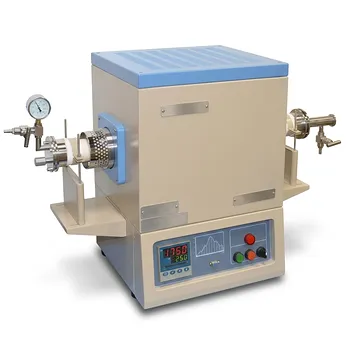
High Temperature Compact Vacuum Tube Furnace 1750C Max 60mm OD Alumina Tube
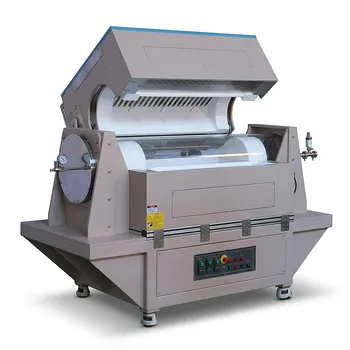
Three Zone Tube Furnace with 11 Inch or 15 Inch Quartz Tube and Hinged Flanges for Vacuum Atmosphere Heat Treatment

1200°C 5 Inch Vertical Quartz Tube Furnace with Stainless Steel Vacuum Flanges
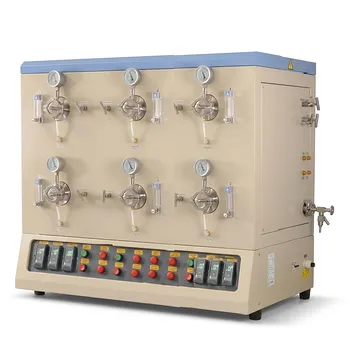
1200C High Throughput Multi Channel Tube Furnace with 50mm Quartz Tubes for Annealing and Material Phase Diagram Research
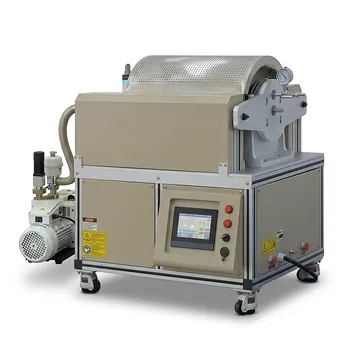
Automated 1200 C Tube Furnace for AI Material Research with 6 Inch OD and Sliding Flange

High Temperature 1700C Vertical Tube Furnace for Powder Spherification and Material Sintering

High Temperature Automated 5 Inch Tube Furnace for Autonomous Material Research and Advanced Laboratory R&D
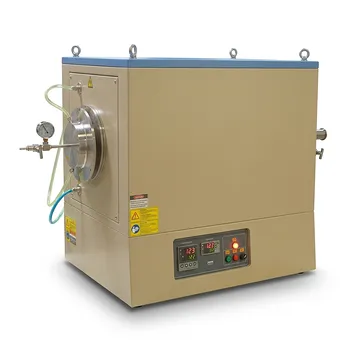
1100°C Large Diameter Quartz Tube Furnace with 24 Inch Heating Zone and Water Cooled Flanges

1800C High Temperature Compact Vacuum Tube Furnace with 60mm OD Alumina Tube and Kanthal MoSi2 Heating Elements
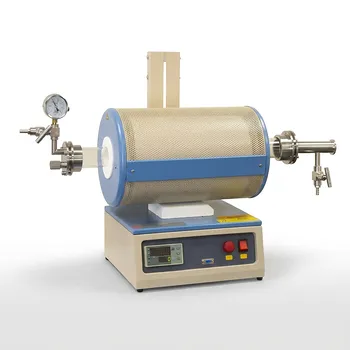
1100C Tube Furnace with Vacuum Flange and Programmable Temperature Controller for Material Science and Industrial Heat Treatment

High Temperature 1700C Tube Furnace with High Vacuum Turbomolecular Pump System and Multi Channel Mass Flow Controller Gas Mixer

High Temperature 1700C Six Zone Split Tube Furnace with Alumina Tube and Water Cooled Flanges

High Temperature 1700C Benchtop Tube Furnace with 5 Inch Heating Zone High Purity Alumina Tube and Vacuum Sealing Flanges
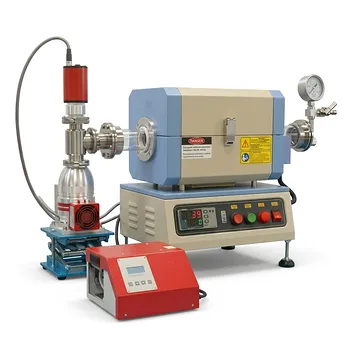
High Vacuum Compact Tube Furnace 1200C with Integrated Turbo Pump System and 8 Inch Heating Zone
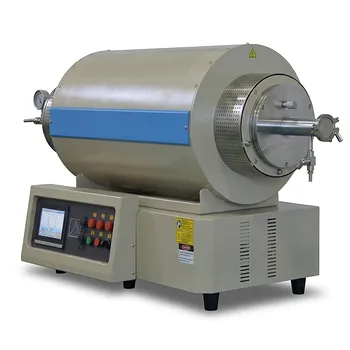
1200C Max Three Zone Tube Furnace 6 Inch OD Max with Tube and Flange

Compact Vertical Split Quartz Tube Furnace with Stainless Steel Vacuum Flanges for Rapid Thermal Quenching and Controlled Atmosphere Material Processing
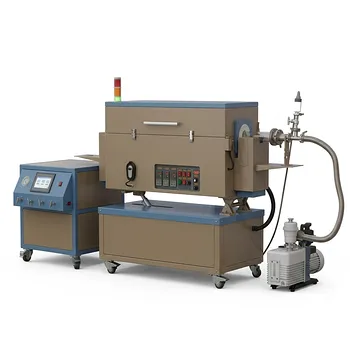
5 Inch Three Zone Rotary Tube Furnace with Integrated Gas Delivery System and 1200C Capability for Advanced Material CVD Processing