How does a two-zone vertical tube furnace operate during the thermal fiber drawing process? Precise Thermal Control
Updated 3 months ago
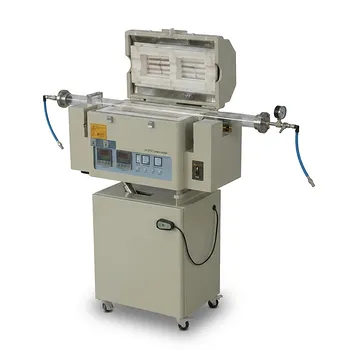
The two-zone vertical tube furnace functions by establishing a precise thermal gradient that transforms a solid macroscopic preform into a continuous microscopic fiber. By separating the furnace into two distinct heating environments, the system provides the mechanical stability and material fluidity necessary for a controlled draw.
The core mechanism of the thermal fiber draw relies on a temperature differential: an upper zone preserves the preform’s structure while a lower, hotter zone induces the "flow state" required for thinning. This dual-zone approach ensures a stable necking phenomenon, allowing gravity or external tension to stretch the material without total structural collapse.
The Dual-Zone Architecture
The Upper Structural Zone
The upper zone is typically maintained at a temperature near the softening point of the material. This specific calibration ensures the bulk of the preform remains rigid enough to support its own weight and maintain its internal geometry.
Without this controlled environment, the top of the preform might deform prematurely. This zone acts as a thermal buffer, preparing the material for the more intense heat below.
The Lower Processing Zone
The lower zone is set to a significantly higher processing temperature to transition the material into a viscous flow state. This is where the actual reduction in diameter occurs as the material loses its resistance to deformation.
Focusing the highest heat at the bottom allows for localized melting. This localization is critical for maintaining a consistent fiber diameter throughout the drawing process.
Mechanics of Fiber Formation
Inducing the Necking Phenomenon
As the preform moves from the upper zone to the lower zone, it undergoes a stable necking phenomenon. This is the physical point where the thick preform tapers down into a thin fiber thread.
The stability of this "neck" is entirely dependent on the precise temperature gradient between the two zones. If the transition is too abrupt or too gradual, the fiber may break or suffer from diameter fluctuations.
Gravity and External Tension
The drawing process utilizes gravity or external mechanical tension to pull the softened material downward. Because the material in the lower zone is in a flow state, it stretches continuously as it is pulled.
This stretching allows a macroscopic object (the preform) to be reduced to a microscopic scale while maintaining its core-cladding ratios. The speed of the pull and the temperature of the lower zone are the primary variables controlling the final fiber thickness.
Understanding the Trade-offs
The Risk of Thermal Instability
Achieving the perfect gradient is technically demanding and requires constant monitoring. If the lower zone is too hot, the material's viscosity drops too far, leading to "dripping" rather than a continuous draw.
Conversely, if the upper zone is too cold, the material may experience high internal stress during the transition. This can cause the preform to fracture or lead to microscopic defects in the finished fiber.
Material Specificity
Each material system—whether polymer or glass—has a unique thermal window for drawing. A furnace setup optimized for one material may fail for another if the softening-to-flow transition occurs over a different temperature range.
How to Apply This to Your Project
When configuring your vertical tube furnace, your settings should be dictated by your material’s rheological properties and your desired fiber dimensions.
- If your primary focus is dimensional consistency: Prioritize the precision of the temperature gradient to keep the necking point stationary throughout the draw.
- If your primary focus is preserving internal structures: Keep the upper zone as cool as possible (just below the softening point) to prevent the internal geometry of the preform from collapsing.
- If your primary focus is high-speed production: Increase the lower zone processing temperature slightly to lower viscosity, but balance this with increased tension to prevent fiber breakage.
The success of the thermal drawing process hinges on mastering the balance between thermal energy and mechanical tension.
Summary Table:
| Component/Process | Function | Primary Impact |
|---|---|---|
| Upper Structural Zone | Maintains preform rigidity | Prevents premature deformation and collapse |
| Lower Processing Zone | Induces viscous flow state | Enables controlled material thinning |
| Necking Phenomenon | Tapers preform to fiber | Determines dimensional stability and quality |
| Tension/Gravity | Pulls softened material | Controls final fiber thickness and scaling |
Optimize Your Thermal Processing with THERMUNITS
As a leading manufacturer of high-temperature laboratory equipment for material science and industrial R&D, THERMUNITS provides the precision needed for complex processes like thermal fiber drawing. Our dual-zone systems are engineered to provide the stable thermal gradients essential for maintaining material integrity and achieving microscopic precision.
Our comprehensive range of thermal solutions includes:
- Furnaces: Muffle, Vacuum, Atmosphere, Tube, Rotary, and Hot Press furnaces.
- Advanced Systems: CVD/PECVD systems, Vacuum Induction Melting (VIM), and Electric Rotary Kilns.
- Specialized Equipment: Dental Furnaces, Thermal Elements, and custom heat treatment solutions.
Ready to enhance your lab's efficiency? Contact our experts at THERMUNITS today to discover how our high-performance equipment can advance your research and production goals.
References
- Miao Qi, Lei Wei. Self‐Healable Multifunctional Fibers via Thermal Drawing. DOI: 10.1002/advs.202400785
Mentioned Products
- 1100°C Dual Zone Split Vertical Tube Furnace with 4 Inch Quartz Tube and Vacuum Sealing Flanges
- Dual Zone Tube Furnace 1100C with 11 Inch Quartz Tube and Vacuum Flanges for 8 Inch Wafer Processing
- 1500C Two Zone Split Tube Furnace with Vacuum Flange and 80mm Alumina Tube
- Two Zone Rotary Tube Furnace for Powder CVD Coating and Core Shell Material Synthesis 1100C
- High Temperature Elongated Dual Zone Tube Furnace for Material Research and Industrial Heat Treatment
People Also Ask
- How do dual-zone quartz tube furnaces achieve controllable material preparation? Optimize Perovskite VD Processes
- Why integrate a vertical split tube furnace with hydraulic loading for HSECC? Essential for In-Situ Fire Simulation.
- What is the role of a split vertical tube furnace during flash sintering of 8YSZ and 20SDC? Master Ultra-Fast R&D
- What are the advantages of using a dual-zone tube furnace for growing Ag8SiS6 single crystals? Achieve Precision Growth
- Why is a Tube Furnace typically utilized for CVD? Achieve Precision in Graphene and 2D Material Synthesis

Tech Team · ThermUnits
Last updated on Jun 03, 2026
Related Products
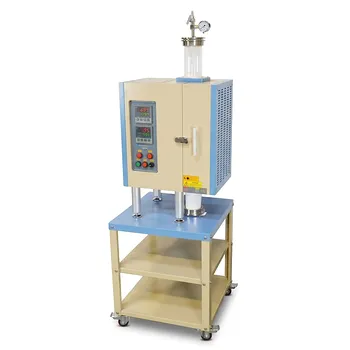
1100°C Dual Zone Split Vertical Tube Furnace with 4 Inch Quartz Tube and Vacuum Sealing Flanges
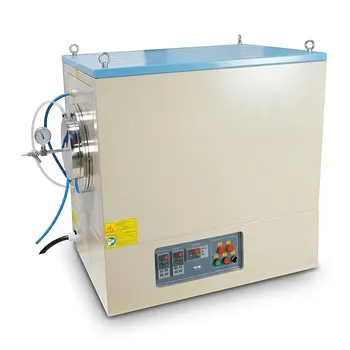
Dual Zone Tube Furnace 1100C with 11 Inch Quartz Tube and Vacuum Flanges for 8 Inch Wafer Processing
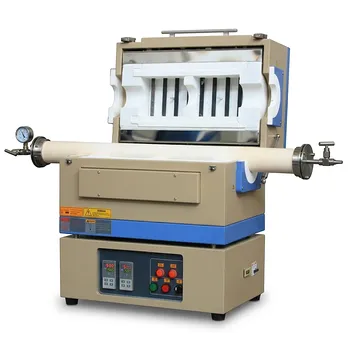
1500C Two Zone Split Tube Furnace with Vacuum Flange and 80mm Alumina Tube
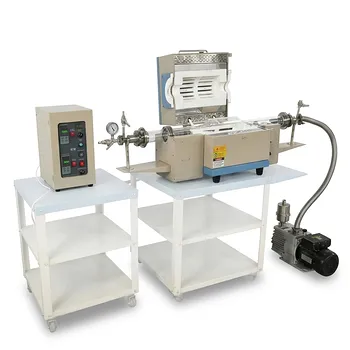
Two Zone Rotary Tube Furnace for Powder CVD Coating and Core Shell Material Synthesis 1100C
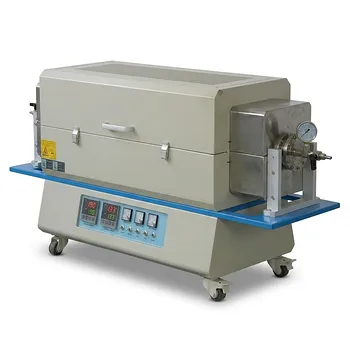
High Temperature Elongated Dual Zone Tube Furnace for Material Research and Industrial Heat Treatment
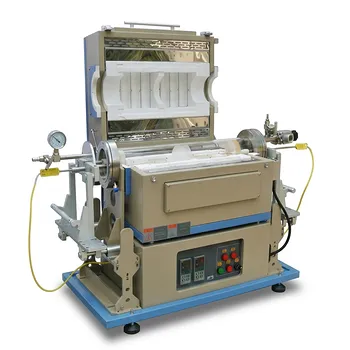
Two Zone IR Heating Rapid Thermal Processing RTP Tube Furnace with 4 Inch ID Quartz Tube and Sliding Sample Holders
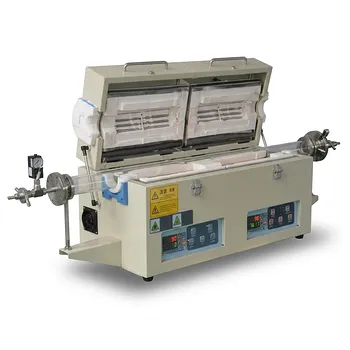
Elongated Two Temperature Zone Pipe Furnace for Industrial Heat Treatment and Material Science Research
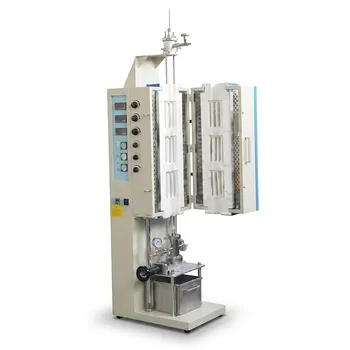
High Temperature Dual Zone Tube Furnace for Material Science Research and Professional Thermal Processing
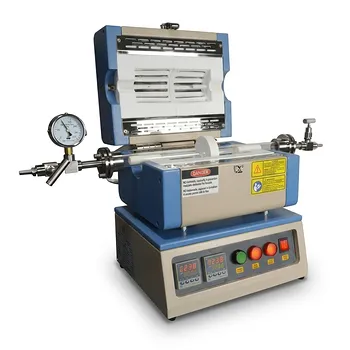
Dual Heating Zone 1200C Compact Split Tube Furnace with Optional 1" - 2" Tube and Vacuum Flanges
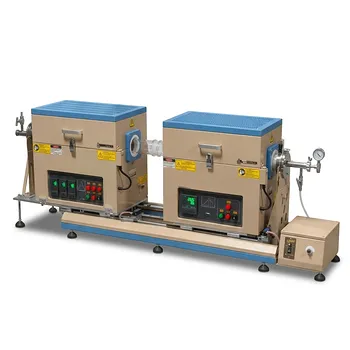
1200C Dual Temperature Zone Slidable Tube Furnace for 2D Material Growth and TCVD Synthesis
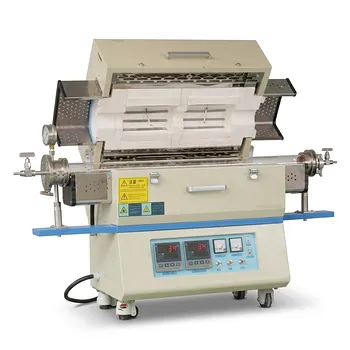
Dual Zone Split Tube Quenching Furnace with High Vacuum Atmosphere Control and Rapid Cooling
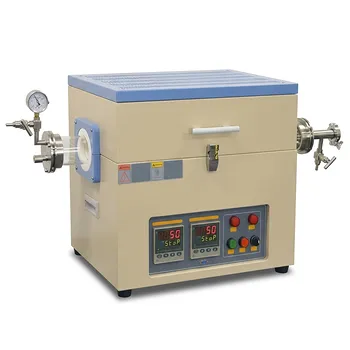
1200C Dual Zone Split Tube Furnace with Fused Quartz Tube and Vacuum Flanges Available in 60mm 80mm and 100mm Diameters
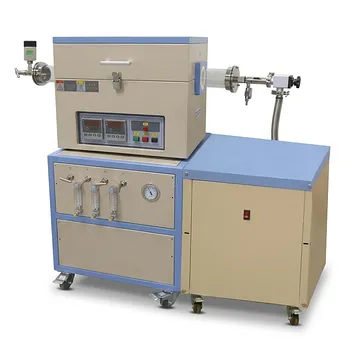
Dual Zone Quartz Tube Furnace with 80mm Diameter 1200C Max Temperature 3 Channel Gas Mixer and Vacuum Pump System
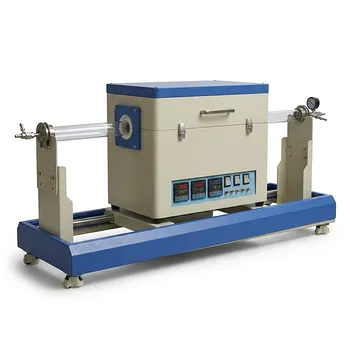
Double Temperature Zone Double Cover Tube Furnace for High Temperature CVD and Vacuum Annealing
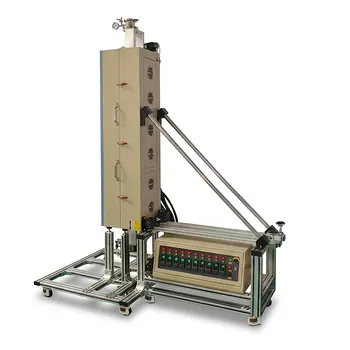
1200°C 10-Zone Split Tube Furnace with Horizontal and Vertical Mounting for Multi-Zone Thermal Gradients and Large Diameter Material Processing
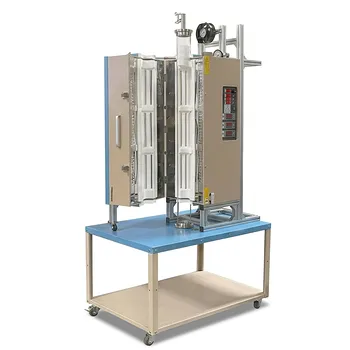
1200C Three Zone Split Vertical Tube Furnace 4 Inch Quartz Tube Stainless Steel Vacuum Flanges
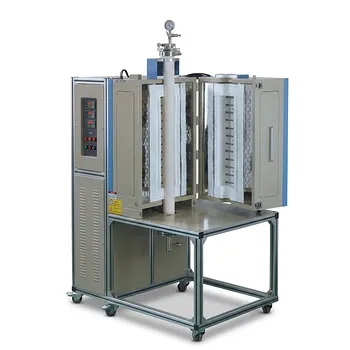
Three Zone Heating Split Vertical Tube Furnace 1700 High Temperature Vacuum Atmosphere Thermal Process System
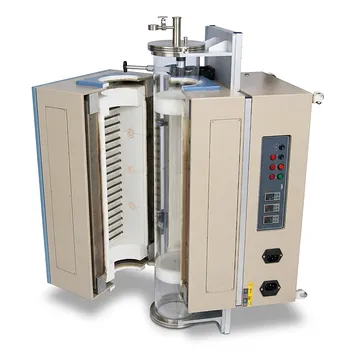
Large Vertical Three Zone Tube Furnace with 8 Inch or 11 Inch Quartz Tube and High Vacuum Flanges 1200C
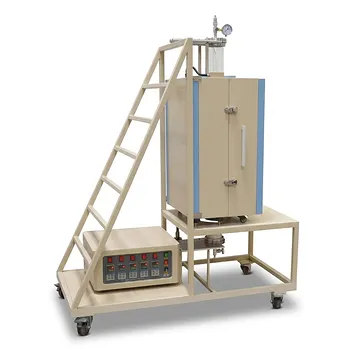
Five Zone Split Vertical Tube Furnace 1200C Max with 4 Inch Quartz Tube and Stainless Steel Vacuum Flanges