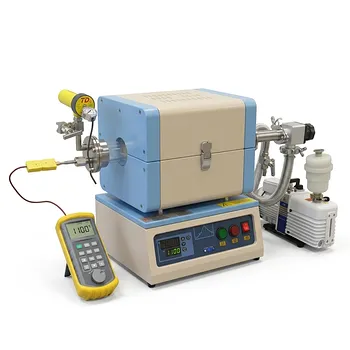
How does a Vacuum Tube Furnace contribute to the annealing of zirconium-based biomaterials? Enhance Implant Performance
Updated 3 months ago
Vacuum tube furnaces are essential for the annealing of zirconium-based biomaterials because they provide a highly controlled, oxygen-free environment that prevents material degradation. By maintaining precise temperatures—often around 800°C—and high vacuum levels, these furnaces facilitate atomic diffusion, eliminate internal stresses, and ensure a uniform microstructure. This process is critical for enhancing the plasticity and mechanical reliability required for medical implants.
Core Takeaway: A vacuum tube furnace acts as a precision thermal processor that shields reactive zirconium from oxidation while enabling deep structural homogenization. This ensures the material achieves the specific mechanical properties and chemical purity necessary for high-performance biomaterial applications.
Protecting Material Integrity Through Atmosphere Control
Prevention of High-Temperature Oxidation
Zirconium and its alloys are highly reactive and prone to rapid oxidation when heated in the presence of oxygen. A vacuum tube furnace creates a sealed environment, often reaching vacuum levels between 10⁻² and 10⁻³ Pa, which effectively prevents the formation of brittle oxide layers.
Flexibility of Inert Gas Integration
Beyond simple vacuum states, these furnaces allow for the introduction of high-purity inert gases like argon or nitrogen. This flexibility allows researchers to switch atmospheres to suit specific alloy chemistries, ensuring that reactive elements remain stable throughout the heating cycle.
Maintaining Chemical Purity
The linear, sealed nature of the quartz or ceramic furnace tube prevents external contaminants from entering the heating zone. This is vital for biomaterials, where even trace amounts of impurities can compromise biocompatibility or lead to premature implant failure.
Driving Microstructural Evolution and Homogenization
Facilitating Atomic Diffusion
At steady temperatures such as 800°C, the furnace provides the thermal energy required for atoms to migrate through the alloy matrix. This diffusion leads to uniform solid solubility, ensuring that alloying elements are distributed evenly rather than clustering in a way that creates weak points.
Achieving Complete Recrystallization
By precisely controlling the duration and temperature of the annealing cycle, the furnace promotes recrystallization. This transforms the distorted grain structure of cold-worked zirconium into a uniform, refined microstructure that is stable for long-term use.
Eliminating Residual Processing Stresses
The melting and shaping stages of zirconium production often leave behind significant internal stresses. The stable thermal field of a tube furnace allows these stresses to relax, significantly improving the plasticity and ductility of the final biomaterial.
Understanding the Trade-offs and Limitations
Thermal Gradient Challenges
While tube furnaces offer excellent uniformity, the length of the tube can sometimes lead to temperature drops at the ends. Utilizing a multi-zone heating system is often necessary to ensure that the entire sample experiences the exact same thermal profile.
Cooling Rate Constraints
Vacuum environments provide excellent insulation, which can make rapid cooling (quenching) difficult to achieve within the tube itself. If a specific phase requires a fast cooling rate, the furnace must be equipped with specialized gas-cooling systems or manual extraction mechanisms.
Material Compatibility of the Tube
The choice between quartz and ceramic tubes involves trade-offs regarding maximum temperature and chemical resistance. High-temperature processes (above 1200°C) may require alumina tubes, which are more durable but can be more susceptible to thermal shock than quartz.
How to Apply This to Your Project
Recommendations Based on Your Objectives
- If your primary focus is maximizing ductility: Prioritize a multi-zone furnace to ensure absolute thermal uniformity, which facilitates the most consistent stress relief across the entire sample.
- If your primary focus is preventing surface contamination: Utilize a high-vacuum configuration (10⁻³ Pa or better) to ensure that reactive zirconium remains free of oxygen and nitrogen during the 800°C soak.
- If your primary focus is researching phase kinetics: Opt for a furnace with integrated atmosphere switching to observe how different inert environments influence the stabilization of the alloy's beta-phase.
By leveraging the precise environmental controls of a vacuum tube furnace, you can transform raw zirconium alloys into high-performance biomaterials ready for rigorous medical applications.
Summary Table:
| Key Feature | Function in Annealing | Benefit for Biomaterials |
|---|---|---|
| High Vacuum (10⁻³ Pa) | Prevents high-temp oxidation | Maintains chemical purity & biocompatibility |
| Precise Temp Control | Facilitates atomic diffusion | Ensures uniform solid solubility & grain structure |
| Sealed Tube Design | Atmosphere control (Ar/N₂) | Prevents contamination & brittle oxide layers |
| Multi-Zone Heating | Thermal uniformity | Eliminates residual stresses & enhances ductility |
Elevate Your Biomaterial Research with THERMUNITS
Achieving the perfect microstructure in zirconium-based implants requires the precision and reliability that only high-performance thermal equipment can provide. THERMUNITS is a leading manufacturer specializing in high-temperature laboratory solutions for material science and industrial R&D.
Whether you need a Vacuum Tube Furnace for precise atmosphere control or advanced CVD/PECVD systems, our equipment is designed to meet the rigorous demands of medical and industrial heat treatment. Our comprehensive range includes:
- Muffle, Vacuum, Atmosphere, and Tube Furnaces
- Rotary, Hot Press, and Dental Furnaces
- CVD/PECVD Systems & Vacuum Induction Melting (VIM) Furnaces
- Electric Rotary Kilns & Thermal Elements
Ready to optimize your annealing process? Partner with THERMUNITS to ensure the highest purity and mechanical performance for your materials. Contact our technical experts today to find the ideal thermal solution for your laboratory's needs.
References
- Muhammad Awwaluddin, Sri Hastuty. Annealing Effect on Improving the Mechanical Properties of Zirconium Based Biomaterials with the Addition of Yttrium Elements for Bone Plate Application. DOI: 10.32493/pjte.v8i1.43200
Mentioned Products
- High Temperature Dual Zone Vacuum Tube Furnace for Material Research and CVD Processing
- High Temperature 1700C Vertical Tube Furnace for Powder Spherification and Material Sintering
- 1000C Mini Tube Furnace with 20mm Quartz Tube and Vacuum Flanges for Material Science Research and Controlled Atmosphere Small Sample Processing
- Compact High Temperature 1600C Tube Furnace with 50mm Alumina Tube and Vacuum Flanges for Material Sintering
- 1800C High Temperature Compact Vacuum Tube Furnace with 60mm OD Alumina Tube and Kanthal MoSi2 Heating Elements
People Also Ask
- What are the primary technical advantages of using a dual-zone tube furnace for MoS2? Optimize CVD Precision & Yield
- What is the primary function of an industrial-grade dual-zone tube furnace? Mastering CuInP2S6 CVT Crystal Growth
- What are the advantages of using a dual-zone tube furnace for MoS2 CVD? Optimize Precursor Control and Material Quality
- Purpose of the reverse gradient step in CVT growth? Master Crystal Purity with Dual-Zone Furnaces
- What are the technical advantages of using a dual-zone tube furnace for growing large PdCoO2 crystals via CVT? Expert Tips

Tech Team · ThermUnits
Last updated on Jun 02, 2026
Related Products
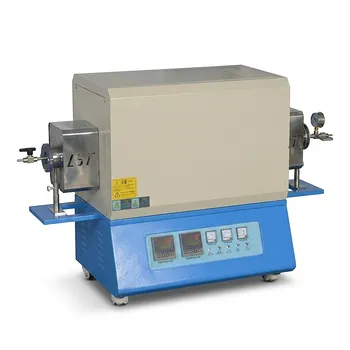
High Temperature Dual Zone Vacuum Tube Furnace for Material Research and CVD Processing

High Temperature 1700C Vertical Tube Furnace for Powder Spherification and Material Sintering
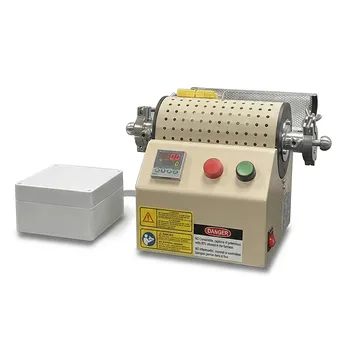
1000C Mini Tube Furnace with 20mm Quartz Tube and Vacuum Flanges for Material Science Research and Controlled Atmosphere Small Sample Processing

Compact High Temperature 1600C Tube Furnace with 50mm Alumina Tube and Vacuum Flanges for Material Sintering

1800C High Temperature Compact Vacuum Tube Furnace with 60mm OD Alumina Tube and Kanthal MoSi2 Heating Elements

Compact Vertical Split Quartz Tube Furnace with Stainless Steel Vacuum Flanges for Rapid Thermal Quenching and Controlled Atmosphere Material Processing

Vertical 1700C Vacuum and Atmosphere Tube Furnace with 80mm Alumina Tube
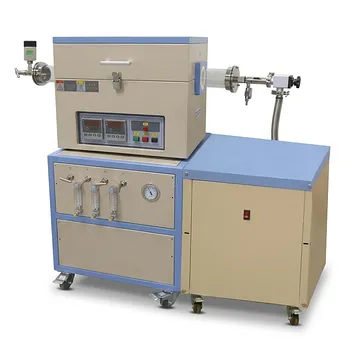
Dual Zone Quartz Tube Furnace with 80mm Diameter 1200C Max Temperature 3 Channel Gas Mixer and Vacuum Pump System

High Temperature Automated 5 Inch Tube Furnace for Autonomous Material Research and Advanced Laboratory R&D

1750°C High Temperature Benchtop Vacuum Atmosphere Tube Furnace with Kanthal Super 1800 Heating Elements and 60mm Alumina Processing Tube
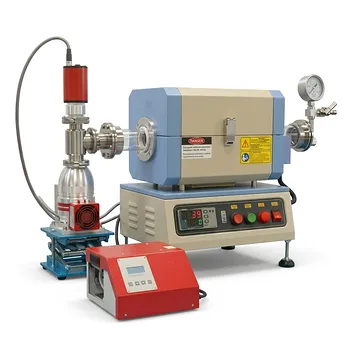
High Vacuum Compact Tube Furnace 1200C with Integrated Turbo Pump System and 8 Inch Heating Zone
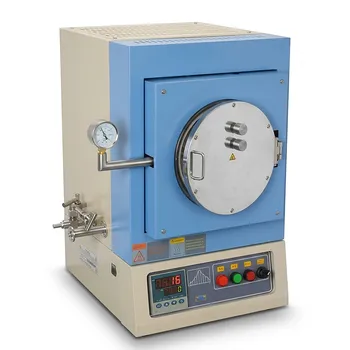
1100°C High Temperature Quartz Chamber Furnace 8 Inch OD with 7.6 Liter Capacity and Vacuum Atmosphere Capability
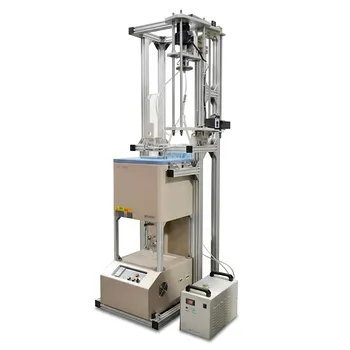
500C Vacuum Vertical Tube Furnace 84mm OD Sample Rotation Lifting System

High Temperature 1700C Six Zone Split Tube Furnace with Alumina Tube and Water Cooled Flanges
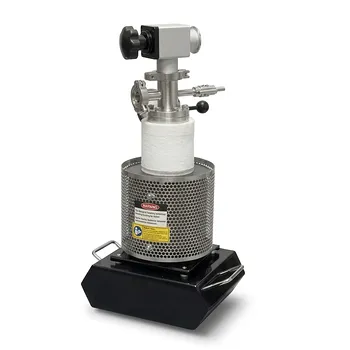
High Temperature 1100C Compact Top Loading Vertical Vacuum Tube Furnace for High Vacuum Noble Metal Melting and Material Research
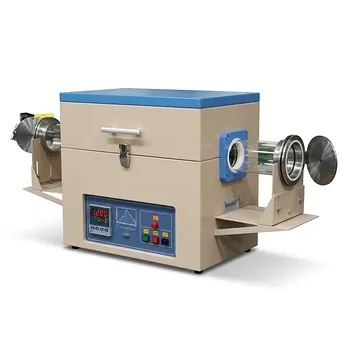
High Temperature 1200C Split Tube Furnace with Hinged Vacuum Flanges and 4 Inch Quartz Tube for Laboratory Research
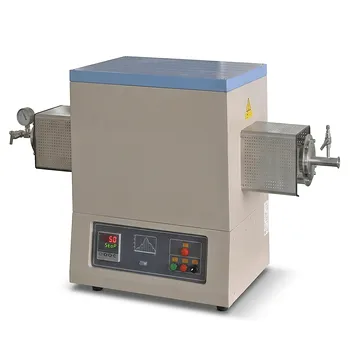
High Temperature 1700C Tube Furnace with 4 Inch OD Alumina Tube and Vacuum Sealing Flanges
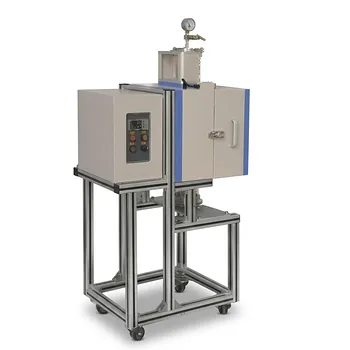
1200°C 5 Inch Vertical Quartz Tube Furnace with Stainless Steel Vacuum Flanges
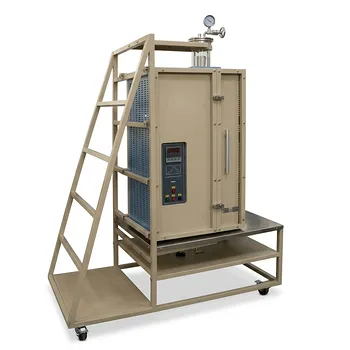
Split Vertical Tube Furnace with 1200C Quartz Tube and Stainless Steel Vacuum Flanges for Rapid Thermal Processing