How does an atmosphere control tube furnace contribute to the final synthesis of W-V3S4 catalysts? Key Roles Explained
Updated 3 months ago
The atmosphere control tube furnace is the critical vessel for the precise thermal engineering required to stabilize W-V${3}$S${4}$ catalysts. It provides a stable, inert nitrogen environment and a precise temperature program (specifically annealing at 200°C) to facilitate the in-situ anchoring of tungsten (W) atoms. This controlled environment ensures that tungsten atoms bond securely to sulfur vacancies on the V${3}$S${4}$ nanosheets while preventing the formation of inactive metal clusters.
Core Takeaway: The furnace serves as a dual-control system that manages both chemical environment and thermal kinetics. By balancing inert gas protection with localized thermal energy, it enables the high-loading "anchoring" of single atoms while preserving the structural integrity of the V${3}$S${4}$ support.
The Role of In-Situ Anchoring and Thermal Energy
Facilitating Tungsten Atom Attachment
The tube furnace provides the specific thermal energy required to drive in-situ anchoring of tungsten atoms. During the annealing process at 200°C, the energy allows metal atoms to migrate and settle into the sulfur vacancies of the V${3}$S${4}$ nanosheets.
Preventing Atom Aggregation
Precise temperature management is vital for maintaining the single-atom state of the catalyst. Without this control, high loading conditions would typically lead to the aggregation of tungsten into nanoparticles, significantly reducing the catalyst's active surface area and efficiency.
Strengthening Metal-Support Interaction
The uniform temperature field within the furnace ensures a consistent reaction across the entire sample. This results in a strong interaction between the metal atoms and the V${3}$S${4}$ support, which is essential for the long-term stability of the catalyst during chemical reactions.
Atmospheric Protection and Chemical Stability
Maintaining an Inert Nitrogen Environment
The furnace creates a stable nitrogen (N$_{2}$) protection environment that is strictly oxygen-free. This prevents the oxidation of the V${3}$S${4}$ support and the tungsten precursors, which would otherwise alter the chemical identity of the catalyst.
Regulating Surface Defect Integrity
By controlling the atmosphere, the furnace preserves the sulfur vacancies necessary for the anchoring process. If the environment were not strictly regulated, these vacancies might be filled by contaminants or degraded, leaving no sites for the tungsten atoms to bond.
Removing Reaction Byproducts
A constant flow of inert gas helps sweep away any residual moisture or volatile byproducts that might evolve during the 200°C annealing step. This ensures that the chemical environment remains pure and the synthesis proceeds according to the intended stoichiometry.
Understanding the Trade-offs and Synthesis Risks
The Sensitivity of Temperature Windows
Synthesis of W-V${3}$S${4}$ is highly dependent on the precision of the 200°C threshold. If the temperature is too low, the tungsten atoms will not have enough kinetic energy to anchor into the vacancies; if it is too high, the nanosheet support may begin to degrade or phase-shift.
Gas Flow Dynamics and Uniformity
Maintaining a stable gas flow is as important as the gas chemistry itself. Fluctuations in the flow rate can create cold spots or localized concentration gradients, leading to an inconsistent catalyst product where some areas are over-processed while others remain under-reacted.
Challenges of High-Loading Conditions
While the furnace helps prevent aggregation, there is a physical limit to how many single atoms can be anchored. If the precursor concentration exceeds the available sulfur vacancies, the furnace's thermal energy may inadvertently promote the growth of unwanted crystalline phases despite the inert atmosphere.
How to Apply This to Your Project
When utilizing an atmosphere control tube furnace for advanced catalyst synthesis, your operational strategy should change based on your specific material goals.
- If your primary focus is maximizing active sites: Prioritize the density of surface defects (like sulfur or oxygen vacancies) and use the furnace to perform low-temperature annealing that favors anchoring over crystal growth.
- If your primary focus is long-term catalyst durability: Focus on the "holding time" at the target temperature to ensure the metal-support interaction is fully matured and the atoms are deeply embedded in the lattice.
- If your primary focus is phase purity: Ensure the furnace atmosphere is purged extensively with high-purity inert gas before heating to prevent even trace amounts of oxygen from creating secondary oxide phases.
By treating the tube furnace as a precision instrument rather than a simple heating element, you can achieve the atomic-level control necessary for high-performance W-V${3}$S${4}$ catalysts.
Summary Table:
| Feature | Function in W-V3S4 Synthesis | Impact on Catalyst Quality |
|---|---|---|
| 200°C Annealing | Facilitates in-situ anchoring of W atoms | Prevents atom aggregation/nanoparticles |
| Inert N2 Atmosphere | Prevents oxidation of V3S4 support | Ensures chemical stability and purity |
| Thermal Kinetics | Manages metal-support interaction | Enhances long-term catalyst durability |
| Gas Flow Dynamics | Removes reaction byproducts/moisture | Maintains vacancy integrity for bonding |
Elevate Your Material Research with THERMUNITS
Precision is the critical difference between a successful synthesis and a failed experiment. THERMUNITS is a leading manufacturer of high-temperature laboratory equipment for material science and industrial R&D. We provide the advanced thermal engineering solutions necessary to stabilize complex catalysts like W-V3S4.
Our comprehensive range of equipment includes:
- Muffle, Vacuum, and Atmosphere Tube Furnaces
- Rotary and Hot Press Furnaces
- CVD/PECVD Systems
- Vacuum Induction Melting Furnaces (VIM)
Whether you are focusing on single-atom anchoring or scaling up industrial heat treatments, our expert-grade solutions ensure uniform temperature fields and strict atmospheric control.
Contact THERMUNITS today to optimize your heat treatment workflow
References
- Min Xi, Guangzhi Hu. Electronic Structure Engineering of Single‐Atom Tungsten on Vacancy‐enriched V <sub>3</sub> S <sub>4</sub> Nanosheets for Efficient Hydrogen Evolution. DOI: 10.1002/advs.202409855
Mentioned Products
- 1200°C Atmosphere Controlled Automatic Bottom Loading Furnace with 6 Inch Quartz Tube
- 1200C High Temperature Atmosphere Controlled Vertical Quenching Tube Furnace with 4 Inch Quartz Tube
- Compact Hybrid Muffle and Tube Furnace for 1000C Controlled Atmosphere Laboratory Material Sintering
- Compact Vertical Split Quartz Tube Furnace with Stainless Steel Vacuum Flanges for Rapid Thermal Quenching and Controlled Atmosphere Material Processing
- 1700C Compact Hybrid Furnace with Dual Layer Box Sintering and Controlled Atmosphere Alumina Tubes
People Also Ask
- Why is a tube furnace required for FGM-PhG structural color ceramics? Key to Carbon Preservation & Vibrant Color
- Why is an atmosphere-controlled tube furnace required for the pre-sulfidation of NiMo/gamma-Al2O3 catalysts?
- Why is an atmosphere-controlled tube furnace required for 800 °C CNF annealing? Essential for Oxidative Protection.
- Why is an atmosphere-controlled tube furnace required for [email protected]/C preparation? Key for Purity & Structure
- Why is an atmosphere-controlled tube furnace required for single-atom sensor calcination? Ensure Atomic Dispersion.

Tech Team · ThermUnits
Last updated on Jun 03, 2026
Related Products
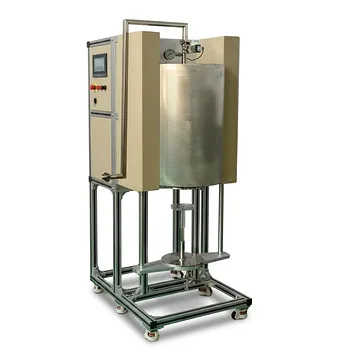
1200°C Atmosphere Controlled Automatic Bottom Loading Furnace with 6 Inch Quartz Tube
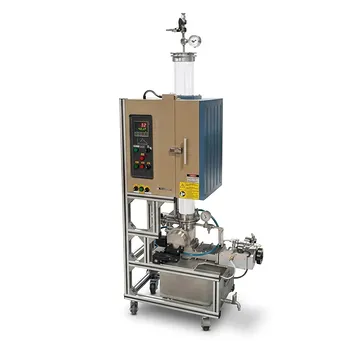
1200C High Temperature Atmosphere Controlled Vertical Quenching Tube Furnace with 4 Inch Quartz Tube
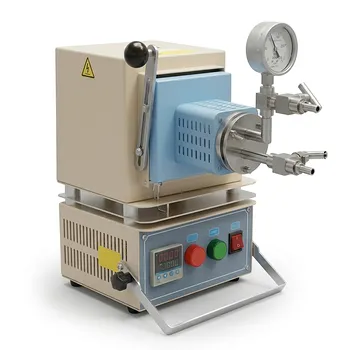
Compact Hybrid Muffle and Tube Furnace for 1000C Controlled Atmosphere Laboratory Material Sintering

Compact Vertical Split Quartz Tube Furnace with Stainless Steel Vacuum Flanges for Rapid Thermal Quenching and Controlled Atmosphere Material Processing
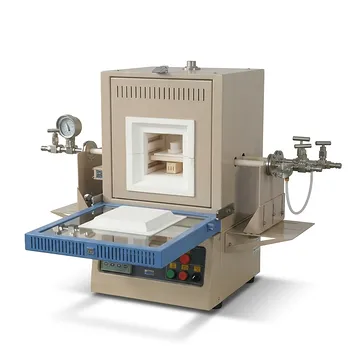
1700C Compact Hybrid Furnace with Dual Layer Box Sintering and Controlled Atmosphere Alumina Tubes
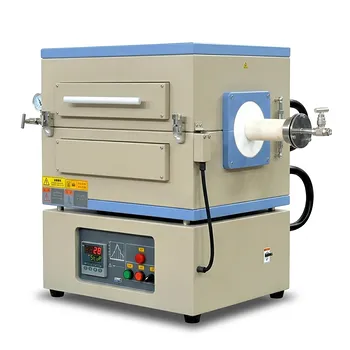
1500°C Split Tube Furnace with Alumina Tube and Vacuum Sealing Flanges for Material Research

Vertical 1700C Vacuum and Atmosphere Tube Furnace with 80mm Alumina Tube
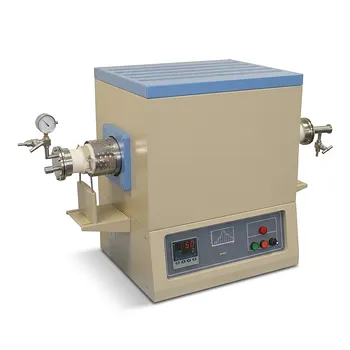
1700C High Temperature Alumina Tube Furnace with 18 Inch Heated Zone and Vacuum Sealing Flanges
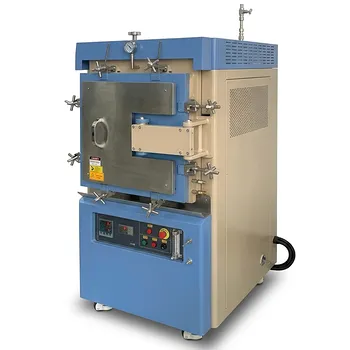
Atmosphere Controlled Muffle Furnace 1700C Maximum Temperature 80L High Capacity Vacuum Inert Gas Box Furnace
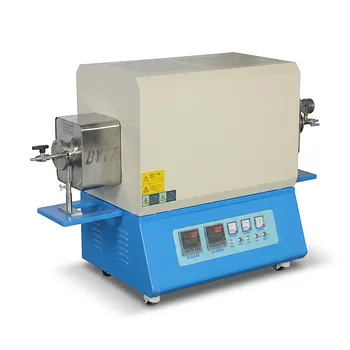
High Temperature Dual Zone Split Tube Furnace for Advanced Atmosphere Sintering and Vacuum CVD Applications
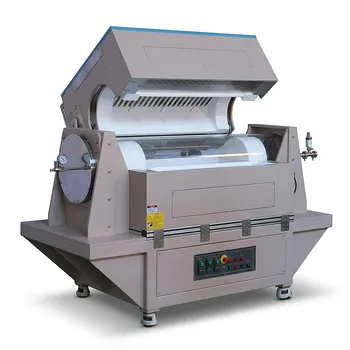
Three Zone Tube Furnace with 11 Inch or 15 Inch Quartz Tube and Hinged Flanges for Vacuum Atmosphere Heat Treatment
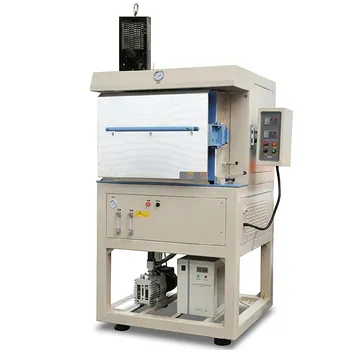
1200C Hydrogen Atmosphere Box Furnace with 5 Heated Sides and 64L Chamber
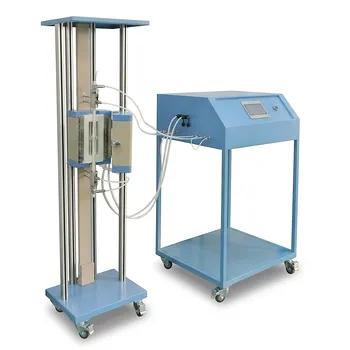
High Temperature Vertical Tube Furnace for Small Solid Oxide Fuel Cell Testing with Four Channel Gas Control
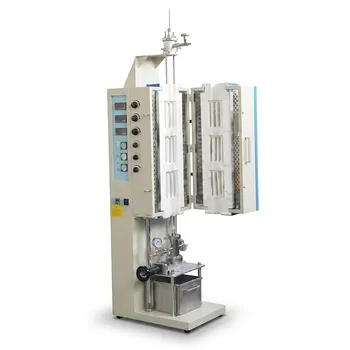
High Temperature Dual Zone Tube Furnace for Material Science Research and Professional Thermal Processing

High Temperature 1700C Tube Furnace with High Vacuum Turbomolecular Pump System and Multi Channel Mass Flow Controller Gas Mixer
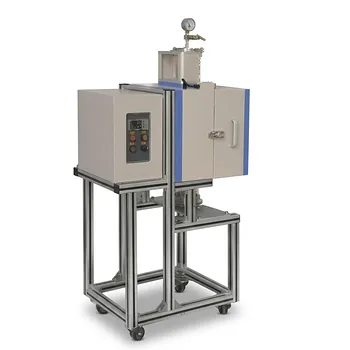
1200°C 5 Inch Vertical Quartz Tube Furnace with Stainless Steel Vacuum Flanges
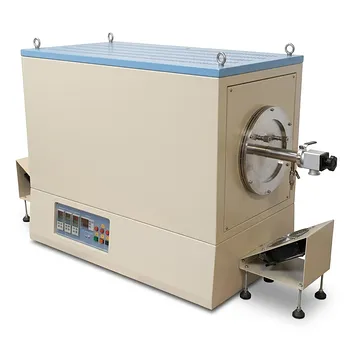
Four Zone Tube Furnace 1100C with 600mm Large Diameter Quartz Tube and Vacuum Flanges
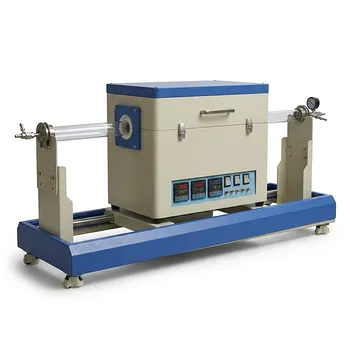
Double Temperature Zone Double Cover Tube Furnace for High Temperature CVD and Vacuum Annealing

Compact High Temperature 1600C Tube Furnace with 50mm Alumina Tube and Vacuum Flanges for Material Sintering
