How does an atmosphere control tube furnace contribute to the preparation of MOF-derived TiO2 heterojunctions? Expert Guide
Updated 3 months ago
The atmosphere control tube furnace is the foundational instrument for driving the topological transformation of metal-organic frameworks (MOFs) into titanium dioxide heterojunctions. It provides a highly controlled thermal environment that triggers the in-situ decomposition of MOF precursors, such as MIL-125(Ti), while simultaneously engineering the material's crystalline phase and electronic properties. By precisely regulating temperature, heating rates, and gas chemistry, the furnace enables the synthesis of advanced heterostructures integrated with conductive carbon and oxygen vacancies.
The tube furnace acts as a precision reactor that balances thermal energy and chemical atmosphere to convert MOF precursors into functional TiO2 heterojunctions. Its primary role is to ensure structural stability through carbonization while facilitating the exact phase transitions required for enhanced catalytic activity.
Driving the Topological Transformation
Precise Pyrolysis and Temperature Control
The furnace facilitates the in-situ decomposition of MOF precursors by maintaining specific thermal profiles, such as a heating rate of 5 °C/min and a peak temperature of 600 °C. This precise control is critical for inducing the phase transformation from an amorphous or precursor state to crystalline forms like anatase and rutile.
Creation of Crystalline Heterojunctions
During the heating process, the furnace drives the formation of anatase/rutile homojunctions (A-R HHs). These junctions are vital for improving charge separation and photocatalytic efficiency, as they create a staggered electronic interface within the material.
Engineering Oxygen Vacancies
By maintaining specific inert environments, such as a high-precision nitrogen or argon flow, the furnace regulates the concentration of oxygen vacancies (OVs). These vacancies act as active sites that trap electrons, preventing premature recombination and significantly enhancing the catalytic performance of the resulting heterojunction.
Atmospheric Influence on Structural Integrity
Prevention of Structural Collapse
The continuous supply of high-purity argon gas under atmospheric pressure is essential for preserving the morphology of the MOF derivative. Unlike vacuum conditions, which can lead to severe structural collapse, a stable inert atmosphere allows the organic ligands to carbonize into a supportive carbon framework.
Facilitating Carbonization and Conductivity
As the MOF decomposes, the furnace enables the organic components to transform into a conductive carbon matrix. This matrix not only provides structural stability but also improves the overall electrical conductivity of the TiO2 heterojunction, making it more effective for electroreduction or photocatalytic applications.
Gas-Solid Phase Transformations
The tube furnace allows for advanced chemical modifications, such as gas-solid phase phosphorization or nitridation. By controlling the directional flow of carrier gases, the furnace enables the introduction of phosphorus or nitrogen atoms into the TiO2 lattice without destroying the underlying carbon-based framework.
Understanding the Trade-offs and Limitations
The Risk of Excessive Oxidation
While a controlled atmosphere is beneficial, any leakage or improper gas purity can lead to excessive oxidation. For example, in the preparation of oxygen-deficient materials, even trace amounts of oxygen at high temperatures can eliminate desired vacancies, reducing the material's electronic efficiency.
Thermal Gradients and Uniformity
In large-scale tube furnaces, maintaining a uniform temperature field can be challenging. Temperature gradients within the tube can lead to variations in grain size and phase composition across the sample batch, which may result in inconsistent catalytic performance.
Energy Efficiency vs. Crystallinity
Higher temperatures generally improve crystallinity and grain size, which are critical for photocatalysis. However, excessive heat can cause sintering, which reduces the surface area and may degrade the porous structure inherited from the MOF precursor.
Strategic Implementation for Material Synthesis
How to Apply This to Your Project
To achieve the best results when preparing MOF-derived titanium dioxide, you should tailor your furnace parameters to your specific performance goals.
- If your primary focus is high catalytic activity: Prioritize the precise regulation of the inert nitrogen atmosphere at lower temperatures (e.g., 280-400 °C) to maximize the density of oxygen vacancies.
- If your primary focus is structural stability: Ensure a consistent flow of argon gas during high-temperature pyrolysis (600 °C or above) to facilitate the carbonization of organic ligands into a robust matrix.
- If your primary focus is phase purity: Utilize specific heating rates and annealing times to induce the transformation from amorphous TiO2 to pure anatase or controlled anatase/rutile mixtures.
The atmosphere control tube furnace remains the indispensable tool for bridging the gap between molecular MOF precursors and high-performance crystalline heterojunctions.
Summary Table:
| Process Stage | Furnace Function | Material Outcome |
|---|---|---|
| Pyrolysis | Precise Temp Control (e.g. 600°C) | Phase transformation (Anatase/Rutile) |
| Atmosphere Control | Inert Gas Flow (N2/Ar) | Oxygen vacancies & structural stability |
| Carbonization | Thermal Decomposition | Conductive carbon matrix framework |
| Chemical Modification | Gas-Solid Phase Reaction | Doping (Phosphorization/Nitridation) |
Elevate Your Material Synthesis with THERMUNITS Precision Furnaces
Achieving the perfect TiO2 heterojunction requires absolute control over atmosphere and temperature. As a leading manufacturer of high-temperature laboratory equipment for material science and industrial R&D, THERMUNITS provides the advanced technology needed for your synthesis success.
Whether you require specialized Tube Furnaces, Atmosphere Furnaces, CVD/PECVD systems, or Vacuum Induction Melting Furnaces (VIM), our equipment ensures the repeatability and precision your laboratory heat treatment demand.
Contact THERMUNITS today to optimize your heat treatment process!
References
- Yueying Ma, Liancheng Zhao. Optimizing Photoelectrochemical UV Imaging Photodetection: Construction of Anatase/Rutile Heterophase Homojunctions and Oxygen Vacancies Engineering in MOF-Derived TiO2. DOI: 10.3390/molecules29133096
Mentioned Products
- 1200°C Atmosphere Controlled Automatic Bottom Loading Furnace with 6 Inch Quartz Tube
- 1200C High Temperature Atmosphere Controlled Vertical Quenching Tube Furnace with 4 Inch Quartz Tube
- Compact Hybrid Muffle and Tube Furnace for 1000C Controlled Atmosphere Laboratory Material Sintering
- Compact Vertical Split Quartz Tube Furnace with Stainless Steel Vacuum Flanges for Rapid Thermal Quenching and Controlled Atmosphere Material Processing
- 1700C Compact Hybrid Furnace with Dual Layer Box Sintering and Controlled Atmosphere Alumina Tubes
People Also Ask
- Why is a tube furnace required for FGM-PhG structural color ceramics? Key to Carbon Preservation & Vibrant Color
- Why is an atmosphere-controlled tube furnace required for 800 °C CNF annealing? Essential for Oxidative Protection.
- Why is an atmosphere-controlled tube furnace required for the pre-sulfidation of NiMo/gamma-Al2O3 catalysts?
- Why is an atmosphere-controlled tube furnace required for [email protected]/C preparation? Key for Purity & Structure
- Why is an atmosphere-controlled tube furnace required for single-atom sensor calcination? Ensure Atomic Dispersion.

Tech Team · ThermUnits
Last updated on Jun 02, 2026
Related Products
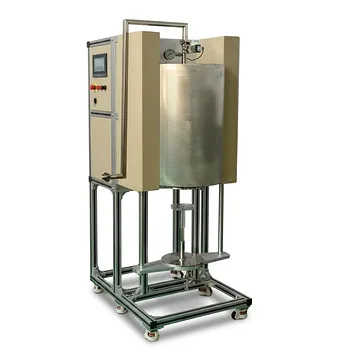
1200°C Atmosphere Controlled Automatic Bottom Loading Furnace with 6 Inch Quartz Tube
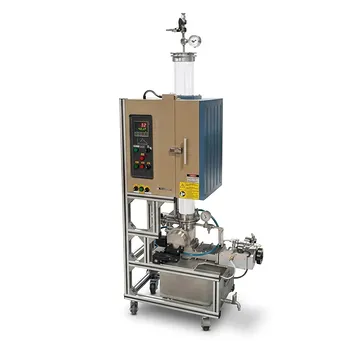
1200C High Temperature Atmosphere Controlled Vertical Quenching Tube Furnace with 4 Inch Quartz Tube
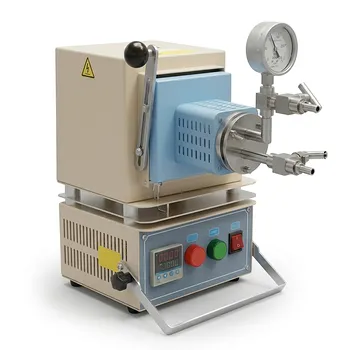
Compact Hybrid Muffle and Tube Furnace for 1000C Controlled Atmosphere Laboratory Material Sintering

Compact Vertical Split Quartz Tube Furnace with Stainless Steel Vacuum Flanges for Rapid Thermal Quenching and Controlled Atmosphere Material Processing
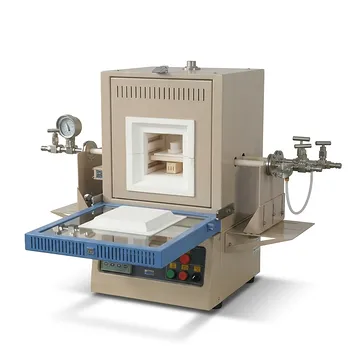
1700C Compact Hybrid Furnace with Dual Layer Box Sintering and Controlled Atmosphere Alumina Tubes
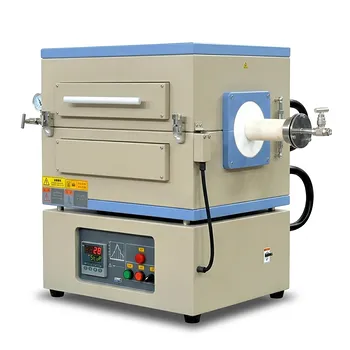
1500°C Split Tube Furnace with Alumina Tube and Vacuum Sealing Flanges for Material Research

Vertical 1700C Vacuum and Atmosphere Tube Furnace with 80mm Alumina Tube
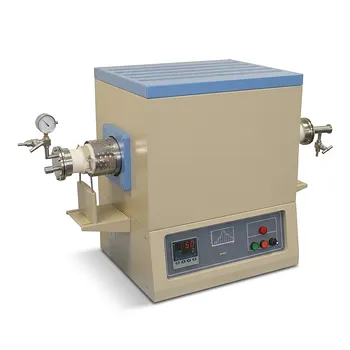
1700C High Temperature Alumina Tube Furnace with 18 Inch Heated Zone and Vacuum Sealing Flanges
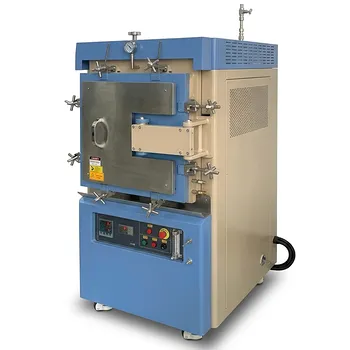
Atmosphere Controlled Muffle Furnace 1700C Maximum Temperature 80L High Capacity Vacuum Inert Gas Box Furnace
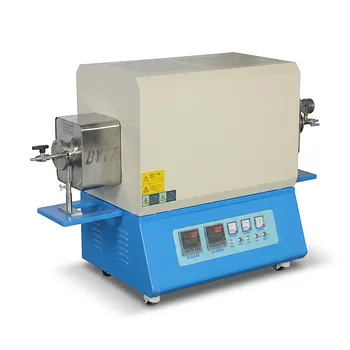
High Temperature Dual Zone Split Tube Furnace for Advanced Atmosphere Sintering and Vacuum CVD Applications
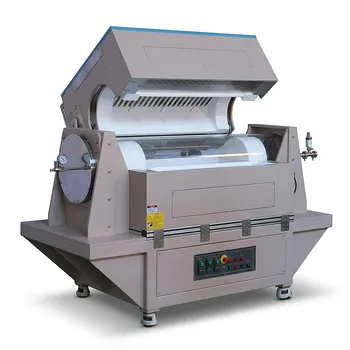
Three Zone Tube Furnace with 11 Inch or 15 Inch Quartz Tube and Hinged Flanges for Vacuum Atmosphere Heat Treatment
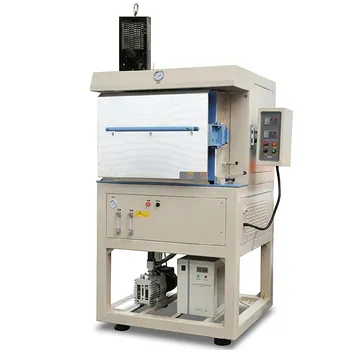
1200C Hydrogen Atmosphere Box Furnace with 5 Heated Sides and 64L Chamber
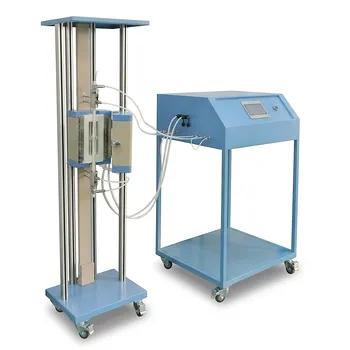
High Temperature Vertical Tube Furnace for Small Solid Oxide Fuel Cell Testing with Four Channel Gas Control
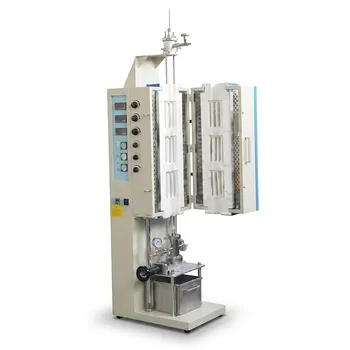
High Temperature Dual Zone Tube Furnace for Material Science Research and Professional Thermal Processing

High Temperature 1700C Tube Furnace with High Vacuum Turbomolecular Pump System and Multi Channel Mass Flow Controller Gas Mixer

1200°C 5 Inch Vertical Quartz Tube Furnace with Stainless Steel Vacuum Flanges
Four Zone Tube Furnace 1100C with 600mm Large Diameter Quartz Tube and Vacuum Flanges
Double Temperature Zone Double Cover Tube Furnace for High Temperature CVD and Vacuum Annealing

Compact High Temperature 1600C Tube Furnace with 50mm Alumina Tube and Vacuum Flanges for Material Sintering
