How does the sealing of the quartz tube affect MOF growth in SCA-CVD? Optimize Atomic-Scale Material Stability
Updated 3 months ago
The sealing of the quartz tube in Self-Condensation Assisted Chemical Vapor Deposition (SCA-CVD) is the primary mechanism for establishing a "quasi-closed" environment. This specific configuration prevents the rapid loss of precursor vapors, ensuring the high concentration and stability required for the precise nucleation of atomic-scale Metal-Organic Frameworks (MOFs).
Core Takeaway: By utilizing a single-end closed tube, the SCA-CVD process maintains a saturated vapor environment that balances atmospheric purity with precursor density, enabling the growth of high-quality, atomic-scale materials that would otherwise fail in an open-flow system.
The Mechanics of the Quasi-Closed Environment
Maintaining Precursor Vapor Concentration
The primary function of the single-end closed seal is to trap precursor molecules within the reaction zone. This quasi-closed setup prevents the "washout" effect commonly seen in traditional open CVD systems.
By restricting the exit path of the vapors, the system maintains a high concentration of reactants near the substrate. This saturation is vital for the self-condensation mechanism that defines the SCA-CVD process.
Regulating Atmospheric Purity and Pressure
The sealing works in tandem with a controlled flow of high-purity nitrogen to regulate the internal environment. This allows for the precise tuning of the pressure within the tube during the growth phase.
Because the tube is partially sealed, it effectively excludes external contaminants while allowing the nitrogen to sweep away unwanted byproducts. This results in highly pure conditions essential for atomic-scale precision.
The Role of the Tube in Atomic-Scale Precision
Ensuring Thermal and Chemical Stability
The quartz tube itself acts as a chemically inert and heat-resistant vessel. It allows for uniform heating across the substrate, which is a prerequisite for consistent MOF growth.
This thermal stability ensures that the thermochemical decomposition of precursors occurs at a predictable rate. Without the controlled environment provided by the sealing, temperature fluctuations could lead to non-uniform atomic structures.
Eliminating External Interference
In atomic-scale synthesis, even trace amounts of oxygen or moisture can terminate growth or alter the MOF's properties. The sealed nature of the quartz tube acts as a physical barrier against external impurities.
By providing a dedicated space for specific atmospheres—such as nitrogen or argon—the system ensures that the precursor gases flow precisely over the catalyst surface. This focus is what allows the MOFs to reach the desired atomic-scale dimensions.
Understanding the Trade-offs
The Risk of Pressure Buildup
While a quasi-closed environment is beneficial for vapor retention, it requires careful monitoring of internal pressure. If the seal is too restrictive or the gas flow is too high, the resulting pressure increase can destabilize the growth front.
Vapor Saturation vs. Precursor Exhaustion
There is a delicate balance between retaining enough vapor for growth and allowing the system to "breathe." If the environment becomes over-saturated, it can lead to bulk crystal growth rather than the intended atomic-scale frameworks.
Conversely, if the seal is insufficient, the precursor loss will be too rapid. This prevents the system from reaching the critical concentration needed for nucleation, resulting in poor coverage or failed synthesis.
How to Apply This to Your Synthesis Goals
Success in SCA-CVD depends on how effectively you manage the sealed environment to match your specific material requirements.
- If your primary focus is Maximum Purity: Ensure the nitrogen flow rate is optimized to flush the quasi-closed tube of any residual moisture before heating begins.
- If your primary focus is Uniform Atomic Thickness: Prioritize the seal integrity to maintain a steady-state vapor concentration, preventing the thinning of the MOF layer due to precursor depletion.
- If your primary focus is Scaling Growth Area: Focus on the tube's thermal gradient to ensure that the quasi-closed environment provides consistent vapor density across the entire substrate.
By mastering the quasi-closed dynamics of the quartz tube, you gain the control necessary to engineer MOFs at the most fundamental atomic level.
Summary Table:
| Feature | Function in SCA-CVD | Impact on MOF Growth |
|---|---|---|
| Quasi-Closed Seal | Traps precursor molecules | Prevents vapor "washout" & ensures nucleation |
| High-Purity Nitrogen | Regulates internal pressure | Excludes atmospheric oxygen & moisture |
| Single-End Tube | Maintains vapor saturation | Facilitates self-condensation for atomic precision |
| Thermal Stability | Uniform heating across substrate | Ensures predictable thermochemical decomposition |
Elevate Your Material Research with THERMUNITS
Precision in SCA-CVD requires exceptional thermal control and atmospheric integrity. THERMUNITS is a leading manufacturer of high-performance thermal processing solutions designed for the most demanding industrial R&D and material science applications.
Whether you are synthesizing atomic-scale MOFs or developing advanced semiconductors, our equipment provides the stability you need:
- Advanced CVD/PECVD Systems for precise vapor deposition.
- High-Purity Tube & Vacuum Furnaces optimized for controlled atmospheres.
- Specialized Thermal Solutions: Including Muffle, Rotary, Hot Press, and Dental furnaces, alongside VIM systems and high-quality thermal elements.
Ready to optimize your laboratory heat treatment? Contact THERMUNITS today to discuss how our customized furnace solutions can enhance your research outcomes.
References
- Lingxin Luo, Jian Zheng. Self-condensation-assisted chemical vapour deposition growth of atomically two-dimensional MOF single-crystals. DOI: 10.1038/s41467-024-48050-5
Mentioned Products
- Dual Zone Quartz Tube Furnace with 80mm Diameter 1200C Max Temperature 3 Channel Gas Mixer and Vacuum Pump System
- 1200°C 5 Inch Vertical Quartz Tube Furnace with Stainless Steel Vacuum Flanges
- 1100°C Large Diameter Quartz Tube Furnace with 24 Inch Heating Zone and Water Cooled Flanges
- Compact Vertical Split Quartz Tube Furnace with Stainless Steel Vacuum Flanges for Rapid Thermal Quenching and Controlled Atmosphere Material Processing
- 1100°C High Temperature Quartz Chamber Furnace 8 Inch OD with 7.6 Liter Capacity and Vacuum Atmosphere Capability
People Also Ask
- How do dual-zone quartz tube furnaces achieve controllable material preparation? Optimize Perovskite VD Processes
- What are the technical advantages of using a dual-zone tube furnace for growing large PdCoO2 crystals via CVT? Expert Tips
- Purpose of the reverse gradient step in CVT growth? Master Crystal Purity with Dual-Zone Furnaces
- Why is it necessary to place MoS2 devices in a dual-zone tube furnace for annealing? Optimize Lattice Repair & Doping
- Why is a dual-zone tube furnace necessary for ReO3-doped Cu2Te CVD? Essential for precise precursor synchronization.

Tech Team · ThermUnits
Last updated on Jun 02, 2026
Related Products
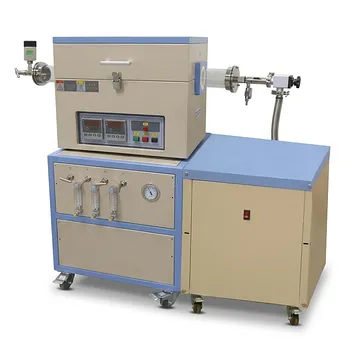
Dual Zone Quartz Tube Furnace with 80mm Diameter 1200C Max Temperature 3 Channel Gas Mixer and Vacuum Pump System

1200°C 5 Inch Vertical Quartz Tube Furnace with Stainless Steel Vacuum Flanges
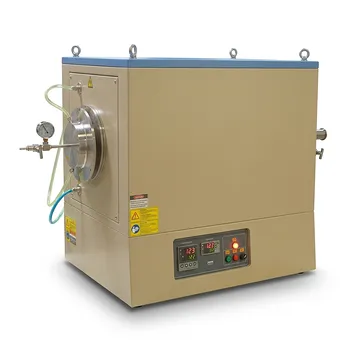
1100°C Large Diameter Quartz Tube Furnace with 24 Inch Heating Zone and Water Cooled Flanges

Compact Vertical Split Quartz Tube Furnace with Stainless Steel Vacuum Flanges for Rapid Thermal Quenching and Controlled Atmosphere Material Processing
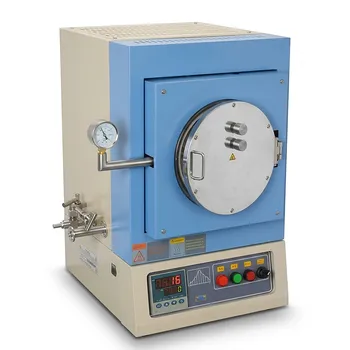
1100°C High Temperature Quartz Chamber Furnace 8 Inch OD with 7.6 Liter Capacity and Vacuum Atmosphere Capability
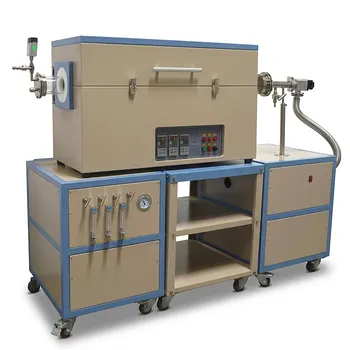
Three Zone Quartz Tube Furnace with 3 Channel Gas Mixer Vacuum Pump and Anti Corrosive Vacuum Gauge
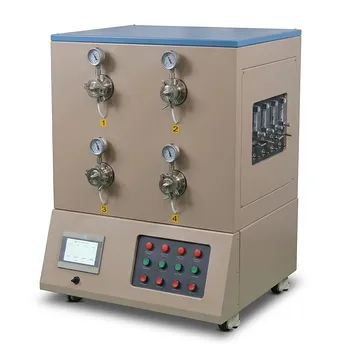
High Throughput 1200C Four Channel Tube Furnace with 3 Inch Quartz Tubes for Multi Zone Annealing and Material Research
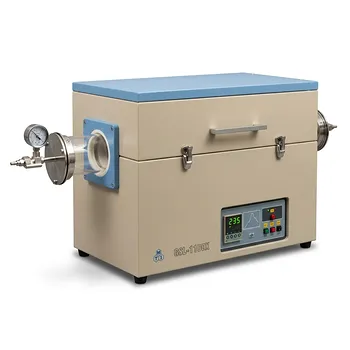
Single Zone Tube Furnace 5 Inch Quartz Tube 36 Inch Heating Zone Vacuum Flanges
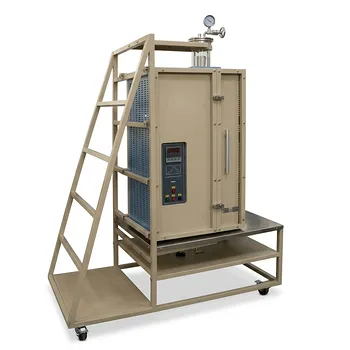
Split Vertical Tube Furnace with 1200C Quartz Tube and Stainless Steel Vacuum Flanges for Rapid Thermal Processing
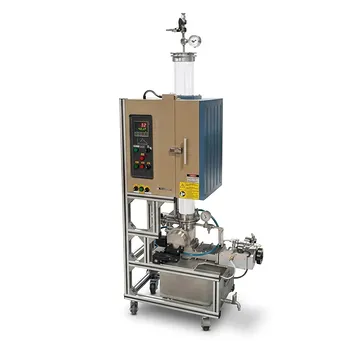
1200C High Temperature Atmosphere Controlled Vertical Quenching Tube Furnace with 4 Inch Quartz Tube
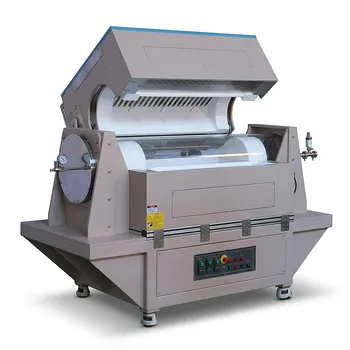
Three Zone Tube Furnace with 11 Inch or 15 Inch Quartz Tube and Hinged Flanges for Vacuum Atmosphere Heat Treatment
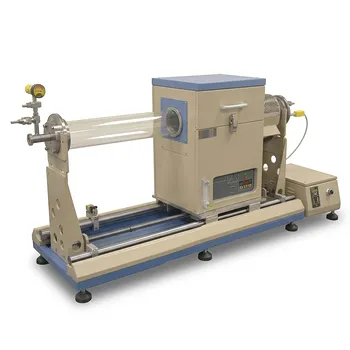
Rapid Thermal Processing Sliding Tube Furnace with 4 Inch OD Quartz Tube and 900C IR Heating
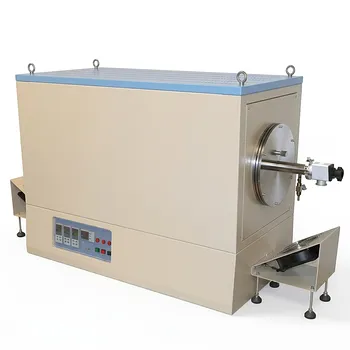
1100°C Three Zone Tube Furnace with 8.5 to 11 Inch OD Quartz Tube and Vacuum Flanges for Large Wafer Processing
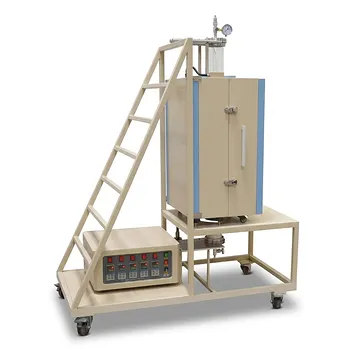
Five Zone Split Vertical Tube Furnace 1200C Max with 4 Inch Quartz Tube and Stainless Steel Vacuum Flanges
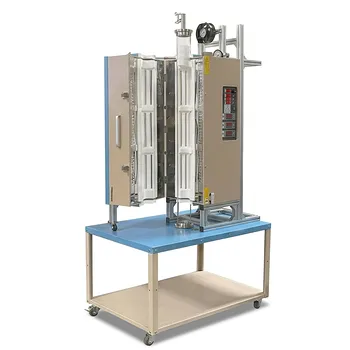
1200C Three Zone Split Vertical Tube Furnace 4 Inch Quartz Tube Stainless Steel Vacuum Flanges
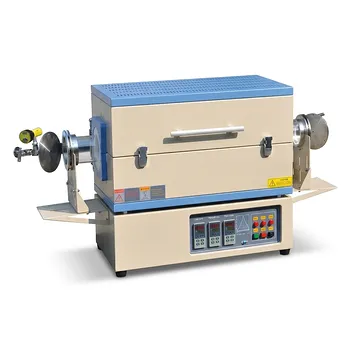
Three Zone Tube Furnace with 24 Inch Heating Length and Hinged Flange Quartz Tube System
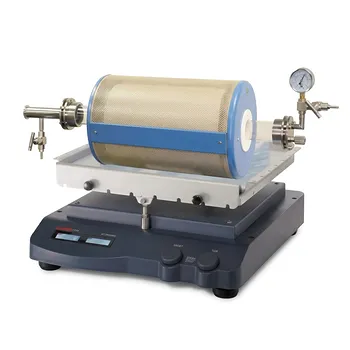
High Temperature Rocking Tube Furnace with Quartz Tube and Vacuum Flange for Materials Synthesis
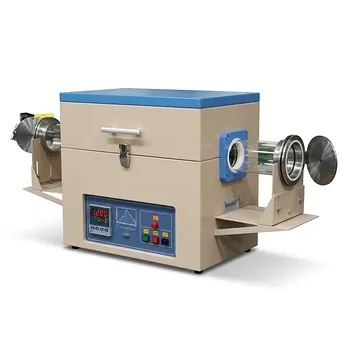
High Temperature 1200C Split Tube Furnace with Hinged Vacuum Flanges and 4 Inch Quartz Tube for Laboratory Research
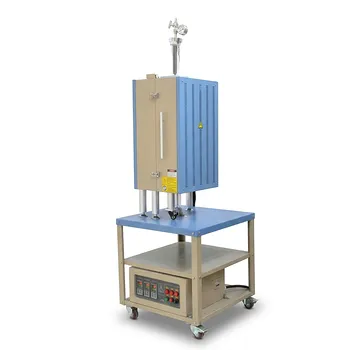
1200C Three Zone Vertical Tube Furnace with 2 Inch Quartz Tube and Vacuum Flanges
