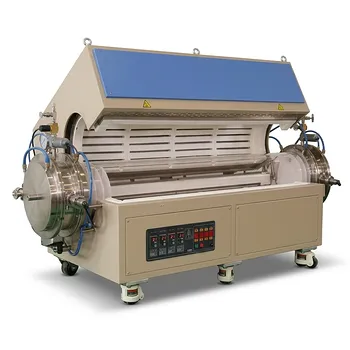
How does the temperature control of a high-temperature tube diffusion furnace affect doping? Precision POCl3 & BBr3 Control
Updated 3 months ago
Temperature control in a high-temperature tube diffusion furnace is the primary regulator of dopant kinetics. It directly dictates the decomposition rate of liquid sources like POCl3 or BBr3 and the subsequent diffusion depth into the material. This precision determines the final sheet resistance and doping profile, which are fundamental to forming high-quality p-n junctions and controlling carrier transport.
Precise thermal management ensures that dopant atoms are distributed with the exact depth and concentration required for optimal electronic performance. Without this control, devices suffer from inconsistent sheet resistance, structural defects, and excessive carrier recombination.
The Relationship Between Thermal Stability and Doping Profiles
Controlling Dopant Concentration and Sheet Resistance
The precision of the thermal field within the furnace tube directly determines how many dopant atoms—such as phosphorus or boron—enter the substrate. Sheet resistance, a critical metric for device performance, is highly sensitive to even minor temperature fluctuations during the soak phase.
By maintaining a stable temperature, the furnace ensures a uniform doping profile across the entire batch of wafers. This uniformity is essential for creating consistent p-n junctions that facilitate efficient lateral carrier transport.
Facilitating Synchronized Phase Transformation
In many advanced processes, the furnace provides the stable thermal energy (often around 850 °C) required for phase transformation. For example, it can convert deposited amorphous silicon (a-Si) into polycrystalline silicon (poly-Si) while simultaneously introducing dopants.
This synchronized doping ensures that the dopant concentration is distributed correctly throughout the depth of the poly-Si layer. Such precise distribution is vital for forming high-quality n+ passivation contacts that minimize energy loss in solar cells and semiconductors.
Structural Integrity and Atomic Migration
The Importance of Slow Heating Rates
A sophisticated temperature control system allows for highly regulated heating rates, such as 2°C per minute. This slow ramp-up is critical for maintaining the structural integrity of complex materials, such as two-dimensional skeletons or carbon nanotubes.
Controlled heating prevents structural collapse caused by the internal stress of sudden temperature spikes. It ensures that organic components decompose uniformly rather than violently, preserving the intended geometry of the material.
Enabling Catalysis and Integration
At high temperatures, typically between 800 °C and 1000 °C, the furnace facilitates the decomposition of sources like boric acid or POCl3. This thermal energy provides the necessary activation energy for dopant atoms to migrate and integrate into the material's framework.
For boron doping, precise heat management allows boron atoms to adjust the electronic structure of the support material. This adjustment enhances the interaction between the material and active metal particles, improving overall catalytic or electronic efficiency.
Understanding the Trade-offs
Thermal Budget vs. Process Throughput
Maintaining extreme temperature precision often requires slower ramp-up and cool-down cycles, which increases the total thermal budget. While this produces superior doping profiles, it can limit the overall throughput of a manufacturing facility.
Uniformity vs. Stress Accumulation
While high temperatures facilitate faster diffusion, they also increase the risk of thermal stress and wafer warping. Engineering a "flat" thermal zone across a long furnace tube is technically challenging and requires complex multi-zone heating elements to prevent edge-to-center variance.
Making the Right Choice for Your Goal
Achieving the desired electrical characteristics depends on aligning your furnace temperature profile with your specific material requirements.
- If your primary focus is consistent electrical conductivity: Prioritize a furnace with multi-zone PID control to minimize sheet resistance variance across the load.
- If your primary focus is forming high-quality passivation contacts: Ensure the system can maintain a stable temperature (e.g., 850 °C) for synchronized phase transformation and doping.
- If your primary focus is protecting delicate nanostructures: Utilize a control system capable of extremely slow, linear ramping (2°C/min) to prevent structural failure due to thermal stress.
Precise temperature control is the bridge between chemical precursors and the final, high-performance electronic architecture of the device.
Summary Table:
| Process Parameter | Impact on Doping Kinetics | Key Performance Outcome |
|---|---|---|
| Thermal Stability | Controls dopant concentration & depth | Uniform sheet resistance & p-n junctions |
| Heating Rate | Regulates atomic migration & stress | Prevents structural collapse of nanostructures |
| Phase Transformation | Facilitates synchronized doping | High-quality n+ passivation contacts |
| Multi-zone Control | Eliminates thermal gradient variance | Consistent doping profile across entire batches |
Optimize Your Doping Precision with THERMUNITS
High-performance semiconductor and material R&D demand absolute thermal accuracy. THERMUNITS is a leading manufacturer of high-temperature laboratory equipment, providing advanced thermal processing solutions including Tube, Vacuum, Atmosphere, and Rotary furnaces, as well as CVD/PECVD systems and Vacuum Induction Melting (VIM) units.
Whether you are managing liquid source diffusion with POCl3/BBr3 or developing complex thin films, our multi-zone PID control systems ensure the structural integrity and electrical performance your research requires.
Ready to enhance your lab’s heat treatment capabilities?
References
- Rabin Basnet, Daniel Macdonald. Understanding the Strong Apparent Injection Dependence of Carrier Lifetimes in Doped Polycrystalline Silicon Passivated Wafers. DOI: 10.1002/solr.202400087
Mentioned Products
- High Temperature Tube Furnace 1500C with Sliding Flanges and 50mm OD for Rapid Thermal Processing Fast Heating and Cooling
- High Temperature 1700C Tube Furnace with High Vacuum Turbomolecular Pump System and Multi Channel Mass Flow Controller Gas Mixer
- Compact High Temperature 1600C Tube Furnace with 50mm Alumina Tube and Vacuum Flanges for Material Sintering
- 1750°C High Temperature Benchtop Vacuum Atmosphere Tube Furnace with Kanthal Super 1800 Heating Elements and 60mm Alumina Processing Tube
- High Temperature Three Zone Tube Furnace 1700C with Alumina Tube and Water Cooled Flanges
People Also Ask
- How are high-temperature tube furnaces utilized to repair etching damage? Precision Lattice Restoration Solutions
- What core conditions does a high-temperature tube furnace provide for rGO aerogels? Mastering Precision Synthesis.
- What role does a high-temperature tube furnace play in CVD synthesis of silicon nanowires? Master VLS Growth Precision.
- How does precision tube furnace control influence CoFe nanoparticle formation? Master Your Bimetallic Synthesis.
- What role does a high-temperature tube furnace play in the sulfidation heat treatment of CoS@C/MXene nanocomposites? Guide

Tech Team · ThermUnits
Last updated on Jun 02, 2026
Related Products

High Temperature Tube Furnace 1500C with Sliding Flanges and 50mm OD for Rapid Thermal Processing Fast Heating and Cooling

High Temperature 1700C Tube Furnace with High Vacuum Turbomolecular Pump System and Multi Channel Mass Flow Controller Gas Mixer

Compact High Temperature 1600C Tube Furnace with 50mm Alumina Tube and Vacuum Flanges for Material Sintering

1750°C High Temperature Benchtop Vacuum Atmosphere Tube Furnace with Kanthal Super 1800 Heating Elements and 60mm Alumina Processing Tube
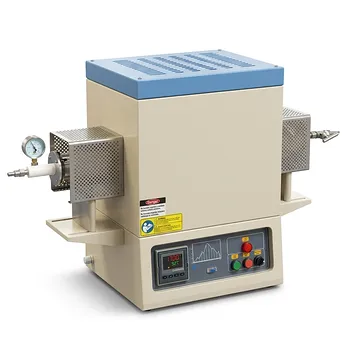
High Temperature Three Zone Tube Furnace 1700C with Alumina Tube and Water Cooled Flanges

1700C High Temperature Alumina Tube Furnace with 18 Inch Heated Zone and Vacuum Sealing Flanges

High Temperature 1700C Vertical Tube Furnace for Powder Spherification and Material Sintering

High Temperature 1700C Benchtop Tube Furnace with 5 Inch Heating Zone High Purity Alumina Tube and Vacuum Sealing Flanges
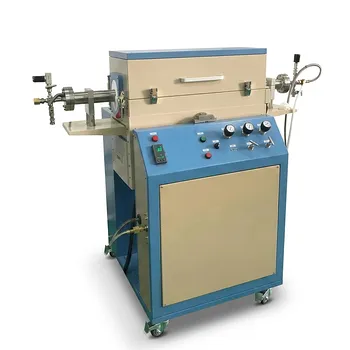
High Temperature Rocking Tube Furnace 1700°C Alumina Processing Tube with Precision Oscillation for Material Synthesis

High Temperature Automated 5 Inch Tube Furnace for Autonomous Material Research and Advanced Laboratory R&D

High Temperature 1700C Six Zone Split Tube Furnace with Alumina Tube and Water Cooled Flanges
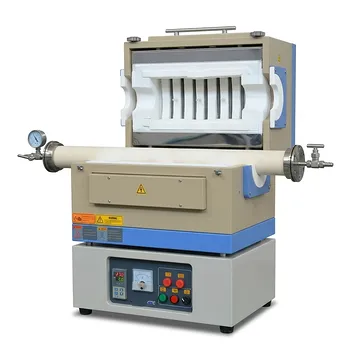
High Temperature 1600C Split Tube Furnace Vacuum Flanges Valves Optional 60mm 80mm Alumina Tube
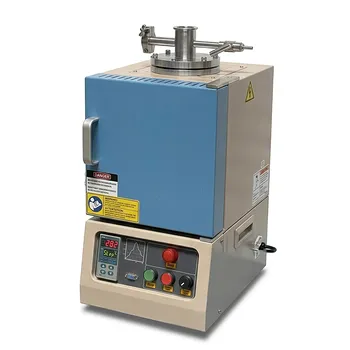
High Temperature Hybrid Muffle and Tube Furnace with Vacuum Capability and PID Control

1700C Hydrogen Gas Tube Furnace with 60mm Alumina Process Tube and Integrated Hydrogen Safety Detector

1100C Tube Furnace with Vacuum Flange and Programmable Temperature Controller for Material Science and Industrial Heat Treatment
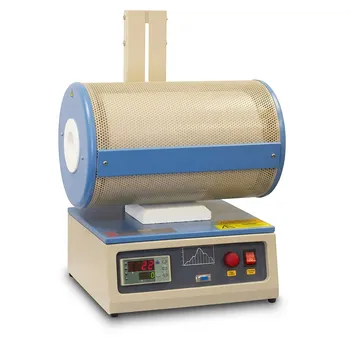
Multi Position Tube Furnace 1100C for Laboratory Material Research and Advanced Industrial Thermal Processing
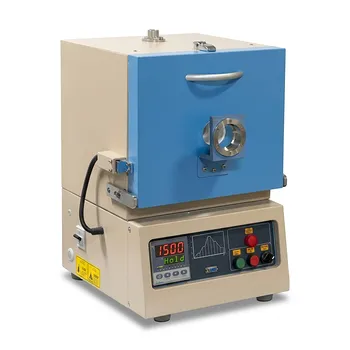
1500C Hybrid Muffle Tube Furnace 1.7L Box with 2 Inch Mullite Tube and Programmable PID Controller
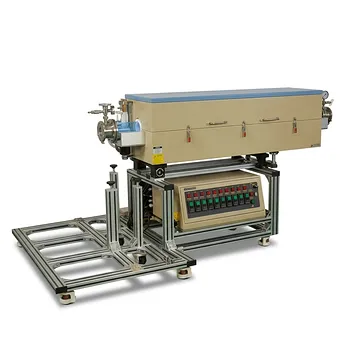
Ten Zone Multi Orientation Laboratory Tube Furnace for 1200C High Temperature Gradient Thermal Processing
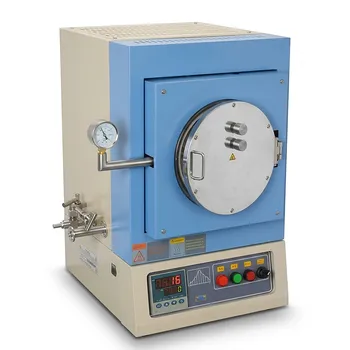
1100°C High Temperature Quartz Chamber Furnace 8 Inch OD with 7.6 Liter Capacity and Vacuum Atmosphere Capability