How does a tube furnace with nitrogen affect MAC@CaO catalysts? Optimize Synthesis for Superior Catalytic Performance
Updated 3 months ago
The use of a tube sintering furnace with a nitrogen atmosphere is the critical factor in establishing the structural integrity and chemical reactivity of MAC@CaO catalysts. This specific environment facilitates the thermal conversion of precursors into active calcium oxide (CaO) crystalline phases at 800°C while simultaneously shielding the magnetic activated carbon (MAC) carrier from oxidative degradation. By excluding oxygen and moisture, the nitrogen flow ensures the catalyst retains its high basic strength and phase purity, which are essential for its catalytic performance.
The tube sintering furnace acts as a controlled reaction chamber that balances high-temperature phase transformation with material preservation. The nitrogen atmosphere is non-negotiable; it prevents the carbon support from burning away and protects the newly formed CaO active sites from atmospheric poisoning.
Phase Transformation and Crystalline Development
Facilitating the Calcination Process
The primary role of the tube furnace is to provide a stable, high-temperature environment—typically 800°C—required for calcination. At this temperature, the calcium precursors undergo a precise thermal decomposition to form the active CaO crystalline phase.
Controlling Grain Size and Dispersion
The furnace's ability to maintain a specific heating curve and uniform temperature distribution is vital for the final morphology. This precise control determines the grain size of the CaO particles and how effectively they are anchored to the activated carbon support.
Enhancing Structural Stability
High-temperature treatment in a tube furnace promotes the formation of strong chemical bonds at the interface between the active material and the carrier. This electronic coupling effect ensures that the CaO remains firmly attached to the MAC, preventing leaching during subsequent reactions.
Preservation of the Carbon Carrier
Preventing Ash Loss
Without a protective atmosphere, the activated carbon carrier would undergo high-temperature oxidation, leading to significant "ash loss." The nitrogen environment excludes oxygen, ensuring the structural framework of the carbon support remains intact even at 800°C.
Maintaining Porosity and Surface Area
By preventing the combustion of the carbon matrix, the nitrogen atmosphere preserves the pore structure of the MAC. This is essential for maintaining a high surface area, which allows reactants to access the CaO active sites more efficiently.
Facilitating Carbonization
The thermal process within the furnace also aids in the further carbonization and graphitization of the support. This enhances the material's overall stability and can improve its electrical and thermal conductivity, depending on the specific precursors used.
Protection of Active Basic Sites
Preventing Reaction with Moisture
Calcium oxide is highly sensitive to the environment and can easily react with moisture to form calcium hydroxide. The continuous nitrogen flow acts as a barrier, ensuring the generated active sites do not hydrate before the catalyst is ready for use.
Eliminating CO2 Interference
CaO naturally reacts with atmospheric carbon dioxide to form calcium carbonate, which significantly reduces the catalyst's basic strength. The tube furnace environment ensures that the basic sites remain "clean" and fully available for catalytic activity.
Ensuring High Basic Strength
By maintaining a strictly inert environment during the cooling phase, the furnace ensures the catalyst reaches room temperature without losing its chemical potency. This preservation of basicity is what allows MAC@CaO to function effectively in demanding chemical processes.
Understanding the Trade-offs
Temperature Sensitivity
While 800°C is necessary for CaO formation, exceeding the optimal temperature can lead to the sintering of particles. This reduces the active surface area and can negatively impact the catalyst's efficiency.
Gas Purity and Flow Rate
The effectiveness of the nitrogen atmosphere depends heavily on the purity of the gas and the consistency of the flow rate. Any trace oxygen or moisture in the nitrogen line can lead to partial oxidation of the carrier or poisoning of the active sites.
Equipment Limitations
Tube furnaces are excellent for precision but often have limited throughput compared to rotary kilns. Achieving the same level of atmospheric control in a large-scale production environment presents significant engineering challenges.
How to Apply This to Your Project
Recommendations for Optimal Synthesis
- If your primary focus is maximizing basicity: Ensure the nitrogen flow remains active throughout the entire cooling cycle until the furnace reaches room temperature to prevent CO2 absorption.
- If your primary focus is carrier integrity: Monitor the oxygen sensors in your exhaust line to verify that the nitrogen atmosphere is successfully preventing carbon oxidation.
- If your primary focus is catalytic activity: Use a precise heating ramp-up (e.g., 5-10°C/min) to control the crystallization rate of the CaO and achieve a uniform distribution on the MAC support.
In summary, the nitrogen-protected tube furnace environment is the fundamental safeguard that allows MAC@CaO catalysts to reach their theoretical potential by balancing aggressive thermal transformation with rigorous material protection.
Summary Table:
| Feature | Influence on MAC@CaO Catalyst | Final Product Benefit |
|---|---|---|
| Nitrogen Atmosphere | Prevents carbon carrier oxidation | High surface area & porosity |
| 800°C Temperature | Facilitates CaO phase transformation | Active crystalline sites |
| Inert Environment | Blocks moisture & CO2 exposure | Maximum basic strength |
| Uniform Heating | Controls grain size & dispersion | Enhanced structural stability |
Elevate Your Material Research with THERMUNITS
Are you looking to achieve precise control over your catalyst synthesis? THERMUNITS is a leading manufacturer of high-performance laboratory equipment for material science and industrial R&D. We provide specialized thermal processing solutions, including Tube, Atmosphere, Vacuum, Muffle, and Rotary furnaces, as well as CVD/PECVD systems, Dental Furnaces, and Vacuum Induction Melting Furnaces (VIM).
Our equipment is engineered to provide the stable, oxygen-free environments necessary for preparing advanced materials like MAC@CaO catalysts. Ensure phase purity, prevent oxidation, and maximize chemical potency in every batch.
Ready to optimize your heat treatment? Contact our experts today!
References
- Sara Almasi, J. Aubin. Calcium oxide anchored on magnetic waste-based activated carbon (MAC@CaO): A sustainable green heterogeneous catalyst for bio-based fuel and lubricant production. DOI: 10.1016/j.biombioe.2024.107071
Mentioned Products
- Compact Hybrid Muffle and Tube Furnace for 1000C Controlled Atmosphere Laboratory Material Sintering
- High Temperature Dual Zone Split Tube Furnace for Advanced Atmosphere Sintering and Vacuum CVD Applications
- Three Temperature Zone Rotating Tube Furnace for Material Sintering and Controlled Atmospheric Heat Treatment
- High Temperature Tilting Rotary Tubular Furnace for Continuous Powder Thermal Processing and Controlled Atmosphere Sintering
- 1700C Compact Hybrid Furnace with Dual Layer Box Sintering and Controlled Atmosphere Alumina Tubes
People Also Ask
- Why is an atmosphere-controlled tube furnace required for the pre-sulfidation of NiMo/gamma-Al2O3 catalysts?
- Why is an atmosphere-controlled tube furnace required for 800 °C CNF annealing? Essential for Oxidative Protection.
- Why is an atmosphere-controlled tube furnace required for [email protected]/C preparation? Key for Purity & Structure
- Why is an atmosphere-controlled tube furnace required for single-atom sensor calcination? Ensure Atomic Dispersion.
- What is the function of a controlled atmosphere tube furnace in LiGa alloying? Achieving High-Purity Thermal Synthesis

Tech Team · ThermUnits
Last updated on Jun 02, 2026
Related Products
Compact Hybrid Muffle and Tube Furnace for 1000C Controlled Atmosphere Laboratory Material Sintering
High Temperature Dual Zone Split Tube Furnace for Advanced Atmosphere Sintering and Vacuum CVD Applications
Three Temperature Zone Rotating Tube Furnace for Material Sintering and Controlled Atmospheric Heat Treatment
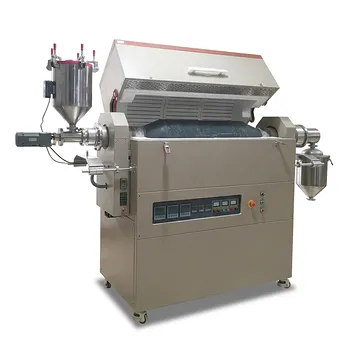
High Temperature Tilting Rotary Tubular Furnace for Continuous Powder Thermal Processing and Controlled Atmosphere Sintering
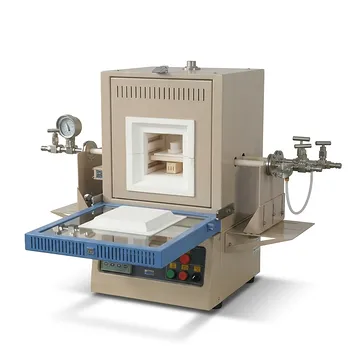
1700C Compact Hybrid Furnace with Dual Layer Box Sintering and Controlled Atmosphere Alumina Tubes
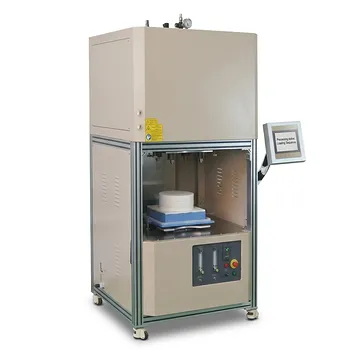
High Temperature Vertical Atmosphere Controlled Furnace with Automatic Bottom Loading and 1700°C Capacity for Advanced Material Research

Compact Vertical Split Quartz Tube Furnace with Stainless Steel Vacuum Flanges for Rapid Thermal Quenching and Controlled Atmosphere Material Processing
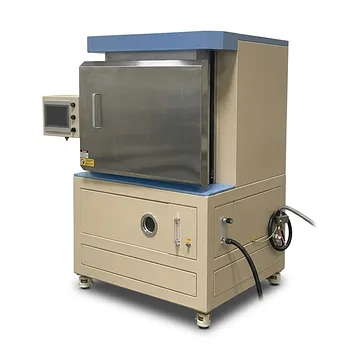
1650C High Temperature Atmosphere Controlled Box Furnace with 65L Chamber for Advanced Material Sintering and Industrial Heat Treatment
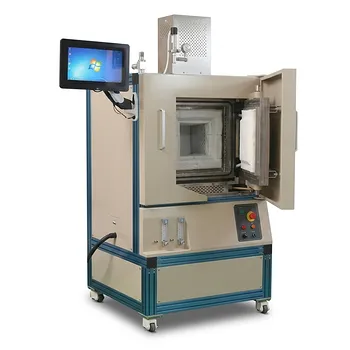
High Temperature Oxygen and Inert Atmosphere Controlled Furnace 8 Liter 1700C Sintering System for Advanced Materials RD

High Temperature 1700C Vertical Tube Furnace for Powder Spherification and Material Sintering

Vertical 1700C Vacuum and Atmosphere Tube Furnace with 80mm Alumina Tube

1750°C High Temperature Benchtop Vacuum Atmosphere Tube Furnace with Kanthal Super 1800 Heating Elements and 60mm Alumina Processing Tube
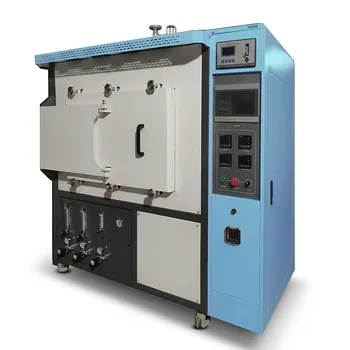
Roller Table Atmosphere Furnace 1500C High Temperature Battery Material Sintering System 112L Capacity

Compact High Temperature 1600C Tube Furnace with 50mm Alumina Tube and Vacuum Flanges for Material Sintering
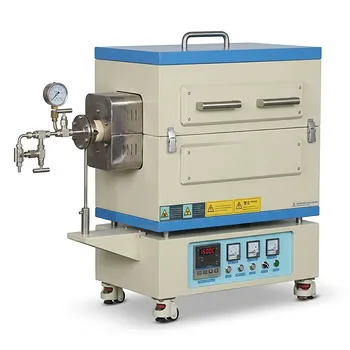
High Temperature Split Tube Furnace 1500C for Material Research Vacuum and Atmosphere Thermal Processing
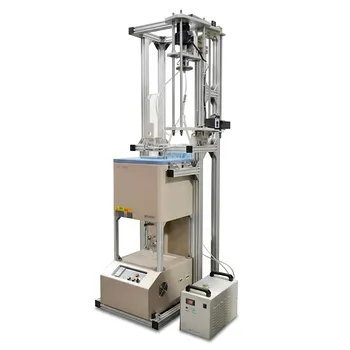
500C Vacuum Vertical Tube Furnace 84mm OD Sample Rotation Lifting System
High Temperature Rotary Tilt Tubular Furnaces for Advanced Powder Sintering and Material Processing
High Temperature Hydrogen Atmosphere Box Furnace 1650C Max Reducing Environment Material Synthesis System 8x8x8 Chamber

1200°C 5 Inch Vertical Quartz Tube Furnace with Stainless Steel Vacuum Flanges