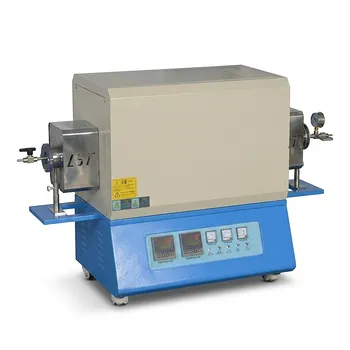
In what ways does vacuum hot pressing contribute to process efficiency? Optimize manufacturing and reduce material waste.
Updated 5 months ago
Vacuum hot pressing serves as a cornerstone of advanced powder metallurgy by simultaneously applying heat and hydraulic pressure to consolidate materials. This dual-action approach allows for lower processing temperatures and shorter cycle times, significantly reducing energy consumption while achieving theoretical density. By forming parts that closely match their final dimensions, it eliminates the expensive and wasteful machining typically required for high-performance carbides and brittle alloys.
Core Takeaway: Vacuum hot pressing optimizes production by consolidating sintering and densification into a single step, preserving material integrity through a vacuum atmosphere while drastically reducing the need for downstream finishing.
Maximizing Process Efficiency Through Consolidation
Thermal and Energy Optimization
Vacuum hot pressing (VHP) requires lower sintering temperatures and shorter timeframes compared to conventional methods. This reduction in thermal demand not only minimizes energy consumption but also extends the lifecycle of specialized furnace equipment by reducing wear and tear.
Streamlining the Production Flow
Unlike traditional "press-and-sinter" routes, VHP integrates consolidation and densification into a single-step process. This eliminates the need for secondary re-pressing operations or the use of binders that must later be removed, simplifying the overall manufacturing pipeline.
Preserving Material Chemistry
The vacuum environment acts as a protective shield, preventing decarburization and oxidation during the heating cycle. By maintaining the chemical purity and surface integrity of the alloy, manufacturers avoid the "rework" often required when materials react with atmospheric gases.
Engineering Near-Net-Shape Precision
Reducing Downstream Machining
The ability to produce near-net-shape parts directly from powders is a massive advantage for brittle or extremely hard materials. By minimizing the volume of excess material, VHP significantly reduces the reliance on diamond machining, which is both time-consuming and expensive.
Material Conservation and Cost Control
Because components are formed close to their final geometry, material waste is kept to an absolute minimum. This is particularly critical for high-performance components made from costly raw materials, directly lowering the total cost of production.
Enhancing Structural Integrity
VHP produces a homogeneous microstructure with significantly reduced porosity. This structural uniformity translates into superior mechanical properties, such as higher transverse rupture strength and enhanced fatigue resistance, compared to parts produced via standard routes.
Understanding the Trade-offs
Equipment and Batch Limitations
While VHP is efficient in terms of material usage, it is typically a batch process rather than a continuous one. This can lead to higher initial capital expenditures and lower throughput speeds for high-volume, low-margin parts.
Geometry Constraints
The process uses rigid dies to apply pressure, which can limit the complexity of the shapes produced. While "near-net" in terms of volume, highly intricate internal geometries may still require specialized tooling or minor supplemental machining.
Making the Right Choice for Your Goal
To determine if vacuum hot pressing is the optimal route for your project, consider your primary performance and budget drivers:
- If your primary focus is material performance: VHP is the superior choice for achieving maximum density and refined microstructures in tools and high-stress components.
- If your primary focus is cost reduction for hard materials: Utilize VHP to skip the extensive diamond grinding phases required by traditional sintering methods.
- If your primary focus is chemical purity: Choose the vacuum environment of VHP to prevent oxidation in sensitive alloys where surface integrity is paramount.
By integrating heat and pressure within a controlled environment, vacuum hot pressing transforms the manufacturing of high-performance materials from a multi-stage burden into a streamlined, high-precision process.
Summary Table:
| Feature | Impact on Process Efficiency | Impact on Near-Net-Shape Manufacturing |
|---|---|---|
| Single-Step Consolidation | Reduces cycle times by merging sintering and densification. | Eliminates the need for secondary re-pressing or binder removal. |
| Near-Net-Shape Forming | Minimizes energy consumption per finished part. | Drastically reduces expensive downstream diamond machining. |
| Vacuum Environment | Prevents oxidation, avoiding the need for material rework. | Maintains chemical purity and surface integrity of sensitive alloys. |
| Simultaneous Heat & Pressure | Allows for lower processing temperatures and less equipment wear. | Produces a homogeneous microstructure with near-zero porosity. |
Accelerate Your Material R&D with THERMUNITS Vacuum Hot Press Solutions
As a leading manufacturer of high-temperature laboratory equipment, THERMUNITS provides the precision tools necessary for advanced material science and industrial R&D. Our specialized Hot Press Furnaces, Vacuum Induction Melting (VIM) systems, and CVD/PECVD solutions are designed to help you achieve theoretical density while minimizing material waste through near-net-shape manufacturing.
Why choose THERMUNITS for your thermal processing needs?
- Expert Engineering: Optimized for Muffle, Vacuum, Tube, and Rotary heat treatment.
- Cost Efficiency: Reduce downstream finishing costs with high-precision forming.
- Purity Control: Advanced vacuum technology to preserve material integrity.
Ready to enhance your laboratory's efficiency and achieve superior structural integrity? Contact our technical experts today to find the perfect heat treatment solution for your specific application!
Mentioned Products
- High Temperature Vacuum Lamination Hot Press Furnace Machine for Semiconductor Wafer Bonding and Advanced Composite Thermal Processing
- Industrial Vacuum Hot Press Furnace Machine and High Temperature Heated Vacuum Press for Advanced Material Sintering
- Industrial High Temperature Vacuum Hot Press Furnace and Heated Vacuum Press Machine for Material Science Sintering
- High Pressure 600T Vacuum Induction Hot Press Furnace for Advanced Material Heat Treatment and Sintering
- 2500C High Vacuum Ultrafast Heating Pellet Press with Automated 8 Sample Loading System
People Also Ask
- What types of heating systems and insulation are used in Vacuum Hot Press Furnaces? Optimize Your Thermal Processing
- What is a Vacuum Hot Press Furnace and what are its primary industrial applications? Achieve Maximum Material Density
- What are the structural features of the furnace body and chamber in a Vacuum Hot Press Furnace? Master Material Density
- Why is graphite the preferred material for dies and heating elements in Vacuum Hot Press Furnaces? High-Temp Solutions
- What are the primary operational components and mechanisms of a vacuum hot press furnace? A Technical Breakdown

Tech Team · ThermUnits
Last updated on Apr 14, 2026
Related Products
High Temperature Vacuum Lamination Hot Press Furnace Machine for Semiconductor Wafer Bonding and Advanced Composite Thermal Processing
Industrial Vacuum Hot Press Furnace Machine and High Temperature Heated Vacuum Press for Advanced Material Sintering
Industrial High Temperature Vacuum Hot Press Furnace and Heated Vacuum Press Machine for Material Science Sintering
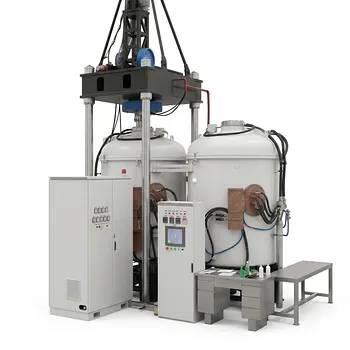
High Pressure 600T Vacuum Induction Hot Press Furnace for Advanced Material Heat Treatment and Sintering
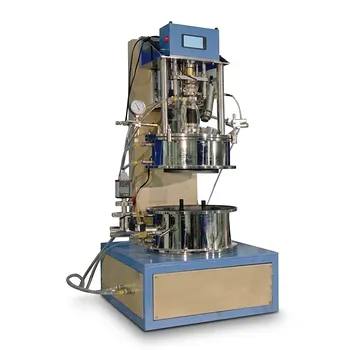
2500C High Vacuum Ultrafast Heating Pellet Press with Automated 8 Sample Loading System
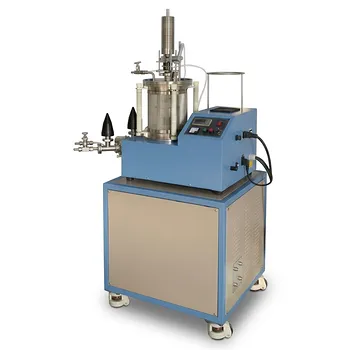
Ultrafast Thermal Pressing Furnace 2900C Max Temperature 200K per Second Heating Rate Vacuum Atmosphere Rapid Processing System
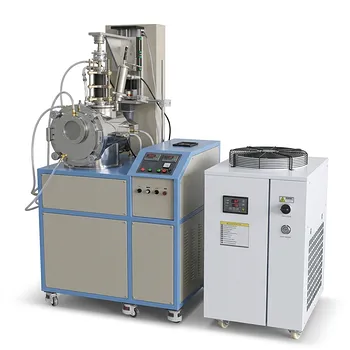
High Temperature Ultrafast Heating Pressing Furnace 2900C Max 100kgf Rapid Thermal Processing System
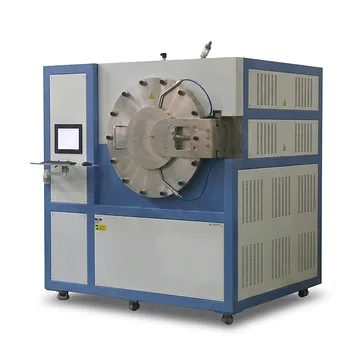
High Vacuum Pressure Chamber Furnace 800C 3.5 Bar Sintering System for Superconducting Materials
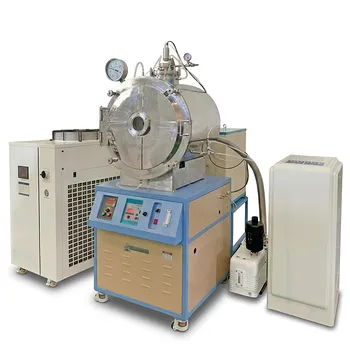
Ultra High Temperature Induction Heated Vacuum Furnace with Molten Salt Electrolysis Capability and 3000 Degree Precision Control
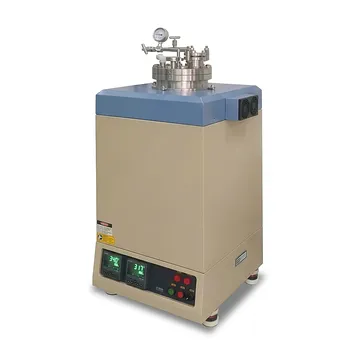
High Temperature 1000C Vacuum Furnace with 8 Inch ID Chamber for Material Sintering and Research Annealing
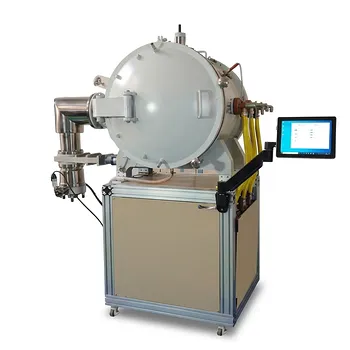
High Temperature Cold Wall Vacuum Furnace for Advanced Material Sintering and Annealing 1600C Heating Area 200x200x300mm

1800C High Temperature Compact Vacuum Tube Furnace with 60mm OD Alumina Tube and Kanthal MoSi2 Heating Elements
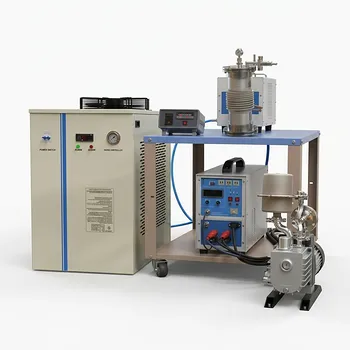
Induction Heating System with Temperature Control for High Temperature Vacuum Sintering and Melting
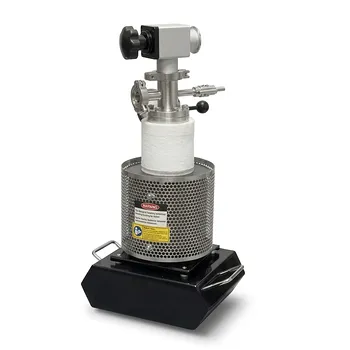
High Temperature 1100C Compact Top Loading Vertical Vacuum Tube Furnace for High Vacuum Noble Metal Melting and Material Research
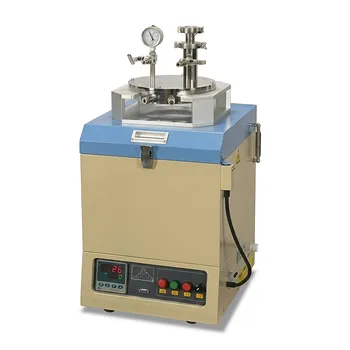
Vertical Vacuum Furnace 1100C High Temperature 8 Inch Quartz Chamber Water Cold Flange System
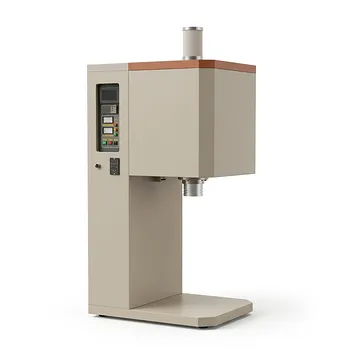
Vertical Openable Tube Furnace 0-1700c High Temperature Laboratory System for CVD and Vacuum Heat Treatment
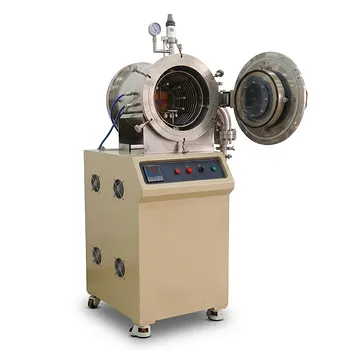
High Temperature Cold Wall High Vacuum Chamber Furnace 1400C for Advanced Material Processing
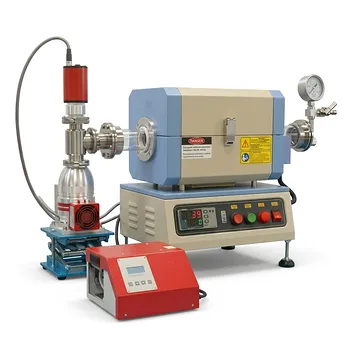
High Vacuum Compact Tube Furnace 1200C with Integrated Turbo Pump System and 8 Inch Heating Zone
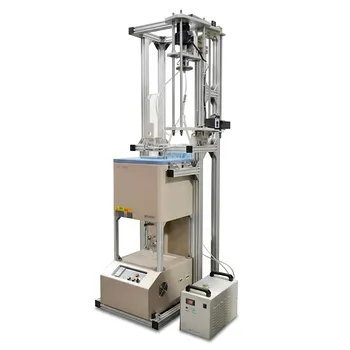
500C Vacuum Vertical Tube Furnace 84mm OD Sample Rotation Lifting System