How is an atmosphere-controlled tube furnace utilized in the selective reduction of laterite nickel ore? Expert Guide
Updated 3 months ago
An atmosphere-controlled tube furnace acts as the primary reactor for regulating the chemical and thermal conditions required to extract nickel from complex laterite ores. It allows researchers to establish specific heating curves and precise gas mixtures—such as natural gas, hydrogen, and nitrogen—to prioritize the reduction of nickel over iron. This creates a strictly controlled environment that optimizes reduction kinetics and ensures the desired metallic phase is achieved while limiting unwanted side reactions.
The core utility of the atmosphere-controlled tube furnace lies in its ability to isolate the thermodynamic and kinetic variables of the reduction process. By manipulating the temperature and the oxygen partial pressure through gas flow, it enables the selective conversion of nickel oxides into metallic form while maintaining iron in a controlled state.
Precision Thermal Management
Establishing Controlled Heating Curves
The furnace allows for the programming of specific heating rates and dwell times, which are essential for the phased transformation of minerals. For instance, maintaining temperatures around 900°C can target specific reduction kinetics that favor nickel without fully reducing the accompanying iron.
Simulating Smelting Environments
High-temperature vertical tube furnaces can reach temperatures exceeding 1550°C to simulate industrial reduction smelting. This high-intensity thermal field is necessary for investigating slag-metal reactions under strictly controlled thermodynamic conditions.
Activation of Chemical Additives
Specific temperature ranges, often between 1050°C and 1250°C, are used to activate additives like sodium sulfate or calcium sulfate. These additives facilitate the separation of nickel and iron from magnesium silicate phases, promoting the growth of ferronickel particles.
Precise Atmospheric Regulation
Control of Reducing Power
The furnace regulates the ratio of reducing gases (like hydrogen or natural gas) to inert gases (like nitrogen or argon). This ratio determines the "reducing power" of the atmosphere, which is the key to achieving selective reduction—reducing the nickel while preventing the excessive reduction of iron.
Gas-Solid and Slag-Metal Interactions
A sealed tube structure allows for the introduction of process gases from either the top or bottom of the furnace. This ensures that the gas makes consistent contact with the ore samples, maintaining a uniform redox environment throughout the experiment.
Managing Humidity and Gas Purity
Advanced setups can regulate specific humidity levels or use high-purity H2/N2 mixtures to induce specific surface reactions. This level of control is vital for experiments involving the reductive exsolution of metallic nanoparticles from a mineral lattice.
Structural and Phase Transformations
Promoting Nickel Exsolution
The controlled environment provides the driving force for nickel cations to migrate from within a mineral lattice to the surface. This process, often conducted between 600°C and 1000°C, results in the formation of metallic nanoparticles that are strongly anchored to the substrate.
Controlling Particle Growth and Morphology
By adjusting the annealing temperature and the duration of the heat treatment, researchers can fine-tune the size of the resulting nickel particles. This is critical for optimizing the active sites in the final product, whether for metallurgical recovery or catalytic applications.
Inducing Volume Contraction
The reduction of nickel oxide into a metallic state leads to volume contraction within the material. The furnace's atmosphere control ensures this happens uniformly, which can be used to introduce specific microporous structures into the reduced ore or catalyst precursors.
Understanding the Trade-offs
Thermal and Chemical Constraints
While tube furnaces offer high precision, they are often limited by the physical properties of the tube material (e.g., quartz or alumina). Quartz tubes are affordable but have lower temperature limits, while alumina can handle higher heat but is more susceptible to thermal shock.
Seal Integrity and Gas Safety
Maintaining a strictly oxygen-free environment requires perfect seals, which can degrade over time at high temperatures. Additionally, using high concentrations of reducing gases like hydrogen introduces significant safety risks that require specialized monitoring and venting systems.
Sample Size Limitations
The narrow diameter of a standard tube furnace limits the volume of laterite ore that can be processed in a single batch. This makes it an excellent tool for fundamental research and kinetic studies, but it may not perfectly represent the mass-transfer dynamics found in large-scale industrial kilns.
How to Apply This to Your Project
Making the Right Choice for Your Goal
- If your primary focus is nickel-iron separation: Utilize a furnace capable of reaching at least 1250°C to ensure the activation of sulfur-based additives and the aggregation of ferronickel particles.
- If your primary focus is selective reduction kinetics: Prioritize a setup with high-precision mass flow controllers to maintain exact ratios of CO/CO2 or H2/N2 for fine-tuning the redox potential.
- If your primary focus is simulating industrial smelting: Select a vertical tube furnace configuration that allows for the observation of slag-metal phase separation and easy crucible recovery.
- If your primary focus is nanoparticle formation: Use a furnace with a programmable logic controller (PLC) to manage very slow heating rates and long-duration isothermal holding.
By mastering the interplay between temperature and gas composition within the tube furnace, you can precisely dictate the chemical pathway of laterite nickel ore reduction.
Summary Table:
| Application Element | Role in Selective Reduction | Experimental Benefit |
|---|---|---|
| Thermal Precision | Programmable curves (900°C - 1550°C) | Targets specific kinetics and simulates industrial smelting |
| Gas Regulation | Precise H2/CO/N2 atmospheric ratios | Controls reducing power to favor nickel over iron |
| Phase Control | Promotion of metallic exsolution | Enables the growth of anchored nickel nanoparticles |
| Structural Tuning | Managed annealing and cooling | Induces volume contraction and specific morphology |
Elevate Your Mineral R&D with THERMUNITS High-Precision Furnaces
Achieving perfect selective reduction in laterite nickel ore requires uncompromising control over thermal and chemical variables. THERMUNITS is a leading manufacturer of high-temperature laboratory equipment, providing the precision and reliability needed for advanced material science and industrial R&D.
Whether you are optimizing reduction kinetics or simulating industrial smelting, our comprehensive range of thermal solutions is designed to meet your most demanding specifications. Our product lineup includes:
- Atmosphere and Vacuum Tube Furnaces for precise gas-solid reactions.
- Muffle, Vacuum, and Atmosphere Furnaces for versatile heat treatment.
- Rotary Kilns and Hot Press Furnaces for industrial process simulation.
- CVD/PECVD Systems for advanced coating and material synthesis.
- Vacuum Induction Melting (VIM) and Speciality Dental Furnaces.
Ready to optimize your heat treatment workflow? Contact our technical experts today to find the perfect furnace for your application.
References
- Zhien He, Yonggang Wei. Reductive behavior of nickel and iron metallization in magnesian siliceous nickel laterite ores under the action of sulfur-bearing natural gas. DOI: 10.1515/htmp-2022-0309
Mentioned Products
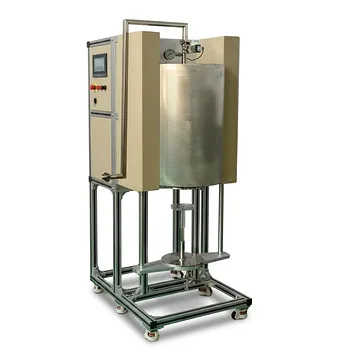
- 1200°C Atmosphere Controlled Automatic Bottom Loading Furnace with 6 Inch Quartz Tube
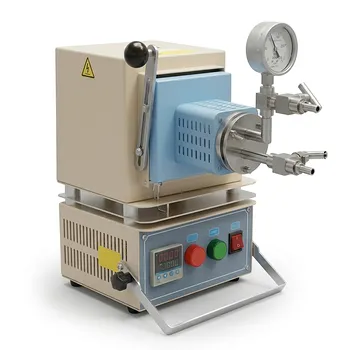
- Compact Hybrid Muffle and Tube Furnace for 1000C Controlled Atmosphere Laboratory Material Sintering
- Compact Vertical Split Quartz Tube Furnace with Stainless Steel Vacuum Flanges for Rapid Thermal Quenching and Controlled Atmosphere Material Processing
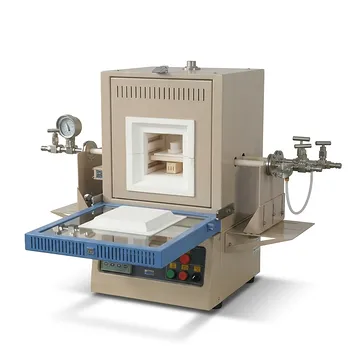
- 1700C Compact Hybrid Furnace with Dual Layer Box Sintering and Controlled Atmosphere Alumina Tubes
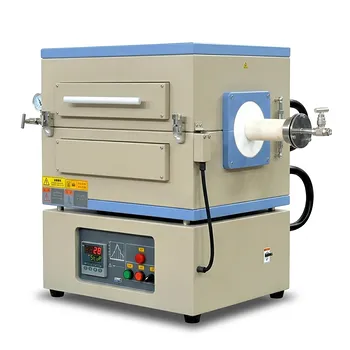
- 1500°C Split Tube Furnace with Alumina Tube and Vacuum Sealing Flanges for Material Research
People Also Ask
- Why is a tube furnace required for FGM-PhG structural color ceramics? Key to Carbon Preservation & Vibrant Color
- Why is an atmosphere-controlled tube furnace required for the pre-sulfidation of NiMo/gamma-Al2O3 catalysts?
- Why is an atmosphere-controlled tube furnace required for 800 °C CNF annealing? Essential for Oxidative Protection.
- Why is an atmosphere-controlled tube furnace required for [email protected]/C preparation? Key for Purity & Structure
- Why is an atmosphere-controlled tube furnace required for single-atom sensor calcination? Ensure Atomic Dispersion.

Tech Team · ThermUnits
Last updated on Jun 03, 2026
Related Products
1200°C Atmosphere Controlled Automatic Bottom Loading Furnace with 6 Inch Quartz Tube
Compact Hybrid Muffle and Tube Furnace for 1000C Controlled Atmosphere Laboratory Material Sintering

Compact Vertical Split Quartz Tube Furnace with Stainless Steel Vacuum Flanges for Rapid Thermal Quenching and Controlled Atmosphere Material Processing
1700C Compact Hybrid Furnace with Dual Layer Box Sintering and Controlled Atmosphere Alumina Tubes
1500°C Split Tube Furnace with Alumina Tube and Vacuum Sealing Flanges for Material Research

1700C High Temperature Alumina Tube Furnace with 18 Inch Heated Zone and Vacuum Sealing Flanges
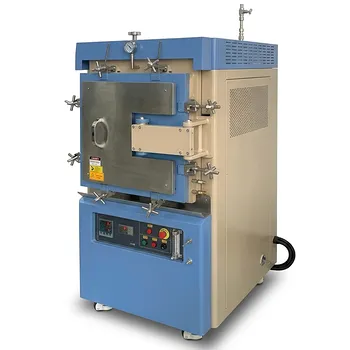
Atmosphere Controlled Muffle Furnace 1700C Maximum Temperature 80L High Capacity Vacuum Inert Gas Box Furnace

Vertical 1700C Vacuum and Atmosphere Tube Furnace with 80mm Alumina Tube
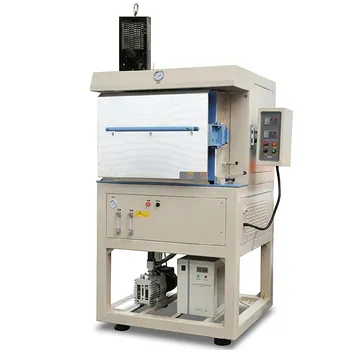
1200C Hydrogen Atmosphere Box Furnace with 5 Heated Sides and 64L Chamber

Three Zone Tube Furnace with 11 Inch or 15 Inch Quartz Tube and Hinged Flanges for Vacuum Atmosphere Heat Treatment
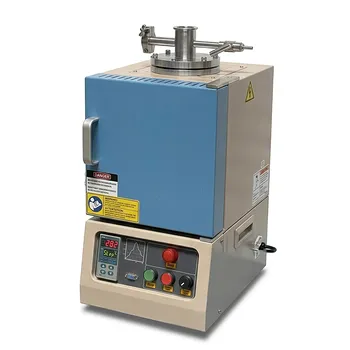
High Temperature Hybrid Muffle and Tube Furnace with Vacuum Capability and PID Control
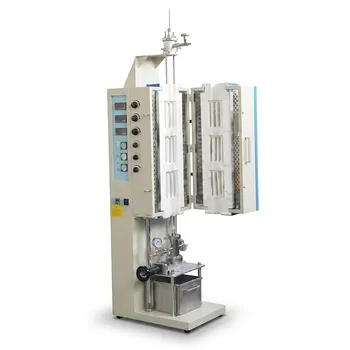
High Temperature Dual Zone Tube Furnace for Material Science Research and Professional Thermal Processing
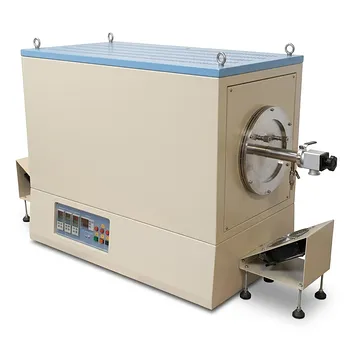
Four Zone Tube Furnace 1100C with 600mm Large Diameter Quartz Tube and Vacuum Flanges

High Temperature 1700C Tube Furnace with High Vacuum Turbomolecular Pump System and Multi Channel Mass Flow Controller Gas Mixer

1200°C 5 Inch Vertical Quartz Tube Furnace with Stainless Steel Vacuum Flanges
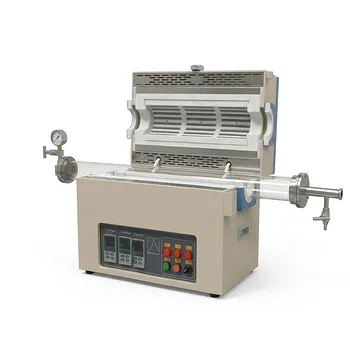
1200°C Three Zone Split Tube Furnace with 18 Inch Heating Length and Vacuum Flanges
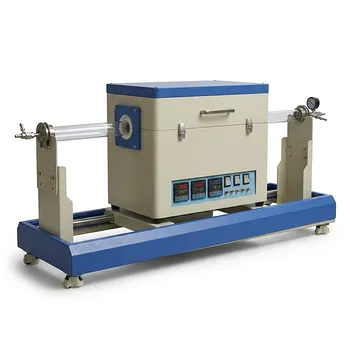
Double Temperature Zone Double Cover Tube Furnace for High Temperature CVD and Vacuum Annealing

High Temperature Automated 5 Inch Tube Furnace for Autonomous Material Research and Advanced Laboratory R&D
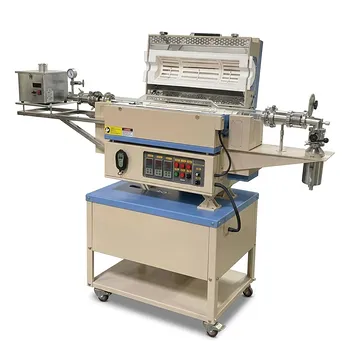
5 Inch Rotary Tube Furnace with Automatic Feeding and Receiving System 1200C Three Zone CVD Powder Processing
