What are the advantages of a vacuum oven for drying catalysts? Preserve Purity and Micro-morphology
Updated 3 months ago
Vacuum ovens are the gold standard for drying sensitive $g-C_3N_4/ZnIn_2S_4$ composites. By operating at low temperatures (typically around 70°C) under reduced pressure, these ovens facilitate the thorough removal of water and ethanol without triggering chemical or physical degradation. This specialized environment is critical for maintaining the material’s active state and preserving the delicate micro-morphology required for high-performance photocatalysis.
The central advantage of a vacuum oven lies in its ability to decouple solvent evaporation from high thermal stress. By lowering the boiling point of solvents and eliminating atmospheric oxygen, it preserves the structural integrity and chemical purity of the catalyst.
Preserving Structural and Chemical Integrity
Maintaining Complex Micro-Morphology
The $g-C_3N_4/ZnIn_2S_4$ composite often features delicate structures, such as wrinkled microspheres, that are essential for its surface area and catalytic activity. A vacuum oven provides a gentle drying environment that prevents these nanostructures from collapsing or agglomerating, which can happen during rapid, high-heat drying in standard ovens.
Prevention of Thermal Oxidation
Catalysts containing sulfides like $ZnIn_2S_4$ can be sensitive to oxygen at elevated temperatures. The oxygen-deficient environment of a vacuum oven prevents the metallic components and surface functional groups from oxidizing, ensuring the final product maintains its intended chemical composition and conductivity.
Ensuring a Dehydrated, Active State
For subsequent characterization and testing, the catalyst must be in a completely dehydrated state. Vacuum drying ensures that even trace moisture trapped within the pores of the composite is removed, leaving the active sites of the catalyst fully exposed and ready for reaction.
Enhancing Synthesis Efficiency and Purity
Lowering Solvent Boiling Points
By creating a negative pressure environment, the oven significantly reduces the boiling point of residual solvents like water and ethanol. This allows for rapid dehydration at temperatures as low as 60°C to 70°C, protecting the heat-sensitive organic framework of the graphitic carbon nitride ($g-C_3N_4$).
Avoiding Component Segregation
Standard drying ovens can suffer from local overheating, which leads to the uneven distribution of components or segregation within the composite. The uniform thermal environment of a vacuum oven ensures that the resulting solid powder possesses a uniform chemical composition and high phase purity.
Eliminating Residual Solvents in Pores
Nanomaterials often have complex pore structures that stubbornly retain solvents. The pressure gradient in a vacuum oven pulls these molecules out of the internal pores, ensuring a deeper level of dryness than atmospheric drying could achieve in the same timeframe.
Understanding the Trade-offs
Equipment Complexity and Cost
Vacuum ovens require specialized pumps and seals to maintain a low-pressure environment, making them more expensive and maintenance-intensive than standard convection ovens. Users must regularly check pump oil and seal integrity to ensure consistent performance.
Longer Processing Cycles
While vacuum drying is more thorough, the lack of air convection can sometimes lead to slower heat transfer to the sample. This may result in longer drying cycles compared to high-temperature forced-air ovens, requiring careful planning for high-throughput laboratory workflows.
Solvent Recovery and Safety
When drying composites containing ethanol, the vacuum pump will exhaust these vapors into the laboratory environment unless a cold trap is used. Failure to manage solvent exhaust can create safety hazards or damage the vacuum pump over time.
How to Apply This to Your Project
Recommendations for Catalyst Drying
- If your primary focus is preserving morphology: Use a vacuum oven set to 70°C to ensure the delicate wrinkled microspheres of the composite do not collapse under thermal stress.
- If your primary focus is preventing oxidation: Ensure the vacuum level is maintained below 10 kPa to create an oxygen-deficient environment that protects the sulfide components.
- If your primary focus is deep dehydration for characterization: Extend the drying time to at least 12 hours under full vacuum to remove all physically adsorbed water from the catalyst pores.
By leveraging the precise control of a vacuum oven, you ensure that your synthesized catalysts are both chemically pure and structurally optimized for peak performance.
Summary Table:
| Key Feature | Advantage for Catalysts | Technical Result |
|---|---|---|
| Low-Pressure Drying | Lowers solvent boiling points | Safe dehydration at 60-70°C without thermal stress |
| Oxygen-Free Environment | Prevents surface oxidation | Maintains chemical purity of sulfide-based components |
| Gentle Evaporation | Preserves micro-morphology | Prevents collapse of wrinkled microspheres/structures |
| Uniform Heating | Avoids component segregation | Ensures high phase purity and uniform chemical composition |
| Deep Pore Removal | Eliminates trapped solvents | Fully exposes active sites for peak catalytic activity |
Elevate Your Material Research with THERMUNITS
Are you struggling to maintain the structural integrity of your sensitive catalyst composites? THERMUNITS is a leading manufacturer of high-temperature laboratory equipment designed specifically for material science and industrial R&D. We understand that precision is non-negotiable in advanced heat treatment.
Our comprehensive range of thermal solutions includes:
- Vacuum & Atmosphere Furnaces for oxygen-sensitive drying and sintering.
- Muffle, Tube, and Rotary Furnaces for versatile material processing.
- CVD/PECVD Systems for advanced thin-film and nanomaterial synthesis.
- Specialized Equipment: Hot Press furnaces, VIM systems, and Dental Furnaces.
Maximize your lab's efficiency and ensure superior material performance. Contact our technical experts today to find the perfect thermal processing solution for your specific application. Let THERMUNITS provide the precision your research deserves!
References
- Hubing Li, Xin Xiao. The Preparation of g-C3N4/ZnIn2S4 Nano-Heterojunctions and Their Enhanced Efficient Photocatalytic Hydrogen Production. DOI: 10.3390/molecules29112571
Mentioned Products
- High Temperature 1000C Vacuum Furnace with 8 Inch ID Chamber for Material Sintering and Research Annealing
- 1800C High Temperature Compact Vacuum Tube Furnace with 60mm OD Alumina Tube and Kanthal MoSi2 Heating Elements
- High Temperature Cold Wall High Vacuum Chamber Furnace 1400C for Advanced Material Processing
- Compact Split Tube Furnace with Integrated Vacuum System and Precision Temperature Calibrator
- Bottom Loading Vacuum Furnace 1200C Rapid Cooling Atmosphere Control Quartz Chamber
People Also Ask
- How does the temperature control precision of a high-temperature sintering furnace affect Na1+xLa1-xZr2O6-δ ceramics?
- How does a high-temperature sintering furnace environment enhance NdFeB magnets? Achieve 98%+ density with precision.
- What role does a high-temperature annealing furnace play in forming ordered Pt3(CoNi) intermetallic catalysts?
- What is the function of high-vacuum furnaces in (Mo2/3V1/3)n+1AlCn MAX phase synthesis? Ensure Purity & Diffusion.
- How does a vacuum or atmosphere sintering furnace contribute to the congener-welding process of carbon nitride membranes?

Tech Team · ThermUnits
Last updated on Jun 02, 2026
Related Products
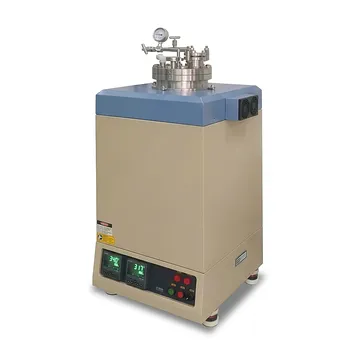
High Temperature 1000C Vacuum Furnace with 8 Inch ID Chamber for Material Sintering and Research Annealing

1800C High Temperature Compact Vacuum Tube Furnace with 60mm OD Alumina Tube and Kanthal MoSi2 Heating Elements
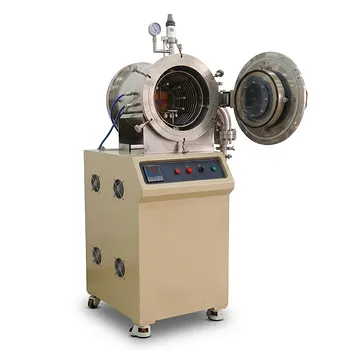
High Temperature Cold Wall High Vacuum Chamber Furnace 1400C for Advanced Material Processing
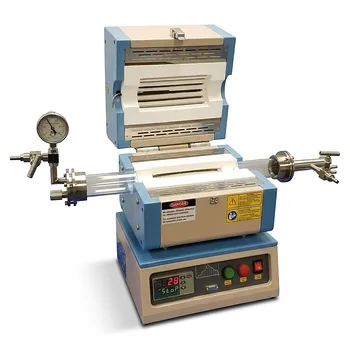
Compact Split Tube Furnace with Integrated Vacuum System and Precision Temperature Calibrator
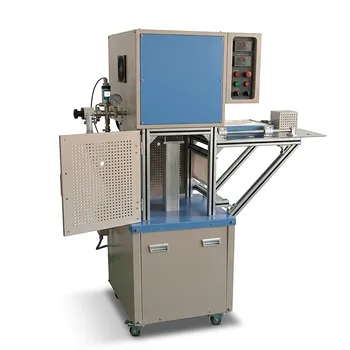
Bottom Loading Vacuum Furnace 1200C Rapid Cooling Atmosphere Control Quartz Chamber
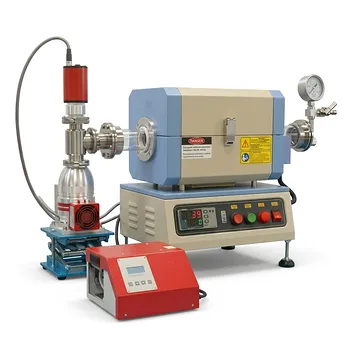
High Vacuum Compact Tube Furnace 1200C with Integrated Turbo Pump System and 8 Inch Heating Zone
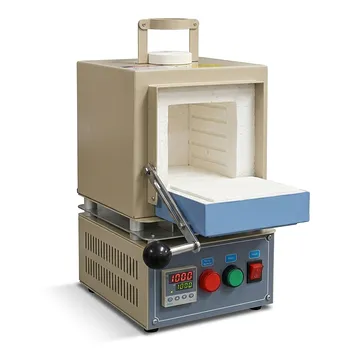
Compact 1000C Muffle Furnace with Programmable Controller and 2 Inch Top Port for Vacuum and Atmosphere Material Research
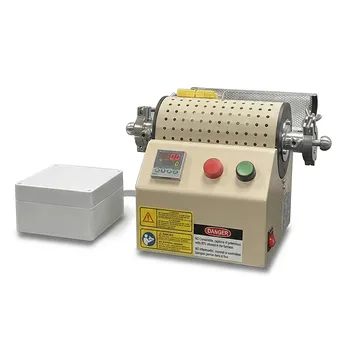
1000C Mini Tube Furnace with 20mm Quartz Tube and Vacuum Flanges for Material Science Research and Controlled Atmosphere Small Sample Processing
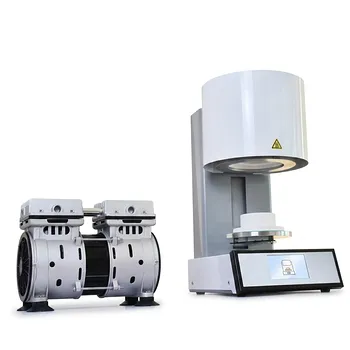
Vacuum Dental Porcelain Sintering Furnace for High Precision Ceramic Restorations
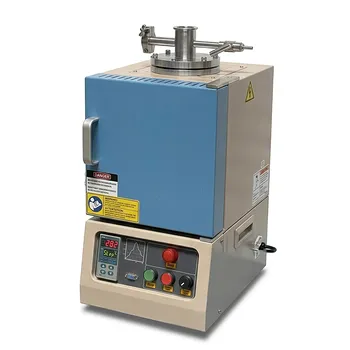
High Temperature Hybrid Muffle and Tube Furnace with Vacuum Capability and PID Control

Vertical 1700C Vacuum and Atmosphere Tube Furnace with 80mm Alumina Tube
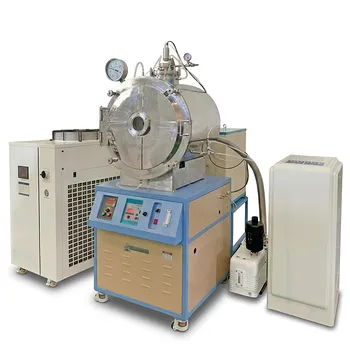
Ultra High Temperature Induction Heated Vacuum Furnace with Molten Salt Electrolysis Capability and 3000 Degree Precision Control
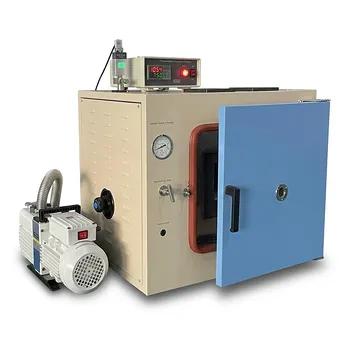
Compact High Vacuum Box Furnace 1050C Max 6.2L Ceramic Chamber Stainless Steel Shell Programmable Temperature Controller for Material Science Research
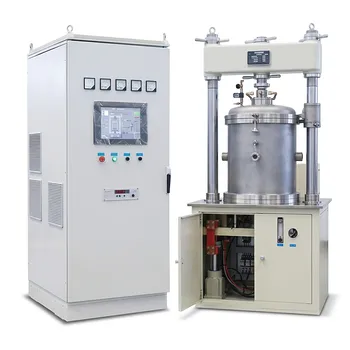
Industrial Vacuum Hot Press Furnace Machine and High Temperature Heated Vacuum Press for Advanced Material Sintering
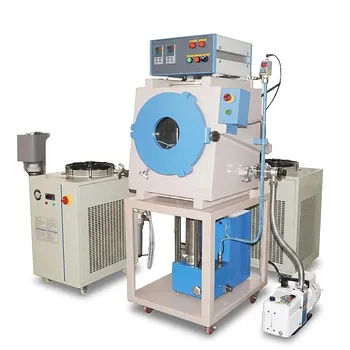
High Temperature Vacuum Lamination Hot Press Furnace Machine for Semiconductor Wafer Bonding and Advanced Composite Thermal Processing
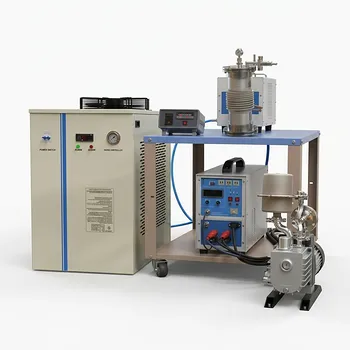
Induction Heating System with Temperature Control for High Temperature Vacuum Sintering and Melting
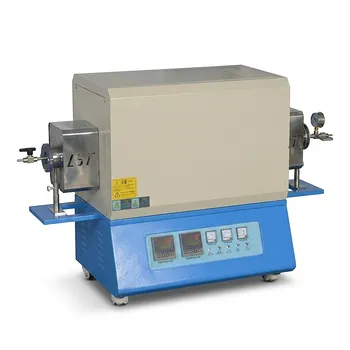
High Temperature Dual Zone Vacuum Tube Furnace for Material Research and CVD Processing
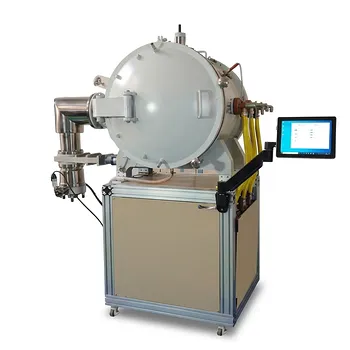
High Temperature Cold Wall Vacuum Furnace for Advanced Material Sintering and Annealing 1600C Heating Area 200x200x300mm
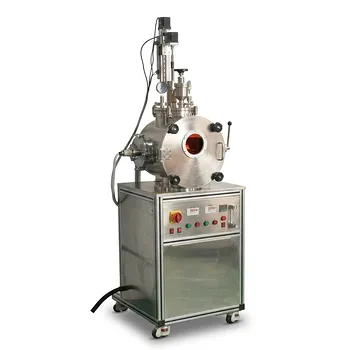
High Vacuum Melting Casting Furnace with Mechanical Stirring and Secondary Charge for Metallic Alloy Research