What are the advantages of using a high-temperature tube furnace at 750°C for the final annealing of Li3V2(PO4)3? Pure Phase
Updated 3 months ago
A high-temperature tube furnace at 750°C is the critical instrument for achieving the high-purity monoclinic phase of $Li_3V_2(PO_4)_3$. This specific thermal environment provides the energy required for complete lattice formation while maintaining a strictly controlled inert atmosphere that prevents vanadium oxidation and minimizes detrimental particle sintering.
Using a tube furnace at 750°C ensures that $Li_3V_2(PO_4)_3$ transitions into a single-phase monoclinic structure with high crystallinity. This precise combination of temperature and atmospheric sealing is what determines the material's final lithium-ion diffusion efficiency and electrochemical stability.
Structural Optimization and Phase Purity
Complete Conversion to the Monoclinic Phase
The primary advantage of 750°C annealing is the full conversion of precursors into a single-phase monoclinic structure. This specific crystalline arrangement is essential for high-performance $Li_3V_2(PO_4)_3$ cathodes, as it provides the most stable framework for lithium-ion insertion and extraction.
Enhancement of Crystallinity
Precise temperature control at 750°C facilitates the elimination of internal residual stresses and defects within the crystal lattice. This results in higher crystallinity, which directly correlates to more robust structural integrity during long-term battery cycling.
Stable Thermal Field Distribution
A high-quality tube furnace provides a uniform thermal field, ensuring that the entire batch of material undergoes a smooth transition from precursor to phosphate. This uniformity prevents localized "cold spots" that could lead to incomplete reactions or "hot spots" that cause phase degradation.
Atmospheric Protection and Chemistry Control
Prevention of Vanadium Oxidation
The sealing performance of a tube furnace allows for a strictly controlled inert atmosphere, typically using high-purity argon. This is vital to keep vanadium ions in their required oxidation state (V3+) and prevent them from reacting with ambient oxygen to form undesirable impurity phases.
In-Situ Carbonization and Coating
The furnace environment supports the carbonization of organic components, which can form a uniform conductive carbon coating on the particle surfaces. This coating is essential for enhancing the electronic conductivity of the phosphate material, which is inherently low.
Removal of Volatile Byproducts
During the heating process, the continuous flow of inert gas helps in the effective removal of carbon-containing components and other gaseous byproducts. This "sweeping" action ensures that the final product remains chemically pure and free of residual organic contaminants.
Morphological and Performance Advantages
Prevention of Excessive Sintering
While 750°C provides sufficient energy for reaction, the precise control of the tube furnace helps prevent excessive particle sintering. Excessive sintering leads to large, fused particles that increase the path length for lithium ions, thereby reducing the rate capability of the battery.
Optimization of Diffusion Coefficients
The combination of high phase purity and controlled particle size results in high lithium-ion diffusion coefficients. This means the material can charge and discharge more rapidly without significant energy loss.
Superior Electrochemical Stability
By ensuring a clean, single-phase reaction, the tube furnace produces a cathode material with excellent electrochemical stability. This translates to a battery that maintains its capacity over hundreds or thousands of cycles without significant structural decay.
Understanding the Trade-offs
Temperature Sensitivity
The window for optimal annealing is narrow; if the temperature significantly exceeds 750°C, the risk of grain growth and aggressive sintering increases, which ruins the surface-to-volume ratio. Conversely, if the temperature stays too low, the solid-state reaction may remain incomplete, leaving behind unreacted precursors.
Atmospheric Integrity
The quality of the final material is entirely dependent on the integrity of the tube seals. Even a minor oxygen leak can lead to the formation of vanadium pentoxide ($V_2O_5$) or other impurities that severely compromise the electrochemical performance and safety of the cathode.
How to Apply This to Your Project
Recommendations for Material Synthesis
- If your primary focus is Maximum Rate Capability: Ensure the argon flow rate is optimized to assist in forming a thin, uniform carbon coating while keeping the dwell time at 750°C as short as possible to limit grain growth.
- If your primary focus is Phase Purity: Prioritize the use of a dual-zone tube furnace to ensure the most stable thermal distribution and use high-purity (99.999%) argon to eliminate any risk of vanadium oxidation.
- If your primary focus is Long Cycle Life: Focus on the cooling rate post-annealing to prevent the formation of micro-cracks within the monoclinic lattice as the material returns to room temperature.
The successful synthesis of $Li_3V_2(PO_4)_3$ relies on the synergy between precise thermal energy and an oxygen-free environment to unlock the material's full electrochemical potential.
Summary Table:
| Benefit | Mechanism | Impact on Performance |
|---|---|---|
| Phase Purity | 750°C Monoclinic Transition | High Li-ion diffusion efficiency |
| Oxidation Control | Sealed Inert Atmosphere | Prevents V oxidation; maintains V3+ |
| Conductive Coating | In-Situ Carbonization | Enhanced electronic conductivity |
| Morphology Control | Controlled Sintering | Optimized particle size & cycle life |
Elevate Your Advanced Material Synthesis with THERMUNITS
As a leading manufacturer of high-temperature laboratory equipment for material science and industrial R&D, THERMUNITS provides the precision thermal solutions required for success. We offer a comprehensive range of thermal processing equipment, including Tube, Muffle, Vacuum, Atmosphere, Rotary, and Hot Press furnaces, CVD/PECVD systems, Dental Furnaces, and Vacuum Induction Melting (VIM) furnaces.
Whether you are focusing on lithium-ion battery research or complex metallurgical processes, our systems deliver the atmospheric integrity and temperature uniformity essential for superior crystallinity and electrochemical stability.
Contact our technical experts today to discuss your project requirements!
References
- Т. П. Гаврилова, S. M. Khantimerov. Li3V2(PO4)3 Cathode Material: Synthesis Method, High Lithium Diffusion Coefficient and Magnetic Inhomogeneity. DOI: 10.3390/ijms25052884
Mentioned Products
- 1200C High Temperature 5 Inch Sliding Tube Furnace for Rapid Thermal Processing RTP and Wafer Annealing
- High Temperature 1700C 4 Channel Tube Furnace 1 Inch Alumina Tube for Hi-Throughput Annealing
- High Temperature Three Temperature Zone Tube Furnace for Advanced Material Science Sintering and Chemical Vapor Deposition Applications
- 900 ºC Max Sliding RTP Tube Furnace with Rapid IR Heating and 4 Inch OD Quartz Tube
- High Temperature 1800C Atmosphere Tube Furnace for CVD Research and Vacuum Sintering Precision Heat Treatment
People Also Ask
- What role does a SiC-coated graphite susceptor play in H2Se selenization? Boost RTP Thermal Uniformity & Film Purity.
- What is the function of a high-temperature tube furnace in SiC wafer bonding? Achieve Atomic-Level Interface Purity
- What are the functional advantages of an RTP system for surface deposition? Enhance Heterojunction Interface Integrity
- What critical conditions does an industrial high-temperature tube furnace provide for annealing (GaAl)2O3 thin films?
- What are the advantages of using a Rapid Thermal Annealing (RTA) furnace for Beta-Ga2O3 devices vs. Tube Furnaces?

Tech Team · ThermUnits
Last updated on Jun 02, 2026
Related Products
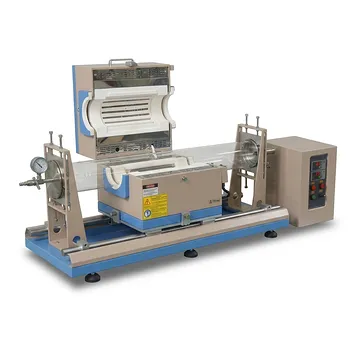
1200C High Temperature 5 Inch Sliding Tube Furnace for Rapid Thermal Processing RTP and Wafer Annealing
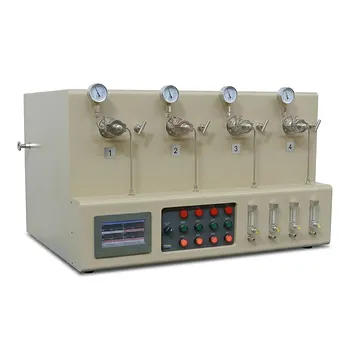
High Temperature 1700C 4 Channel Tube Furnace 1 Inch Alumina Tube for Hi-Throughput Annealing
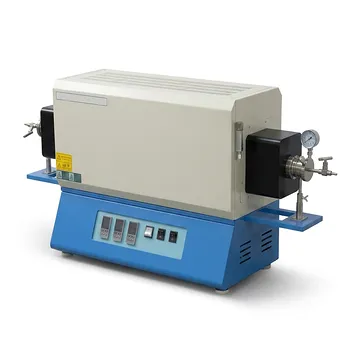
High Temperature Three Temperature Zone Tube Furnace for Advanced Material Science Sintering and Chemical Vapor Deposition Applications
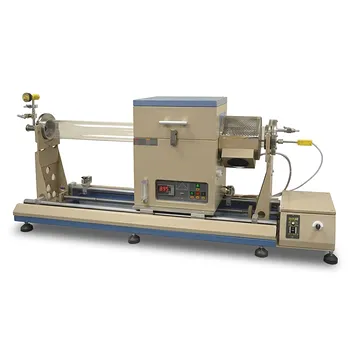
900 ºC Max Sliding RTP Tube Furnace with Rapid IR Heating and 4 Inch OD Quartz Tube
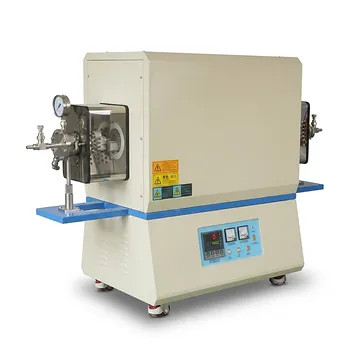
High Temperature 1800C Atmosphere Tube Furnace for CVD Research and Vacuum Sintering Precision Heat Treatment
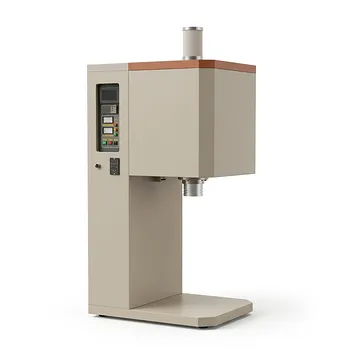
Vertical Openable Tube Furnace 0-1700c High Temperature Laboratory System for CVD and Vacuum Heat Treatment
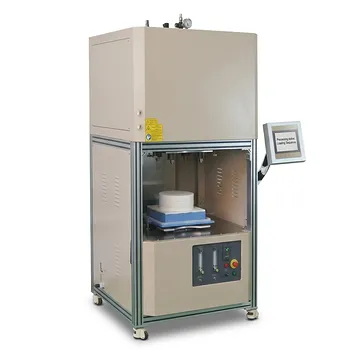
High Temperature Vertical Atmosphere Controlled Furnace with Automatic Bottom Loading and 1700°C Capacity for Advanced Material Research

High Temperature 1700C Vertical Tube Furnace for Powder Spherification and Material Sintering
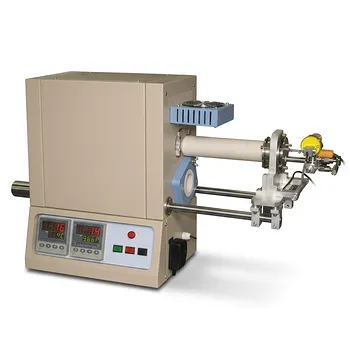
High Temperature Tube Furnace 1500C with Sliding Flanges and 50mm OD for Rapid Thermal Processing Fast Heating and Cooling
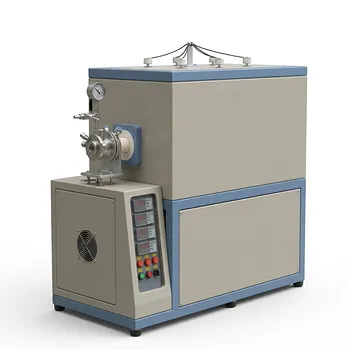
High Temperature 1700C Three Zone Tube Furnace with Alumina Tube 50mm 60mm 80mm OD for Material Research and Industrial Heat Treatment
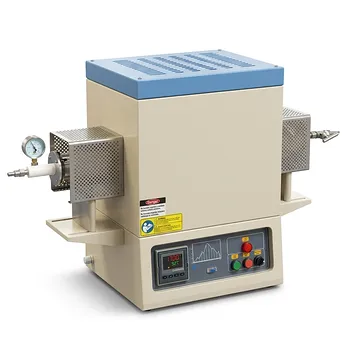
High Temperature Three Zone Tube Furnace 1700C with Alumina Tube and Water Cooled Flanges

High Temperature 1700C Tube Furnace with High Vacuum Turbomolecular Pump System and Multi Channel Mass Flow Controller Gas Mixer
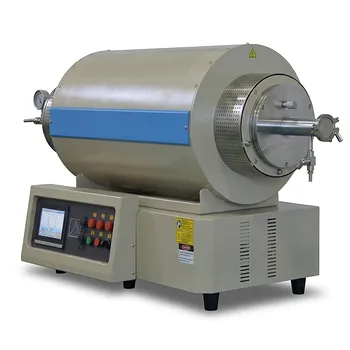
1200C Max Three Zone Tube Furnace 6 Inch OD Max with Tube and Flange
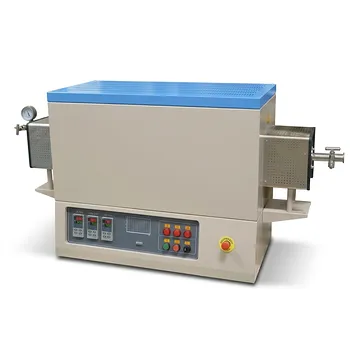
Three Zone Alumina Tube Furnace with Vacuum Flanges High Temperature 1700C Thermal Gradient CVD System
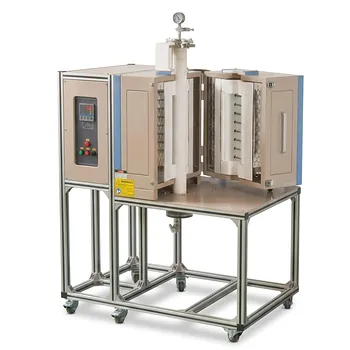
High Temperature 1700C Vertical Split Tube Furnace for Material Quenching and Single Crystal Growth

1800C High Temperature Compact Vacuum Tube Furnace with 60mm OD Alumina Tube and Kanthal MoSi2 Heating Elements

High Temperature 1700C Benchtop Tube Furnace with 5 Inch Heating Zone High Purity Alumina Tube and Vacuum Sealing Flanges

Compact High Temperature 1600C Tube Furnace with 50mm Alumina Tube and Vacuum Flanges for Material Sintering

Vertical 1700C Vacuum and Atmosphere Tube Furnace with 80mm Alumina Tube
