What are the advantages of using a Quartz Tube in Uranium sulfide annealing? Ensure Purity & Precise Atmosphere Control
Updated 3 months ago
Quartz tubes are the premier choice for Uranium sulfide annealing because they provide an exceptionally stable, chemically inert environment that prevents sample contamination and sulfur loss at high temperatures. At the standard processing temperature of approximately 850 °C, quartz acts as a superior gas-tight barrier, allowing researchers to maintain the precise vacuum or protective atmosphere necessary for the crystallization of sensitive actinide materials.
Quartz tubes ensure the integrity of Uranium sulfide synthesis by combining high-temperature chemical stability with a gas-tight seal that prevents oxidation and sulfur volatilization. This dual functionality guarantees high product purity while providing the transparency needed for real-time process monitoring.
Maintaining High Product Purity
Chemical Stability at 850 °C
Quartz exhibits remarkable chemical stability and does not react with Uranium sulfides during the annealing process. This inertness is critical because it ensures that no impurities from the vessel walls are introduced into the actinide sample.
Prevention of Contamination
Because the quartz does not interact with the processed material, the high purity of the synthesized product is maintained throughout the high-temperature cycle. This is especially important for sensitive actinide sulfides where even minor elemental migration could compromise the material's properties.
Atmospheric Isolation and Sulfur Retention
Superior Gas-Tightness
The gas-tight nature of quartz allows it to hold a stable vacuum or a specific flowing atmosphere (such as nitrogen or hydrogen) within a tube furnace. This isolation protects the Uranium sulfides from external air and prevents unwanted oxidation reactions.
Inhibiting Sulfur Volatilization
A sealed quartz tube acts as a physical barrier that prevents the rapid sublimation and loss of elemental sulfur. By keeping sulfur vapor confined, the tube ensures that the reaction remains stoichiometrically complete rather than converting into unwanted oxides.
Optical Transparency and Process Control
Real-Time Visual Monitoring
The transparency of high-purity quartz allows researchers to observe physical changes, such as melting or crystallization, as they happen. This visual access is vital for recording combustion wave propagation or identifying the precise moment of a phase change.
Efficient Thermal Radiation and IR Sensing
Quartz permits the efficient transfer of thermal radiation from furnace heaters directly to the sample surface. Furthermore, its transparency allows for the use of external infrared thermometers to monitor internal temperature gradients with high accuracy.
Structural Integrity and Thermal Resilience
High Thermal Shock Resistance
Quartz glass has an extremely low coefficient of thermal expansion, which translates to excellent thermal shock resistance. This allows the reaction vessel to withstand rapid temperature fluctuations within the furnace without fracturing or losing its seal.
Structural Stability in High Heat
The material maintains its structural integrity at the temperatures required for actinide decomposition and annealing. This stability ensures that the reaction space remains consistent and pure, even during long-duration thermal cycles.
Understanding the Trade-offs and Limitations
Temperature Constraints
While quartz is stable at 850 °C, its structural integrity begins to soften as it approaches much higher temperatures (typically above 1100–1200 °C for extended periods). For processes requiring temperatures exceeding these limits, alternative materials like alumina may be necessary, though they lack quartz's transparency.
Chemical Sensitivities
Quartz is highly susceptible to corrosion from hydrofluoric acid and certain alkaline materials. If the Uranium sulfide synthesis involves precursors or cleaning agents containing these substances, the tube can become etched, leading to structural failure or sample contamination.
Devitrification Risks
Over time and through repeated heating cycles, quartz can undergo devitrification, where the glass transforms into a crystalline state. This process can make the tube brittle and opaque, eventually compromising the gas-tight seal and visual clarity.
Making the Right Choice for Your Goal
- If your primary focus is high chemical purity: Use high-purity quartz to ensure zero reaction between the vessel walls and the Uranium sulfide sample.
- If your primary focus is preventing sulfur loss: Utilize a flame-sealed quartz tube to maintain a high concentration of sulfur vapor and ensure complete chemical conversion.
- If your primary focus is precise atmosphere control: Leverage the gas-tight properties of quartz in a tube furnace to maintain a specific nitrogen-hydrogen or vacuum environment.
- If your primary focus is process observation: Take advantage of the material's transparency to use video recording or infrared thermometry during the annealing cycle.
By leveraging the unique thermal and chemical properties of quartz, researchers can achieve the rigorous environmental control necessary for the successful synthesis of actinide sulfides.
Summary Table:
| Key Feature | Benefit for Uranium Sulfide Annealing | R&D Value |
|---|---|---|
| Chemical Inertness | Prevents reaction between vessel and actinide | High product purity |
| Gas-Tight Seal | Inhibits sulfur volatilization and oxidation | Stoichiometric precision |
| Optical Clarity | Enables visual monitoring and IR thermometry | Improved process control |
| Thermal Resilience | Resists shock during rapid heating/cooling | Structural integrity at 850°C |
| Atmospheric Isolation | Allows stable vacuum or protective gas flow | Contamination-free environment |
Elevate Your Material Research with THERMUNITS Precision
Successful synthesis of sensitive materials like Uranium sulfides requires absolute atmospheric control and thermal stability. THERMUNITS is a leading manufacturer of high-temperature laboratory equipment specifically designed for material science and industrial R&D.
We provide a comprehensive range of thermal processing solutions to meet your most rigorous requirements, including:
- Tube Furnaces & CVD/PECVD Systems for precise gas-tight reactions.
- Vacuum, Atmosphere, and Muffle Furnaces for high-purity annealing.
- Innovative Solutions including Rotary kilns, VIM furnaces, and high-quality Thermal Elements.
Whether you are scaling up industrial production or conducting fundamental laboratory research, our equipment delivers the reliability and accuracy you demand.
Ready to optimize your thermal processing? Contact THERMUNITS today to discuss your specific application!
References
- Sheridon N. Kelly, Stefan G. Minasian. Formation of uranium disulfide from a uranium thioamidate single-source precursor. DOI: 10.1039/d4sc03422h
Mentioned Products
- High Throughput 1200C Four Channel Tube Furnace with 3 Inch Quartz Tubes for Multi Zone Annealing and Material Research
- 900 ºC Max Sliding RTP Tube Furnace with Rapid IR Heating and 4 Inch OD Quartz Tube
- Compact Vertical Split Quartz Tube Furnace with Stainless Steel Vacuum Flanges for Rapid Thermal Quenching and Controlled Atmosphere Material Processing
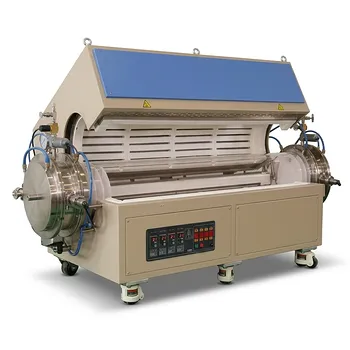
- Three Zone Tube Furnace with 11 Inch or 15 Inch Quartz Tube and Hinged Flanges for Vacuum Atmosphere Heat Treatment
- 1200C High Temperature Atmosphere Controlled Vertical Quenching Tube Furnace with 4 Inch Quartz Tube
People Also Ask
- Why is high-purity alumina selected for sample trays? Key to High-Throughput Sintering Success
- How does a high-throughput tube furnace achieve precise sulfurization? Expert Control for CoS2–Co(OH)F Nanostructures
- Why is a quartz tube furnace necessary for phosphorus-doped MoS2/GO preparation? Ensure Purity & Precise Synthesis
- Why is high-purity argon used as a flowing atmosphere during the catalyst carbonization process in a tube furnace? Role
- What role does an industrial programmable tube furnace play in preparing MXene/MWCNTs@C-Co microspheres? Expert Guide

Tech Team · ThermUnits
Last updated on Jun 03, 2026
Related Products
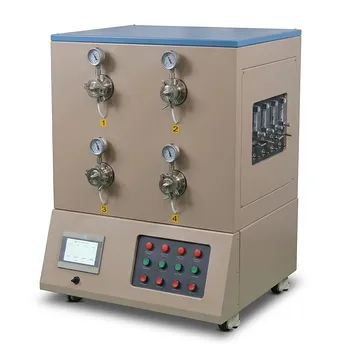
High Throughput 1200C Four Channel Tube Furnace with 3 Inch Quartz Tubes for Multi Zone Annealing and Material Research
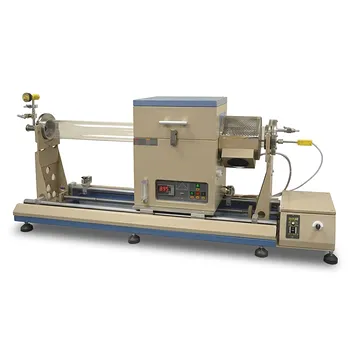
900 ºC Max Sliding RTP Tube Furnace with Rapid IR Heating and 4 Inch OD Quartz Tube

Compact Vertical Split Quartz Tube Furnace with Stainless Steel Vacuum Flanges for Rapid Thermal Quenching and Controlled Atmosphere Material Processing

Three Zone Tube Furnace with 11 Inch or 15 Inch Quartz Tube and Hinged Flanges for Vacuum Atmosphere Heat Treatment
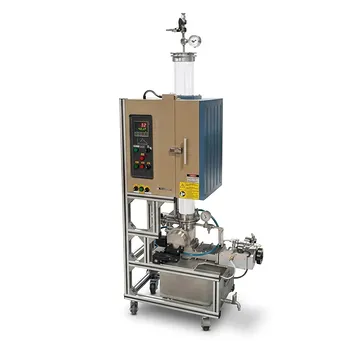
1200C High Temperature Atmosphere Controlled Vertical Quenching Tube Furnace with 4 Inch Quartz Tube
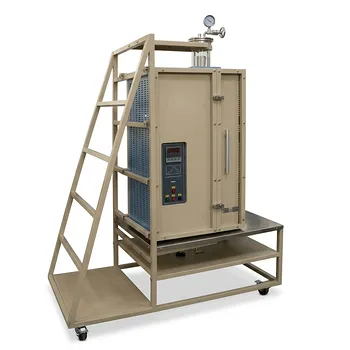
Split Vertical Tube Furnace with 1200C Quartz Tube and Stainless Steel Vacuum Flanges for Rapid Thermal Processing
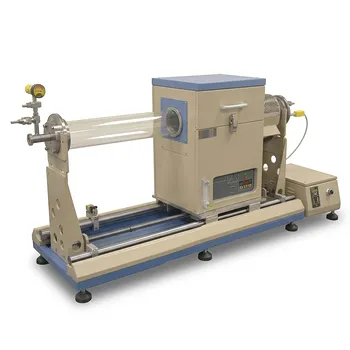
Rapid Thermal Processing Sliding Tube Furnace with 4 Inch OD Quartz Tube and 900C IR Heating
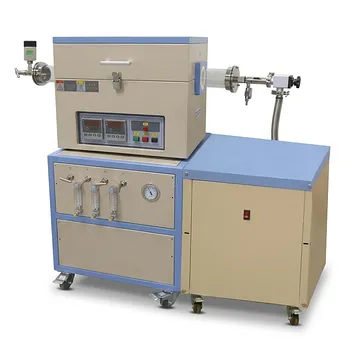
Dual Zone Quartz Tube Furnace with 80mm Diameter 1200C Max Temperature 3 Channel Gas Mixer and Vacuum Pump System
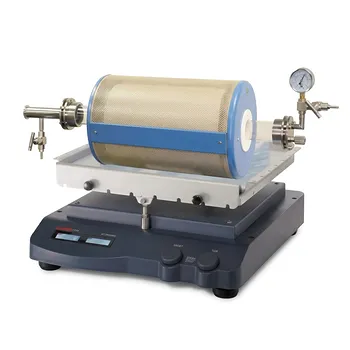
High Temperature Rocking Tube Furnace with Quartz Tube and Vacuum Flange for Materials Synthesis
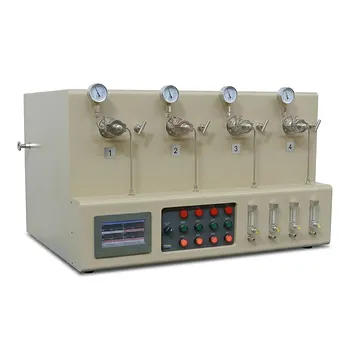
High Temperature 1700C 4 Channel Tube Furnace 1 Inch Alumina Tube for Hi-Throughput Annealing
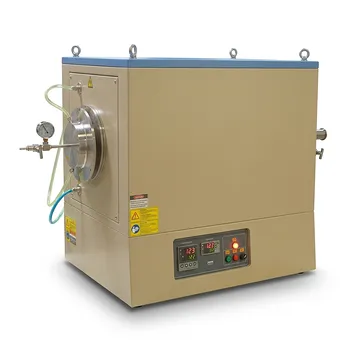
1100°C Large Diameter Quartz Tube Furnace with 24 Inch Heating Zone and Water Cooled Flanges
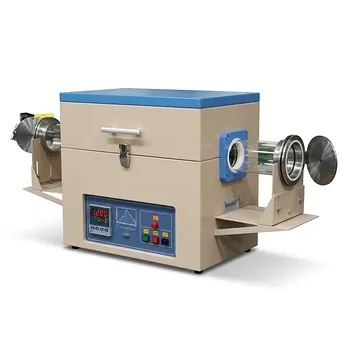
High Temperature 1200C Split Tube Furnace with Hinged Vacuum Flanges and 4 Inch Quartz Tube for Laboratory Research
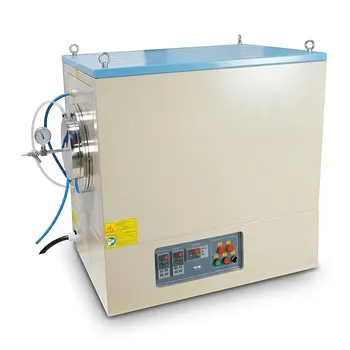
Dual Zone Tube Furnace 1100C with 11 Inch Quartz Tube and Vacuum Flanges for 8 Inch Wafer Processing

1200°C 5 Inch Vertical Quartz Tube Furnace with Stainless Steel Vacuum Flanges
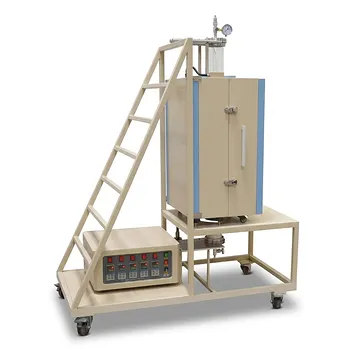
Five Zone Split Vertical Tube Furnace 1200C Max with 4 Inch Quartz Tube and Stainless Steel Vacuum Flanges
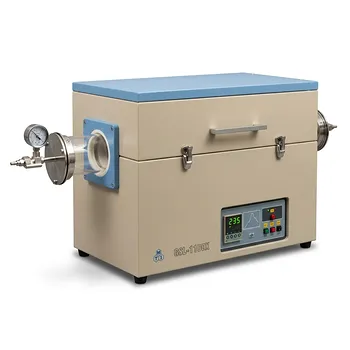
Single Zone Tube Furnace 5 Inch Quartz Tube 36 Inch Heating Zone Vacuum Flanges
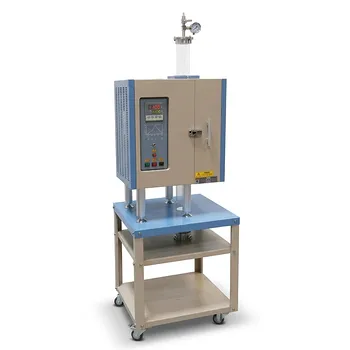
1100°C Split Vertical Tube Furnace with 80mm Quartz Tube and Stainless Steel Vacuum Flanges

High Temperature Automated 5 Inch Tube Furnace for Autonomous Material Research and Advanced Laboratory R&D
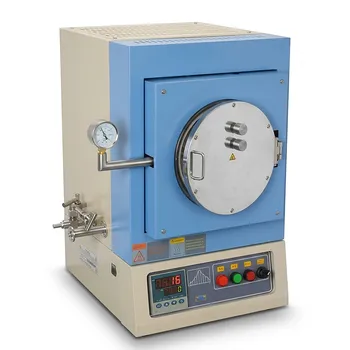
1100°C High Temperature Quartz Chamber Furnace 8 Inch OD with 7.6 Liter Capacity and Vacuum Atmosphere Capability