What are the primary advantages of using quartz material reactors? Boost Olefin Yield and Reduce Coking by 5x
Updated 3 months ago
Quartz reactors provide a superior environment for propane-butane fraction pyrolysis by offering extreme chemical inertness and a significant reduction in carbon fouling. Compared to metal alternatives, quartz reactors minimize side reactions and reduce coke deposition by more than fivefold under identical high-temperature conditions. This ensures a cleaner reaction path toward low-grade olefin generation while significantly lowering the frequency of required equipment maintenance.
Choosing quartz over metal for pyrolysis ensures that the reaction path remains focused on target products rather than side reactions, while the dramatic reduction in carbon buildup protects both the purity of the yield and the longevity of the equipment.
Superior Anti-Coking and Process Efficiency
Drastic Reduction in Carbon Deposition
In high-temperature pyrolysis, carbon deposition (coke) is a primary operational hurdle that degrades performance. Quartz reactors exhibit carbon deposition rates more than five times lower than those of metal reactors under the same conditions. This allows for longer run times and more consistent thermal transfer through the reactor walls.
Focusing the Reaction Path
The surface properties of quartz actively reduce the occurrence of unwanted side reactions. By minimizing these interactions, the process path remains focused on low-grade olefin generation. This selectivity is crucial for maintaining high product quality and maximizing the value of the output.
Lower Maintenance Frequency
Because quartz accumulates significantly less coke than metal, the need for aggressive cleaning and decoking is greatly reduced. This results in lower equipment maintenance frequency and higher overall system uptime. Reduced mechanical stress from cleaning also extends the functional life of the reactor components.
Chemical Inertness and Thermal Stability
Elimination of Background Catalytic Effects
High-purity quartz acts as a "neutral" container, ensuring that the reactor material itself does not participate in the chemistry. It prevents background effects on catalytic activity measurements, which is vital for ensuring the accuracy of experimental data. This is especially important when measuring the effects of specific catalysts on CH4 or CO2.
Stability at Extreme Temperatures
Quartz maintains its structural integrity and inertness at temperatures reaching up to 900 °C. It does not react with common reactants or impurities such as SO2 and NO2, making it an ideal choice for complex feedstocks. This thermal stability ensures that the material does not contaminate biochar or bio-oil vapors during the process.
Visual Calibration and Transparency
Unlike opaque metal reactors, the transparency of quartz allows for precise visual calibration. Operators can confirm the exact placement of materials within the heating center of a furnace before experiments begin. This visual feedback reduces setup errors and enhances the repeatability of the pyrolysis process.
Understanding the Trade-offs
Physical Fragility and Structural Limits
While quartz is chemically superior, it is physically more brittle than metal and highly susceptible to mechanical shock. In large-scale industrial applications where high pressure or physical impact is a factor, metal reactors may be required for their structural durability.
Thermal Shock Sensitivity
Quartz can be sensitive to rapid temperature fluctuations, which may lead to cracking if the heating or cooling cycles are not carefully controlled. Metal reactors generally handle rapid thermal cycling with less risk of catastrophic failure.
Scaling and Cost Considerations
High-purity quartz is often more expensive to fabricate into complex, large-scale geometries compared to standard industrial alloys. For small-scale research and high-precision specialty chemicals, the benefits outweigh the costs, but large-scale commodity production often relies on metal for economic and structural reasons.
How to Apply This to Your Project
- If your primary focus is maximizing olefin yield and product purity: Quartz is the definitive choice due to its chemical inertness and ability to suppress unwanted side reactions.
- If your primary focus is reducing downtime for cleaning: Utilize quartz to take advantage of its 80% lower coking rate compared to metal, which drastically extends maintenance intervals.
- If your primary focus is high-precision catalytic research: Use quartz reactors to eliminate background interactions that could otherwise skew your experimental data and lead to false conclusions.
Choosing quartz reactors transforms pyrolysis from a high-maintenance struggle into a controlled, high-precision chemical process.
Summary Table:
| Feature | Quartz Material Reactors | Metal (Alloy) Reactors |
|---|---|---|
| Coking Rate | >5x lower carbon deposition | High carbon fouling (coke) |
| Chemical Inertness | High (prevents side reactions) | Can exhibit catalytic background effects |
| Max Temperature | Up to 900 °C | Varies by alloy (can exceed 1000 °C) |
| Transparency | Transparent (allows visual calibration) | Opaque |
| Maintenance | Low frequency; easy decoking | High frequency; aggressive cleaning |
| Durability | Brittle; sensitive to thermal shock | Robust; handles mechanical stress |
Optimize Your Pyrolysis Research with THERMUNITS
Are you looking to maximize olefin yield and minimize equipment downtime? THERMUNITS is a leading manufacturer of high-temperature laboratory equipment specifically designed for material science and industrial R&D.
We offer a comprehensive range of thermal processing solutions, including CVD/PECVD systems, Tube furnaces, Vacuum furnaces, and Rotary kilns, perfectly suited for high-purity quartz reactor applications. Our equipment ensures precise temperature control and uniform heating, empowering you to achieve superior heat treatment results with minimal background interference.
Ready to upgrade your lab's performance? Contact our engineering team today to discuss your specific furnace and reactor requirements and find the perfect solution for your research goals.
References
- Sanjar H. Saidqulov. STUDY OF THE KINETICS OF THE PROPANE-BUTANE FRACTION PYROLYSIS PROCESS. DOI: 10.37547/tajet/volume06issue12-21
Mentioned Products
- 1100°C High Temperature Quartz Chamber Furnace 8 Inch OD with 7.6 Liter Capacity and Vacuum Atmosphere Capability
- Compact Vertical Split Quartz Tube Furnace with Stainless Steel Vacuum Flanges for Rapid Thermal Quenching and Controlled Atmosphere Material Processing
- 1200°C 5 Inch Vertical Quartz Tube Furnace with Stainless Steel Vacuum Flanges
- Dual Zone Quartz Tube Furnace with 80mm Diameter 1200C Max Temperature 3 Channel Gas Mixer and Vacuum Pump System
- 1100°C Large Diameter Quartz Tube Furnace with 24 Inch Heating Zone and Water Cooled Flanges
People Also Ask
- Why is a quartz tube furnace necessary for phosphorus-doped MoS2/GO preparation? Ensure Purity & Precise Synthesis
- Benefits of high-vacuum quartz tube furnaces with N2 for Co3O4 nanosheets: Purity and Structural Integrity.
- What conditions does a quartz tube furnace provide for AlxCoCrFeNi steam corrosion tests? Achieve Precise R&D Control.
- Why is high-temperature annealing in a quartz tube furnace done after HfO2 deposition? Unlock peak film performance.
- Why is a high-purity quartz tube used for SP-Fe3O4-C? Ensure Chemical Purity & Catalytic Stability

Tech Team · ThermUnits
Last updated on Jun 03, 2026
Related Products
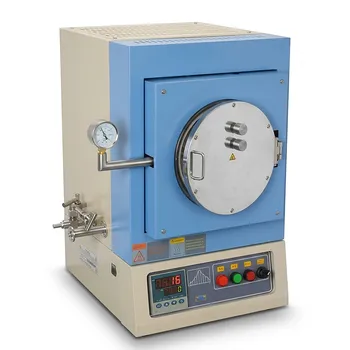
1100°C High Temperature Quartz Chamber Furnace 8 Inch OD with 7.6 Liter Capacity and Vacuum Atmosphere Capability

Compact Vertical Split Quartz Tube Furnace with Stainless Steel Vacuum Flanges for Rapid Thermal Quenching and Controlled Atmosphere Material Processing

1200°C 5 Inch Vertical Quartz Tube Furnace with Stainless Steel Vacuum Flanges
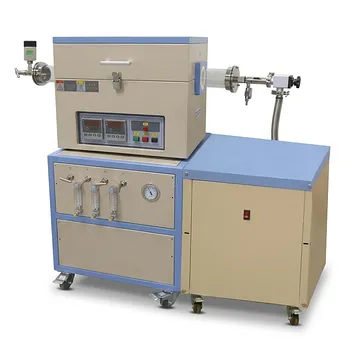
Dual Zone Quartz Tube Furnace with 80mm Diameter 1200C Max Temperature 3 Channel Gas Mixer and Vacuum Pump System
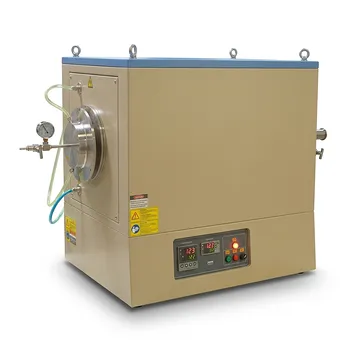
1100°C Large Diameter Quartz Tube Furnace with 24 Inch Heating Zone and Water Cooled Flanges
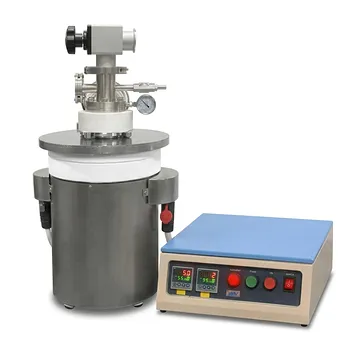
1100C High Temperature Vacuum Crucible Furnace with Quartz Chamber for Thermal Processing and Sintering
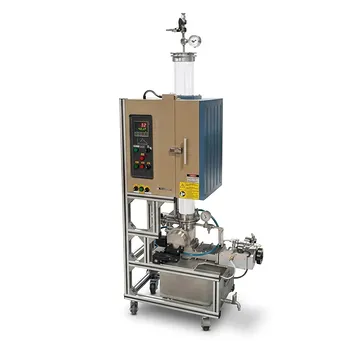
1200C High Temperature Atmosphere Controlled Vertical Quenching Tube Furnace with 4 Inch Quartz Tube
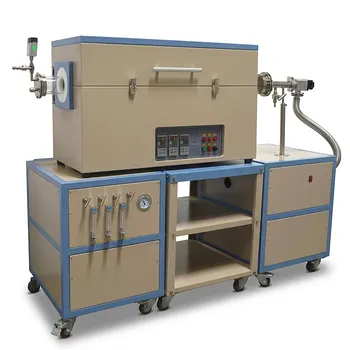
Three Zone Quartz Tube Furnace with 3 Channel Gas Mixer Vacuum Pump and Anti Corrosive Vacuum Gauge
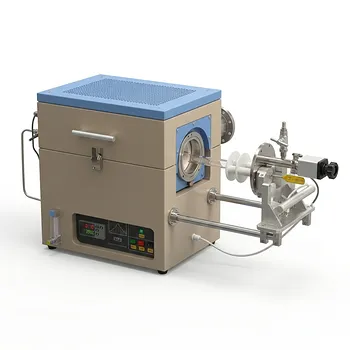
Compact Atmosphere Controlled Rapid Thermal Processing RTP Furnace with 4 Inch ID Quartz Tube 1100C
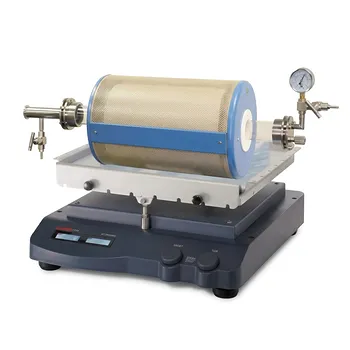
High Temperature Rocking Tube Furnace with Quartz Tube and Vacuum Flange for Materials Synthesis
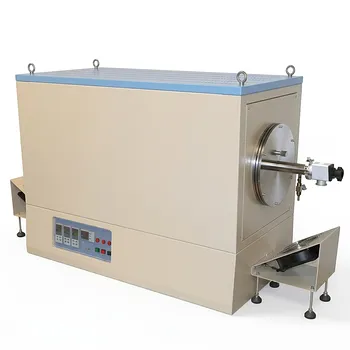
1100°C Three Zone Tube Furnace with 8.5 to 11 Inch OD Quartz Tube and Vacuum Flanges for Large Wafer Processing
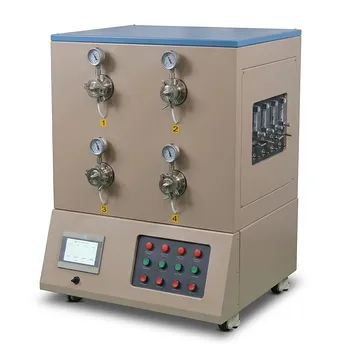
High Throughput 1200C Four Channel Tube Furnace with 3 Inch Quartz Tubes for Multi Zone Annealing and Material Research
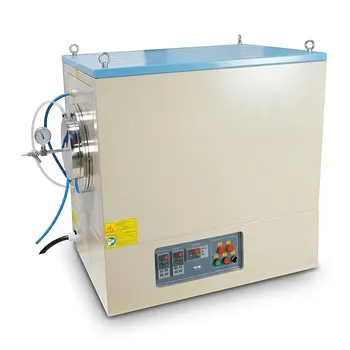
Dual Zone Tube Furnace 1100C with 11 Inch Quartz Tube and Vacuum Flanges for 8 Inch Wafer Processing
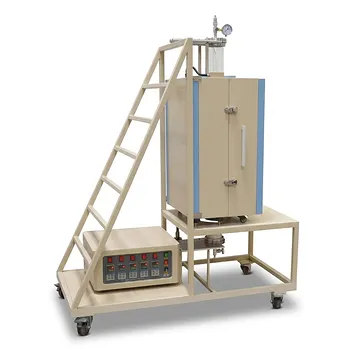
Five Zone Split Vertical Tube Furnace 1200C Max with 4 Inch Quartz Tube and Stainless Steel Vacuum Flanges
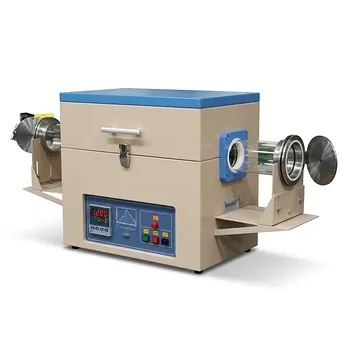
High Temperature 1200C Split Tube Furnace with Hinged Vacuum Flanges and 4 Inch Quartz Tube for Laboratory Research
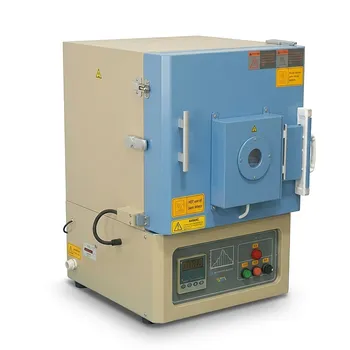
High Temperature Benchtop Muffle Furnace 1500C with 3.6L Chamber and Quartz Observation Window
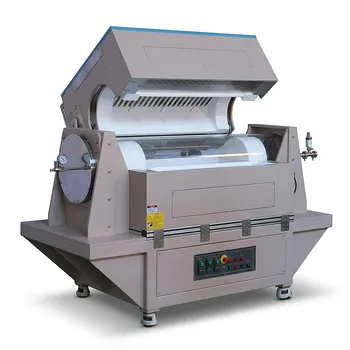
Three Zone Tube Furnace with 11 Inch or 15 Inch Quartz Tube and Hinged Flanges for Vacuum Atmosphere Heat Treatment
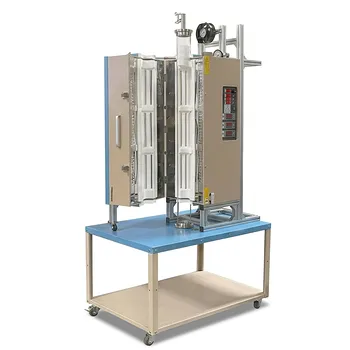
1200C Three Zone Split Vertical Tube Furnace 4 Inch Quartz Tube Stainless Steel Vacuum Flanges
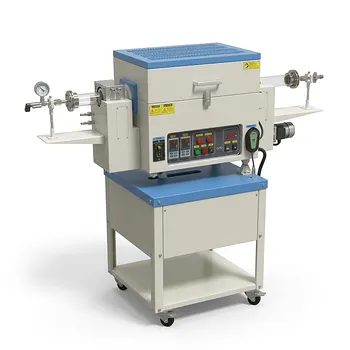
4 Inch Two Zone Rotary CVD Tube Furnace for High Temperature Battery Material Synthesis and Advanced Material Calcination