What are the primary functions of a high-temperature tube furnace in LCCFO synthesis? Key Synthesis Guide
Updated 3 months ago
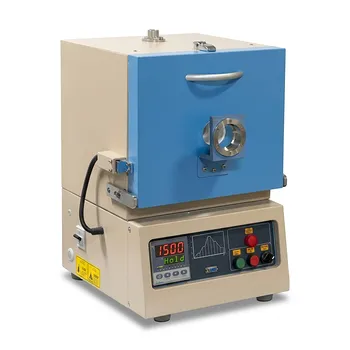
The high-temperature tube furnace is the critical catalyst for atomic reorganization. It provides the precise thermal energy required to drive solid-state diffusion, allowing raw metal oxide precursors to chemically react and transform into a stable, crystalline Lanthanum Cobalt Iron Calcium (LCCFO) perovskite structure.
The tube furnace functions as a controlled thermochemical reactor that ensures phase purity and structural integrity. By regulating thermal energy and cooling kinetics, it transforms a physical mixture of powders into a homogeneous, functional ceramic lattice.
Driving Atomic Diffusion and Chemical Reaction
Facilitating Solid-State Kinetics
At the heart of LCCFO synthesis is the need for atoms to move across grain boundaries. The tube furnace provides a sustained high-temperature environment—typically around 1150°C for 5 hours—to grant atoms sufficient kinetic energy to migrate and bond.
Phase Transformation and Crystallization
The thermal environment drives the chemical reaction of metal oxide precursors into a stable cubic phase structure. Without this precise energy input, the material would remain a heterogeneous mixture of individual oxides rather than a unified perovskite lattice.
Precursor Decomposition
As seen in similar inorganic synthesis, the furnace environment aids in the decomposition of precursors (such as carbonates) to release volatile components like carbon dioxide. This ensures that only the desired metallic elements remain to form the final crystalline framework.
Managing Structural Integrity and Morphology
Precision Rate Control
The ability to program specific heating and cooling rates, such as 2°C/min, is essential for structural success. This gradual change prevents the accumulation of internal thermal stress, which could otherwise lead to micro-cracking or structural failure.
Regulating Grain Growth
The furnace's thermal stability directly influences the final grain size of the LCCFO perovskite. Controlled sintering allows for the management of crystal growth kinetics, ensuring the material achieves the specific surface area and density required for its intended application.
Atmosphere and Valence Regulation
While LCCFO is often sintered in air, tube furnaces offer the unique ability to control the gaseous environment. This allows researchers to regulate the valence states of metal ions or maintain specific concentrations of oxygen vacancies within the lattice by introducing inert or reactive gases.
Understanding the Trade-offs
Sintering versus Oversintering
While high temperatures are necessary for diffusion, excessive heat or prolonged dwell times can lead to uncontrolled grain growth. This reduces the specific surface area of the material, potentially degrading its performance in catalytic or electronic applications where a fine microstructure is preferred.
Thermal Gradients and Non-Uniformity
In larger batches, the distance from the tube wall to the center of the sample can create thermal gradients. If the heating is not perfectly uniform, different sections of the LCCFO sample may exhibit varying degrees of crystallinity or phase impurities, compromising the batch's total consistency.
Energy Efficiency and Throughput
The use of a tube furnace involves a significant energy and time trade-off. Achieving high phase purity requires slow ramping and long dwell times, which limits production throughput and increases the operational cost per gram of synthesized material.
How to Apply This to Your Project
Optimizing the Synthesis Protocol
To achieve the best results with LCCFO perovskites, you must align your furnace parameters with your specific material requirements.
- If your primary focus is Phase Purity: Maintain a steady dwell temperature (e.g., 1150°C) for at least 5 hours to ensure complete atomic diffusion and lattice reorganization.
- If your primary focus is Mechanical Integrity: Utilize a slow cooling rate of 2°C/min or less to minimize thermal shock and prevent the formation of internal structural defects.
- If your primary focus is Catalytic Activity: Carefully monitor sintering time to prevent excessive grain growth, as a smaller grain size typically provides more active surface sites.
By mastering the thermal environment of the tube furnace, you command the transition from raw oxides to high-performance perovskite materials.
Summary Table:
| Function | Impact on LCCFO Synthesis | Recommended Parameters |
|---|---|---|
| Atomic Diffusion | Drives solid-state kinetics and bonding | 1150°C Dwell Temperature |
| Phase Transformation | Ensures stable cubic crystalline lattice | 5+ Hours Dwell Time |
| Thermal Rate Control | Prevents micro-cracks and thermal stress | 2°C/min Cooling/Heating |
| Atmosphere Control | Regulates metal valence and oxygen vacancies | Controlled Gas Environment |
Unlock High-Performance Materials with THERMUNITS
Achieving perfect phase purity in LCCFO perovskites requires more than just heat—it requires absolute precision. THERMUNITS is a leading manufacturer of high-temperature laboratory equipment, providing the specialized tools needed for advanced material science and industrial R&D.
Our comprehensive range of solutions includes:
- Precision Tube & Muffle Furnaces for exact sintering profiles.
- Vacuum & Atmosphere Furnaces for sensitive valence regulation.
- CVD/PECVD & Hot Press Systems for advanced chemical synthesis.
- Rotary Kilns & Dental Furnaces for specialized applications.
Whether you are optimizing atomic reorganization or scaling up catalyst production, our equipment delivers the thermal stability your research demands.
Ready to elevate your heat treatment results?
Contact our technical team today to find your ideal furnace!
References
- Islam Saad, Rafat M. Amin. LaCo<sub>0.2</sub>Fe<sub>0.8</sub>O<sub>3</sub> perovskites doped with natural Ca<sup>2+</sup> as bifunctional electrocatalysts for oxygen evolution and reduction reactions. DOI: 10.1039/d4ra04105d
Mentioned Products
- High Temperature 1700C Vertical Tube Furnace for Powder Spherification and Material Sintering
- 1500C Max Dual Zone Rotary Tube Furnace with 60 mm OD Alumina Tube for High Temperature Material Synthesis
- High Temperature Dual Zone Rotating Tube Furnace 1500C Silicon Carbide Heating for Advanced Material Synthesis
- Compact High Temperature 1600C Tube Furnace with 50mm Alumina Tube and Vacuum Flanges for Material Sintering
- 1100C High Pressure Rocking Tube Furnace with 2 Inch Super Alloy Processing Tube for Material Synthesis
People Also Ask
- What role does a high-temperature vertical tube furnace play in simulating high-carbon ferromanganese slag formation?
- What functions does a vertical high-temperature tube furnace perform? Master Industrial Sintering & R&D Simulation
- What is the primary function of a high-temperature tube furnace in Cu1-N-C synthesis? Precision Thermal Control.
- High-Temp Tube Furnace Role in Converting Microbial Proteins to Iron Single-Atom Sites: Expert Synthesis Guide
- What impact does the heating rate of a tube furnace have on biochar microstructure? Optimize Your Material R&D.

Tech Team · ThermUnits
Last updated on Jun 02, 2026
Related Products

High Temperature 1700C Vertical Tube Furnace for Powder Spherification and Material Sintering
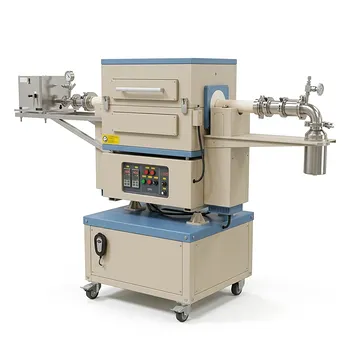
1500C Max Dual Zone Rotary Tube Furnace with 60 mm OD Alumina Tube for High Temperature Material Synthesis
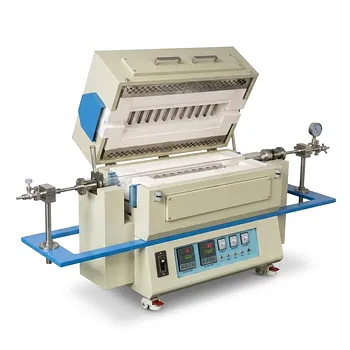
High Temperature Dual Zone Rotating Tube Furnace 1500C Silicon Carbide Heating for Advanced Material Synthesis

Compact High Temperature 1600C Tube Furnace with 50mm Alumina Tube and Vacuum Flanges for Material Sintering
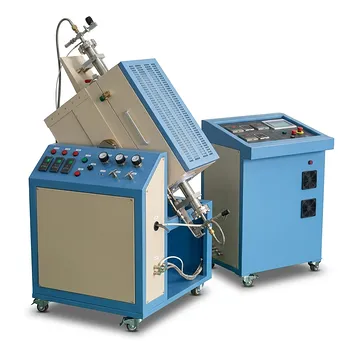
1100C High Pressure Rocking Tube Furnace with 2 Inch Super Alloy Processing Tube for Material Synthesis

High Temperature Tube Furnace 1500C with Sliding Flanges and 50mm OD for Rapid Thermal Processing Fast Heating and Cooling
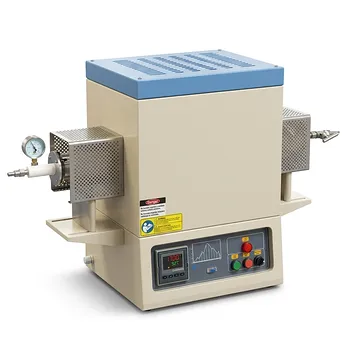
High Temperature Three Zone Tube Furnace 1700C with Alumina Tube and Water Cooled Flanges
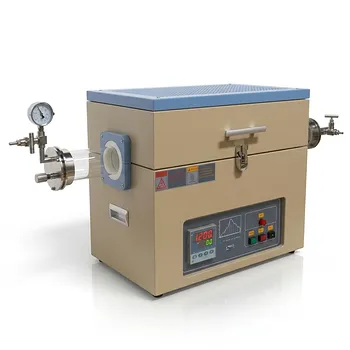
High Temperature 1200C Split Tube Furnace with Optional Quartz Tube Sizes and Vacuum Sealing Flanges for Material Science Research

High Temperature 1700C Tube Furnace with High Vacuum Turbomolecular Pump System and Multi Channel Mass Flow Controller Gas Mixer

High Temperature Automated 5 Inch Tube Furnace for Autonomous Material Research and Advanced Laboratory R&D

1750°C High Temperature Benchtop Vacuum Atmosphere Tube Furnace with Kanthal Super 1800 Heating Elements and 60mm Alumina Processing Tube

1800C High Temperature Compact Vacuum Tube Furnace with 60mm OD Alumina Tube and Kanthal MoSi2 Heating Elements
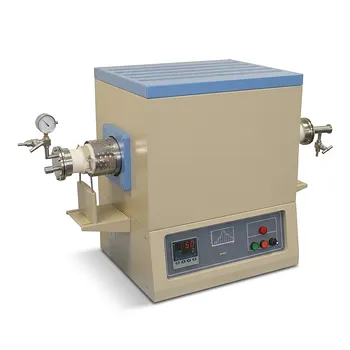
1700C High Temperature Alumina Tube Furnace with 18 Inch Heated Zone and Vacuum Sealing Flanges
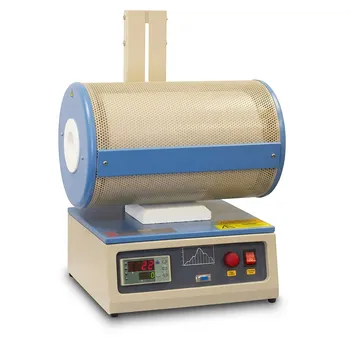
Multi Position Tube Furnace 1100C for Laboratory Material Research and Advanced Industrial Thermal Processing

High Temperature 1700C Benchtop Tube Furnace with 5 Inch Heating Zone High Purity Alumina Tube and Vacuum Sealing Flanges
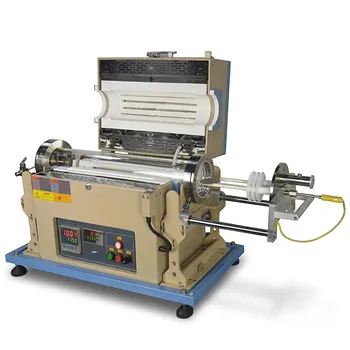
1200°C High Temperature 4 Inch Tube Furnace with Sliding Flange for CVD Systems
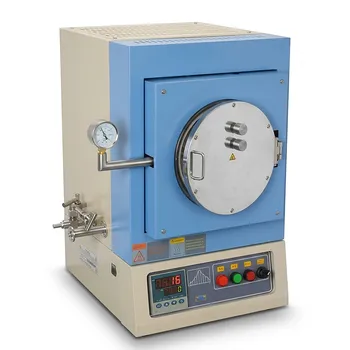
1100°C High Temperature Quartz Chamber Furnace 8 Inch OD with 7.6 Liter Capacity and Vacuum Atmosphere Capability
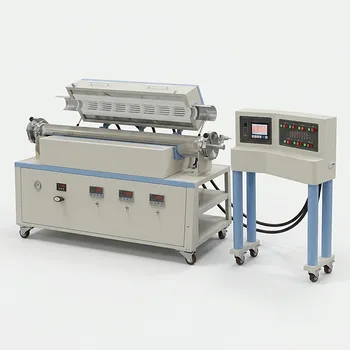
1100C Eight Zone High Pressure Super Alloy Tube Furnace with Integrated High Pressure Gas Control System
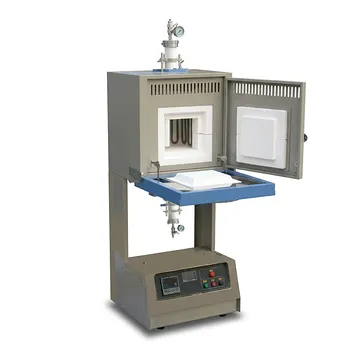
Vertical Hybrid High Temperature Furnace 1500C Alumina Tube SOFC Fuel Cell Testing Laboratory Heat Treatment Research Equipment