What are the functions of a tube furnace in f-SWNTs-T synthesis? Master Precise Thermal Atomization
Updated 3 months ago
The atmosphere-controlled tube furnace serves as the critical thermal reactor for synthesizing f-SWNTs-T catalysts by providing a strictly regulated chemical and temperature environment. It facilitates the carbonization of polyformamide into nitrogen-doped carbon layers at temperatures between 600-700°C while simultaneously inducing the partial thermal atomization of residual nickel nanoparticles into NiN4 active sites.
The primary role of the tube furnace is to manage the simultaneous carbonization of precursors and the atomic dispersion of metal sites within a protected, oxygen-free environment. This dual-action process ensures that the resulting catalyst achieves high catalytic activity without the structural degradation caused by oxidation.
Facilitating Complex Chemical Transformations
Carbonization and Nitrogen Doping
The furnace provides the sustained heat required for the thermal polycondensation of polyformamide. This process converts the precursor into a stable, nitrogen-doped carbon layer that encapsulates the nanotubes.
Partial Thermal Atomization of Metal Sites
At the targeted 600-700°C range, the furnace induces the partial thermal atomization of residual nickel nanoparticles. This transforms bulk metal into atomically dispersed NiN4 active sites, which are essential for high catalytic performance.
Removing Unstable Functional Groups
High-temperature treatment within the furnace facilitates the thermal cracking of organic matter. This removes unstable surface functional groups and rearranges chemical bonds to enhance the mechanical strength and graphitization of the carbon framework.
Maintaining Environmental Integrity
Protection Against Oxidation
By introducing a continuous flow of inert argon gas, the furnace creates a completely oxygen-free state. This protection is vital to prevent the combustion of carbon materials and the unwanted oxidation of active metal sites at high temperatures.
Temperature Field Uniformity
The tube furnace is designed for high temperature field uniformity, ensuring that the entire batch of catalysts undergoes identical thermal conditions. This leads to the highly repeatable preparation of nanomaterials with consistent catalytic properties.
Precise Multi-Stage Programming
Synthesis often requires specific heating rates (e.g., 5 °C/min) and holding times to anchor metal ions firmly into the carbon-nitrogen lattice. The furnace’s programmable controllers allow for this level of precision, preventing the sintering of nanoparticles into inactive clusters.
Understanding the Trade-offs
Temperature Sensitivity
Operating below the 600-700°C range may result in incomplete carbonization or failed atomization of nickel. Conversely, exceeding the target temperature risks the excessive sintering of metal atoms or the degradation of the single-walled carbon nanotube structure.
Atmosphere Purity and Sealing
The success of the synthesis depends entirely on the rigorous sealing performance of the furnace tube. Even trace amounts of oxygen leakage can lead to the formation of metal oxides instead of the desired NiN4 sites, significantly reducing the catalyst's effectiveness.
Optimization Strategies for Catalyst Synthesis
How to Apply This to Your Project
To achieve the best results in f-SWNTs-T synthesis, focus your furnace parameters on the specific requirements of your precursor and metal loading.
- If your primary focus is High Catalytic Activity: Prioritize the precision of the 600-700°C temperature hold to maximize the conversion of nickel particles into NiN4 active sites.
- If your primary focus is Structural Integrity: Ensure the flow rate of argon is sufficient to maintain a positive pressure, effectively purging all oxygen to prevent carbon framework degradation.
- If your primary focus is Batch Consistency: Use a furnace with a long "constant temperature zone" to ensure that catalysts placed at different points in the tube receive uniform thermal treatment.
Precise control over the thermal and atmospheric environment is the fundamental requirement for transforming raw precursors into high-purity, single-atom catalysts.
Summary Table:
| Key Function | Mechanism | Desired Outcome |
|---|---|---|
| Carbonization | Thermal polycondensation at 600-700°C | Nitrogen-doped carbon layers |
| Metal Atomization | Dispersion of Ni nanoparticles | Formation of NiN4 active sites |
| Atmosphere Control | Inert Argon (Ar) purging | Prevents oxidation and combustion |
| Thermal Uniformity | Stable temperature field | Repeatable catalyst properties |
| Thermal Cracking | Removal of organic matter | Enhanced graphitization & strength |
Elevate Your Material Research with THERMUNITS
At THERMUNITS, we specialize in providing the high-precision thermal environments required for advanced material synthesis. As a leading manufacturer of high-temperature laboratory equipment, we understand the critical nature of atmosphere control and temperature uniformity in creating catalysts like f-SWNTs-T.
Our comprehensive range of thermal processing solutions includes:
- Tube & Atmosphere Furnaces (Ideal for CVD/PECVD and controlled carbonization)
- Vacuum, Muffle, and Rotary Furnaces
- Hot Press Furnaces & Vacuum Induction Melting (VIM)
- Specialized Dental and Electric Rotary Kilns
Whether you are in academic material science or industrial R&D, our equipment ensures your catalysts achieve maximum activity without structural degradation. Contact our experts today to find the perfect furnace for your synthesis project.
References
- Fengwei Zhang, Sheng Zhu. Partial thermal atomization of residual Ni NPs in single-walled carbon nanotubes for efficient CO <sub>2</sub> electroreduction. DOI: 10.1039/d4sc07291j
Mentioned Products
- 1200°C Atmosphere Controlled Automatic Bottom Loading Furnace with 6 Inch Quartz Tube
- Compact Hybrid Muffle and Tube Furnace for 1000C Controlled Atmosphere Laboratory Material Sintering
- Compact Vertical Split Quartz Tube Furnace with Stainless Steel Vacuum Flanges for Rapid Thermal Quenching and Controlled Atmosphere Material Processing
- 1700C Compact Hybrid Furnace with Dual Layer Box Sintering and Controlled Atmosphere Alumina Tubes
- 1500°C Split Tube Furnace with Alumina Tube and Vacuum Sealing Flanges for Material Research
People Also Ask
- Why is a tube furnace required for FGM-PhG structural color ceramics? Key to Carbon Preservation & Vibrant Color
- Why is an atmosphere-controlled tube furnace required for the pre-sulfidation of NiMo/gamma-Al2O3 catalysts?
- Why is an atmosphere-controlled tube furnace required for 800 °C CNF annealing? Essential for Oxidative Protection.
- Why is an atmosphere-controlled tube furnace required for [email protected]/C preparation? Key for Purity & Structure
- Why is an atmosphere-controlled tube furnace required for single-atom sensor calcination? Ensure Atomic Dispersion.

Tech Team · ThermUnits
Last updated on Jun 03, 2026
Related Products
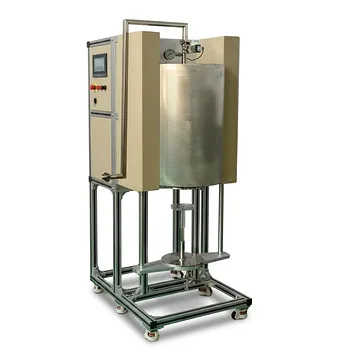
1200°C Atmosphere Controlled Automatic Bottom Loading Furnace with 6 Inch Quartz Tube
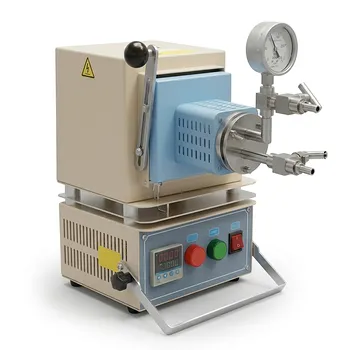
Compact Hybrid Muffle and Tube Furnace for 1000C Controlled Atmosphere Laboratory Material Sintering

Compact Vertical Split Quartz Tube Furnace with Stainless Steel Vacuum Flanges for Rapid Thermal Quenching and Controlled Atmosphere Material Processing
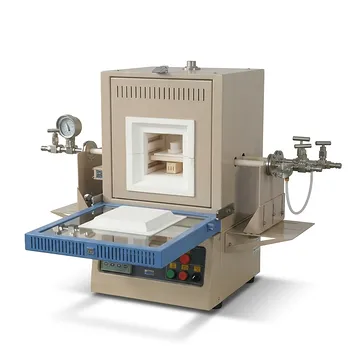
1700C Compact Hybrid Furnace with Dual Layer Box Sintering and Controlled Atmosphere Alumina Tubes
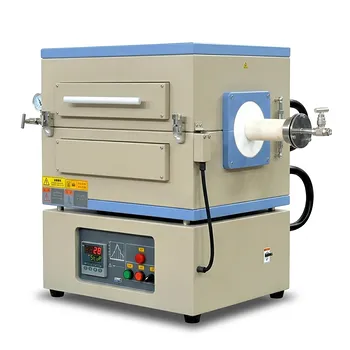
1500°C Split Tube Furnace with Alumina Tube and Vacuum Sealing Flanges for Material Research
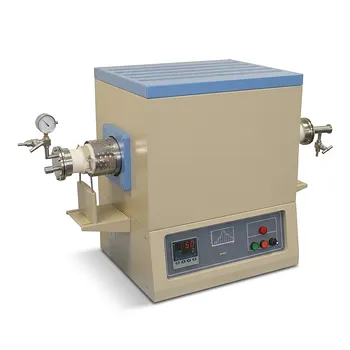
1700C High Temperature Alumina Tube Furnace with 18 Inch Heated Zone and Vacuum Sealing Flanges
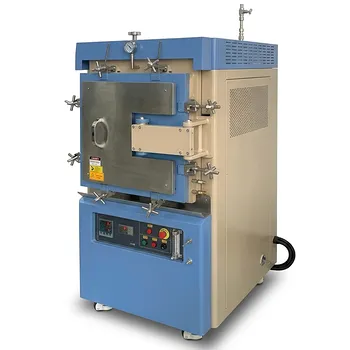
Atmosphere Controlled Muffle Furnace 1700C Maximum Temperature 80L High Capacity Vacuum Inert Gas Box Furnace

Vertical 1700C Vacuum and Atmosphere Tube Furnace with 80mm Alumina Tube
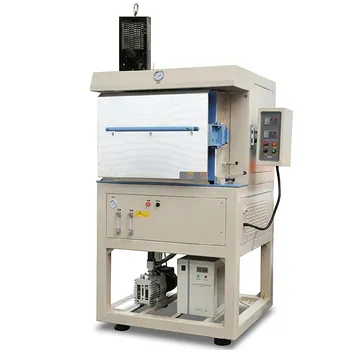
1200C Hydrogen Atmosphere Box Furnace with 5 Heated Sides and 64L Chamber

Three Zone Tube Furnace with 11 Inch or 15 Inch Quartz Tube and Hinged Flanges for Vacuum Atmosphere Heat Treatment
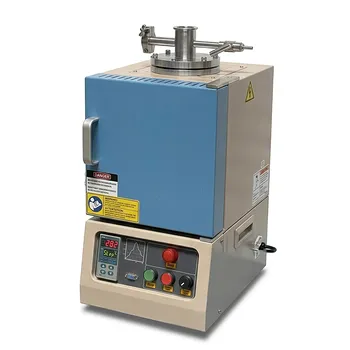
High Temperature Hybrid Muffle and Tube Furnace with Vacuum Capability and PID Control
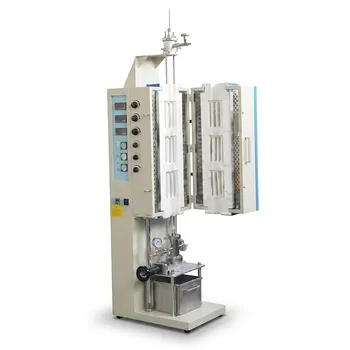
High Temperature Dual Zone Tube Furnace for Material Science Research and Professional Thermal Processing
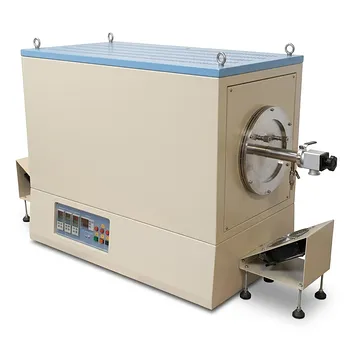
Four Zone Tube Furnace 1100C with 600mm Large Diameter Quartz Tube and Vacuum Flanges

High Temperature 1700C Tube Furnace with High Vacuum Turbomolecular Pump System and Multi Channel Mass Flow Controller Gas Mixer

1200°C 5 Inch Vertical Quartz Tube Furnace with Stainless Steel Vacuum Flanges
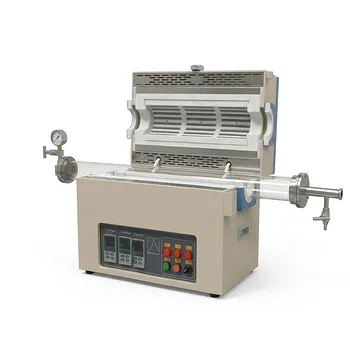
1200°C Three Zone Split Tube Furnace with 18 Inch Heating Length and Vacuum Flanges
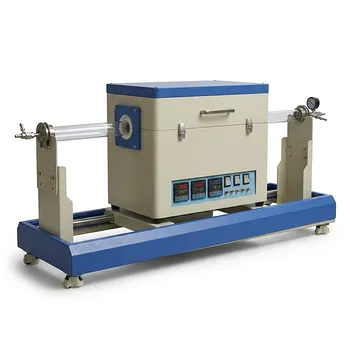
Double Temperature Zone Double Cover Tube Furnace for High Temperature CVD and Vacuum Annealing

High Temperature Automated 5 Inch Tube Furnace for Autonomous Material Research and Advanced Laboratory R&D
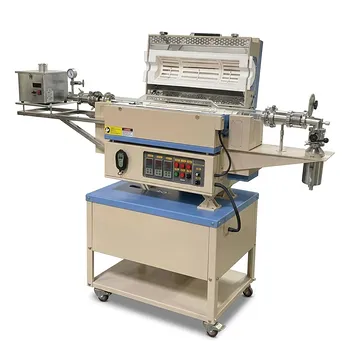
5 Inch Rotary Tube Furnace with Automatic Feeding and Receiving System 1200C Three Zone CVD Powder Processing
