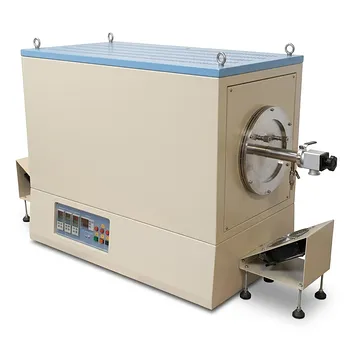
What is the core role of the atmosphere-controlled tube furnace in the SNAT process? Achieve Precise Phase Control.
Updated 3 months ago
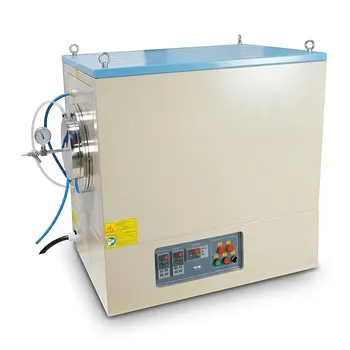
The atmosphere-controlled tube furnace is the central hardware required to execute the Solid-state Nitrogenization and Atmosphere Transformation (SNAT) process. It serves as a high-temperature reactor capable of reaching 1320 °C while maintaining a strictly regulated chemical environment. Its primary function is to manage the balance between nitrogen infiltration and escape by switching gas atmospheres at critical temperature setpoints during the cooling phase.
The core role of the tube furnace is to act as a precision thermal and atmospheric regulator that locks in a single-phase austenite structure. It achieves this through a high-sealing system that enables a rapid transition from nitrogen to high-purity argon at specific temperatures.
The Mechanics of Atmospheric Transformation
High-Temperature Thermal Stability
The SNAT process demands consistent sintering environments that can reach temperatures as high as 1320 °C. The tube furnace provides a uniform temperature field, which is essential for the repeatable preparation of complex materials and ensures that the entire sample undergoes uniform nitrogenization.
Precise Gas Flow and Switching
Beyond simple heating, the furnace acts as a dynamic gas management system. It features integrated flow controls that allow researchers to transition between reactive nitrogen and inert argon atmospheres with high precision.
Ensuring Chemical Stoichiometry
By maintaining a strictly controlled gas environment, the furnace ensures that chemical reactions occur at specific stoichiometric ratios. This level of control is vital for preventing unwanted side reactions and ensuring the material reaches its intended chemical composition.
Achieving the Single-Phase Austenite Structure
Regulating Nitrogen Infiltration
The furnace manages the infiltration and escape balance of nitrogen elements within the material lattice. This balance is what determines the final phase of the metal, transforming the base structure into a stable austenite form.
Dynamic Atmosphere Control During Cooling
A critical step in SNAT is the rapid transition from a nitrogen atmosphere to high-purity argon during the cooling process, typically at a setpoint like 1150 °C. This atmosphere transformation prevents excessive nitrogen loss or further unwanted infiltration as the material temperature drops.
Maintaining Material Purity
High-sealing furnace tubes are used to provide a protective atmosphere, preventing oxidation at high temperatures. This ensures that the single-phase austenite structure is not compromised by oxygen contamination or other environmental impurities.
Understanding the Trade-offs
The Risk of Seal Failure
The effectiveness of the SNAT process is entirely dependent on the rigorous sealing performance of the furnace tube. Any leak can introduce oxygen, leading to the oxidation of active sites and the failure to achieve a high-purity single-atom active center or phase.
Temperature Gradient Sensitivity
While tube furnaces offer excellent uniformity in the center, thermal gradients near the ends of the tube can lead to inconsistent nitrogenization. Users must carefully calibrate the "hot zone" to ensure the sample is treated under perfectly uniform conditions.
Gas Transition Lag
There is often a slight temporal lag when switching from nitrogen to argon. If the gas displacement is not rapid enough, the material may spend too much time in a mixed-gas state, which can disrupt the delicate balance of nitrogen elements required for a single-phase structure.
How to Apply This to Your SNAT Project
To successfully implement the SNAT process, your choice of equipment and operational parameters must align with your specific material goals.
- If your primary focus is phase purity: Ensure your furnace features high-sealing vacuum flanges and a programmable controller capable of executing a gas switch at a precise temperature point (e.g., 1150 °C).
- If your primary focus is material uniformity: Use a furnace with multi-zone heating elements to extend the uniform temperature "hot zone," ensuring the nitrogenization is consistent across the entire sample batch.
- If your primary focus is preventing oxidation: Prioritize a system with integrated oxygen sensors and high-purity argon purging capabilities to maintain an ultra-clean environment during the cooling phase.
The precision of the atmosphere-controlled tube furnace is what ultimately transforms a standard sintering process into the sophisticated molecular engineering required for SNAT.
Summary Table:
| Feature | Function in SNAT Process | Key Benefit for Materials |
|---|---|---|
| High-Temp Stability | Maintains up to 1320 °C | Ensures uniform nitrogenization and sintering |
| Atmosphere Switching | Rapidly transitions N₂ to Argon | Locks in single-phase austenite structure |
| High-Sealing Tube | Prevents oxygen ingress | Eliminates oxidation and preserves chemical purity |
| Flow Management | Regulates gas infiltration/escape | Ensures precise stoichiometric ratios |
Elevate Your SNAT Research with THERMUNITS High-Performance Furnaces
Success in the Solid-state Nitrogenization and Atmosphere Transformation (SNAT) process demands absolute precision in both temperature and atmospheric regulation. THERMUNITS is a leading manufacturer of high-temperature laboratory equipment tailored for material science and industrial R&D.
We offer a comprehensive range of thermal processing solutions—including Atmosphere-Controlled Tube Furnaces, Vacuum/Muffle Furnaces, Rotary Kilns, and CVD/PECVD systems—engineered to deliver the rigorous sealing and rapid gas transition speeds required for advanced phase engineering. Whether you are working on Vacuum Induction Melting (VIM) or complex dental materials, our equipment provides the stability you need to ensure repeatable, high-purity results.
Ready to achieve superior material phase purity?
Contact our technical experts today to discuss how our specialized heat treatment equipment can optimize your laboratory’s R&D capabilities.
References
- Weipeng Zhang, Zhengwu Peng. Achieving Homogeneous Microstructure and Superior Properties in High-N Austenitic Stainless Steel via a Novel Atmosphere-Switching Method. DOI: 10.3390/met14070795
Mentioned Products
- 1200°C Atmosphere Controlled Automatic Bottom Loading Furnace with 6 Inch Quartz Tube
- Compact Vertical Split Quartz Tube Furnace with Stainless Steel Vacuum Flanges for Rapid Thermal Quenching and Controlled Atmosphere Material Processing
- Compact Hybrid Muffle and Tube Furnace for 1000C Controlled Atmosphere Laboratory Material Sintering
- 1700C High Temperature Alumina Tube Furnace with 18 Inch Heated Zone and Vacuum Sealing Flanges
- 1650C High Temperature Atmosphere Controlled Box Furnace with 65L Chamber for Advanced Material Sintering and Industrial Heat Treatment
People Also Ask
- Why is a tube furnace required for FGM-PhG structural color ceramics? Key to Carbon Preservation & Vibrant Color
- Why is an atmosphere-controlled tube furnace required for the pre-sulfidation of NiMo/gamma-Al2O3 catalysts?
- Why is an atmosphere-controlled tube furnace required for 800 °C CNF annealing? Essential for Oxidative Protection.
- Why is an atmosphere-controlled tube furnace required for [email protected]/C preparation? Key for Purity & Structure
- Why is an atmosphere-controlled tube furnace required for single-atom sensor calcination? Ensure Atomic Dispersion.

Tech Team · ThermUnits
Last updated on Jun 03, 2026
Related Products
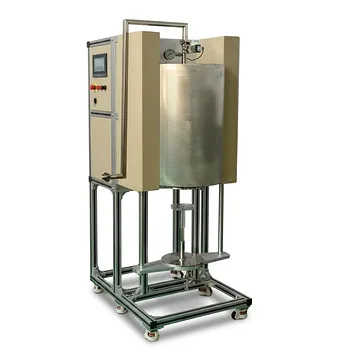
1200°C Atmosphere Controlled Automatic Bottom Loading Furnace with 6 Inch Quartz Tube

Compact Vertical Split Quartz Tube Furnace with Stainless Steel Vacuum Flanges for Rapid Thermal Quenching and Controlled Atmosphere Material Processing
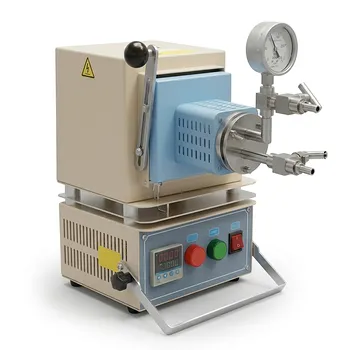
Compact Hybrid Muffle and Tube Furnace for 1000C Controlled Atmosphere Laboratory Material Sintering
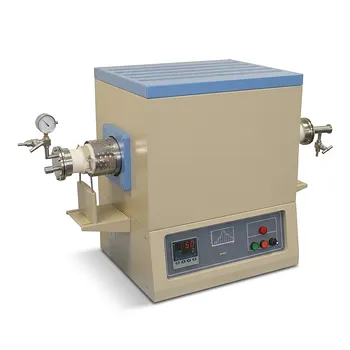
1700C High Temperature Alumina Tube Furnace with 18 Inch Heated Zone and Vacuum Sealing Flanges
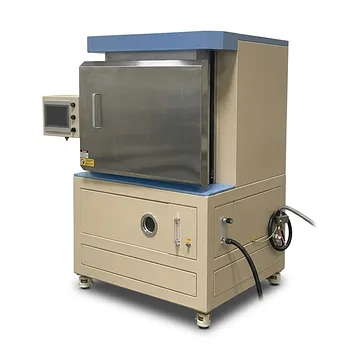
1650C High Temperature Atmosphere Controlled Box Furnace with 65L Chamber for Advanced Material Sintering and Industrial Heat Treatment

Vertical 1700C Vacuum and Atmosphere Tube Furnace with 80mm Alumina Tube
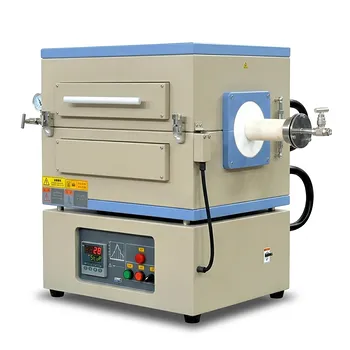
1500°C Split Tube Furnace with Alumina Tube and Vacuum Sealing Flanges for Material Research
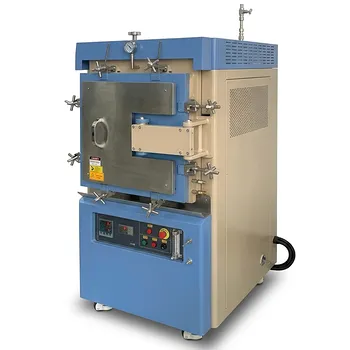
Atmosphere Controlled Muffle Furnace 1700C Maximum Temperature 80L High Capacity Vacuum Inert Gas Box Furnace
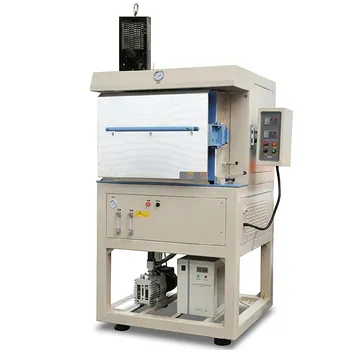
1200C Hydrogen Atmosphere Box Furnace with 5 Heated Sides and 64L Chamber

Three Zone Tube Furnace with 11 Inch or 15 Inch Quartz Tube and Hinged Flanges for Vacuum Atmosphere Heat Treatment
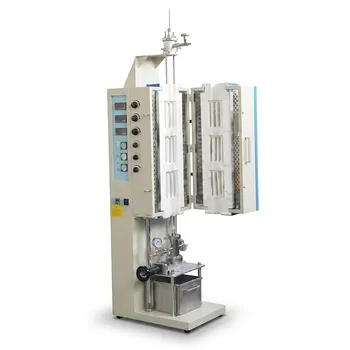
High Temperature Dual Zone Tube Furnace for Material Science Research and Professional Thermal Processing
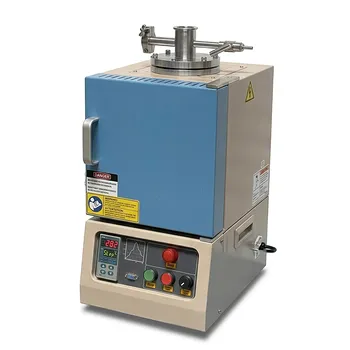
High Temperature Hybrid Muffle and Tube Furnace with Vacuum Capability and PID Control

High Temperature 1700C Tube Furnace with High Vacuum Turbomolecular Pump System and Multi Channel Mass Flow Controller Gas Mixer

High Temperature 1700C Vertical Tube Furnace for Powder Spherification and Material Sintering

High Temperature Automated 5 Inch Tube Furnace for Autonomous Material Research and Advanced Laboratory R&D
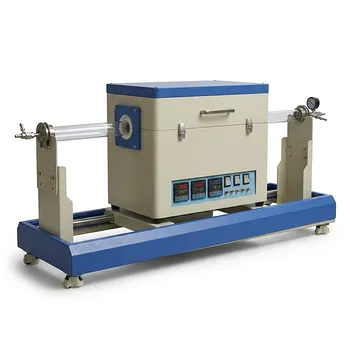
Double Temperature Zone Double Cover Tube Furnace for High Temperature CVD and Vacuum Annealing
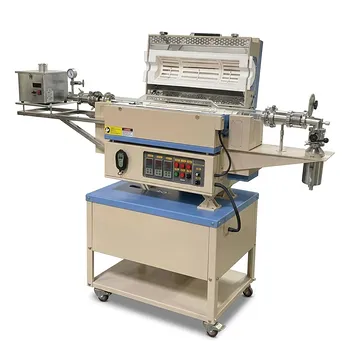
5 Inch Rotary Tube Furnace with Automatic Feeding and Receiving System 1200C Three Zone CVD Powder Processing

High Temperature 1700C Six Zone Split Tube Furnace with Alumina Tube and Water Cooled Flanges
Dual Zone Tube Furnace 1100C with 11 Inch Quartz Tube and Vacuum Flanges for 8 Inch Wafer Processing